How Do You Run on a Treadmill in 3 Easy Steps
To run on a treadmill, start by setting the machine to a comfortable, manageable speed and make certain the safety clip is attached. This ensures you can stop quickly if needed and keeps your workout safe. Getting the right speed helps you ease into your run without overexerting yourself.
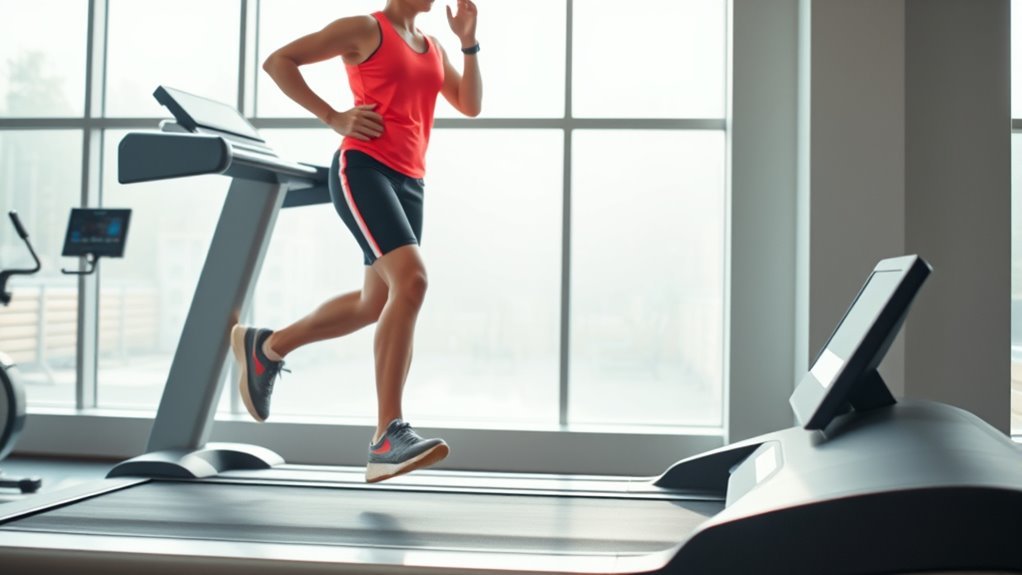
Keep your posture upright, look straight ahead, and swing your arms naturally for balance. This helps you maintain good form and reduces the risk of injury while running. Moving your arms naturally also boosts your momentum and keeps you steady.
After your run, gradually slow down to a walk to cool off, then step off to stretch your legs and help recovery. Cooling down properly is important to prevent muscle stiffness and improve flexibility.
If you stick with these basics, you’ll build a solid routine and avoid common mistakes. Just keep it simple and consistent!
Key Takeaways
- Start by inspecting the treadmill, setting the incline flat, and securing the safety clip to your clothing.
- Power on the treadmill and step onto the stationary belt before gradually increasing to a comfortable running speed.
- Maintain proper running form: keep your head up, shoulders relaxed, arms swinging naturally, and land softly mid-foot.
- Begin slow to let your body adjust, avoiding sudden speed increases, and find a pace that feels manageable yet challenging.
- After running, cool down by walking for 5 minutes, then stretch key muscles like calves, hamstrings, and quadriceps.
Prepare Your Treadmill and Set Your Pace
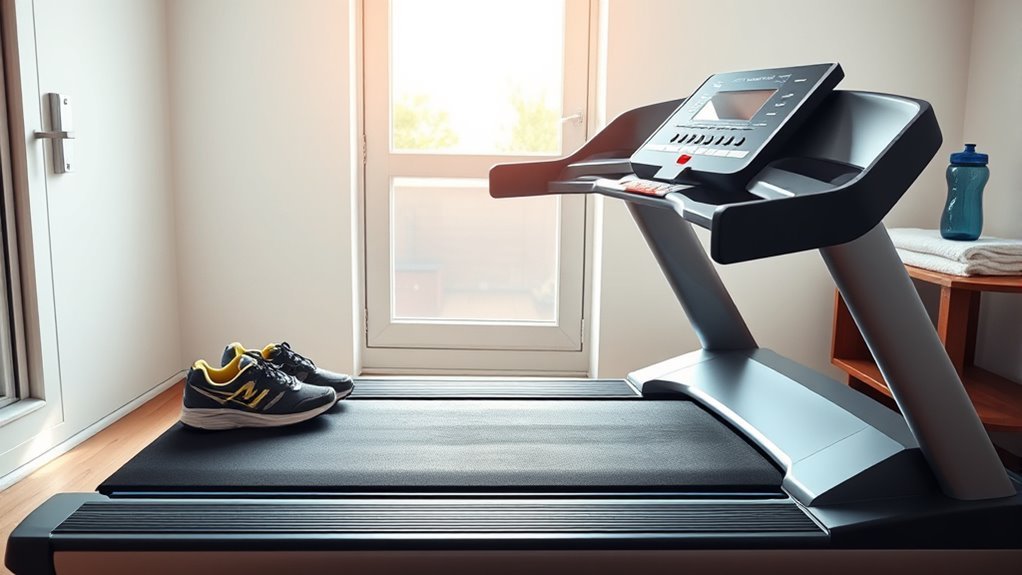
Before you start running, make sure you prepare your treadmill properly and set a comfortable pace. Begin by checking the treadmill’s belt for any debris or damage.
Prepare your treadmill by inspecting the belt and setting a pace that feels comfortable before running.
Adjust the incline to your preference, usually starting flat to get warmed up. Next, secure the safety clip to your clothing—it’s vital for stopping the machine quickly if needed.
Power on the treadmill and step onto the belt while it’s stationary. Once you feel steady, gradually increase the speed until you find a pace that feels manageable but challenging.
Don’t rush this step; your body needs time to adjust. Starting too fast can cause discomfort or injury. Setting the right speed ensures a productive, enjoyable workout right from the start.
Maintain Proper Running Form

Although running on a treadmill might feel straightforward, maintaining proper form is essential to prevent injury and maximize efficiency. Keep your head up and look straight ahead, avoiding the temptation to stare down at your feet.
Relax your shoulders and let your arms swing naturally by your sides, bending your elbows at about 90 degrees. Maintain an upright posture with a slight forward lean from your ankles, not your waist.
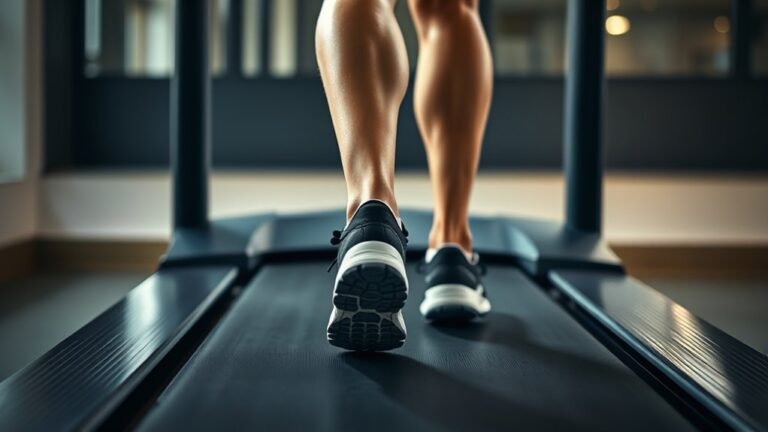
Land softly on the middle of your foot to reduce impact and push off smoothly with your toes. Avoid overstriding, which can cause strain.
Staying mindful of your form helps you run more comfortably and effectively, making your treadmill sessions safer and more productive.
Cool Down and Stretch After Running
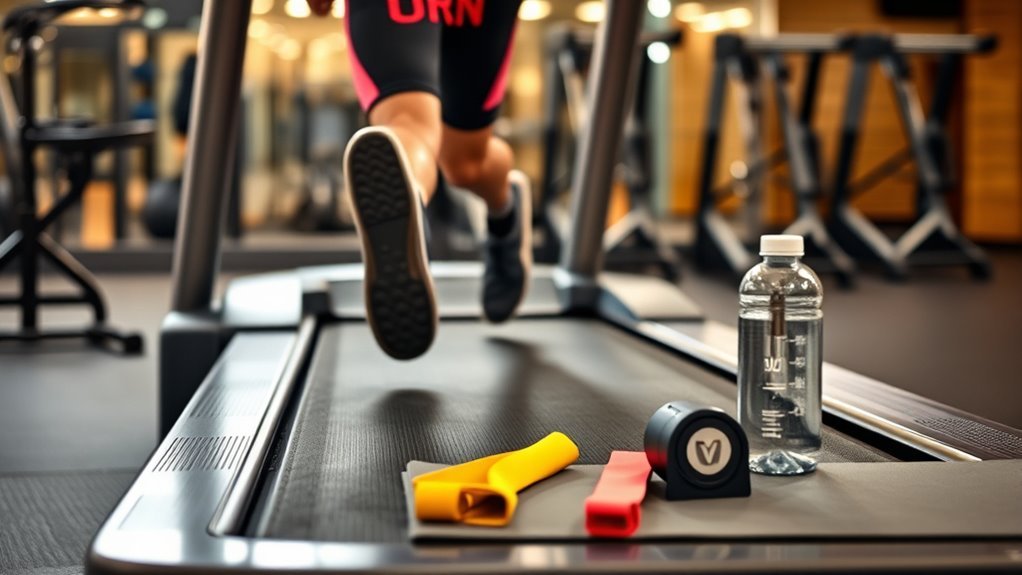
Once you finish your treadmill run, taking time to cool down and stretch helps your body recover and reduces muscle stiffness. Slow your pace to a walk for about 5 minutes to gradually lower your heart rate and prevent dizziness.
After that, step off the treadmill and focus on stretching key muscles like your calves, hamstrings, quadriceps, and hip flexors. Hold each stretch for 15 to 30 seconds without bouncing. Stretching improves flexibility and helps prevent injuries.
Remember to breathe deeply and relax during each stretch. Cooling down and stretching also aids in flushing out lactic acid buildup, reducing soreness. Make this routine a habit after every run to keep your muscles healthy and ready for your next workout.
Frequently Asked Questions
How Often Should I Clean My Treadmill?
You should clean your treadmill at least once a week to keep it running smoothly. Wipe down the belt and console regularly.
Also, don’t forget to vacuum around the motor. This helps keep dust and debris from building up.
Every few months, make sure to lubricate the deck. It’s a simple step that can prevent wear and tear and extend your treadmill’s life.
Can Running on a Treadmill Help With Weight Loss?
Imagine Sarah, who lost 15 pounds running 30 minutes daily on a treadmill. Yes, you can shed weight by burning calories consistently.
Just keep your pace steady, combine with good nutrition, and stay committed for results. It’s all about sticking with it!
What Shoes Are Best for Treadmill Running?
You’ll want cushioned running shoes with good arch support and a snug fit for treadmill running.
Look for lightweight, breathable materials to keep your feet comfortable. This also helps reduce impact on your joints during your workout.
How Do I Avoid Boredom While Treadmill Running?
You can avoid boredom by mixing up your speed and incline. Listening to music or podcasts also helps keep your mind engaged.
Watching shows or setting goals can make your treadmill time fly by. Changing your routine keeps things fresh.
Plus, it makes treadmill time more enjoyable and motivating. Give it a try and see how much better your workouts feel!
Is It Safe to Run on a Treadmill Every Day?
Running on a treadmill every day can be safe if you listen to your body’s signals like a compass. You’ll want to mix in rest and vary intensity to avoid overuse injuries and keep your muscles happy.
It’s all about balance. Don’t push too hard every day, and give yourself time to recover. That way, you can enjoy your treadmill workouts without risking injury.
Conclusion
Now that you know how to run on a treadmill in three easy steps, you can confidently hit your workout goals indoors. Many believe treadmill running feels unnatural, but with proper form and pacing, it can mimic outdoor running perfectly.
Just remember to prepare your machine, keep your posture aligned, and finish with a cool down and stretch.
You’ll find treadmill running not only effective but also enjoyable and convenient, no matter the weather outside. Whether you’re aiming for endurance, speed, or weight loss, running on a treadmill is a great way to stay consistent with your fitness routine. So lace up, step on, and enjoy the benefits of treadmill running right at home or in the gym!