How Many Calories Do You Burn on a Vibration Plate?
You burn about 90 to 150 calories in a 30-minute vibration plate workout by activating multiple muscle groups through rapid vibrations. Your body weight, workout intensity, and the types of exercises you perform all influence how many calories you torch.
Using a vibration plate engages your muscles differently than traditional workouts, making it a unique way to burn calories and tone up.
Standing still on the plate burns fewer calories, but add moves like squats or lunges, and you’ll boost the count significantly.
While vibration plates help tone muscles and improve circulation, keep in mind they typically burn fewer calories than running or cycling. So, if calorie burn is your main goal, combining vibration workouts with cardio might be your best bet.
Keep going, and you’ll discover how to maximize these benefits safely and effectively. It’s all about finding what works for you and sticking with it!
Key Takeaways
- A typical 30-minute vibration plate workout burns about 90–150 calories depending on intensity and exercises performed.
- Standing still on a vibration plate burns roughly 50–70 calories in 30 minutes.
- Performing squats or lunges on the plate increases calorie burn to approximately 90–140 calories per 30 minutes.
- Body weight, workout duration, and vibration frequency significantly affect the total calories burned.
- Vibration plate workouts burn fewer calories than intense cardio but improve muscle activation, circulation, and balance.
Understanding Vibration Plate Technology
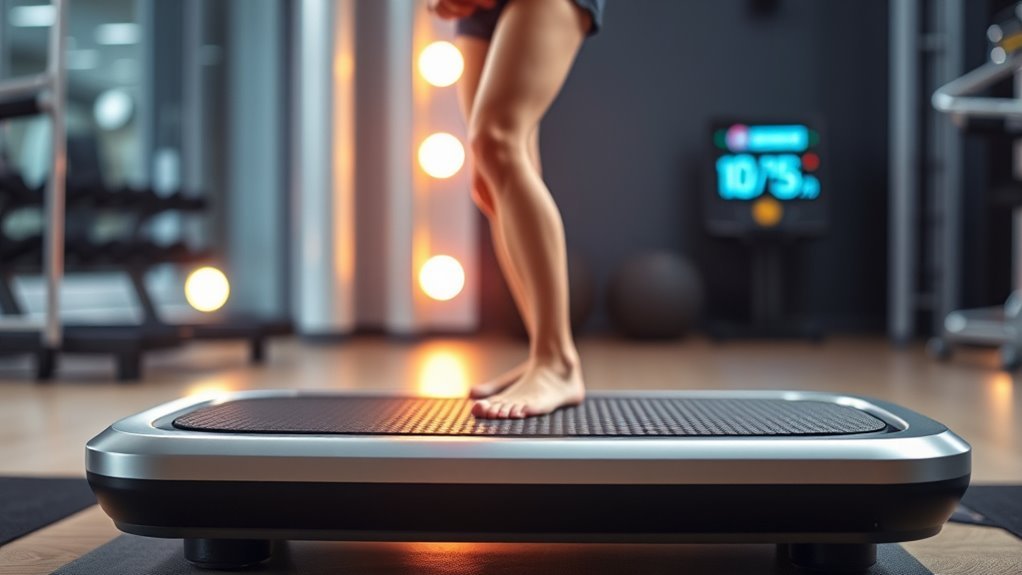
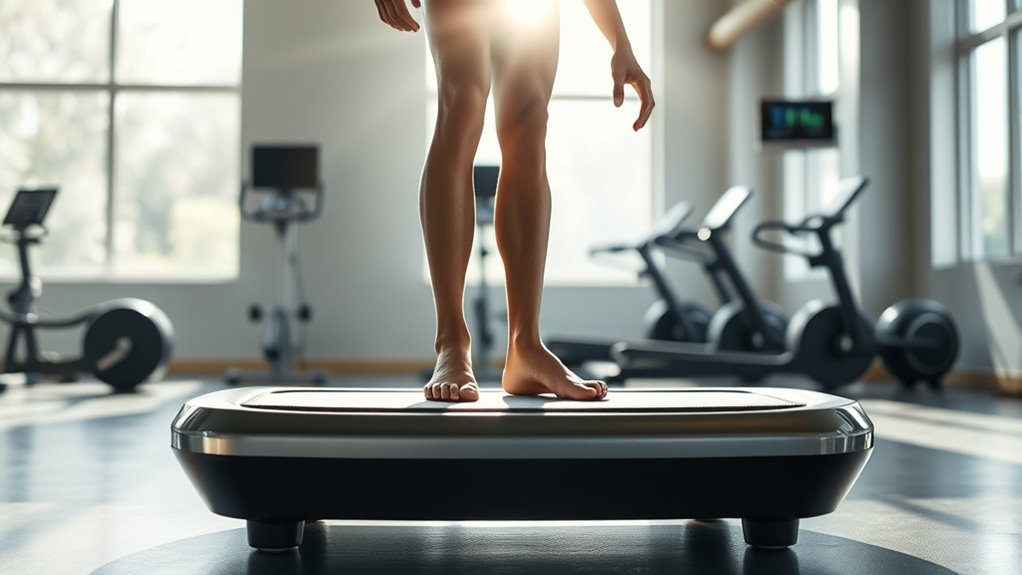
Although vibration plates might seem simple, they use advanced technology to stimulate your muscles through rapid oscillations. When you stand or perform exercises on the platform, the plate vibrates at specific frequencies, creating subtle movements that your body responds to.
This technology is designed to engage multiple muscle groups simultaneously, improving circulation and enhancing muscle tone. You’ll find that vibration plates often allow you to adjust settings like speed and amplitude, tailoring the intensity to your fitness level.
The machine’s ability to generate consistent, controlled vibrations sets it apart from traditional workouts, offering a unique way to engage your body. Understanding this technology helps you appreciate how these plates can complement your exercise routine effectively.
How Vibration Plates Influence Muscle Activation
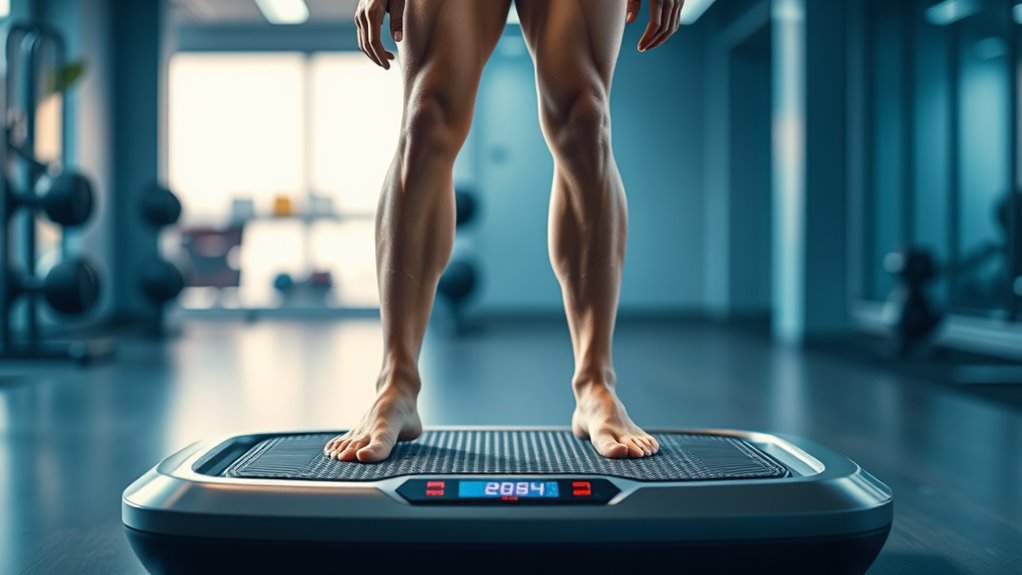
The rapid oscillations generated by vibration plates don’t just create movement—they actively engage your muscles in ways traditional exercises might not. When you stand or perform exercises on the plate, these vibrations cause your muscles to contract and relax rapidly, triggering a reflex called the tonic vibration reflex.
This reflex forces your muscle fibers to activate more frequently and intensely, even in muscles you might not usually target. As a result, your body works harder to maintain balance and stability, increasing overall muscle activation.
This enhanced engagement can lead to improved muscle strength and endurance over time. So, when you use a vibration plate, you’re not just moving—you’re stimulating your muscles to work harder, maximizing your workout efficiency.
Factors Affecting Calorie Burn on a Vibration Plate
When you step onto a vibration plate, several factors influence how many calories you burn during your session. Your body weight plays a major role; heavier individuals typically burn more calories.
The intensity and frequency settings of the vibration plate also matter—higher frequencies and amplitudes increase muscle activation and energy expenditure. The duration of your workout directly affects total calorie burn, so longer sessions generally lead to more calories burned.
Your posture and the exercises you perform on the plate can either boost or limit calorie expenditure. Additionally, your fitness level impacts efficiency; if you’re more conditioned, you might burn fewer calories as your body adapts.
Finally, factors like age and metabolism influence how effectively your body uses energy during vibration plate workouts. So, all these things together determine just how much energy you’ll use while standing on that plate!
Comparing Calorie Burn: Vibration Plates vs. Traditional Exercise
When you use a vibration plate, you might burn fewer calories compared to traditional exercises like running or cycling. Vibration plates typically estimate calorie burn based on muscle activation, but traditional workouts often engage more muscle groups and sustain higher intensity.
So, if you’re looking to torch a lot of calories quickly, running or cycling might give you more bang for your buck. But vibration plates can still be a good option, especially for muscle activation and recovery.
Understanding these differences can really help you choose the best method to meet your fitness goals. It’s all about what works best for your body and lifestyle!
Vibration Plate Calorie Estimates
Although vibration plates offer a convenient workout option, you might wonder how their calorie burn stacks up against traditional exercises. On average, using a vibration plate burns about 100 to 150 calories in 30 minutes, depending on your intensity and body weight.
These machines stimulate muscle contractions, boosting metabolism and calorie expenditure, but the total burn tends to be lower than many cardio workouts. So, while they’re helpful, don’t expect them to replace your regular cardio sessions entirely.
Here’s what influences your calorie burn on a vibration plate:
- Duration of your session
- Intensity and frequency settings
- Your body weight and composition
- Type of exercises performed on the plate
- Muscle engagement during vibration
Keep these factors in mind to maximize your results with vibration plate workouts. It’s all about how you use it, really!
Traditional Exercise Calorie Burn
Since you want to understand how vibration plates compare to more traditional workouts, it’s important to look at the calorie burn from exercises like running, cycling, or swimming. Traditional exercises typically burn more calories per hour due to continuous, high-intensity movement.
You’ll find that running or swimming engages large muscle groups and elevates your heart rate more consistently than vibration plates. Here’s a quick comparison to give you perspective:
| Exercise | Calories Burned (per hour) |
|---|---|
| Running (6 mph) | 600 |
| Cycling (12 mph) | 500 |
| Swimming | 400 |
While vibration plates offer benefits like muscle activation and improved circulation, traditional exercises generally help you burn more calories. So, if weight loss and cardiovascular health are your goals, traditional workouts might be a better bet.
Typical Calorie Burn Estimates for Vibration Plate Workouts
You can expect to burn around 100 to 200 calories during a typical 30-minute vibration plate workout, but this varies based on factors like intensity and body weight. Your effort level and the specific exercises you perform will impact how many calories you burn.
Let’s also compare these numbers with other forms of exercise to see where vibration plates stand. It’s always good to know how it stacks up against your usual workout!
Average Calorie Burn
When you step onto a vibration plate, you might wonder how many calories you can realistically burn during a session. On average, you can expect to burn between 90 and 150 calories in a 30-minute workout.
This range varies based on the intensity and exercises you perform. To give you a clearer idea, here’s what you might burn during different activities on a vibration plate:
- Standing still: around 50-70 calories per 30 minutes
- Light exercises (e.g., squats): 90-120 calories
- Moderate exercises (e.g., lunges, push-ups): 110-140 calories
- High-intensity intervals: up to 150 calories
- Combined strength and balance routines: 100-130 calories
These estimates provide a practical snapshot of what to expect from your vibration plate workouts. Pretty handy, right? It helps you plan your sessions better!
Factors Affecting Burn Rate
Calorie burn on a vibration plate isn’t fixed—it shifts based on several factors. Your weight plays a big role: heavier individuals tend to burn more calories because their bodies work harder to stabilize during vibrations.
The intensity and duration of your session also matter; higher frequencies and longer workouts increase calorie expenditure. Your muscle engagement affects burn rate too—actively performing exercises on the plate, like squats or lunges, boosts calorie burn compared to just standing still.
Additionally, your fitness level influences how many calories you burn; if you’re new to vibration training, your body might burn more as it adapts. Finally, your metabolism and age impact results, with younger, faster metabolisms typically burning calories more efficiently during sessions.
Comparison With Other Exercises
Although vibration plate workouts can effectively boost your calorie burn, they typically don’t match the expenditure levels of more intense exercises like running or cycling.
When you compare calorie burn, vibration plates usually fall into a moderate range, making them a good option for low-impact exercise or recovery days.
Here’s a quick comparison of typical calorie burn estimates per 30 minutes:
- Vibration plate: 90-150 calories
- Walking (moderate pace): 120-180 calories
- Cycling (moderate intensity): 210-310 calories
- Running (6 mph): 300-450 calories
- Swimming (moderate effort): 250-350 calories
Maximizing Calorie Expenditure on a Vibration Plate
How can you boost the number of calories you burn on a vibration plate? Start by increasing the workout intensity. Use higher vibration frequencies and amplitudes to engage more muscle fibers.
Combine the vibration with active movements like squats, lunges, or push-ups to further challenge your body. Incorporate intervals by alternating between intense effort and brief rest periods to keep your metabolism elevated.
Also, extend your session duration gradually, but avoid overdoing it to prevent fatigue. Maintaining proper posture and engaging your core enhances effectiveness and calorie burn.
Ultimately, consistency is key—regular sessions help improve muscle tone and metabolic rate, leading to greater calorie expenditure over time. By applying these strategies, you’ll maximize the benefits of your vibration plate workouts efficiently.
Potential Benefits Beyond Calorie Burning
While focusing on burning calories is important, vibration plates offer a range of other benefits that can enhance your overall fitness and well-being. Using one regularly can improve muscle strength by activating deeper muscle fibers.
Vibration plates do more than burn calories—they boost muscle strength by engaging deeper muscle fibers.
It also boosts circulation, which helps with recovery and reduces muscle soreness. You might notice better balance and coordination as your body adapts to the vibrations.
Plus, vibration plates can aid in increasing bone density, supporting long-term joint health. Ultimately, they promote relaxation and stress relief, making your workout more enjoyable.
- Enhances muscle strength and tone
- Improves blood circulation
- Boosts balance and coordination
- Increases bone density
- Promotes relaxation and reduces stress
These perks make vibration plates a versatile addition to your fitness routine.
Safety Tips and Best Practices for Vibration Plate Use
Because vibration plates deliver intense muscle activation, you should follow safety tips to prevent injury and get the most from your workouts. Start by consulting your doctor, especially if you have health conditions like heart issues or joint problems.
Always wear comfortable, supportive shoes to protect your feet and maintain balance. Begin with short sessions—around 5 to 10 minutes—and gradually increase time as your body adapts.
Maintain proper posture: keep your knees slightly bent and core engaged to reduce strain. Avoid locking your joints or standing stiffly.
Stay hydrated and listen to your body; stop if you feel dizzy or uncomfortable. Finally, combine vibration plate exercises with regular strength and cardio workouts for balanced fitness and better calorie burn results.
Frequently Asked Questions
Can Vibration Plates Help Improve Bone Density?
Yes, vibration plates can help improve bone density by stimulating bone cells through mechanical vibrations. This stimulation encourages bone growth and strength.
You’ll enhance bone strength and reduce osteoporosis risk, especially when combined with weight-bearing exercises. Plus, a balanced diet rich in calcium and vitamin D really helps too.
Are Vibration Plates Suitable for Elderly Users?
Yes, vibration plates can be suitable for elderly users if you use them carefully. They help improve balance and muscle strength.
But you should start slow, consult your doctor, and guarantee proper supervision to avoid injury. It’s really important to take it step by step and make sure you’re safe while using the equipment.
How Often Should I Clean My Vibration Plate?
You should clean your vibration plate at least once a week to keep it in top shape. Studies show regular cleaning reduces bacteria by 99%.
This means you’ll have a safe, hygienic workout environment every time you use it. Keeping it clean is easier than you might think, too! Just a quick wipe down does the trick.
Can Vibration Plates Reduce Cellulite?
Yes, vibration plates can help reduce cellulite by improving circulation and stimulating muscle contractions.
If you use them consistently along with a healthy diet and exercise, you’ll likely see smoother, firmer skin over time.
It’s all about combining good habits and being patient with the process. Keep at it, and the results can really show!
Do Vibration Plates Require Special Footwear?
You don’t need special footwear for vibration plates, but wearing comfortable, flat-soled shoes helps with stability and grip.
Avoid high heels or slippery socks to prevent slipping and make sure you get the most out of your workout safely.
It’s all about keeping steady and safe while you exercise, so choose shoes that feel good and keep you balanced.
Conclusion
Picture yourself standing on a vibration plate, muscles trembling as tiny pulses ripple through your body. While it won’t torch calories like a full-on run, it still boosts your muscle activity and revs up your metabolism.
By combining it with other exercises and staying consistent, you can maximize your calorie burn and enjoy added benefits. Just remember to stay safe and listen to your body as you power through each session.
Using a vibration plate can be a great way to enhance your workout routine and increase calorie burn. It activates muscles more intensely than regular standing, which helps boost your metabolism over time. However, to really burn calories effectively, it’s best to pair vibration training with cardio or strength exercises.
Consistency is key here. When you stick with it regularly, vibration plate workouts contribute to your overall calorie expenditure and fitness goals. So, keep moving, stay safe, and let that vibration plate add a little extra burn to your day!