How Many Calories Do You Burn on a Vibration Plate
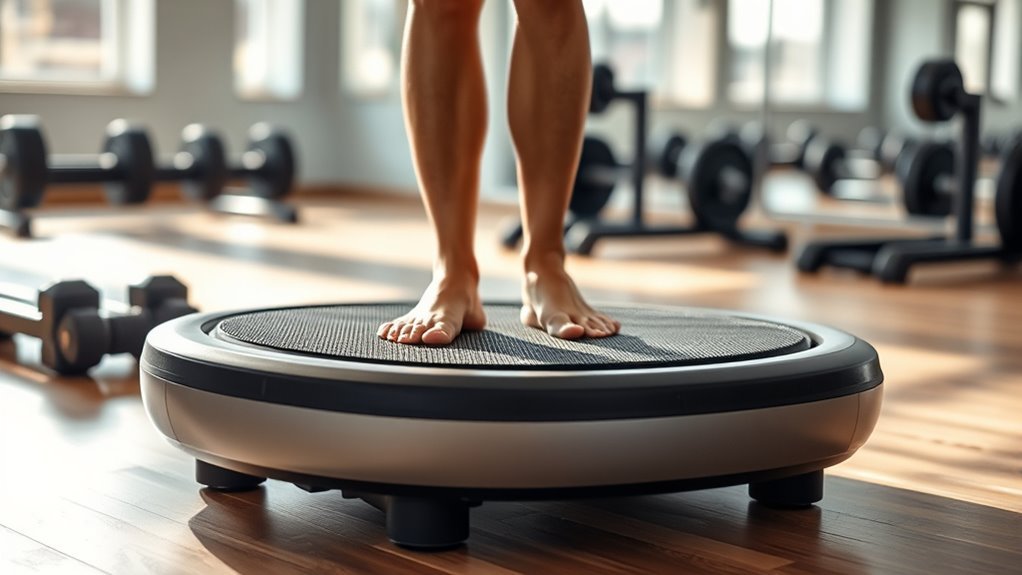
You can burn roughly 90 to 200 calories during a vibration plate workout, depending on your weight, session length, and intensity. These vibration plates activate muscles through rapid oscillations, causing involuntary contractions that enhance strength and circulation with less effort.
While they don’t burn as many calories as running or cycling, vibration plates offer unique benefits for muscle tone and recovery.
If you want to get the most out of your vibration plate sessions and understand how they compare to other exercises, keep exploring.
Key Takeaways
- A typical 15-30 minute vibration plate session burns approximately 90 to 200 calories depending on weight and intensity.
- Heavier individuals and higher vibration settings generally increase calorie expenditure on the vibration plate.
- Keep in mind, vibration plates burn fewer calories than traditional cardio exercises like running or cycling.
- But if you add dynamic exercises like squats or lunges on the vibration plate, you can boost calorie burn significantly.
- Consistent effort, longer sessions, and proper posture really help maximize calorie burn during vibration plate workouts.
- So, staying committed and using good form makes a big difference!
Understanding Vibration Plate Technology
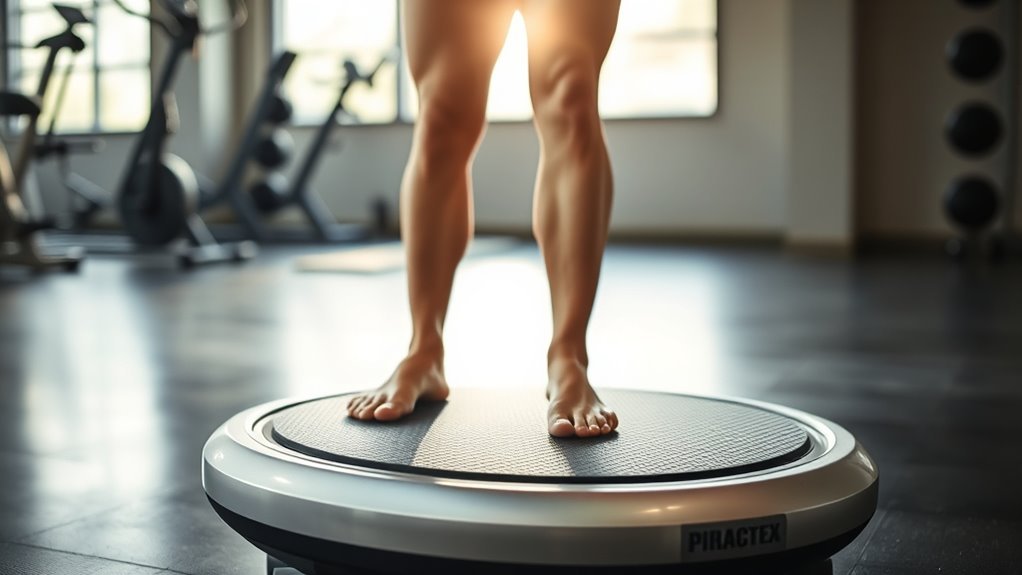
Although vibration plates might seem like simple exercise machines, they use advanced technology to stimulate your muscles through rapid vibrations. When you stand, sit, or perform exercises on the plate, it generates mechanical oscillations that cause your body to experience quick, small movements.
These vibrations engage your muscles to maintain balance and stability, which increases muscle activity even when you’re not moving much. The technology behind these plates varies—some use vertical vibrations, while others add side-to-side or oscillating motions to target muscles differently.
The intensity and frequency can usually be adjusted, allowing you to customize your workout. By understanding this technology, you’ll better appreciate how vibration plates serve as more than just passive platforms—they actively create a unique exercise environment for your body.
How Vibration Plates Activate Muscles
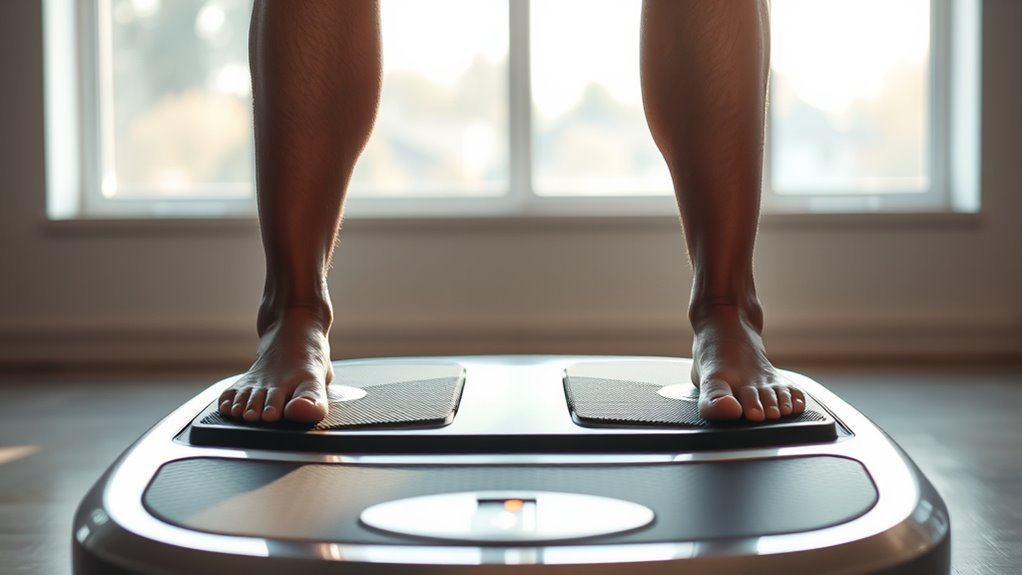
When you stand on a vibration plate, the rapid movements force your muscles to contract reflexively to keep you balanced. These involuntary muscle contractions happen multiple times per second, engaging both your fast-twitch and slow-twitch muscle fibers.
This constant activation helps improve muscle strength, tone, and endurance without requiring you to consciously flex or strain. Your body responds to the vibrations by stabilizing itself, which activates core muscles and smaller stabilizer muscles often neglected in regular workouts.
This stimulation also increases blood flow and enhances neuromuscular efficiency, meaning your muscles communicate better with your nervous system. By activating muscles this way, vibration plates provide a unique workout stimulus, making your muscles work harder in a short time.
All of this contributes to overall muscle engagement and potential calorie expenditure. So, it’s like getting a good workout, even without thinking too much about it.
Factors Influencing Calorie Burn on Vibration Plates
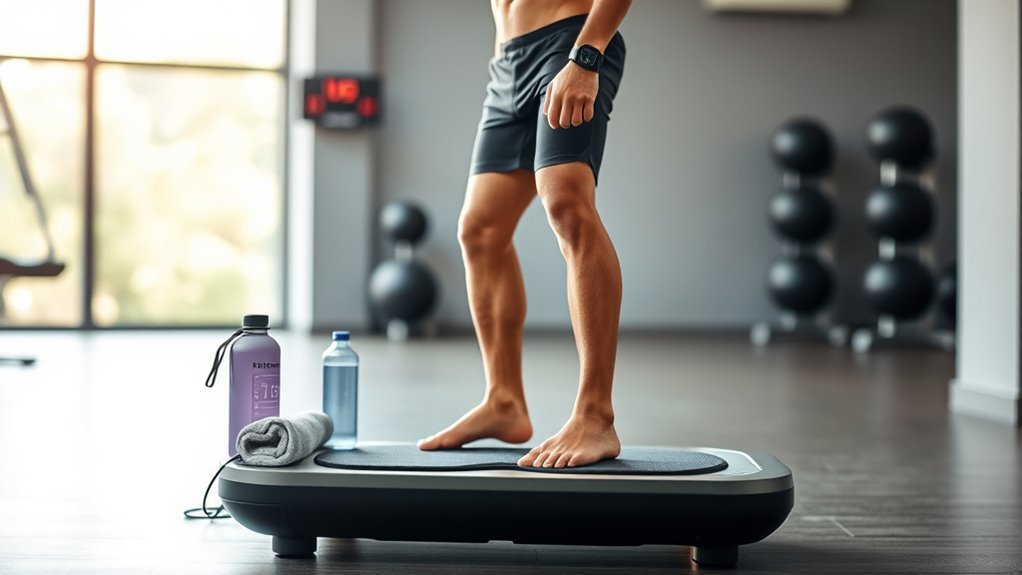
You’ll burn calories differently depending on your body composition, as muscle mass affects how much energy you use. The intensity of your workout on the vibration plate also plays a big role in calorie burn.
Plus, the longer your session lasts, the more calories you can expect to torch. So, it’s not just about hopping on the plate; how hard and how long you work out really matters!
Body Composition Effects
Because your body composition directly affects how many calories you burn on a vibration plate, understanding your muscle-to-fat ratio is key. Muscle tissue requires more energy to maintain than fat, so if you have a higher percentage of muscle, you’ll naturally burn more calories during your session.
Fat is less metabolically active, meaning it doesn’t contribute as much to calorie expenditure. Additionally, denser muscles respond more effectively to the vibrations, increasing muscle contractions and energy use.
Your metabolic rate also ties into body composition; those with more muscle typically have a higher resting metabolic rate, further boosting calorie burn even after your workout ends. Knowing your body composition helps you tailor your vibration plate workouts for maximum efficiency and results.
Exercise Intensity Levels
Although vibration plates can boost calorie burn, the intensity of your exercises plays a crucial role in determining how many calories you actually burn.
High-intensity exercises engage more muscles and increase heart rate, resulting in greater energy expenditure. Lower-intensity movements still help but lead to fewer calories burned.
You can adjust intensity by changing vibration frequency, exercise complexity, and muscle engagement.
| Intensity Level | Vibration Frequency (Hz) | Estimated Calories Burned (per 10 min) |
|---|---|---|
| Low | 15-20 | 30-50 |
| Moderate | 20-30 | 50-80 |
| High | 30-40 | 80-120 |
| Very High | 40+ | 120+ |
Focus on increasing intensity to maximize calorie burn effectively. It’s all about pushing yourself a bit more to get the best results.
Session Duration Impact
Adjusting exercise intensity on a vibration plate definitely influences how many calories you burn, but the length of your session also plays a significant role. The longer you stay active on the plate, the more energy your body expends.
However, longer sessions don’t always mean higher calorie burn if your intensity drops. It’s vital to maintain consistent effort throughout.
Start with shorter sessions, around 10-15 minutes, and gradually increase as your endurance improves. Keep in mind that fatigue can reduce effectiveness, so balance duration with quality.
Overdoing it might lead to diminishing returns or injury. Ultimately, aim for sessions long enough to challenge your muscles but short enough to keep your form and intensity sharp, ensuring you maximize calorie burn efficiently.
Average Calories Burned During a Vibration Plate Session
When you use a vibration plate, the number of calories you burn depends on factors like session length, intensity, and your body weight.
On average, a 15-30 minute session can burn between 90 to 200 calories. Higher intensity and longer durations increase the calorie burn.
Your body weight also plays a key role—heavier individuals tend to burn more calories. Below is a quick reference for average calorie burn:
| Body Weight (lbs) | Session Length (min) | Calories Burned (avg) |
|---|---|---|
| 125 | 15 | 90 |
| 160 | 20 | 140 |
| 200 | 30 | 200 |
Keep in mind these are estimates; your results may vary based on your specific vibration plate settings and workout intensity. So, don’t be surprised if your calorie burn numbers are a bit different!
Comparing Vibration Plates to Traditional Exercise
You might wonder how the calories you burn on a vibration plate stack up against traditional exercise. It’s important to compare not just calorie burn but also how efficiently each method works for your fitness goals.
Let’s break down the differences so you can decide what fits your routine best. After all, what works well for one person might not be the best for another.
Calorie Burn Differences
Although vibration plates can boost muscle activation, they typically don’t burn as many calories as traditional exercises like running or cycling. You might find vibration plates convenient for light activity, but when it comes to calorie burn, they lag behind more intense workouts.
Here’s a quick comparison to help you understand the differences:
| Activity | Calories Burned (30 mins) |
|---|---|
| Vibration Plate | 90 – 150 |
| Walking (3 mph) | 120 – 140 |
| Cycling (moderate) | 210 – 310 |
| Running (6 mph) | 270 – 400 |
| Jump Rope | 300 – 450 |
As you can see, traditional exercises generally burn more calories in the same amount of time. So, they tend to be more effective if your goal is weight loss.
Exercise Efficiency Comparison
Since vibration plates engage muscles differently than traditional workouts, you might wonder how efficient they really are for burning calories and improving fitness. While vibration plates activate muscles through rapid oscillations, traditional exercises rely on continuous movement and resistance.
You’ll find that vibration plates can complement your routine but often don’t match the calorie burn of sustained cardio or strength training. However, they’re great for enhancing muscle activation and circulation with less joint strain.
Consider these differences:
- Vibration plates stimulate deep muscle fibers quickly
- Traditional workouts build endurance and cardiovascular health
- Vibration sessions tend to be shorter but intense
- Cardio exercises consistently burn more calories over time
In short, vibration plates are effective for muscle engagement but work best when combined with traditional exercise.
Benefits Beyond Calorie Burning
While burning calories is a key advantage, vibration plates offer several other benefits that can enhance your overall fitness and well-being. Using a vibration plate can improve your muscle strength and tone by stimulating muscle contractions more intensely than traditional exercises.
Vibration plates boost muscle strength and tone by intensifying muscle contractions beyond traditional workouts.
It also boosts your circulation, helping to deliver oxygen and nutrients more efficiently throughout your body. You’ll likely notice improved flexibility and balance, as the vibrations challenge your stabilizing muscles.
Additionally, vibration plates may aid in reducing muscle soreness and accelerating recovery after workouts. For those dealing with bone density concerns, regular use can promote bone health by encouraging bone growth.
These benefits make vibration plates a versatile tool that supports your fitness journey beyond just burning calories. So, it’s not just about the calories — there’s a lot more going on that can really help your body feel and perform better.
Tips to Maximize Calorie Expenditure on Vibration Plates
Beyond the additional health benefits, you can also focus on increasing the number of calories you burn using a vibration plate. To get the most out of your sessions, consider these tips.
First, incorporate dynamic exercises like squats or lunges to engage more muscles. Next, increase the vibration intensity gradually as your body adapts.
Also, extend your workout duration in short increments to boost calorie burn without overexertion. Finally, maintain proper posture to maximize muscle activation and prevent injury.
Here’s a quick checklist:
- Perform compound movements on the plate
- Adjust vibrations to challenge your muscles
- Gradually lengthen workout time
- Keep a strong, stable stance
Who Should Consider Using Vibration Plates for Fitness
If you’re looking for an effective way to enhance your fitness routine, vibration plates might be a great addition. You should consider using them if you want to improve muscle strength, increase circulation, or recover faster from workouts.
They’re especially useful if you have limited time for exercise or struggle with traditional workouts due to joint pain or mobility issues. Athletes can benefit from vibration plates to boost performance and speed up recovery.
However, if you’re pregnant, have a pacemaker, or suffer from specific health conditions, consult your doctor before starting. Ultimately, vibration plates can complement your fitness plan, but they work best combined with other exercises for overall health and calorie burning.
Frequently Asked Questions
Are Vibration Plates Safe for People With Joint Problems?
Yes, vibration plates can be safe if you have joint problems, but you should start slowly and consult your doctor first.
They’ll help guarantee the vibrations won’t worsen your condition or cause discomfort during use. Just take it easy at the beginning and listen to your body.
How Often Should I Clean My Vibration Plate?
Think of your vibration plate as a canvas—clean it after every use to keep it fresh and functional.
Wipe it down with a damp cloth and mild detergent weekly to prevent dust and sweat buildup. This helps ensure longevity and safety.
Can Vibration Plates Help Improve Bone Density?
Yes, vibration plates can help improve bone density by stimulating bone cells through mechanical vibrations.
If you use them regularly alongside weight-bearing exercises, you’ll enhance bone strength and reduce osteoporosis risk effectively.
It’s a great way to add variety to your routine and support your bones in a simple, low-impact way.
Do Vibration Plates Make Noise During Use?
Yes, vibration plates do make noise during use, but it’s usually a low hum or buzzing sound.
You can expect some vibration noise, but most models are designed to minimize it for a quieter workout experience. So, it’s not too distracting while you’re working out.
What Is the Average Lifespan of a Vibration Plate?
You can expect your vibration plate to last around 5 to 10 years with proper care. Regular maintenance and avoiding overuse will help it stay in good shape.
That way, you get the most out of your investment. Just keep an eye on how often you use it and give it some TLC now and then.
Conclusion
Using a vibration plate can feel like having a personal trainer shaking your muscles awake—literally! While it won’t torch calories as fast as running a marathon, it still activates your muscles and boosts your metabolism.
To get the most out of it, combine vibration sessions with traditional exercise and a healthy lifestyle. If you’re looking for a unique, low-impact way to burn calories and tone up, a vibration plate might just be your new best workout buddy!
In terms of calories burned, using a vibration plate typically burns fewer calories than more intense exercises, but it’s excellent for muscle activation and metabolic boost. So, if calorie burning is your goal, think of vibration plates as a helpful supplement—not the main event.
Overall, incorporating a vibration plate into your fitness routine can enhance your workout, improve muscle tone, and support weight management when paired with proper diet and exercise. It’s a convenient and low-impact option for those seeking to burn calories and tone muscles effectively.