How Much Do Common Bench Press Bar Weights Weigh?
Common bench press bars usually weigh between 33 and 45 pounds, depending on the type you use. If you’re wondering about bench press bar weights, it’s important to know that the standard Olympic bars typically weigh 45 pounds.
These bars are the most common in gyms and are great for general strength training.
Women’s bars are lighter, usually around 33 pounds, which makes them easier to handle for some lifters. Then, there are training or technique bars that can be much lighter, often ranging from 5 to 15 pounds.
These are perfect for beginners or those focusing on form.
Specialty and powerlifting bars can also vary within this weight range. The bar’s material and design play a big role in how it feels and performs during your workout.
Keep exploring to discover which bar suits your training goals best.
Key Takeaways
– Standard Olympic barbells for bench press typically weigh 45 pounds (20.4 kg) and measure about 7 feet in length.
They’re pretty much the go-to bar for most gym-goers and serious lifters alike.
– Women’s Olympic bench press bars generally weigh 33 pounds (15 kg), are slightly shorter, and have a smaller diameter than men’s bars.
This makes them easier to handle for those with smaller hands or less upper body strength.
– Training or technique bars weigh between 5 to 15 pounds, designed for beginners focusing on form rather than heavy lifting.
These bars help new lifters build confidence and perfect their technique without worrying about heavy weights.
– Powerlifting bench press bars usually weigh 44 pounds (20 kg) for men, adhering to strict competition standards for weight and dimensions.
These bars are built tough and made to meet specific rules in powerlifting competitions.
– Specialty bench press bars vary from 15 to 45 pounds depending on type, such as Swiss bars or cambered bars, tailored for specific training needs.
They’re great for targeting muscles differently or reducing strain on joints during lifts.
Standard Olympic Barbell Weight
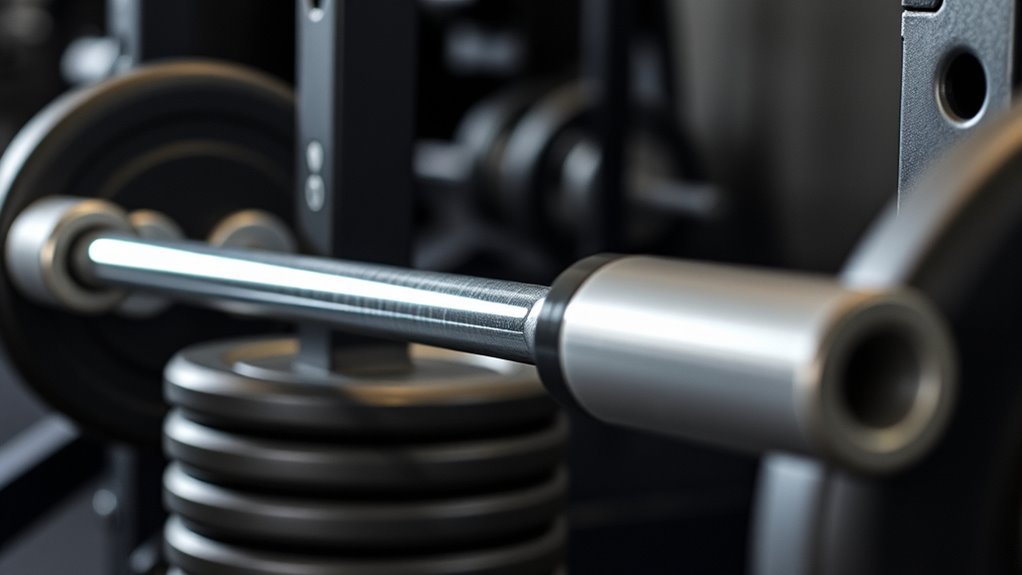
Although barbell weights can vary, the standard Olympic barbell typically weighs 45 pounds (20.4 kilograms). When you pick up this bar, you’ll notice it’s about 7 feet long with a 2-inch diameter sleeve designed to hold weight plates securely.
These bars are built to meet specific standards for strength and durability, ensuring they can handle heavy loads during your bench press sessions. Since the bar itself is 45 pounds, you need to account for that weight when calculating your total lift.
Whether you’re adding plates or just using the bar, knowing this baseline helps you track progress accurately. So, when you load up the bar, remember that the bar alone contributes a significant portion of the total weight you’re pushing.
Women’s Olympic Barbell Weight
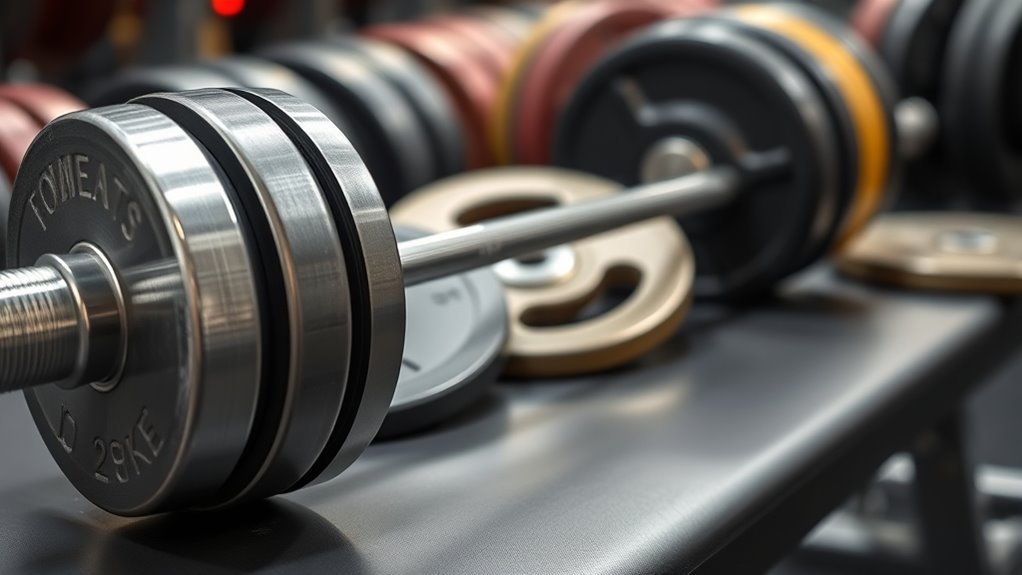
How much does a women’s Olympic barbell weigh compared to a standard bar? A women’s Olympic barbell typically weighs 15 kilograms (33 pounds), which is lighter than the standard men’s Olympic barbell that weighs 20 kilograms (44 pounds).
This difference makes the women’s bar more manageable if you’re newer to lifting or prefer a lighter bar for certain exercises. The women’s bar is also slightly shorter, around 6.5 feet in length, and has a smaller diameter of 25 millimeters compared to the men’s 28 millimeters.
That smaller diameter can actually affect your grip comfort. So, if you’re training with a women’s Olympic barbell, it’s important to recognize these weight and size differences. Doing so helps you accurately track your progress and ensures you maintain proper technique during your bench press workouts.
Training or Technique Bar Weight
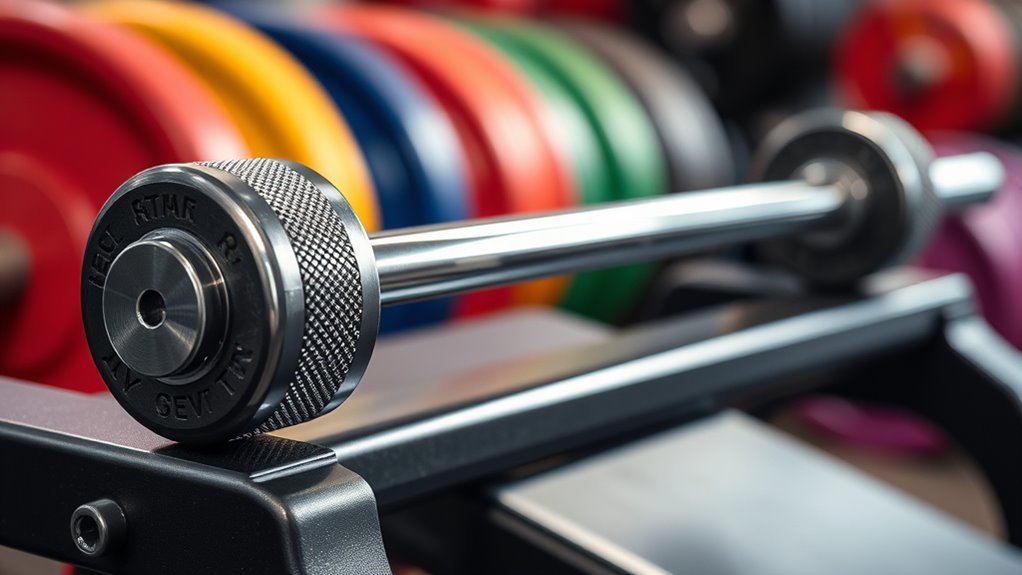
While women’s Olympic barbells offer a lighter option compared to standard bars, training or technique bars take weight considerations even further. These bars typically weigh between 5 to 15 pounds, notably less than the 45-pound standard bars.
Designed to help you perfect form and technique, they’re great for beginners or those rehabbing injuries. You’ll find they’re shorter and thinner, making them easier to handle and control.
Because they weigh less, you can focus purely on movement patterns without struggling against heavy resistance. Using a training or technique bar allows you to build confidence and muscle memory before moving on to heavier bars.
Powerlifting Barbell Weight
When you step into powerlifting, you’ll notice the barbell differs from standard gym bars in both weight and design. A powerlifting barbell typically weighs 20 kilograms (44 pounds) for men and 15 kilograms (33 pounds) for women.
These bars are designed to meet strict competition standards, featuring specific dimensions and stiffness to handle heavy loads without excessive whip. You’ll find knurling marks tailored for grip during the three lifts: squat, bench press, and deadlift.
The powerlifting bar’s sleeves rotate smoothly to reduce torque on your wrists during lifts. Unlike Olympic bars, powerlifting bars prioritize stiffness over flexibility, helping you maintain control under maximal weights.
Using the correct powerlifting bar guarantees you train and compete under consistent conditions. And that’s essential for accurate progress tracking and performance.
Specialty Bench Press Bars
When you’re exploring specialty bench press bars, you’ll find several types designed to target different muscle groups or improve your lift technique. Each bar comes with its own weight variations that can affect your overall workout.
Understanding these differences helps you choose the right bar for your training goals. It’s pretty handy to know what each bar offers before you make your pick.
Types of Specialty Bars
If you’re looking to target specific muscle groups or address mobility issues, specialty bench press bars offer unique designs that can enhance your training. These bars let you customize your lifts and reduce strain on joints.
Here are three common types:
- Cambered Bar – Features a dip in the middle, increasing range of motion and challenging your chest and shoulders differently.
- Swiss Bar (Football Bar) – Has multiple neutral grip handles, which reduce wrist strain and focus more on triceps and shoulders.
- Safety Squat Bar – Though primarily for squats, it can be used in bench variations; its padded handles help with grip and shoulder comfort.
Using these bars can diversify your routine and address specific training goals effectively. Give them a try to mix things up and keep your workouts fresh!
Weight Variations Explained
Although specialty bench press bars offer unique designs, their weights can vary considerably from standard bars. You might find bars weighing anywhere from 15 to 30 pounds, depending on their purpose and construction.
For example, a Swiss bar, designed to reduce shoulder strain, typically weighs around 25 pounds, which is heavier than the standard 20-pound barbell. Meanwhile, safety squat bars or cambered bars can weigh between 35 to 45 pounds due to added features like padding or bends.
When you choose a specialty bar, understanding its weight is vital for accurate loading and progress tracking. Always check manufacturer specifications before lifting, so you don’t overestimate or underestimate your total weight. This helps you train safely and effectively.
Fixed-Weight Bench Press Bars
Since you’re looking for simplicity and consistency, fixed-weight bench press bars offer a straightforward option. These bars have a set, unchanging weight, making it easier for you to track progress without guessing.
When you pick up a fixed-weight bar, you know exactly what you’re lifting every time.
Here’s what you’ll typically find with fixed-weight bench press bars:
- Standard Weight: Usually around 15 to 25 pounds, perfect for beginners or warm-ups.
- Integrated Plates: The weight plates are permanently attached, so you don’t have to add or remove them.
- Compact Design: These bars are often shorter and lighter than Olympic bars, making them easy to handle and store.
This consistency helps you focus purely on your form and reps.
Differences Between Commercial and Competition Bars
When you compare commercial and competition bench press bars, you’ll notice differences in their standard weights and materials. Competition bars often meet strict certification and regulation standards, while commercial bars vary more in construction.
Understanding these distinctions helps you choose the right bar for your training or event. So, whether you’re gearing up for a competition or just hitting the gym, knowing what makes each bar unique can really make a difference.
Standard Bar Weight Variations
Understanding the differences between commercial and competition bench press bars helps you choose the right equipment for your training or event. Standard bar weight variations mainly depend on their intended use.
You’ll find:
- Commercial Bars: Typically weigh around 20 kg (44 lbs), designed for gym use with some slight weight tolerance.
- Men’s Competition Bars: Usually set at 20 kg (44 lbs) but built to stricter standards, ensuring consistent weight and performance.
- Women’s Competition Bars: Lighter, generally 15 kg (33 lbs), tailored for female competitions to meet official regulations.
Knowing these weight standards guarantees you pick a bar that matches your strength level and competition requirements. This helps you train effectively and compete fairly.
Material and Construction Differences
Although both commercial and competition bench press bars share similar purposes, their materials and construction vary considerably to meet different performance standards and durability needs. When you pick up a commercial bar, it’s usually made from lower-grade steel or alloy, designed for general use and moderate weight loads.
These bars often have a thicker shaft and less aggressive knurling to prioritize comfort over grip. In contrast, competition bars use higher-grade steel, like stainless or chrome-molybdenum, offering greater tensile strength and flexibility.
They’re crafted with precise machining for tighter tolerances, thinner shafts for better whip, and sharper knurling to enhance grip during maximal lifts. So, when you choose between them, consider how construction impacts performance, feel, and longevity based on your lifting goals.
Certification and Regulation Standards
Since competition bars must meet strict certification and regulation standards, they undergo rigorous testing to guarantee consistency and safety during official events. When you choose a competition bar, you’re looking at equipment that’s been precisely calibrated to ensure fair play.
Commercial bars, on the other hand, don’t always follow these exacting standards, which can affect weight accuracy and durability.
Here’s what sets competition bars apart:
- Weight Tolerance: Competition bars stick to a narrow weight range, typically ±0.01 kg, so you know exactly what you’re lifting.
- Whip and Flexibility: They have tested flex characteristics to meet federation rules, giving you consistent performance.
- Knurling and Markings: Specific grip patterns and center knurling are standardized for safety and grip consistency.
When you train seriously, these standards matter. Choosing the right bar can make all the difference in your progress and performance.
How to Weigh Your Barbell Accurately
When you want to know the exact weight of your barbell, you’ll need to measure it carefully using a reliable scale. First, find a scale that can handle the barbell’s length and weight, such as a commercial gym scale or a sturdy floor scale.
Place the barbell on the scale evenly to avoid inaccurate readings caused by uneven weight distribution. Make sure the scale is calibrated correctly before weighing.
Ensure even placement on a calibrated scale for accurate barbell weight measurements.
If your barbell has removable sleeves or attachments, remove them to measure the bar alone. For added accuracy, weigh the barbell multiple times and average the results.
This process ensures you know the precise weight, helping you track your progress and load your bench press safely.
Frequently Asked Questions
How Often Should I Replace My Bench Press Bar?
You should replace your bench press bar when it shows signs of bending, rust, or worn knurling. This usually happens every few years, depending on how often you use it.
Make sure to check it regularly. That way, you’ll keep your workouts safe and your performance at its best.
What Maintenance Is Required for Bench Press Bars?
Oh, you don’t need to do anything—just let your bench press bar rust away!
But seriously, wipe it down after use, oil the sleeves, and check for damage regularly to keep it spinning smoothly and lasting longer.
Can Bench Press Bars Be Used for Other Lifts?
Yes, you can use bench press bars for other lifts like squats, overhead presses, and deadlifts. Just make certain the bar suits the exercise’s specific requirements and your safety needs before switching between movements.
It’s pretty handy to use one bar for multiple exercises, but always double-check that the bar can handle the load and movement pattern. Safety first, right?
Are There Safety Standards for Bench Press Bars?
Yes, there are safety standards for bench press bars. You’ll find they must meet specific strength and durability criteria set by organizations like the International Weightlifting Federation.
These standards are in place to guarantee your safety during lifts. So, when you’re choosing a bench press bar, it’s a good idea to check if it meets these requirements. That way, you can lift with confidence.
How Does Barbell Material Affect Performance?
Barbell material affects your grip, durability, and flex. Steel bars offer strength and slight whip, while aluminum is lighter but less durable.
Choosing the right material helps you lift safely and perform better during workouts. It’s all about finding what feels best and supports your goals.
Conclusion
Now that you know the different bench press bar weights, choosing the right one will be as easy as picking your favorite pair of shoes. Whether you’re lifting with a standard Olympic bar, a lighter women’s bar, or a specialty option, understanding their weights helps you train smarter and safer.
Remember to always weigh your bar accurately to track progress and avoid surprises. With this knowledge, you’re set to lift confidently and effectively every time. Knowing how much common bench press bar weights weigh is key to improving your workouts and preventing injury. So next time you hit the gym, you’ll be ready to pick the perfect bar and crush your goals with ease!