How Much Does a Standard Gym Bar Weigh?
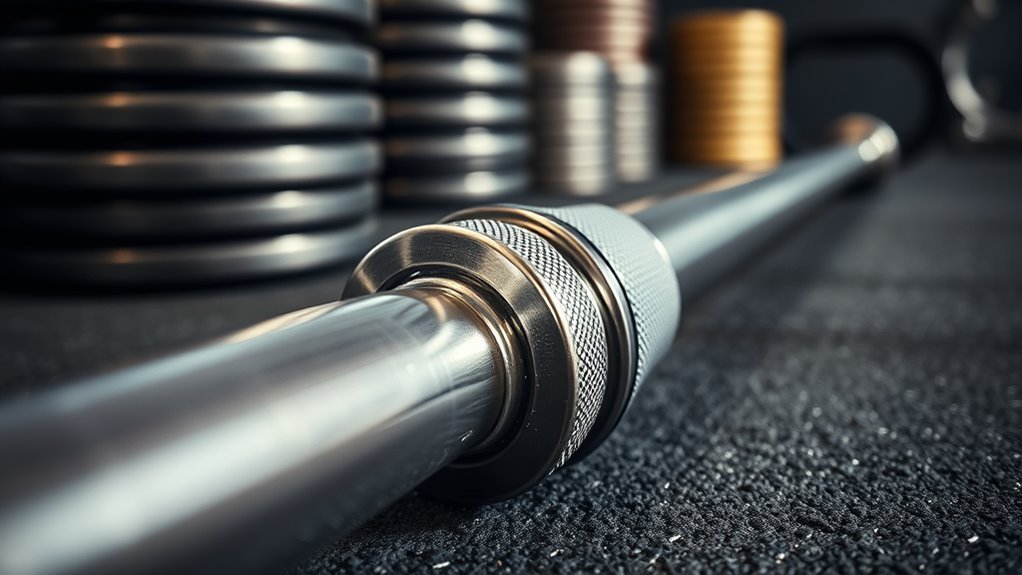
A standard gym bar usually weighs 45 pounds (20.4 kg), which is the common weight for Olympic barbells used in most gyms. Knowing the exact weight of a gym bar is important because it helps you keep track of your lifting progress accurately.
Plus, it ensures you’re adding the right amount of weight to avoid injury.
The men’s Olympic bar weighs exactly 20 kilograms (44 pounds), while the women’s version is a bit lighter at 15 kilograms (33 pounds). This difference helps accommodate different strength levels and training needs.
Understanding these weights lets you adjust your loads safely and effectively.
If you want to learn why bar weight matters and explore specialty bars, keep going. There’s more to gym bars than just their weight!
Key Takeaways
- A standard gym bar, typically an Olympic barbell, weighs about 45 pounds (20.4 kilograms). Women’s Olympic bars, on the other hand, weigh approximately 33 pounds (15 kilograms).
- Standard (non-Olympic) bars usually weigh between 15 and 25 pounds. These standard bars often have a 1-inch diameter and may lack rotating sleeves.
- Specialty bars can vary quite a bit in weight. But they commonly range from 45 to 55 pounds depending on the type. So, it really depends on what you’re using!
Dimensions and Design of a Standard Gym Bar
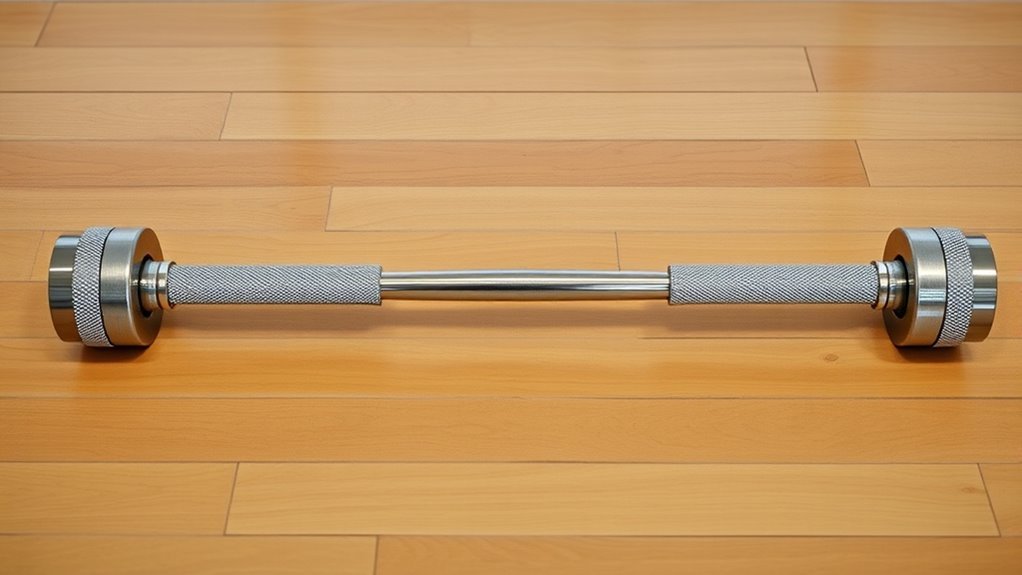
Although gym bars come in various styles, the standard gym bar typically measures about 7 feet long and weighs 45 pounds. When you handle one, you’ll notice its design balances durability with functionality.
The bar’s shaft usually has a diameter of around 28 millimeters, providing a comfortable grip without sacrificing strength. Knurling—the textured pattern etched into the bar—helps prevent slipping, so you can maintain control during lifts.
The sleeves, where you add weight plates, rotate smoothly to reduce strain on your wrists and elbows. This rotation is made possible by bearings inside the sleeves.
Weight of a Men’s Olympic Barbell
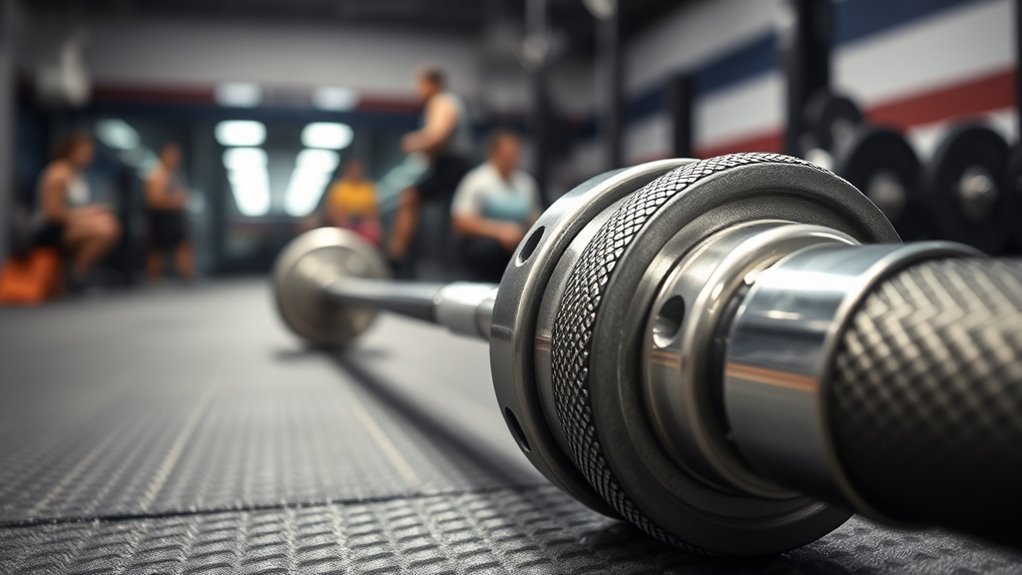
The standard gym bar’s 45-pound weight sets a baseline for many lifters, but when it comes to men’s Olympic barbells, the weight is slightly more specific. A men’s Olympic barbell typically weighs exactly 20 kilograms, which is about 44 pounds.
This precise weight is standardized by the International Weightlifting Federation (IWF) to ensure consistency in competitions worldwide. When you pick up a men’s Olympic bar, you’ll notice it’s designed for both durability and performance, balancing weight with grip and flexibility.
Knowing this helps you plan your training and track progress accurately. So, if you’re training for Olympic lifts or just want a reliable bar for heavy lifting, the men’s Olympic barbell’s 20-kilogram weight gives you a consistent, recognized standard to work with every time.
Weight of a Women’s Olympic Barbell
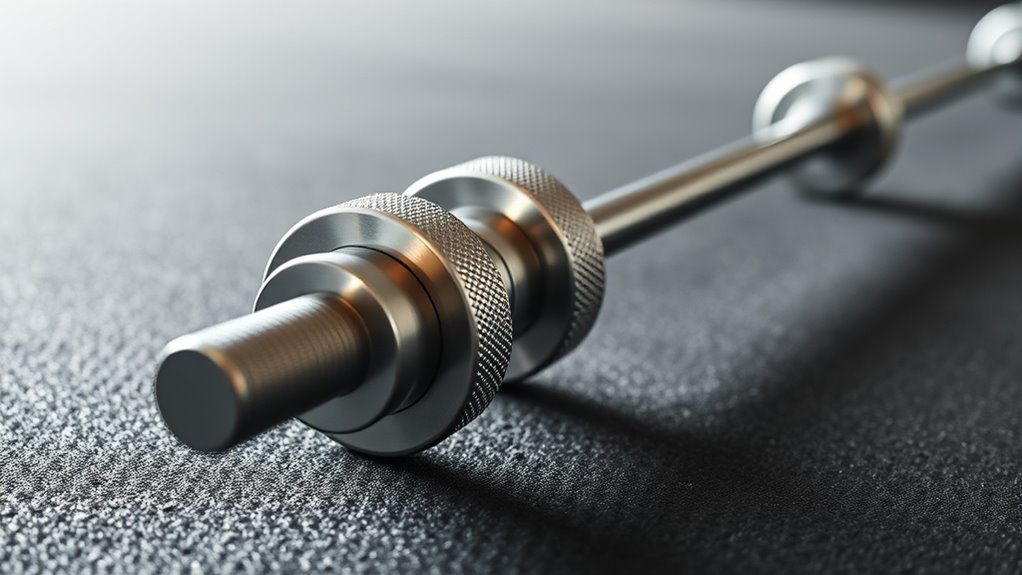
When you pick up a women’s Olympic barbell, you’ll notice it weighs 15 kilograms, slightly lighter than the men’s version. Its dimensions and specifications are designed for better grip and control, making it ideal for female athletes.
Understanding these features can help you decide if it suits your training needs and goals. It’s all about finding the right fit for your strength and comfort level.
Women’s Olympic Bar Weight
Since you’re exploring Olympic lifting options, you should know that a women’s Olympic barbell typically weighs 15 kilograms (33 pounds). This lighter weight makes it easier to handle while still meeting official competition standards.
The bar is designed to offer the same performance features as the men’s bar, including excellent whip and grip, but with reduced mass to accommodate female lifters. You’ll find these bars in many gyms and competitions, especially for those focusing on technique and gradual strength progression.
Using a women’s Olympic bar helps you train effectively without overloading your muscles prematurely. So, if you’re starting out or prefer a lighter bar for specific lifts, this bar weight strikes a good balance between challenge and manageability.
Dimensions and Specifications
Although you might focus on the weight of a women’s Olympic barbell, its dimensions and specifications play a crucial role in performance and comfort. Typically, this bar measures 6.6 to 6.8 feet (2.0 to 2.1 meters) in length, shorter than the men’s standard bar.
It weighs 33 pounds (15 kilograms), making it lighter and easier to handle. The bar’s diameter is usually 25 millimeters, slimmer than the men’s 28 millimeters, which helps you maintain a better grip.
Additionally, the bar features rotating sleeves to reduce wrist strain during lifts. The whip, or flexibility, of the bar is also designed to suit lighter weights.
Knowing these specs helps you choose the right bar for your training needs and enhances your lifting experience.
Common Usage and Benefits
Understanding the specifications of a women’s Olympic barbell sets the stage for appreciating its common uses and benefits.
Weighing 15 kilograms (33 pounds), it’s lighter than the men’s version, making it ideal for female lifters and beginners. You’ll find it perfect for Olympic lifts, powerlifting, and general strength training.
Its slightly shorter length and thinner grip enhance control and comfort, helping you build technique and confidence. Plus, the standardized weight guarantees consistency across competitions and gyms.
Here’s a quick look:
| Usage Type | Benefit |
|---|---|
| Olympic Weightlifting | Precision and control |
| Powerlifting | Balanced weight for strength |
| General Fitness | Accessible for all levels |
| Technique Training | Improves form and grip |
| Competitive Sports | Standardized for fairness |
This barbell supports your progress safely and effectively.
Differences Between Olympic and Standard Bars
When you compare Olympic and standard bars, you’ll notice key differences that affect their performance and suitability for various workouts.
Olympic bars are designed for heavy lifting and competitions, while standard bars suit casual and home gym use. Here’s what sets them apart:
- Weight: Olympic bars typically weigh 20 kg (44 lbs), whereas standard bars range from 15 to 25 lbs.
- Diameter: Olympic bars have a 2-inch sleeve diameter to fit Olympic plates; standard bars have a 1-inch diameter.
- Length: Olympic bars are longer, around 7 feet, providing more room for grip and plates.
- Sleeve Rotation: Olympic bars feature rotating sleeves for smoother lifts, reducing strain on your wrists and elbows, unlike standard bars.
Knowing these differences helps you choose the right bar for your training needs. It’s all about matching the bar to what you want to achieve.
Specialty Bars and Their Typical Weights
Since specialty bars cater to specific training goals, their weights vary more than standard or Olympic bars. For example, a trap bar typically weighs between 45 and 55 pounds, designed to help you lift with a neutral grip.
A safety squat bar usually weighs around 55 pounds, offering extra padding and handles for comfort during squats. If you’re into powerlifting, you might use a deadlift bar, which is thinner and often weighs about 20 kilograms (44 pounds).
Meanwhile, a Swiss bar or football bar weighs roughly 25 kilograms (55 pounds) and allows you to target your muscles differently with angled grips. Knowing these weights helps you plan your workouts more effectively, especially when switching between bars for variety and specific muscle focus.
How Bar Weight Affects Your Workout
The weight of the bar directly influences how challenging your exercises feel and how much you can lift. You’ll need to modify your added weights to match your goals and guarantee steady progress.
Understanding this balance helps you optimize your workouts and avoid plateaus. It’s all about finding that sweet spot that pushes you without overdoing it. Keep adjusting, and you’ll see consistent gains.
Impact on Exercise Intensity
Although you might focus most on reps and sets, the weight of the gym bar plays a crucial role in determining your workout’s intensity. The bar’s mass directly influences how much effort you exert and how your muscles respond.
- Baseline Load: The bar sets your starting point; a heavier bar means more initial resistance.
- Energy Expenditure: Heavier bars demand more energy, increasing cardiovascular and muscular fatigue.
- Muscle Recruitment: More weight engages additional muscle fibers, enhancing strength and hypertrophy.
- Exercise Form: The bar’s weight affects your control and technique, impacting safety and effectiveness.
Adjusting Load for Progress
When you adjust the load during your workouts, the weight of the bar becomes a key factor in your progress. You might add plates thinking you’re increasing resistance, but forgetting the bar’s weight can lead to miscalculations.
Always account for the bar’s standard weight—usually 45 pounds for an Olympic bar—so you know your actual total load. This helps you track your strength gains accurately and avoid plateaus.
If you want to increase intensity gradually, start by adding small increments to the plates, keeping the bar’s weight in mind. This ensures steady progression without overloading too quickly.
Tips for Choosing the Right Barbell Weight
Choosing the right barbell weight depends on your fitness goals, experience level, and workout routine. To select effectively, consider these tips:
- Assess Your Strength: Start with a weight you can lift comfortably for 8-12 reps without compromising form.
- Match Your Goals: Use lighter weights for endurance and heavier ones for building strength or power.
- Progress Gradually: Increase weight in small increments to avoid injury and ensure steady progress.
- Consider Bar Types: Different bars vary in weight and grip; choose one suited to your exercise and comfort.
Measuring Your Gym Bar’s Weight at Home
Understanding the exact weight of your gym bar can help you track progress and tailor your workouts more effectively.
To measure your gym bar’s weight at home, start by checking for any stamped markings—many bars list their weight right on the shaft.
If not, you can use a bathroom scale. First, zero the scale, then carefully place the barbell on it, balancing it evenly to get an accurate reading.
If your scale isn’t wide enough, weigh the bar by measuring its weight in segments if possible or weigh yourself holding the bar and subtract your own weight.
Using these simple methods, you’ll know your bar’s weight precisely, allowing you to adjust your lifting routine with confidence.
Frequently Asked Questions
How Often Should I Replace My Gym Bar?
You should replace your gym bar when it shows signs of bending, rust, or damaged knurling.
Typically, inspect it every 6-12 months, especially if you use it frequently or drop heavy weights often.
Keeping an eye on these issues can help you stay safe and keep your workouts effective. If anything looks off, it’s probably time for a new bar.
Can a Gym Bar Bend Under Heavy Weight?
Oh sure, your gym bar’s just dying to bend under heavy weight!
Yes, it can bend if you push it too far.
Just don’t treat it like a spaghetti noodle—lift smart, and it’ll stay strong.
What Materials Are Standard Gym Bars Made From?
Standard gym bars are made from high-quality steel, often coated with chrome, zinc, or black oxide to prevent rust.
You’ll find some bars use stainless steel for durability, while others add knurling for better grip during lifts. It really depends on the type of bar and what it’s designed for.
How Do I Clean and Maintain My Gym Bar?
You don’t need a lab coat to clean your gym bar—just wipe it down with a damp cloth and mild soap.
Then, apply some light oil to keep it rust-free. Easy maintenance keeps your gains strong!
Are There Gym Bars Suitable for Beginners?
Yes, you’ll find gym bars designed for beginners, often lighter and shorter than standard bars. They help you focus on form while building strength safely.
Look for bars labeled “training” or “technique” bars. These are perfect for getting started without feeling overwhelmed.
Conclusion
Now that you know how much a standard gym bar weighs, imagine the steady clink of plates sliding onto it, each adding to your strength and resolve.
Whether you’re lifting a men’s Olympic bar or a lighter specialty bar, that weight becomes more than metal—it’s your progress in motion.
Choosing the right barbell is like picking the perfect tool for your journey. It helps you build power, confidence, and momentum with every rep.
Keep lifting, and feel the difference a standard gym bar can make in your workout. Understanding the bar’s weight is key to tracking your progress and pushing your limits safely and effectively. So, whether you’re just starting out or aiming to break personal records, the right barbell is your partner in strength. Keep going strong!