How to Add More Weight to Dumbbells Step by Step
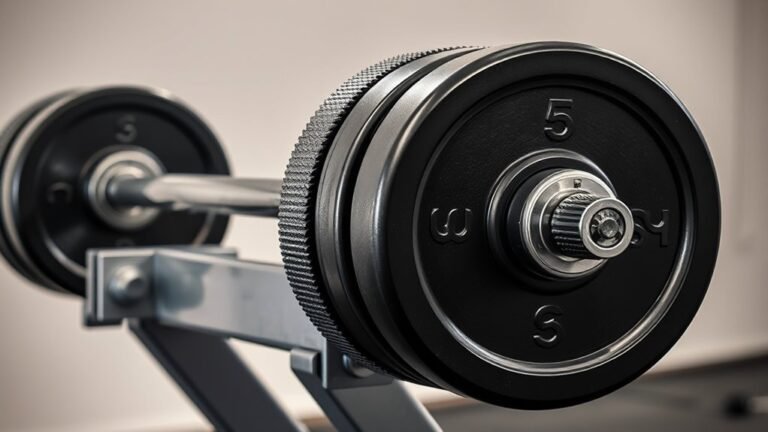
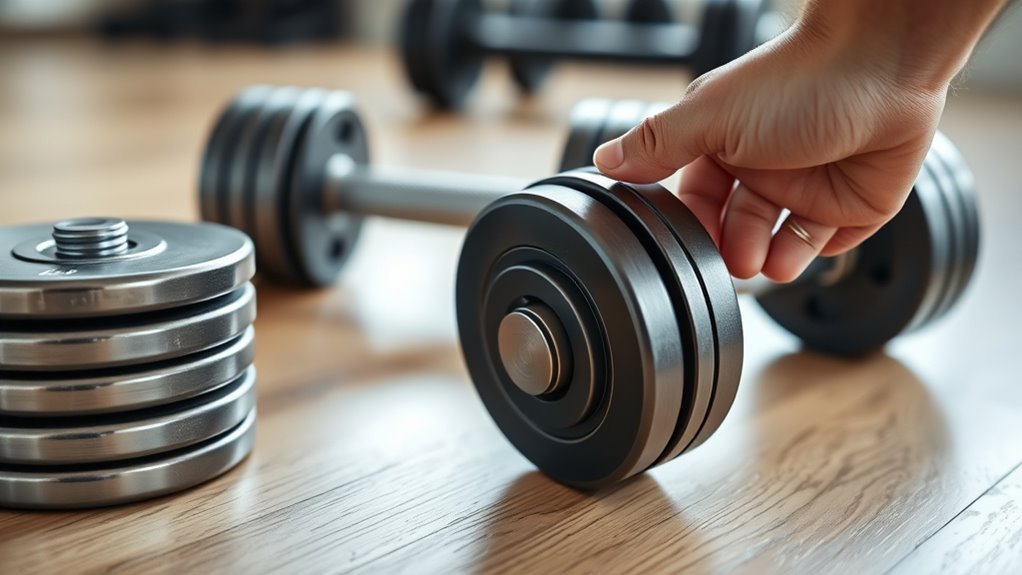
To add more weight to your dumbbells, start by checking your dumbbell bars and picking weight plates that fit securely. Make sure these plates are compatible with your dumbbell handles to avoid any issues during your workout.
Next, slide the weight plates onto the handles. Once in place, fasten them tightly using collars or clamps so they don’t slip or move while you’re exercising. This helps keep your workout safe and effective.
If you’re using adjustable dumbbells, consider using weight plate adapters. These make it easy to change weights quickly without hassle.
You can also try homemade inserts or resistance bands for adding extra load. Just remember to inspect your equipment regularly to ensure everything stays in good condition and safe to use.
Keep going to find more tips on how to optimize your dumbbell setup!
Key Takeaways
- Choose weight plates that match your dumbbell bar diameter and fit your workout goals. This ensures a secure and effective weight increase.
- Slide the selected plates onto the dumbbell handle. Make sure to distribute them evenly on both sides for proper balance.
- Secure the plates tightly using collars or clamps, like twist-lock collars or spring clamps. This helps prevent the plates from sliding during your workout.
- Regularly check the plates and collars to make sure they’re tight and in good condition. This keeps your workouts safe and stable.
- After use, store your dumbbells in a dry place and clean them. Doing this helps maintain your equipment and prevents rust or corrosion.
Assess Your Current Dumbbell Setup
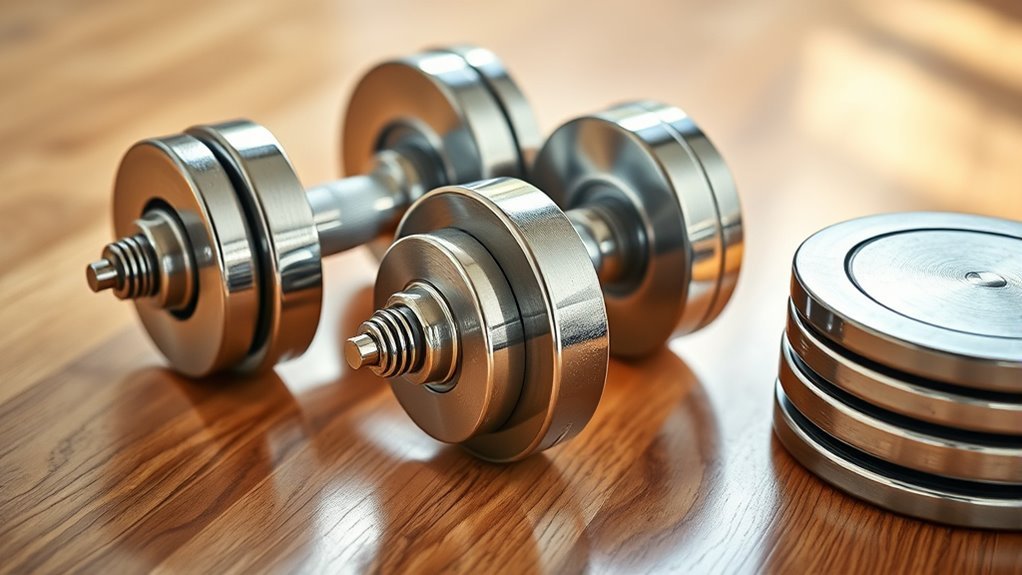
Before you add more weight to your dumbbells, you need to assess your current setup carefully. Start by inspecting the dumbbell handles for any signs of wear or damage to ensure they can safely hold additional weight.
Check the locking mechanisms or collars to confirm they secure the plates firmly. Measure the current weight of your dumbbells to establish a baseline, so you know how much more weight you want to add.
Also, consider the maximum weight capacity your dumbbell handles can support—exceeding this can be unsafe. Take note of the dumbbell’s design, as some handles have limited space for extra plates.
Choose the Right Type of Weight Plates
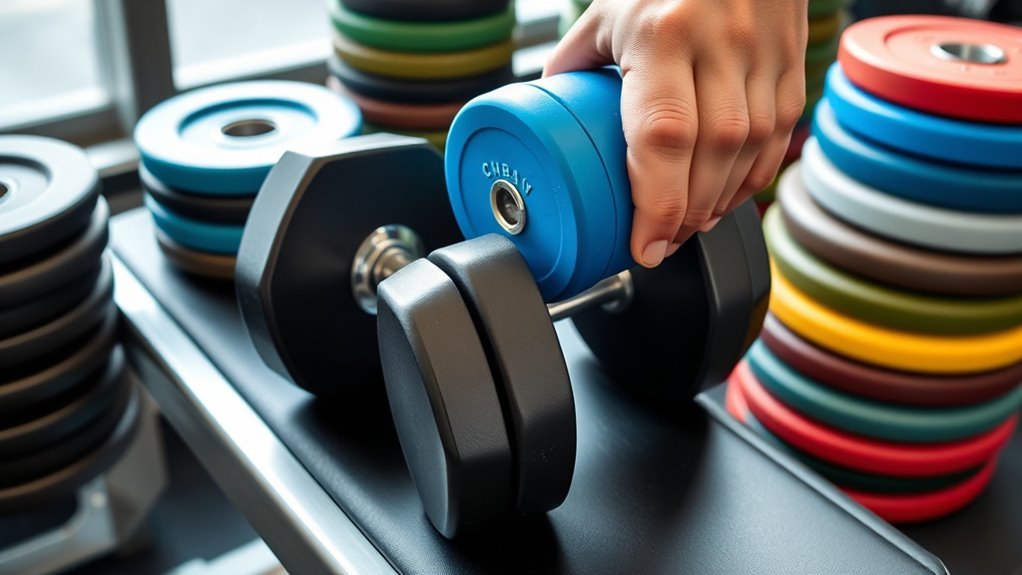
Once you’ve confirmed your dumbbells can safely hold extra weight, the next step is selecting the right type of weight plates. Choosing plates that fit your dumbbell bars and suit your workout style really matters.
Here’s a quick guide to help you decide:
| Plate Type | Key Features |
|---|---|
| Cast Iron | Durable, classic look |
| Rubber-Coated | Protects floors, quieter lifts |
| Olympic Plates | Larger hole, fits Olympic bars |
| Adjustable Plates | Variety of weights, versatile |
Make sure the plate hole diameter matches your dumbbell bar size. It’s super important to get this right so everything fits safely.
Also, think about your workout environment. Rubber-coated plates reduce noise and protect your floor, which is perfect if you’re working out at home. Cast iron plates are budget-friendly and built to last.
If you like flexibility, adjustable plates let you customize weights easily. So, pick plates that blend safety, convenience, and your fitness goals for the best experience.
Secure Weight Plates With Collars or Clamps
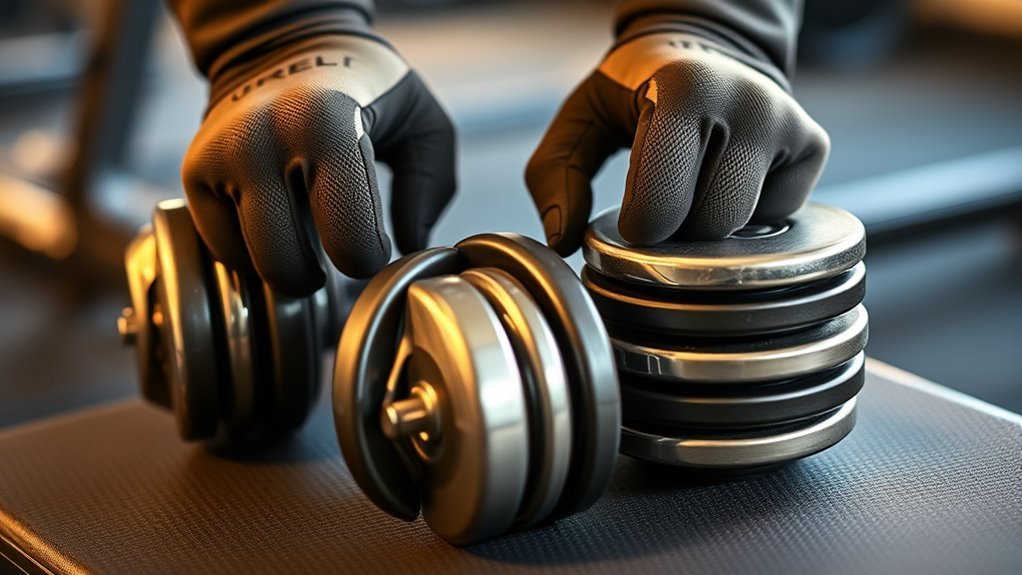
To keep your added weight plates secure and prevent them from sliding during your workout, you’ll need reliable collars or clamps. After sliding the plates onto your dumbbell handle, firmly attach the collar or clamp right next to the plates.
Secure your weight plates with reliable collars or clamps to prevent sliding during workouts.
This guarantees they stay in place and don’t shift as you lift or move the dumbbell. Make sure to choose collars that fit your dumbbell’s handle diameter exactly to avoid any wobbling.
Twist-lock collars or spring clamps are popular because they’re easy to tighten and release. Before each set, double-check the collars are snug and secure.
Taking this simple step not only protects your safety but also helps maintain your form by keeping the weights balanced throughout your exercise. It’s a small thing that really makes a big difference!
Use Weight Plate Adapters for Adjustable Dumbbells
Keeping your weight plates secure with collars is just one way to enhance your dumbbells. Another effective method is to use weight plate adapters designed for adjustable dumbbells.
These adapters let you quickly add or remove plates, boosting your dumbbell’s versatility and maximum load. They fit various plate sizes and ensure stability during workouts.
Here’s a quick comparison:
| Adapter Type | Compatible Plate Sizes | Max Weight Capacity |
|---|---|---|
| Standard Sleeve | 1″ (25mm) | 50 lbs (22.7 kg) |
| Olympic Sleeve | 2″ (50mm) | 100 lbs (45.4 kg) |
| Universal Adapter | 1″ & 2″ (25 & 50mm) | 75 lbs (34 kg) |
Choose an adapter that fits your plates and workout goals for a safe, customizable dumbbell setup. It’s all about making your workout easier and more effective!
Add Homemade Weight Inserts Safely
Although commercial adapters offer convenience, you can add homemade weight inserts to your dumbbells to increase resistance without spending much. Start by selecting dense materials like sandbags or filled PVC pipes that fit snugly around or inside your dumbbell handles.
Secure these inserts firmly with heavy-duty tape, zip ties, or clamps to prevent any movement during your workout. Always check the stability before lifting to avoid accidents.
Make sure the added weight is evenly distributed on both sides to maintain balance. Avoid materials that can easily shift or break.
Regularly inspect the inserts for wear and replace them as needed. By taking these safety precautions, you’ll enhance your training effectively while minimizing the risk of injury or damage to your equipment.
Utilize Resistance Bands for Additional Load
You can boost your dumbbell workouts by adding resistance bands for extra load. Make sure to pick bands with the right tension to match your strength level.
Always secure the bands properly to avoid slips and keep your exercises safe. It’s a simple way to make your routine more challenging and effective!
Choosing Suitable Resistance Bands
Selecting the right resistance bands can considerably boost the effectiveness of your dumbbell workouts by adding extra load.
To pick suitable bands, focus on three key factors:
1. Resistance Level: Choose bands with resistance that complements your strength. Lighter bands suit beginners, while heavier ones challenge experienced users.
It’s all about matching the band to your current fitness level.
2. Material Quality: Opt for durable, high-quality latex or synthetic bands. They last longer and provide consistent tension without snapping.
Going for quality means fewer replacements and safer workouts.
3. Band Length and Width: Longer bands offer versatility for different exercises, while wider bands typically provide more resistance.
Pick bands that fit your workout style and range of motion. That way, you get the most out of every session.
Attaching Bands Safely
Now that you’ve chosen suitable resistance bands, knowing how to attach them safely is key to maximizing your workout and preventing injury. Start by inspecting the bands for any tears or weak spots before each use.
Secure one end of the band firmly around the dumbbell handle, ensuring it won’t slip during your exercises. Avoid overstretching the band when attaching it; maintain controlled tension to reduce snap risk.
Position the band so it distributes resistance evenly without twisting or bunching. Always anchor the other end to a stable point or loop it around your hand securely if using it freeform.
Finally, test the setup with light movements before progressing to heavier lifts. Taking these precautions helps you add resistance safely while protecting your joints and equipment.
Consider Weighted Vests or Gloves as Alternatives
Although adding plates or collars to dumbbells is common, weighted vests or gloves offer a practical alternative to increase resistance without modifying your equipment.
These wearable weights boost your workout intensity by adding load directly to your body, enhancing strength and endurance.
Wearable weights increase workout intensity by adding direct load, improving strength and endurance effectively.
Here’s why you should consider them:
- Versatility: You can wear weighted vests or gloves during various exercises, including bodyweight movements and dumbbell routines.
- Comfort: They distribute weight evenly, reducing strain on your hands or joints compared to holding heavier dumbbells.
- Convenience: Easy to put on and take off, they allow quick adjustments in weight without interrupting your workout flow.
Using weighted vests or gloves complements your dumbbell training and helps you progress safely without needing extra equipment.
Maintain and Inspect Dumbbells Regularly
To keep your dumbbells safe and effective, you should regularly inspect and maintain them. Check for loose plates, damaged handles, or rust.
Tighten any screws or bolts and clean your dumbbells after each use to prevent buildup and corrosion. Proper maintenance guarantees longevity and safety during workouts.
| Task | Frequency | Tips |
|---|---|---|
| Inspect screws | Weekly | Use a screwdriver to tighten |
| Clean dumbbells | After each use | Wipe with a dry cloth |
| Check for rust | Monthly | Use a rust remover if needed |
| Examine handles | Monthly | Replace if cracked or loose |
Frequently Asked Questions
Can I Mix Different Brands of Weight Plates Safely?
Yes, you can mix different brands of weight plates safely as long as they fit securely on your dumbbell handles and are balanced properly. Always check for compatibility and guarantee the collars hold plates firmly to avoid accidents.
Just make sure everything feels snug and stable before you start lifting. It’s all about keeping things safe and steady!
How Often Should I Replace Worn-Out Dumbbell Collars?
Like a guard at the gate, you should replace worn-out dumbbell collars as soon as they show cracks or looseness. Don’t wait—keeping them tight protects you from accidents and keeps your workouts safe and steady.
Seriously, a loose collar can turn a great workout into a risky situation in no time. So, check them regularly and swap them out the moment they start looking worn. Your safety comes first!
Are There Specific Exercises Better Suited for Weighted Gloves?
Yes, you’ll find weighted gloves great for boxing, shadowboxing, and cardio workouts. They enhance wrist and forearm strength without bulky equipment.
Avoid heavy lifting; gloves suit dynamic, repetitive movements best for endurance and speed. So, think of them as a way to boost your stamina and quickness rather than raw power.
What Is the Maximum Weight My Dumbbell Handles Can Support?
You can typically add up to 50 pounds per dumbbell handle, but it depends on the manufacturer’s specs.
It’s a good idea to check your dumbbell’s maximum weight rating. That way, you avoid damage or injury and keep your workouts safe and effective.
Can Resistance Bands Damage My Dumbbell Grips Over Time?
Resistance bands usually won’t damage your dumbbell grips if you use them properly. Just avoid overstretching bands around the handles or sharp edges.
It’s a good idea to regularly inspect your grips to catch any wear early. That way, you can keep them in good shape and avoid any surprises.
Conclusion
By adding weight to your dumbbells, you’re not just lifting more—you’re building strength with every rep, like sculpting your own resilience. Picture the plates locking in place, each click echoing your commitment.
Whether you choose collars, adapters, or resistance bands, you’re crafting a personalized challenge that grows with you. Keep your gear well-maintained, and watch how these small adjustments transform your workouts into powerful steps toward your strongest self.
Adding more weight to dumbbells is a simple yet effective way to increase your workout intensity. It helps you progress steadily, ensuring you build muscle and improve endurance. So, take the time to add weights correctly and enjoy the benefits of stronger, more efficient training sessions.