
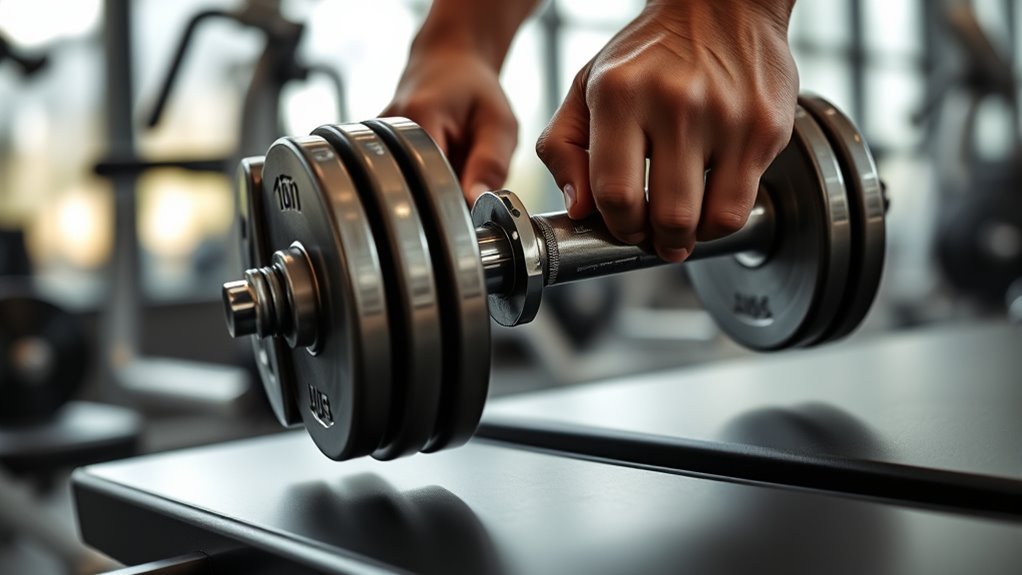
How to Add Weight to Dumbbells in 5 Easy Steps
Start by checking your dumbbells for any damage and find out their max weight capacity. This is super important because you want to make sure your equipment can safely handle the extra weight without any issues.
Next, pick compatible weight plates or attachments that suit your exercise style. Make sure these weights fit your dumbbells perfectly so everything stays secure during your workout.
Securely fasten the weights using collars or locking mechanisms designed for your dumbbells to avoid any movement. You don’t want plates sliding around mid-exercise—that can be dangerous!
Test the stability by gently moving the dumbbells and doing a few light lifts to ensure balance. If anything feels off, double-check your setup before adding more weight.
Finally, adjust your workout by lowering reps when using heavier weight and always warm up well. Follow these simple steps, and you’ll be set for safer, more effective strength gains with your newly weighted dumbbells!
Key Takeaways
- Inspect your dumbbells for damage and determine their maximum weight capacity before adding extra weight. This step is crucial to ensure safety and prevent any accidents.
- Choose compatible weight plates or add-ons that fit your dumbbells and suit your workout needs. Picking the right weights will help you achieve your fitness goals effectively.
- Securely attach the additional weights using proper collars, clamps, or locking mechanisms designed for your dumbbells. This keeps everything in place while you’re working out.
- Test the stability and balance of the dumbbells by gently moving and lifting them to ensure weights are tightly fixed. If anything feels loose, adjust it before starting your exercise.
- Adjust your workout routine by warming up, reducing reps, increasing sets, and gradually progressing to heavier weights safely. Taking it slow helps you avoid injury and build strength over time.
Assess Your Current Dumbbells and Weight Capacity
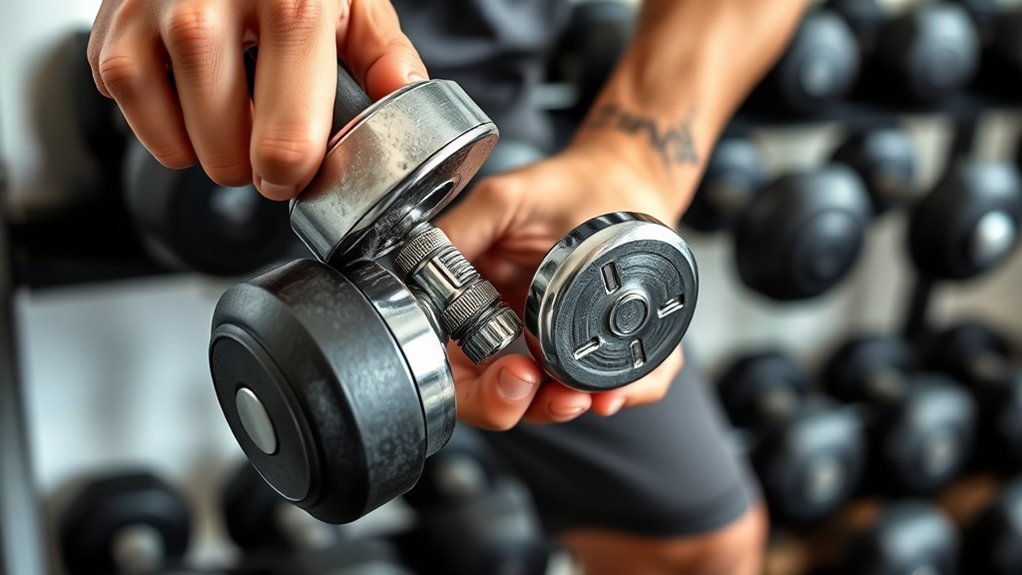
Before you add any weight to your dumbbells, take a close look at their current condition and maximum capacity. Check for any cracks, loose parts, or rust that could weaken their structure. You don’t want to risk injury by overloading compromised equipment.
Next, find out the maximum weight your dumbbells can safely hold. This info is usually in the user manual or stamped on the dumbbells themselves. If you can’t find it, look up the model online or contact the manufacturer. Knowing this limit helps you avoid damaging your dumbbells or hurting yourself.
Finally, inspect the locking mechanism or collars that keep the weights in place. Make sure they’re secure and can handle the extra load before moving on to adding weight. It’s better to be safe than sorry!
Choose Suitable Weight Add-Ons
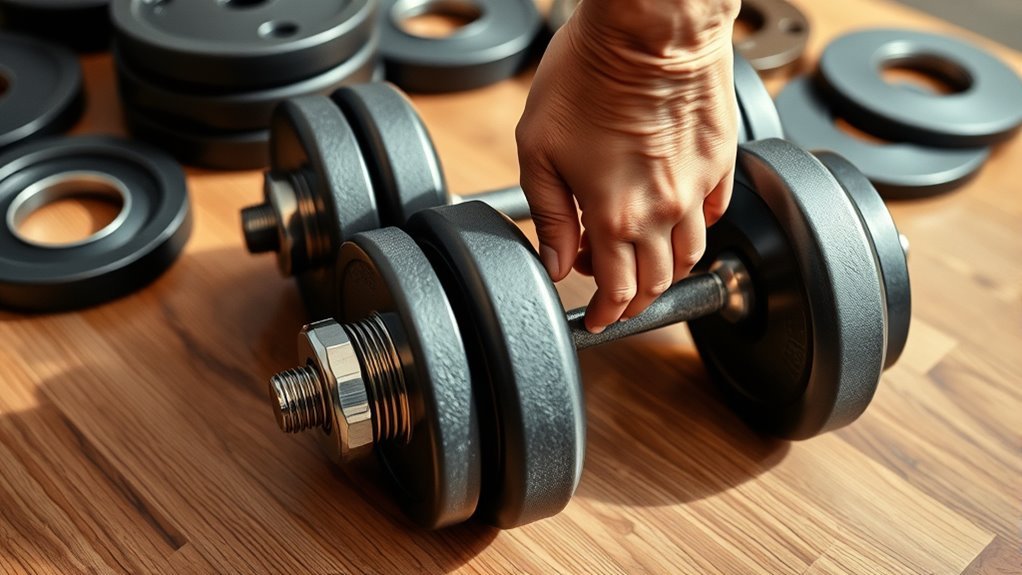
When adding weight to your dumbbells, you’ll want to select add-ons that fit securely and match your workout goals. Look for plates or attachments designed specifically for your dumbbell type to guarantee compatibility.
Consider the material; metal plates offer durability, while rubber-coated ones reduce noise and protect floors. Choose weight increments that allow gradual progression—small plates let you fine-tune resistance, while heavier ones speed up strength gains.
Metal plates ensure durability, while rubber-coated ones protect floors; choose increments that match your progression needs.
Also, think about your workout style: if you prefer dynamic movements, avoid bulky add-ons that might hinder grip or balance. Finally, check the maximum weight capacity of your dumbbells to avoid damage or injury.
Picking suitable weight add-ons helps you stay safe and effectively challenge your muscles. It’s all about finding the right balance to keep making progress without risking harm.
Secure the Added Weight Properly
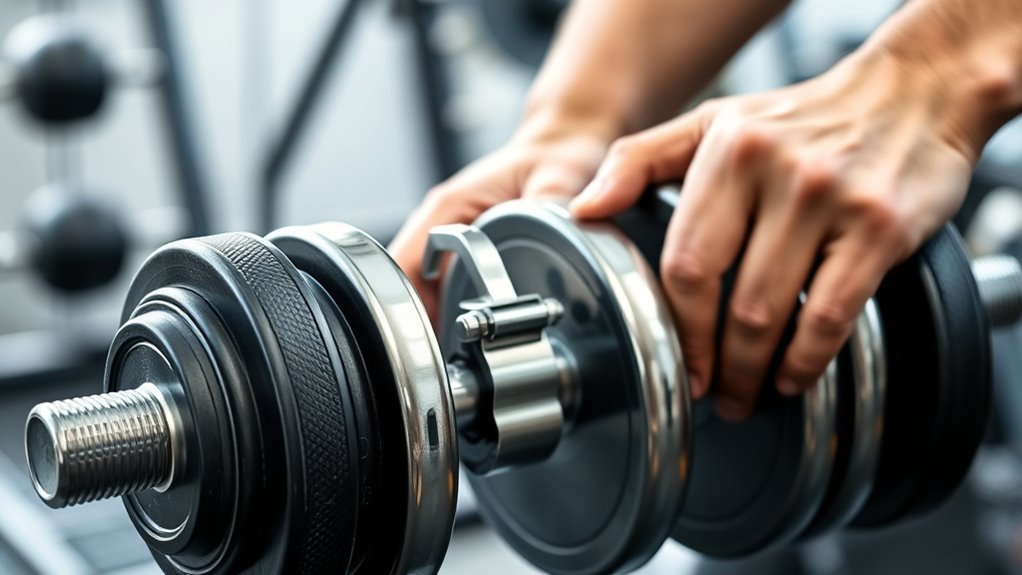
Although adding weight boosts your workout, you need to guarantee it properly to prevent accidents and ensure stability. Start by firmly securing the weight plates or add-ons onto the dumbbell handle. Use collars, clamps, or locking mechanisms designed for your dumbbell type—they’re essential for keeping the plates from sliding off during movement.
Double-check that everything fits snugly without any play or wiggle. If you’re using adjustable dumbbells, tighten the selector pins securely. Avoid makeshift solutions like tape or rubber bands, as they won’t provide the necessary hold.
Taking these precautions not only protects you from injury but also helps maintain proper form throughout your exercises. Remember, a securely fastened dumbbell gives you confidence to push harder safely every time you train.
Test the Stability and Balance
Securing the added weight properly sets the foundation for safe lifting, but you also need to make sure the dumbbells feel stable and balanced in your hands. Start by holding each dumbbell and gently moving it side to side and up and down.
Secure your dumbbells firmly and check for stability by gently moving them in your hands before lifting.
If you notice any wobbling or shifting, tighten the collars or adjust the plates to achieve an even distribution. Uneven weight can throw off your form and increase injury risk.
Next, perform a few test lifts with light repetitions, paying attention to how the dumbbells feel. They should feel secure and not pull unevenly.
If something feels off, take a moment to readjust the weights before moving on. Testing stability ensures your workout remains both effective and safe.
Adjust Your Workout Routine Accordingly
As you add weight to your dumbbells, you’ll need to adapt your workout routine to match the increased resistance. This helps prevent injury and ensures you keep making progress.
Start by reassessing your sets, reps, and rest periods. Don’t jump into heavy weights without warming up properly. Focus on maintaining good form, even if that means reducing reps initially.
Here are some tips to adjust your workout routine:
- Lower reps and increase sets to build strength safely
- Extend rest periods between sets for better recovery
- Incorporate warm-up sets with lighter weights before heavy lifting
- Focus on controlled movements to avoid strain
- Track your progress and increase weights gradually
Frequently Asked Questions
Can I Add Weight to Adjustable Dumbbells From Different Brands?
You usually can’t add weight from different brands to adjustable dumbbells because sizes and locking mechanisms differ. It’s best to use compatible plates designed for your specific dumbbells to guarantee safety and proper fit when adding weight.
Mixing plates from different brands might not fit properly, and that can be risky during your workout. So, sticking to the plates that come with or are made for your dumbbells is definitely the way to go.
What Materials Are Best for Homemade Weight Add-Ons?
When it comes to homemade weight add-ons, you’ll want dense materials like steel plates, sandbags, or concrete blocks—they pack a punch.
Just make sure they fit securely and don’t slip, or you’ll be skating on thin ice!
How Often Should I Increase the Dumbbell Weight for Muscle Growth?
You should increase dumbbell weight every 1-2 weeks, depending on your progress.
When your current weight feels too easy and you can complete all reps with good form, it’s time to challenge your muscles more.
Keep listening to your body and push just enough to keep growing without risking injury.
Are There Any Safety Risks With Adding Weight to Fixed Dumbbells?
You might encounter some “unexpected challenges” when adding weight to fixed dumbbells. Make sure you secure weights properly and avoid abrupt movements to prevent accidents.
Always prioritize control and steady progression for your safety. It’s all about staying careful and taking it step by step.
Can Adding Weight to Dumbbells Affect My Joint Health?
Yes, adding weight can strain your joints if you increase too quickly or use poor form.
You should progress gradually, focus on technique, and listen to your body to protect your joint health during workouts.
Conclusion
So, you’ve mastered adding weight to your dumbbells—because who doesn’t want their equipment to double as a game of Jenga? Just remember, securing those add-ons properly is key. Unless you enjoy surprise workouts when weights slip off mid-lift.
Testing stability isn’t just for show; it’s your ticket to avoiding an accidental dumbbell drop. Now, adjust your routine and lift smart—after all, heavier isn’t always better if you can’t keep it together!
When you add weight to dumbbells, always make sure everything is tightly fastened. This simple step ensures safety and effectiveness during your workout. Plus, it helps maintain balance, so your lifts feel steady and controlled.
Incorporating extra weight can really enhance your strength training, but only if done right. So, take your time, double-check the setup, and enjoy the benefits of a heavier dumbbell without the risks. Remember, adding weight to dumbbells safely is the key to a smarter, more productive fitness routine.