How to Build Traps With Dumbbells Step by Step
To build your traps with dumbbells, start by warming up with dynamic stretches and shoulder mobility drills. This helps get your muscles ready and reduces the risk of injury.
Using the right equipment, like adjustable dumbbells and a mirror, is key to tracking your form and progress.
Begin with dumbbell shrugs: stand tall, hold the weights at your sides, then slowly lift your shoulders toward your ears. Make sure to squeeze your traps at the top, then lower your shoulders back down in a controlled way.
To mix things up and target your traps differently, try adding upright rows and farmer’s walks to your routine.
Always pay attention to your posture and breathing throughout the exercises.
Remember to increase the weight gradually to challenge your muscles without overdoing it. Keep consistent, and you’ll unlock more techniques for building powerful, well-rounded traps.
Key Takeaways
- Warm up with dynamic stretches and shoulder mobility drills to prepare traps and prevent injury before dumbbell training. It really helps get your muscles ready and reduces the risk of strain.
- Use proper grip and posture: stand tall, feet shoulder-width apart, dumbbells at sides with palms facing the body. This stance sets the foundation for effective and safe movements.
- Perform slow, controlled dumbbell shrugs by lifting shoulders toward ears, squeezing traps, then lowering with control. Take your time with each rep to really engage those muscles.
- Incorporate upright rows by lifting dumbbells to chest height with elbows bent, focusing on steady, controlled movements. This complements shrugs and targets your traps differently.
- Start with manageable weights, use full range of motion, breathe properly, and rest adequately to maximize trap growth safely. Remember, consistency and form beat heavy weights any day!
Understanding the Anatomy of the Trapezius Muscle

Before you start building your traps with dumbbells, you need to understand the trapezius muscle’s structure and function. The trapezius is a large, triangular muscle covering your upper back and neck.
It has three parts: upper, middle, and lower fibers. Each part plays a unique role in moving and stabilizing your shoulder blades.
The upper traps help lift your shoulders, the middle traps pull your shoulder blades together, and the lower traps assist in rotating and depressing the scapula. Knowing this allows you to target these areas effectively with dumbbell exercises.
When you focus on the right portion, you’ll develop balanced strength and avoid muscle imbalances. So, understanding the trapezius anatomy sets the foundation for your trap-building routine.
Benefits of Dumbbell Training for Trap Development
Now that you know how the trapezius muscle functions and its different parts, you can appreciate why dumbbells are a great tool for targeting each section effectively. Dumbbells allow you to work each side of your traps independently, helping correct muscle imbalances and ensuring balanced development.
They also offer a greater range of motion compared to machines or barbells, which means you can engage your traps through a fuller stretch and contraction. Plus, dumbbells enable you to adjust your grip and angle easily, hitting the upper, middle, and lower traps with precision.
This versatility helps you build stronger, more defined traps. Finally, dumbbell training improves your stabilizer muscles, enhancing overall shoulder stability and reducing injury risk during heavy lifts or daily activities.
Essential Equipment Needed for Dumbbell Trap Workouts
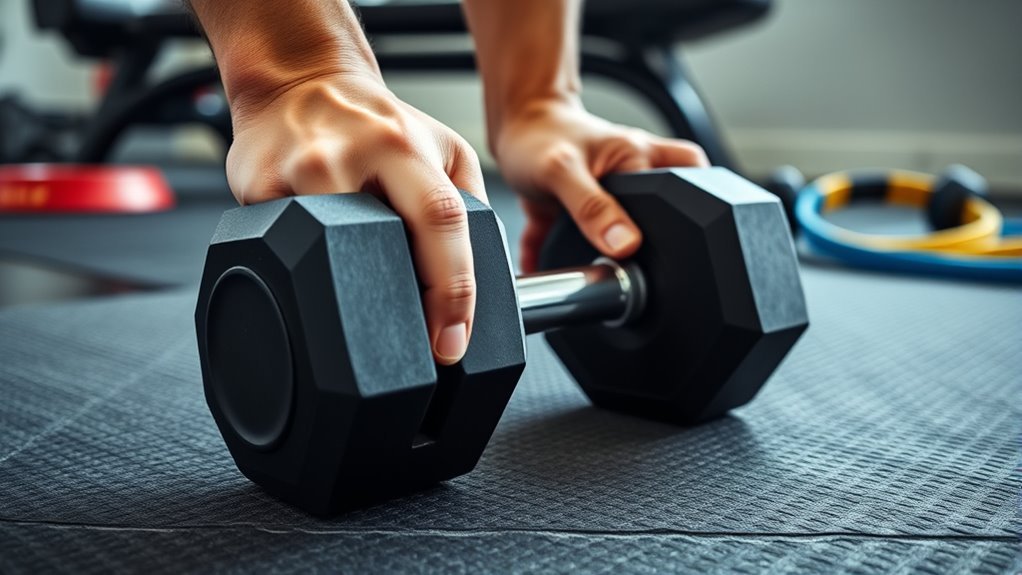
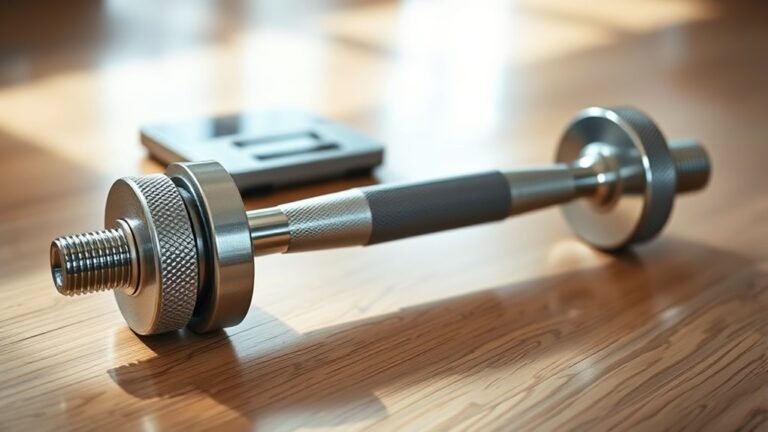
To get the most out of your dumbbell trap workouts, you’ll need a few key pieces of equipment. First, choose dumbbells that allow you to progressively increase weight as your traps grow stronger.
A sturdy workout bench can help you maintain proper form during some exercises. Additionally, a mirror is invaluable for checking your posture and technique, guaranteeing every rep counts.
| Equipment | Why You Need It |
|---|---|
| Adjustable Dumbbells | Gradual strength progression |
| Workout Bench | Supports stability and posture |
| Mirror | Ensures correct exercise form |
Having these essentials ready will boost your confidence and help you train traps effectively. This way, you’re setting yourself up for solid, visible gains.
Proper Warm-Up Techniques Before Trap Exercises
Before you start building your traps with dumbbells, warming up properly is key to prevent injury and boost performance. Focus on dynamic stretching and shoulder mobility drills to get your muscles ready.
Then, activate your traps gradually with lighter loads before jumping into heavier sets. This approach helps your body adjust and gets you set for a solid workout.
Importance of Dynamic Stretching
Although you might be enthusiastic to start lifting, incorporating dynamic stretching into your warm-up prepares your traps for the upcoming workout by increasing blood flow and enhancing muscle flexibility.
Dynamic stretches activate the muscles and joints, reducing the risk of injury and improving your range of motion. This leads to better form and more effective trap engagement during dumbbell exercises.
Focus on controlled, repetitive movements that mimic the actions you’ll perform.
| Stretch Type | Movement Example | Benefits |
|---|---|---|
| Arm Circles | Circular shoulder spins | Warms up shoulder joints |
| Scapular Retractions | Shoulder blade squeezes | Activates trap muscles |
| Neck Tilts | Side-to-side neck bends | Loosens neck muscles |
| Shoulder Shrugs | Lifting and lowering shoulders | Enhances trap flexibility |
| Cross-Body Swings | Swinging arms across chest | Increases upper back mobility |
Targeted Shoulder Mobility Drills
Since your traps rely heavily on shoulder movement, targeted shoulder mobility drills play a crucial role in your warm-up routine. These drills prepare your joints, increase blood flow, and reduce injury risk before you lift dumbbells.
Focus on exercises that loosen the shoulders and activate surrounding muscles. It really helps you get ready and can make a big difference in your workout.
Here’s a simple 4-step routine to get you started:
- Arm circles: Perform small to large circles forward and backward for 30 seconds each.
- Shoulder dislocations: Use a resistance band or stick, moving it over your head and back.
- Scapular wall slides: Stand against a wall, sliding your arms upward while keeping contact.
- Band pull-aparts: Hold a resistance band, pull it apart focusing on squeezing your shoulder blades.
Try to incorporate these drills regularly. They’ll enhance shoulder mobility and help you maximize trap activation.
Gradual Load Activation
When you start your trap workouts, gradually increasing the load helps your muscles adapt and prevents injury. Begin with light dumbbells or even just bodyweight to warm up your traps and surrounding muscles.
Perform slow, controlled movements like shrugs and shoulder rolls to increase blood flow. After 5 to 10 minutes, progressively add weight in small increments, paying attention to how your muscles feel.
This approach primes your nervous system and prepares your connective tissues for heavier loads. Skipping this step can lead to strains or poor form.
Step-by-Step Guide to Dumbbell Shrugs
Now, let’s focus on how you can master dumbbell shrugs with the right grip and controlled movements. Keeping your posture aligned and breathing properly will make each rep more effective.
Follow these steps to maximize your trap gains safely and efficiently. You’ll see the difference it makes in no time!
Proper Dumbbell Grip
A proper dumbbell grip is essential for performing shrugs effectively and safely. Gripping the dumbbells correctly guarantees you target your traps without risking injury or losing control.
Let’s break it down so you get it just right.
Follow these steps for the right grip:
- Choose the right dumbbell weight: Start with manageable weights to maintain form. Don’t jump too heavy too soon.
- Hold the dumbbells firmly: Wrap your fingers completely around the handles. A good grip keeps you in control.
- Keep your palms facing your body: This neutral grip engages the traps best. It’s all about the angle here.
- Maintain wrist alignment: Avoid bending your wrists to prevent strain. Straight wrists mean safer shrugs.
Stick to these tips, and you’ll nail your shrugs every time!
Controlled Shrug Movement
Although gripping the dumbbells properly sets the foundation, controlling your shrug movement guarantees you maximize trap engagement and minimize injury risk.
Start by standing tall with dumbbells at your sides, palms facing your body. Slowly lift your shoulders straight up toward your ears, focusing on squeezing your traps at the top.
Hold the contraction for a second to intensify muscle activation. Then, lower your shoulders back down in a controlled manner, resisting the urge to drop the weights quickly.
Avoid rolling your shoulders or using momentum—keep the movement vertical and deliberate. This control ensures your traps do the work, preventing strain on your neck or back.
Repeat for the desired reps, maintaining focus on smooth, steady motions throughout each shrug. It really makes a difference when you stay focused on form.
Breathing and Posture Tips
Mastering the shrug movement is important, but pairing it with proper breathing and posture will boost your performance and safety.
When you perform dumbbell shrugs, focus on these key tips:
- Inhale deeply before you lift the dumbbells to prepare your core and stabilize your body.
- Exhale slowly as you shrug your shoulders up, maximizing muscle engagement.
- Keep your chest lifted and shoulders back to maintain a strong, neutral spine throughout the movement.
- Avoid leaning forward or backward; stand tall with feet shoulder-width apart for balance.
How to Perform Upright Rows With Dumbbells
When you perform upright rows with dumbbells, you target your traps effectively while also engaging your shoulders and arms. Start by holding a dumbbell in each hand, palms facing your body.
Keep your back straight, elbows slightly bent, and lift the weights straight up along your torso until they reach chest height. Pause briefly, then lower slowly.
Focus on controlled movements to avoid strain and maximize trap activation.
| Benefit | Feeling You Get |
|---|---|
| Trap growth | Strength and power |
| Shoulder engagement | Stability and control |
| Arm involvement | Confidence boost |
| Controlled motion | Mind-muscle connection |
This exercise not only builds muscle but also enhances your posture and overall upper-body strength. It’s a great move to add to your routine!
Incorporating Dumbbell Farmer’s Walk for Trap Strength
After working on upright rows, adding the dumbbell farmer’s walk can take your trap strength to the next level. This exercise targets your traps by forcing them to stabilize heavy weights as you walk.
Here’s how to incorporate it effectively:
- Grab a pair of heavy dumbbells, one in each hand.
- Stand tall with your shoulders back and core engaged.
- Walk forward steadily for a set distance or time, keeping your grip tight.
- Rest briefly, then repeat for multiple sets.
This functional movement not only builds trap strength but also improves grip, posture, and overall endurance.
Make sure to maintain proper form throughout to maximize benefits and keep your traps working hard with every step.
Tips for Maximizing Trap Growth and Preventing Injury
To maximize trap growth and prevent injury, you need to focus on proper technique and recovery. Always start with a manageable weight to maintain control and prevent strain.
Keep your shoulders down and back during exercises to avoid unnecessary stress. Use a full range of motion to engage your traps effectively.
Don’t rush—perform each rep deliberately to ensure muscle activation and reduce injury risk. Incorporate rest days into your routine to allow your muscles to repair and grow.
Stretch your neck and shoulder muscles before and after workouts to enhance flexibility and reduce tightness. Finally, listen to your body; if you feel sharp pain or discomfort, stop immediately and reassess your form or weight.
Consistency and care will help you build traps safely and efficiently. Stick with it, and you’ll see the results!
Frequently Asked Questions
Can I Train Traps With Dumbbells at Home Without a Spotter?
Yes, you can train traps with dumbbells at home without a spotter. Just focus on controlled movements like shrugs. Keep the weights manageable, and prioritize proper form to avoid injury.
That way, you’ll effectively build your traps without any problems. It’s all about being safe and consistent!
How Often Should I Train My Traps Weekly for Best Results?
Just like a knight sharpening his sword before battle, you should train your traps 2-3 times weekly. That frequency lets your muscles recover and grow strong without overdoing it.
Keep consistent, and you’ll see gains fast!
Are Dumbbell Traps Exercises Suitable for Beginners With Back Issues?
You can try dumbbell trap exercises if you have back issues, but you should start light and focus on form.
Always consult your doctor or a physical therapist first to avoid aggravating your condition.
Taking it slow and paying attention to how your body feels can make a big difference.
Can Trap Training With Dumbbells Improve Posture and Reduce Neck Pain?
Like a strong pillar supports a building, training your traps with dumbbells can improve your posture and reduce neck pain.
You’ll strengthen muscles that hold your head up properly, easing tension and discomfort over time.
It’s a simple way to help your body feel better and stand taller. Plus, consistent training can really make a difference.
What Is the Difference Between Dumbbell Traps Exercises and Barbell Traps Exercises?
Dumbbell trap exercises let you work each side independently, improving balance and range of motion. This means you can focus on each trap muscle separately, which is great for fixing any imbalances.
Barbell exercises let you lift heavier weights, targeting overall trap strength but with less unilateral focus. So, you get more power and bulk, but it’s more of a two-sided workout.
You’ll benefit from both. Mixing them up can really help you build strong, balanced traps.
Conclusion
Think of building your traps like sculpting a masterpiece—each dumbbell shrug or upright row is a deliberate chisel stroke. Just like Michelangelo didn’t rush David, you shouldn’t either; consistent, focused effort yields the best results.
Studies show that targeted dumbbell exercises can increase trap strength by up to 30% in weeks. Keep your form sharp and your routine steady, and soon you’ll see your traps transform, standing strong like a finely carved statue.
So, when you build traps with dumbbells, remember: patience and precision are key. Stick with your workouts, focus on proper technique, and you’ll carve out impressive traps in no time. The right dumbbell traps exercises, done consistently, will bring the strength and definition you’re aiming for.