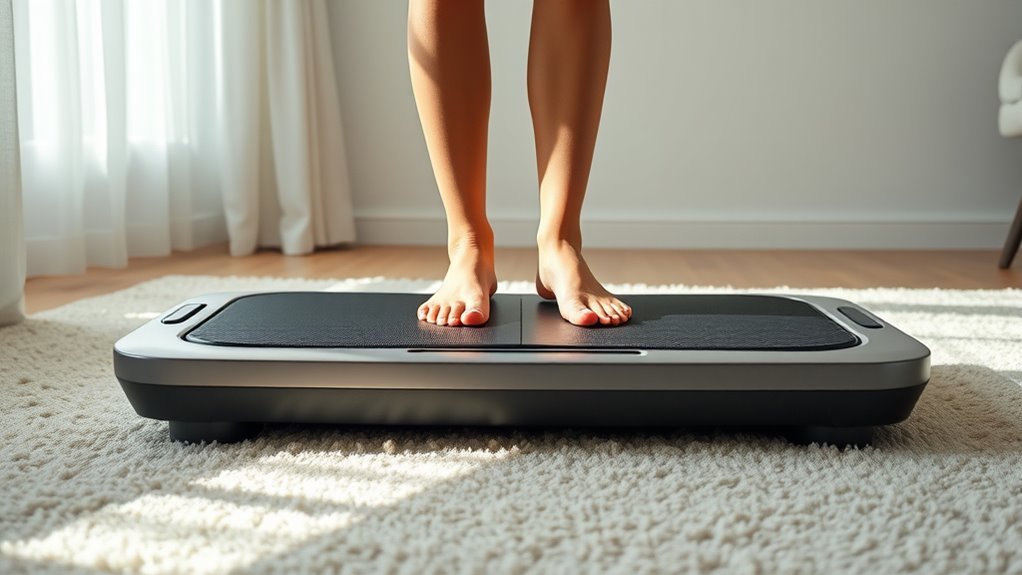
How to Use My Vibration Plate Safely on Carpet
To use your vibration plate safely on carpet, start by choosing a low-pile, tightly woven carpet for better stability. This helps prevent the plate from wobbling or shifting during use.
Next, place a non-slip mat or rubber pad underneath the vibration plate. This not only keeps the plate from slipping but also protects your carpet from damage.
Begin with the lowest vibration settings and increase them gradually. Keep an eye out for any wobbling or unusual noises as you adjust the intensity.
Make sure to wear shoes with good grip to maintain your balance. Keep your center of gravity steady and avoid sudden movements to stay safe while using the plate.
By following these simple setup and maintenance tips, you can protect both your carpet and your vibration plate, ensuring a smooth and safe workout experience every time.
Key Takeaways
- Place the vibration plate on a low-pile carpet with a sturdy, non-slip mat underneath to prevent sinking and slipping. This helps keep everything stable while you’re working out.
- Start with low frequency settings (around 15 Hz) and gradually increase while monitoring stability and vibration. It’s better to ease into it so you can get used to the feeling.
- Wear shoes with good grip and maintain balanced, centered footing to avoid slipping during use. Keeping your balance is key to staying safe.
- Regularly check and adjust the plate’s position to prevent concentrated carpet wear and ensure stable placement. Moving it around a bit can save your carpet in the long run.
- Clean the equipment after use, inspect for dust or debris buildup, and maintain power cords for safe operation. Taking care of your vibration plate means it’ll last longer and work better.
Assessing Your Carpet Type for Vibration Plate Use
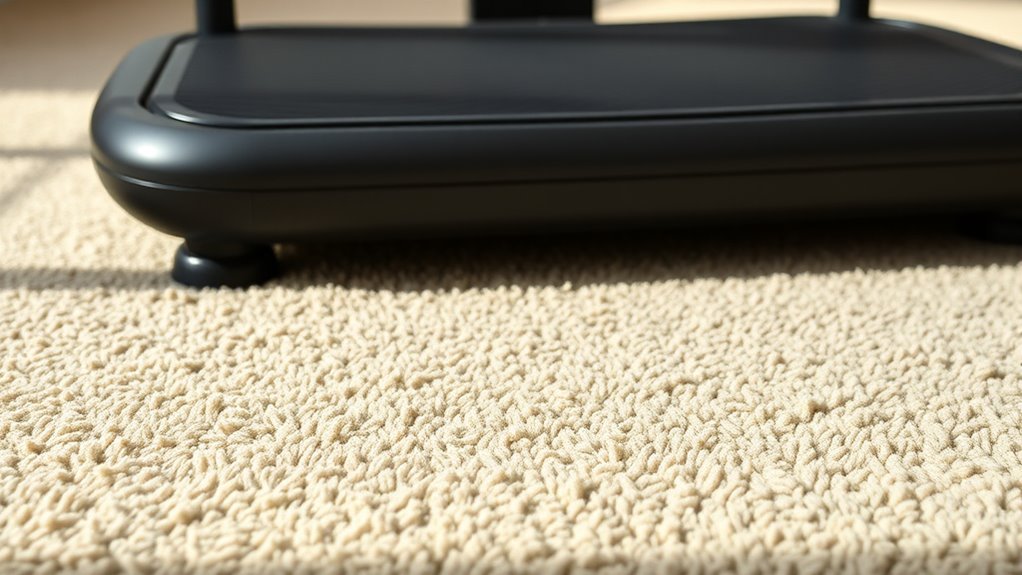
Before you set up your vibration plate, you need to assess the type of carpet in your workout area. Different carpets react differently to the vibrations, affecting both your safety and the machine’s performance.
Low-pile or tightly woven carpets are generally better because they provide a stable surface without excessive cushioning. High-pile or shag carpets tend to absorb vibrations unevenly, which can reduce the effectiveness of your workout and potentially cause the plate to shift.
Also, verify your carpet is clean and free from loose fibers that could interfere with the plate’s base. By understanding your carpet’s texture and thickness, you’ll be better prepared to position your vibration plate safely and get the most out of your exercise sessions.
Ensuring Stability and Balance on Carpet
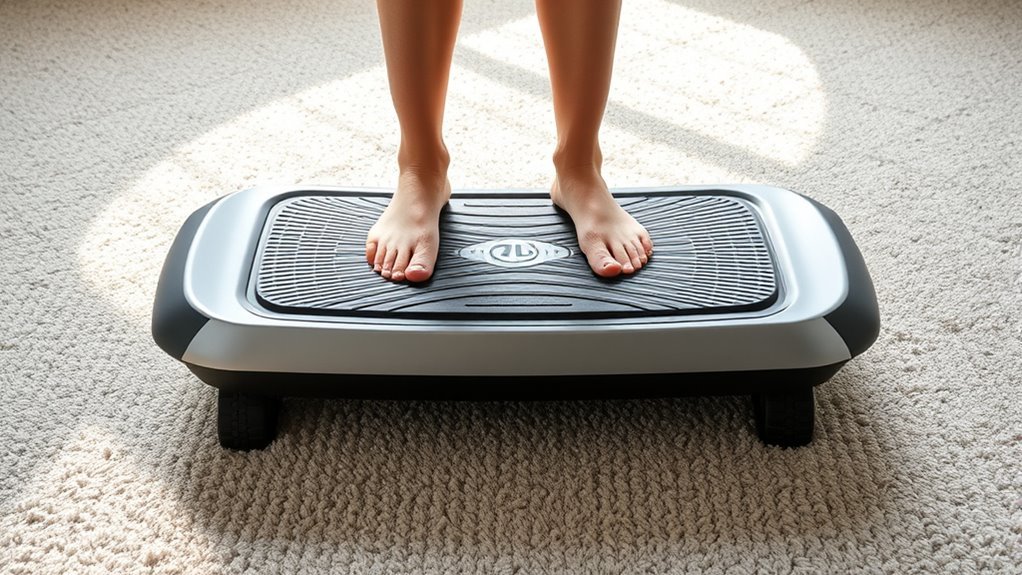
To keep your vibration plate steady on carpet, choose a low-pile surface that won’t compress too much. Place an anti-slip mat underneath to prevent sliding during use.
Make sure the plate is securely positioned before you start your workout. This way, you’ll have a safer and more effective session every time.
Choose Low-Pile Carpet
Choosing a low-pile carpet can considerably improve your vibration plate’s stability and balance. Low-pile carpets have shorter, denser fibers that create a firm surface, preventing your plate from sinking or wobbling during use.
This stability reduces the risk of accidents and guarantees that your workouts are safe and effective. Avoid high-pile or shag carpets, as their thick fibers can cause uneven weight distribution, leading to instability.
When setting up your vibration plate, check the carpet’s texture and firmness. If the carpet feels soft or plush, consider switching to a low-pile option.
This simple choice helps maintain the plate’s performance and keeps you secure while exercising. Prioritizing low-pile carpet ensures you get the most out of your vibration plate safely.
Use Anti-Slip Mats
Even if you place your vibration plate on a low-pile carpet, it can still shift during use. To prevent slipping and guarantee stability, use anti-slip mats underneath. These mats create friction between the carpet and the plate, keeping it firmly in place.
Choose mats made from durable, non-toxic materials that won’t damage your carpet or plate. Here’s a quick look at the features to take into account:
| Feature | Benefit |
|---|---|
| Material | Rubber or silicone for grip |
| Thickness | At least 0.25 inches for cushion |
| Size | Larger than vibration plate base |
| Texture | Raised patterns for friction |
| Maintenance | Easy to clean, water-resistant |
Using an anti-slip mat improves balance and safety, letting you focus on your workout without worrying about movement. It really makes a difference, especially if you don’t want your plate sliding around while you’re exercising.
Secure Plate Position
Placing an anti-slip mat under your vibration plate helps prevent movement, but securing the plate’s position on carpet takes a bit more attention. Carpets can be uneven and soft, which may cause your plate to wobble or shift during use.
To guarantee stability, position your vibration plate on a flat, low-pile carpet rather than thick or plush rugs. You can also place a sturdy plywood board or a hard plastic mat beneath the anti-slip mat to create a firm, level surface.
Make sure the plate sits evenly without rocking before starting your workout. Regularly check and adjust its position as needed.
Taking these steps helps maintain balance, reduces the risk of injury, and ensures your vibration plate functions safely and effectively on carpeted floors.
Using a Firm Base or Platform Under the Vibration Plate
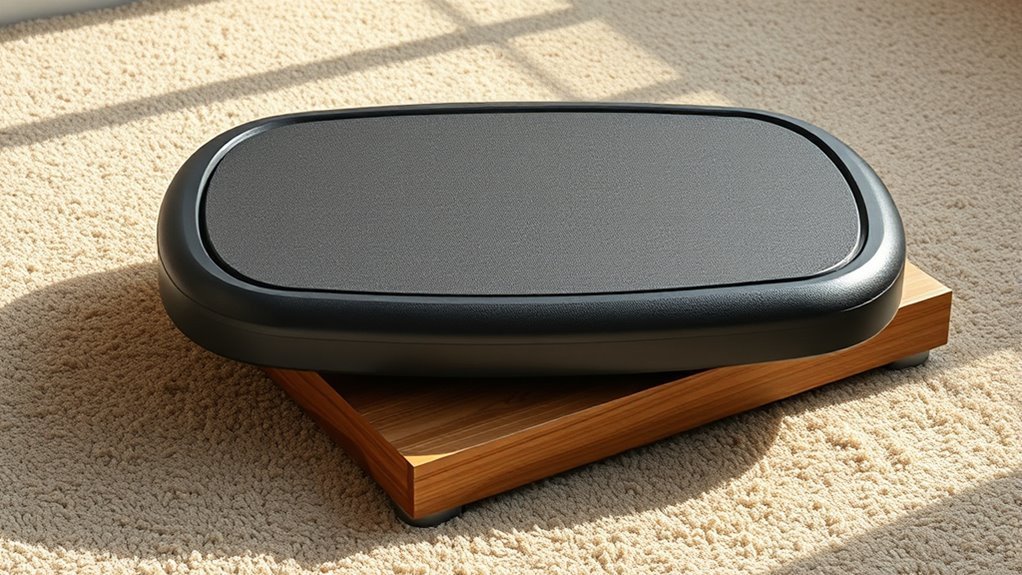
When you set up your vibration plate, make sure it rests on a firm, stable surface to prevent unwanted movement during use. Placing it directly on soft carpet can cause instability and reduce its effectiveness.
Ensure your vibration plate is on a firm, stable surface to avoid movement and maximize workout effectiveness.
Instead, use a solid base or platform to enhance safety and performance. Here’s how to do it:
- Choose a sturdy wooden or rubber platform slightly larger than your vibration plate.
- Ensure the platform is level to keep the plate balanced.
- Place a non-slip mat between the platform and the carpet to prevent shifting.
- Double-check that the platform doesn’t wobble before starting your session.
Using a firm base helps maintain stability, protects your floor, and ensures you get the most out of your workout.
It’s a simple step, but it makes a big difference!
Adjusting Vibration Settings for Carpeted Surfaces
When using your vibration plate on carpeted surfaces, you’ll need to adjust the frequency settings for ideal performance. Lower intensity levels can help maintain stability and prevent excessive movement.
Make sure to find the right balance to keep your workout both safe and effective. It’s all about tuning the settings so you get the best results without any wobbling or slipping.
Optimal Frequency Settings
Although vibration plates perform best on hard surfaces, you can still use them safely on carpeted floors by adjusting the frequency settings. Lower frequencies reduce excessive movement caused by carpet cushioning, ensuring stability and safety during your workout.
Here’s how to find ideal frequency settings for carpeted use:
- Start at a low frequency (around 15 Hz) to minimize wobbling.
- Increase gradually in 5 Hz increments while monitoring plate stability.
- Avoid frequencies above 30 Hz, as high vibrations may cause instability on thick carpets.
- Test different settings with your body weight and workout style to find a comfortable, secure vibration level.
Just take it slow and listen to how your body and the plate respond. That way, you’ll get the best results without risking a slip or fall.
Intensity Level Adjustments
Since carpeted surfaces absorb some of the vibration energy, you’ll need to modify the intensity levels on your vibration plate to maintain effective muscle stimulation. Start by increasing the intensity gradually rather than jumping to high levels right away.
This helps prevent strain and ensures your muscles respond properly despite the cushion from the carpet.
Here’s a quick guide to intensity adjustments for various carpet thicknesses:
| Carpet Thickness | Recommended Intensity | Notes |
|---|---|---|
| Thin (<0.5 inch) | Low to Medium | Minimal energy absorption |
| Medium (0.5-1 inch) | Medium to High | Moderate absorption |
| Thick (>1 inch) | High | Maximum compensation |
Adjust based on how your body feels and always prioritize safety. It’s all about finding the right balance for your comfort and effectiveness.
Monitoring Noise and Vibration Levels
Keeping an eye on noise and vibration levels helps you use the vibration plate safely and prevents potential hearing damage or discomfort.
Monitoring noise and vibrations ensures safe use and protects your hearing from damage or discomfort.
Since your plate sits on carpet, vibrations can amplify, so it’s essential to monitor these factors closely.
- Start at a low intensity and listen for any unusual or loud noises.
- Place your hand lightly on surrounding surfaces to detect excessive vibrations.
- Use a smartphone app to measure decibel levels, keeping them below 85 dB.
- If noise or vibrations feel too strong, adjust the intensity or reposition the plate.
Protecting Your Carpet From Wear and Tear
When you use a vibration plate on your carpet, it can cause wear and tear over time, so taking steps to protect your flooring is essential. Start by placing a sturdy, non-slip mat or rubber pad beneath the vibration plate to distribute the pressure evenly and reduce friction.
This barrier prevents the plate’s movements from damaging the carpet fibers or creating indentations. You should also avoid using the plate in the same spot every day; shifting its position slightly helps minimize concentrated wear.
Keep the carpet clean by vacuuming regularly to remove dirt and debris that could accelerate wear. By taking these precautions, you’ll extend your carpet’s lifespan while safely enjoying your vibration plate workouts.
Safety Tips to Prevent Slipping and Injuries
Although vibration plates offer effective workouts, you need to prioritize safety to prevent slipping and injuries. When using your vibration plate on carpet, follow these tips to stay secure and avoid accidents.
First, place a non-slip mat beneath the vibration plate. This helps stabilize it and reduces movement during use.
Also, wear shoes with good grip to enhance your footing and prevent slipping on the plate.
Make sure to keep your feet centered and balanced on the platform. This way, you maintain control throughout the session.
And try to avoid sudden, jerky movements. Those can cause you to lose balance or strain muscles.
Maintenance and Cleaning After Use on Carpet
Since using a vibration plate on carpet can trap dust and moisture, you should clean and maintain it regularly to guarantee peak performance and hygiene. After each session, unplug the device and wipe down the surface with a damp cloth to remove sweat and dirt.
Avoid using harsh chemicals that might damage the plate’s material. Check the base and underside for dust buildup, as carpet fibers can accumulate and affect stability.
Use a vacuum cleaner to gently remove debris from vents and motor areas. Also, inspect the power cord and connections for wear and tear.
Performing these quick maintenance steps helps prevent malfunctions and extends your vibration plate’s lifespan. This way, your workouts stay safe and effective when used on carpeted floors.
Frequently Asked Questions
Can Vibration Plates Help Improve Muscle Strength and Circulation?
Yes, vibration plates can help improve your muscle strength and circulation by stimulating muscle contractions and boosting blood flow.
Just make sure you use it consistently and follow safety guidelines to get the best results.
It’s a simple way to add some extra activity to your routine without too much effort.
And with regular use, you might start noticing better muscle tone and improved circulation over time.
How Often Should I Use My Vibration Plate for Best Results?
You should use your vibration plate about 3 times a week, just like a knight training for battle.
Keep sessions under 15 minutes to avoid overuse, and always listen to your body’s signals for rest.
It’s important not to push too hard.
Your body knows best!
Are Vibration Plates Safe for People With Joint Problems?
If you have joint problems, you should consult your doctor before using a vibration plate. Once you get the green light, start with low intensity and short sessions to avoid strain.
It’s really important to listen to your body. Stop right away if you feel any pain. Taking it slow helps keep things safe and comfortable.
What Exercises Can I Do on a Vibration Plate Besides Standing?
Imagine Sarah doing squats on her vibration plate. Besides standing, you can try squats, lunges, or planks to engage different muscles.
These exercises boost strength and balance while maximizing your vibration plate’s benefits effectively. Give them a shot to feel the difference!
Can Children or Elderly Individuals Use Vibration Plates Safely?
Yes, children and elderly individuals can use vibration plates safely, but you should consult a doctor first.
Always start with low intensity, supervise use closely, and avoid prolonged sessions to prevent injury or discomfort.
It’s all about taking it slow and paying attention to how the body responds. That way, everyone can benefit without any risks.
Conclusion
Using your vibration plate safely on carpet is all about stability and protection. Did you know that improper use on soft surfaces can reduce its effectiveness by up to 30%? To get the best results, make sure your plate is stable and use a firm base underneath it.
Also, adjust the settings accordingly to match the surface. Taking these precautions not only protects your carpet but also keeps you safe. Plus, it maximizes your workout benefits every time you use your vibration plate.
So, when using your vibration plate on carpet, always prioritize stability. Using a solid base and the right settings ensures you get the most out of every session while avoiding damage to your carpet or injury. Safe use means better results and a longer lifespan for your equipment.