Do Vibration Plates Help Varicose Veins and How to Use Them
Yes, vibration plates can help with varicose veins by improving blood circulation and reducing swelling. These devices use gentle vibrations to stimulate muscle contractions, which boost venous return and encourage lymphatic drainage.
This means your blood flows better, and the pressure on your veins decreases.
Start with short sessions of 5-10 minutes at low intensity, and gradually increase the time as you get more comfortable. It’s important to always consult your doctor before beginning any new therapy.
Make sure you use proper posture on the plate and avoid overdoing it.
If you want to support your vein health effectively, there’s more you can do alongside vibration therapy. Combining this with healthy lifestyle changes can make a big difference.
Key Takeaways
- Vibration plates help improve blood circulation and reduce leg swelling by stimulating muscle contractions. They also boost venous return, which is great for your veins.
- Try using low-frequency, gentle settings for about 10-15 minutes each session. Doing this up to three times a week is usually enough and helps avoid putting too much strain on your veins.
- Keep a relaxed posture while using the plate. Also, don’t just stand still on it for too long—that way, you’ll get the most benefit without feeling uncomfortable.
- It’s a good idea to combine vibration plate therapy with other treatments like wearing compression stockings, elevating your legs, and doing some gentle exercises. This combo works well for managing varicose veins.
- Before you start with vibration therapy, make sure to chat with a healthcare professional. And if you ever feel pain, swelling, or discomfort, stop using the plate right away.
Understanding Varicose Veins and Their Causes

Although you might not notice them at first, varicose veins can cause discomfort and affect your confidence. These veins usually appear swollen, twisted, and blue or purple, mainly on your legs.
Varicose veins may go unnoticed initially but can cause discomfort and impact your confidence.
They happen when your vein valves weaken or get damaged, making blood pool instead of flow smoothly back to your heart. Factors like genetics, aging, pregnancy, prolonged standing, and obesity increase your risk.
When your veins struggle to push blood upward, pressure builds, leading to those visible bulges. You might feel aching, heaviness, or itching around these veins.
Understanding what causes varicose veins helps you take steps to prevent worsening symptoms and explore effective treatments. Recognizing early signs means you can address the problem before it impacts your daily life more considerably.
How Vibration Plates Work to Improve Circulation

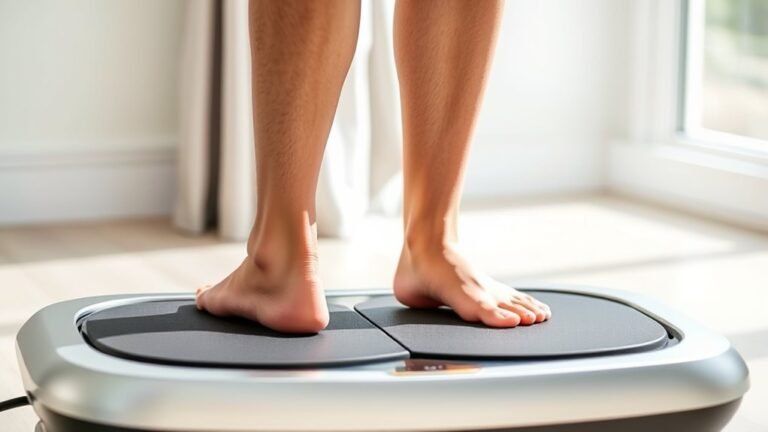
When you stand on a vibration plate, the rapid, gentle pulses cause your muscles to contract and relax repeatedly, which boosts blood flow throughout your body. This increased circulation helps your veins by encouraging blood to move more efficiently, reducing pooling and pressure that contribute to varicose veins.
The vibrations stimulate your lymphatic system too, aiding in the removal of waste and excess fluid. This combined effect enhances oxygen and nutrient delivery to your tissues, supporting vein health.
Scientific Evidence on Vibration Therapy for Vein Health

Since vibration therapy actively enhances blood flow and lymphatic drainage, researchers have explored its effects on vein health, particularly concerning varicose veins. Studies show that vibration can improve venous return, reducing blood pooling and relieving symptoms like leg heaviness and swelling.
While the evidence is promising, it’s not yet definitive—most research involves small sample sizes or short duration. You should note that vibration therapy alone isn’t a cure but may complement other treatments.
Clinical trials indicate improved microcirculation and reduced inflammation after regular sessions, suggesting potential benefits for vein function. However, experts recommend consulting your healthcare provider before starting vibration therapy, especially if you have severe vein disease or other health issues.
Staying informed helps you use vibration plates safely and effectively.
Benefits of Using Vibration Plates for Varicose Veins
Using vibration plates can boost your blood circulation, which is essential for managing varicose veins. You’ll likely notice less leg swelling as the gentle vibrations help move fluids more efficiently.
Plus, these plates strengthen your muscles, supporting better vein function and overall leg health. It’s a simple way to give your legs a little extra care without much effort.
Improved Blood Circulation
Although varicose veins can cause discomfort and swelling, vibration plates can help improve blood circulation effectively. By standing or exercising on a vibration plate, you stimulate muscle contractions that promote better blood flow in your legs.
This enhanced circulation helps prevent blood from pooling in your veins, reducing the risk of worsening varicose veins. Using vibration plates regularly offers these benefits:
- Activates deep muscle pumps to push blood upward
- Increases oxygen delivery to tissues
- Enhances venous return to the heart
- Supports lymphatic drainage to reduce toxin buildup
- Improves overall vascular health and elasticity
Incorporating vibration plate sessions into your routine can be a convenient way to boost circulation and support your leg vein health. It’s an easy addition that can make a real difference over time.
Reduced Leg Swelling
When your legs swell from varicose veins, vibration plates can provide significant relief by stimulating circulation and promoting fluid movement. This enhanced circulation helps prevent fluid from pooling in your lower legs, reducing the uncomfortable swelling often associated with varicose veins.
By standing or gently exercising on a vibration plate, you activate your leg muscles and lymphatic system, encouraging excess fluid to drain away more efficiently. This process not only eases swelling but also alleviates the pressure and heaviness you might feel after long periods of standing or sitting.
Using vibration plates regularly can help you manage leg swelling more effectively, making it easier to stay active and comfortable throughout your day. Just remember to follow recommended session times to avoid overuse.
Enhanced Muscle Tone
Since muscle tone plays a crucial role in supporting healthy blood flow, vibration plates can help you strengthen your leg muscles without high-impact exercise. Using these plates regularly engages your muscles through rapid contractions, improving their tone and endurance.
Stronger muscles assist the veins in pumping blood back to your heart, reducing the pressure that causes varicose veins.
Here’s how vibration plates enhance muscle tone for varicose vein relief:
- Activate deep muscle fibers more effectively than traditional workouts
- Improve calf muscle strength to support venous return
- Increase muscle endurance, reducing fatigue and swelling
- Promote better posture and leg alignment
- Offer low-impact exercise suitable for sensitive legs
Recommended Vibration Plate Settings for Varicose Veins
To support your circulation and minimize discomfort from varicose veins, you should use vibration plate settings that prioritize gentle, low-frequency vibrations. Start with lower frequencies to stimulate blood flow without causing strain.
Adjust intensity gradually, focusing on comfort rather than power. Sessions of 10-15 minutes work best to avoid overexertion.
| Setting | Recommendation |
|---|---|
| Frequency | 15-30 Hz |
| Intensity Level | Low to moderate |
| Session Duration | 10-15 minutes per use |
These settings help improve venous return and reduce swelling. Remember to maintain a relaxed posture during use to maximize benefits.
Following these guidelines allows you to safely incorporate vibration plates into your varicose vein management routine. It’s all about being gentle and consistent.
Safe Practices and Precautions When Using Vibration Plates
Before you start using a vibration plate, you should check with your doctor to make sure it’s safe for your varicose veins.
Keep your sessions short to avoid overloading your circulation. Following these precautions helps you get benefits without risking harm.
Medical Consultation Necessity
Although vibration plates offer numerous benefits, you should always consult a healthcare professional before using one if you have varicose veins. A medical expert can assess your condition and advise whether vibration therapy suits you or if it might worsen symptoms.
They’ll help tailor a safe approach that protects your veins and overall health.
Before starting vibration plate sessions, consider these key points from your doctor:
- Confirm there are no contraindications with your vein condition
- Discuss the best vibration settings for your situation
- Understand warning signs to stop usage immediately
- Get guidance on combining vibration therapy with other treatments
- Schedule regular follow-ups to track your vein health
Taking these steps ensures you use vibration plates safely and effectively with varicose veins.
Proper Duration Limits
Once your doctor approves the use of vibration plates, you’ll need to stick to proper duration limits to protect your veins. Start with short sessions—around 5 to 10 minutes—and gradually increase only if you feel comfortable.
Most experts recommend limiting use to 15-20 minutes per session, no more than three times a week. Overuse can strain your veins and worsen varicose symptoms.
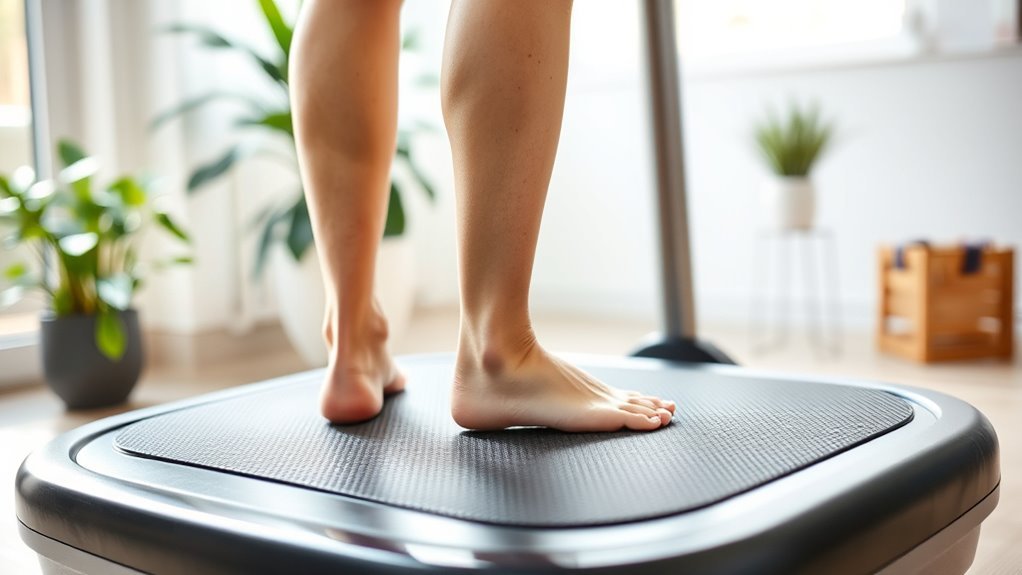
Always listen to your body; if you experience pain, swelling, or discomfort, stop immediately. Make sure to maintain proper posture and avoid standing still for too long on the plate.
Following these duration guidelines helps you safely enjoy the benefits of vibration therapy without risking your vein health.
Combining Vibration Plates With Other Treatments for Varicose Veins
When you combine vibration plates with other treatments for varicose veins, you can enhance overall results and speed up recovery. Vibration therapy boosts circulation and muscle tone, which really complements medical and lifestyle interventions.
To get the most out of it, consider these combinations:
- Use compression stockings to improve vein support and reduce swelling.
- Pair vibration sessions with leg elevation to ease pressure on veins.
You might also want to include gentle walking or low-impact exercises to promote blood flow.
And don’t forget to follow medical treatments like sclerotherapy or laser therapy as advised by your doctor.
Finally, maintaining a balanced diet rich in antioxidants can really support your vein health.
Tips for Integrating Vibration Plate Exercises Into Your Daily Routine
Combining vibration plates with other treatments sets a strong foundation, but integrating vibration plate exercises into your daily routine will make a bigger difference. Start by scheduling short sessions, around 10-15 minutes, three to five times a week. Consistency matters more than duration.
Use the vibration plate while doing simple activities like stretching or light strength exercises to maximize benefits. Place the plate near your workspace or TV area to remind yourself to use it regularly.
Listen to your body—if you experience discomfort, adjust the intensity or consult your doctor. Pair your sessions with proper hydration and leg elevation afterward to enhance circulation.
Frequently Asked Questions
Can Vibration Plates Replace Surgical Treatment for Varicose Veins?
No, you can’t replace surgery with vibration plates for varicose veins. They might improve circulation and reduce discomfort, but only a doctor can recommend surgery or treatments based on your vein condition and severity.
It’s important to get a proper diagnosis first. Your healthcare provider will help decide the best approach for you.
Are Vibration Plates Effective for All Types of Varicose Veins?
No, vibration plates aren’t effective for all types of varicose veins.
You’ll find they help mild cases by improving circulation, but severe or complicated veins usually need medical treatment beyond vibration therapy.
How Soon Can I Expect to See Results Using Vibration Plates?
Like waiting for spring after a long winter, you might start noticing improvements in circulation and reduced swelling within 4 to 6 weeks of consistent vibration plate use.
Stick with it, and results will come.
Can Vibration Plates Worsen Varicose Veins if Used Incorrectly?
Yes, vibration plates can worsen varicose veins if you use them incorrectly. You should avoid excessive pressure or standing too long.
Always start gently, listen to your body, and consult a doctor before beginning any new exercise. It’s better to be safe and get professional advice!
Do Vibration Plates Help Prevent New Varicose Veins From Forming?
Vibration plates can help improve circulation, which may reduce your risk of new varicose veins forming.
Just make sure you use them properly and avoid excessive pressure to get the best preventive benefits safely.
Conclusion
Using vibration plates can be a gentle breeze that stirs your circulation and soothes the storm of varicose veins. By incorporating these steady vibrations into your routine, you’re giving your legs a rhythmic dance toward better vein health.
Just remember to tune into your body’s signals and blend vibration therapy with other treatments for the best results.
With care and consistency, you’ll help your veins flow like a calm river, easing discomfort day by day. Vibration plates help varicose veins by improving blood flow and reducing swelling. When used properly, they can be a valuable part of managing varicose veins.
So, if you’re considering how to use vibration plates for varicose veins, start slow and listen to your body. Combine this therapy with lifestyle changes and medical advice for the best outcome. In time, vibration plates might just become a key part of your vein care routine, helping you feel lighter and more comfortable every day.