
How Many Calories Should You Burn on a Treadmill
You should aim to burn between 150 and 400 calories per treadmill session, depending on your weight, speed, and workout intensity.
Heavier individuals burn more calories at the same pace, so your body size definitely plays a role.
Increasing speed or incline boosts your calorie burn, making your treadmill workout more effective.
It’s all about balancing duration and intensity to get the best results without overdoing it.
Tracking your heart rate is a great way to tailor your workout effectively.
Keep going to discover tips for setting goals and getting the most from your treadmill time.
Key Takeaways
- Calorie burn varies by weight, speed, incline, and duration, with heavier individuals burning more calories at the same pace.
- Beginners should aim to burn 150-200 calories per treadmill session to build endurance safely.
- Increasing treadmill speed and incline elevates heart rate and boosts total calorie expenditure.
- Interval training combining high-intensity bursts with moderate recovery maximizes calorie burn efficiently.
- Use heart rate zones (60-80% max HR) to tailor intensity and optimize fat burning and cardiovascular benefits.
It’s all about finding what works best for you! Adjust your workout based on how you feel and your fitness goals.
Factors Influencing Calorie Burn on a Treadmill

Although the number of calories you burn on a treadmill depends on several factors, understanding these can help you tailor your workouts for better results. Your speed plays a major role: running or walking faster increases calorie burn.
Incline also matters—adding a slope forces your muscles to work harder, boosting energy expenditure. The duration of your workout is vital; longer sessions burn more calories overall.
Your fitness level influences how efficiently your body uses energy, so beginners might burn calories differently than seasoned runners. Even your treadmill’s settings, like interval training or steady pace, affect calorie use.
How Weight Affects Calories Burned
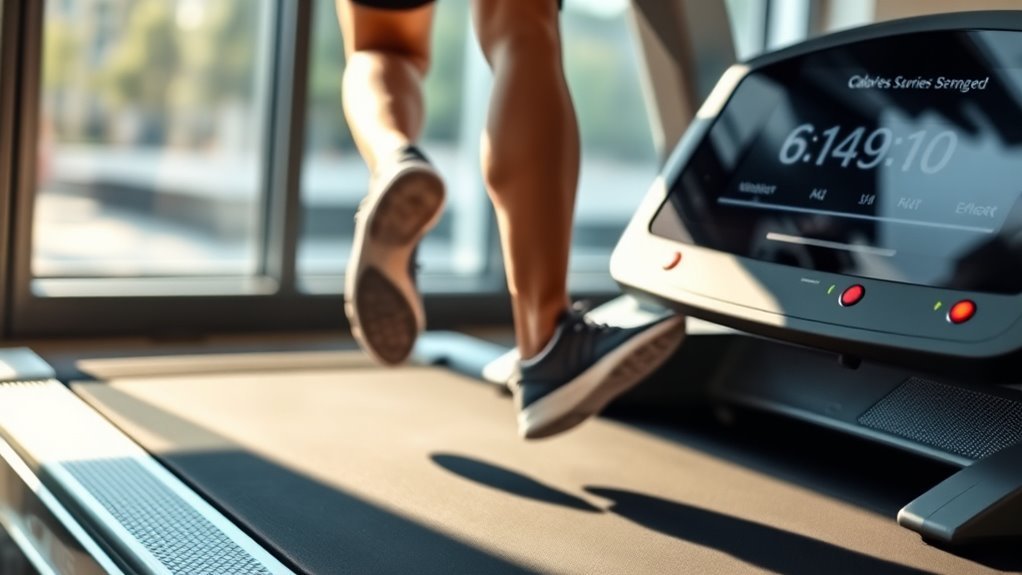
Besides speed, incline, and workout duration, your body weight plays a big role in how many calories you burn on a treadmill. The heavier you are, the more energy your body uses to move.
That means you’ll burn more calories during the same workout compared to someone lighter. This happens because carrying extra weight requires more effort, so your muscles work harder.
Burning more calories happens naturally when your muscles work harder carrying extra weight.
For example, if you weigh 180 pounds, you’ll burn more calories walking or running at a certain pace than someone who weighs 130 pounds. However, don’t focus solely on your weight; consistency and proper form matter too.
Understanding this can help you set realistic goals and track your progress more accurately as your fitness level changes.
Impact of Workout Intensity and Speed

You’ll burn more calories as you increase your speed and push your intensity higher on the treadmill. Understanding different intensity levels helps you tailor workouts to your goals.
Mixing in interval training can boost calorie burn and keep your sessions more engaging. It’s a great way to break up the routine and challenge yourself.
Speed Influence on Calories
When you increase your treadmill speed, your body works harder, which boosts the number of calories you burn. Moving faster demands more energy, so your metabolism kicks into higher gear.
For example, jogging at 5 mph burns fewer calories per minute than running at 7 mph. As your speed climbs, you engage more muscle fibers and elevate your heart rate, both contributing to higher calorie expenditure.
However, keep in mind that drastically increasing speed without proper conditioning can lead to injury. It’s smart to gradually raise your pace to safely maximize calorie burn.
Intensity Levels Explained
Although speed plays a major role, workout intensity combines factors like pace, incline, and duration to determine how many calories you burn on a treadmill. When you adjust these elements, you directly influence your calorie burn and fitness gains.
Here’s what you should focus on:
- Pace: Faster speeds increase your heart rate and calorie expenditure.
- Incline: Raising the treadmill’s incline simulates uphill walking or running, boosting intensity.
- Duration: The longer you work out, the more calories you burn overall.
- Consistency: Maintaining a steady effort prevents burnout and maximizes fat loss.
Interval Training Benefits
Mixing up your treadmill routine with interval training can dramatically boost the calories you burn by varying intensity and speed. When you alternate between high-intensity sprints and moderate-paced recovery periods, your body works harder, increasing calorie burn during and after your workout.
This method revs up your metabolism, helping you burn more fat even when you’re resting. Plus, interval training improves cardiovascular fitness and endurance faster than steady-state exercise.
You don’t need to spend hours—just short bursts of intense effort followed by recovery make a big difference. By pushing yourself during these intervals, you engage more muscle fibers and challenge your body to adapt.
Role of Workout Duration in Calorie Expenditure
Since your body burns calories continuously during exercise, the longer you stay on the treadmill, the more energy you’ll expend. Duration directly impacts total calorie burn, but quality matters too.
Here’s how workout length influences your calorie expenditure:
- Sustained Effort: Longer sessions allow for steady calorie burn over time.
- Fat Utilization: Extended workouts encourage your body to tap into fat stores.
- Increased Endurance: Your metabolism stays elevated even after you finish.
- Risk of Fatigue: Too long without breaks may reduce intensity and efficiency.
Balancing duration with intensity ensures you maximize calorie burn without overtraining. So, aim for a workout length that challenges you but keeps you energized throughout.
Calculating Your Personal Calorie Burn Estimate
To calculate your personal calorie burn, you need to think about factors like your weight, age, and workout intensity. Tracking your heart rate can give you a more accurate estimate of how many calories you’re burning.
You can also adjust your treadmill speed or incline to match your fitness goals and boost calorie expenditure. It’s a simple way to make your workouts more effective and keep things interesting!
Factors Affecting Calorie Burn
Although calorie burn varies from person to person, you can estimate your own by considering key factors like your weight, treadmill speed, incline, and workout duration. These elements directly influence how many calories you burn during your treadmill session.
Here’s what to focus on:
- Weight: Heavier individuals burn more calories at the same pace compared to lighter ones.
- Speed: Faster running or walking increases calorie expenditure.
- Incline: Adding an incline simulates uphill walking or running, making your muscles work harder.
- Duration: The longer you stay active, the more calories you burn overall.
Using Heart Rate Data
Beyond factors like weight and speed, your heart rate offers a more personalized way to estimate calories burned on a treadmill. By monitoring your heart rate during exercise, you get real-time feedback on how hard your body is working.
To calculate your calorie burn, you can use heart rate-based formulas that consider your age, weight, and exercise duration. Many fitness devices and apps use this data to provide accurate estimates tailored specifically to you.
For example, a higher heart rate usually means you’re burning more calories per minute. Tracking this helps you understand your workout’s effectiveness better than relying on speed or distance alone.
Adjusting Workout Intensity
When you adjust your treadmill workout intensity, you directly influence how many calories you burn. To calculate your personal calorie burn estimate, consider these key factors:
- Speed: Increasing your pace raises your calorie expenditure markedly.
- Incline: Adding incline mimics uphill walking or running, boosting calorie burn.
- Duration: The longer you work out, the more total calories you burn.
- Body Weight: Heavier individuals typically burn more calories at the same intensity.
Using Heart Rate to Gauge Calorie Burn
Since your heart rate reflects how hard your body is working, you can use it to estimate the calories you burn on a treadmill. Tracking your heart rate helps you stay in the ideal calorie-burning zone.
Typically, the higher your heart rate, the more calories you burn per minute. To make this practical, here’s a simple guide:
| Heart Rate (% of Max) | Calories Burned (per 10 min) |
|---|---|
| 50-60% | 50-70 |
| 60-70% | 70-90 |
| 70-80% | 90-110 |
| 80-90% | 110-130 |
Keep an eye on your heart rate monitor while you treadmill to adjust your speed and intensity accordingly. This keeps your workout efficient and tailored to your fitness goals.
Tips to Maximize Calories Burned on a Treadmill
Although burning calories on a treadmill depends on various factors, you can boost your results by adjusting your workout strategy.
Here are four effective tips to help you maximize calorie burn:
1. Increase Incline: Walking or running uphill engages more muscles, raising your heart rate and calorie expenditure.
It’s like giving your body an extra challenge that pays off.
2. Incorporate Intervals: Alternate between high-intensity sprints and moderate-paced recovery to keep your metabolism elevated.
This keeps things interesting and really fires up your calorie burn.
3. Maintain Proper Form: Use your arms actively and keep a steady posture to enhance overall workout efficiency.
Good form not only helps you burn more calories but also reduces the risk of injury.
4. Extend Duration Gradually: Add time to your sessions in small increments to build endurance and burn more calories.
Slow and steady wins the race here, making your workouts more effective over time.
Setting Realistic Calorie Burn Goals for Your Fitness Level
To set realistic calorie burn goals on a treadmill, you need to contemplate your current fitness level and personal limitations. If you’re new to exercise, aim for a modest calorie burn to avoid burnout or injury—start with 150-200 calories per session.
As your endurance improves, gradually increase your target. Use your heart rate and perceived exertion as guides; pushing too hard too soon can be counterproductive.
Consider factors like age, weight, and workout intensity, since they affect calorie expenditure. Setting achievable goals keeps you motivated and helps track progress effectively.
Frequently Asked Questions
Can Treadmill Workouts Help With Muscle Toning?
Yes, treadmill workouts can help tone muscles, especially your legs and glutes. By adjusting speed and incline, you’ll engage different muscle groups.
This improves strength and definition while also boosting your overall fitness and endurance. Plus, it’s a great way to mix up your routine and keep things interesting!
How Does Treadmill Running Compare to Outdoor Running?
Treadmill running offers controlled conditions, making it easier to maintain pace and avoid weather issues.
Outdoor running challenges you with varied terrain and wind resistance, boosting endurance and engaging more muscles.
Both have unique benefits you’ll enjoy. Give them a try and see which one fits your style best!
What’s the Best Treadmill Workout for Beginners?
Start with a 5-minute warm-up walk to get your muscles ready.
Then, alternate between 1-minute jogs and 2-minute walks for a total of 20 minutes. It might feel challenging at first, but that’s totally normal.
As you get more comfortable, try to increase your jogging time bit by bit.
And don’t forget to always cool down with 5 minutes of slow walking at the end. It helps your body relax and recover.
Are Incline Settings Better for Weight Loss?
Incline settings boost calorie burn, so yes, they’re better for weight loss.
Coincidentally, as you increase incline, you engage more muscles, making your workout tougher yet more efficient.
You’ll torch fat faster that way.
How Often Should I Clean My Treadmill?
You should clean your treadmill at least once a week, focusing on the belt and deck. Wipe down sweat after each use to keep things fresh.
Also, don’t forget to lubricate the belt every three to six months. This helps it run smoothly and safely.
Conclusion
As you step onto the treadmill, remember that each stride is a brushstroke painting your unique fitness journey. Your calorie burn isn’t just a number—it’s a reflection of your effort, weight, speed, and heart’s rhythm dancing together.
By tuning into these factors and setting realistic goals, you’ll turn every workout into a powerful story of progress. Keep pushing forward, and watch your calories melt away like morning mist under the rising sun.
Understanding how many calories you should burn on a treadmill depends on various elements like your body weight and workout intensity. So, focus on consistency and listen to your body. With dedication, your treadmill sessions will not only burn calories but also build endurance and boost your overall health. Keep moving, and let every step bring you closer to your fitness goals.