How You Do Squats With Dumbbells Safely and Effectively
To squat safely and effectively with dumbbells, start by choosing weights that challenge you without sacrificing form. Picking the right dumbbells is key because you want to build strength, not risk injury.
Before diving in, warm up with some light cardio and dynamic stretches to get your muscles ready.
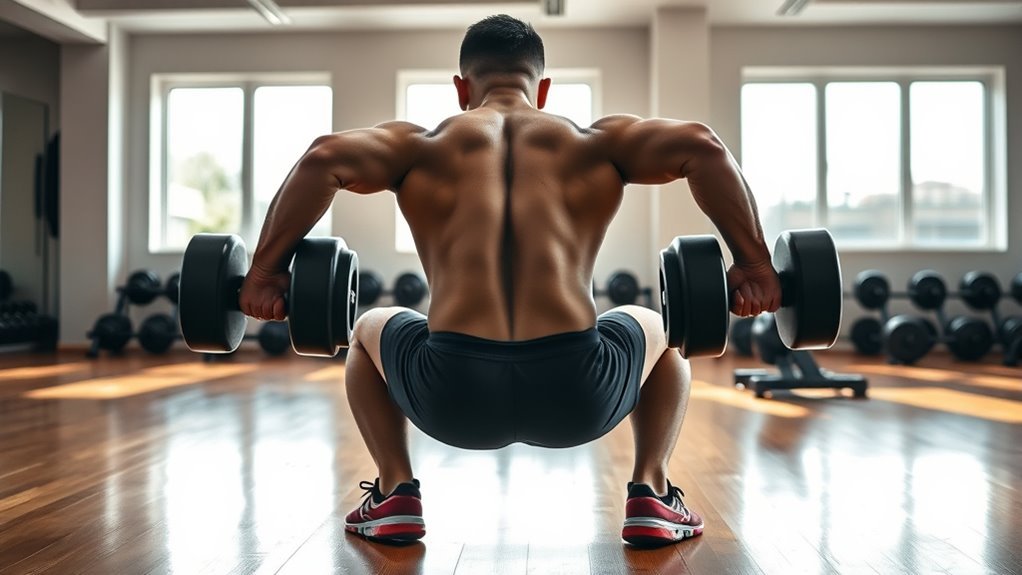
Position your feet shoulder-width apart, with your toes angled slightly outward. Hold the dumbbells firmly at your sides. When you lower yourself, do it slowly, keeping your chest up and your back straight. Make sure your knees stay aligned with your toes to protect your joints.
As you get stronger, increase the weight gradually. Only add more when your form is spot on. Keep following these steps consistently, and you’ll build strength safely while avoiding injury. It’s all about control and proper technique!
Key Takeaways
– Warm up with light cardio and dynamic stretches to prepare your muscles and joints before you start doing dumbbell squats.
This helps get your body ready and reduces the risk of injury.
– Hold the dumbbells firmly at your sides with relaxed arms. Keep your back straight and your core engaged throughout the movement.
Trust me, maintaining good posture makes a big difference.
– Position your feet shoulder-width apart, with your toes angled about 15-30 degrees outward. Make sure your knees stay aligned with your toes as you squat down.
This alignment protects your knees and helps you squat safely.
– Lower yourself slowly by bending your hips and knees. Push through your heels to rise back up without locking your knees.
Keep the movement controlled and steady for the best results.
– Increase the weight gradually, but only after you’ve mastered the correct form. Aim to perform squats 2-3 times a week, allowing rest days between sessions.
Consistency and patience are key here!
Choosing the Right Dumbbells for Your Squats
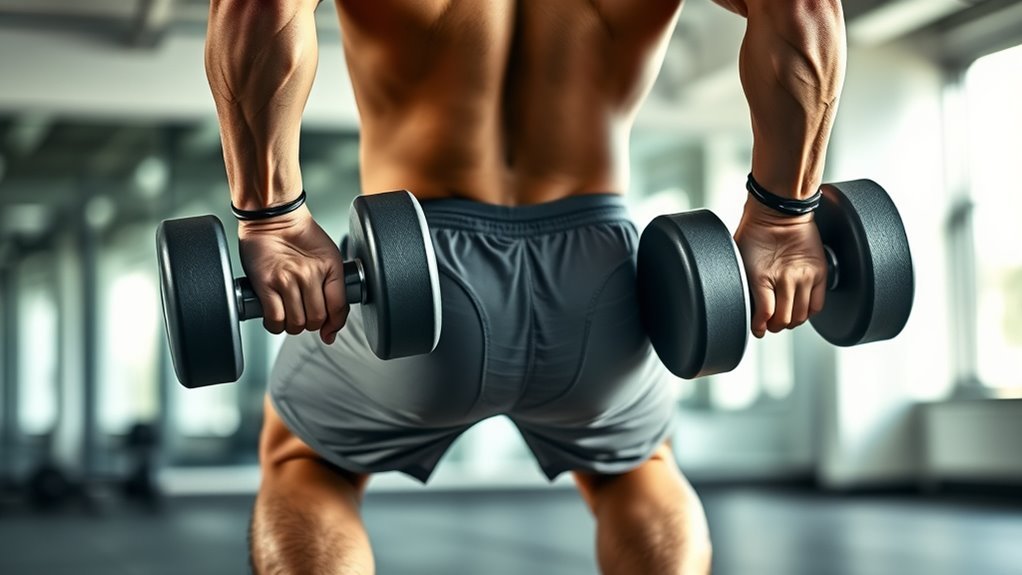
Choosing the right dumbbells for your squats is essential to guarantee both safety and effectiveness during your workout. Begin by selecting a weight that challenges you but doesn’t compromise your form.
If you’re new, start light to master the movement before increasing the load. Consider adjustable dumbbells—they let you fine-tune weights as you progress, saving space and money.
Opt for dumbbells with comfortable grips that won’t slip during your squat. Avoid weights that are too heavy, as they increase injury risk and hinder your range of motion.
Proper Warm-Up Techniques Before Squatting
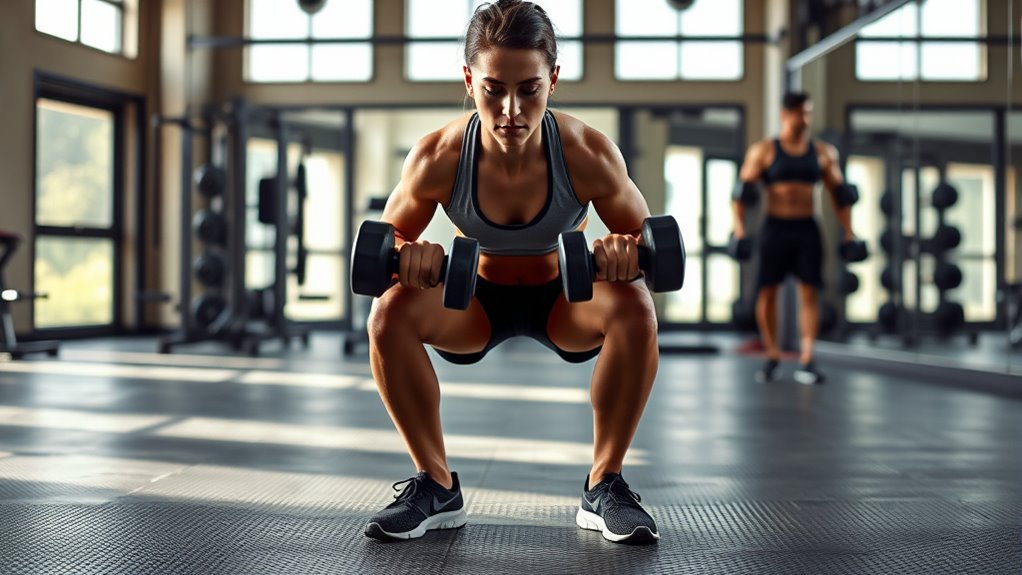
Before you start squatting, warming up properly prepares your muscles and joints to handle the movement safely and effectively. Skipping this can increase your risk of injury and reduce your performance.
Here’s a simple warm-up routine to get you ready:
- Light Cardio (5 minutes): Get your heart rate up with brisk walking or jogging to increase blood flow.
- Dynamic Leg Swings (10 reps each leg): Loosen your hip flexors and hamstrings with controlled forward and sideways swings.
- Bodyweight Squats (15 reps): Practice the squat motion without weights to reinforce form and activate muscles.
- Hip Circles (10 rotations each direction): Mobilize your hips to improve flexibility and range of motion.
These steps will help you squat with better control and less strain. Give it a try, and you’ll notice the difference!
Correct Foot Position and Stance for Dumbbell Squats
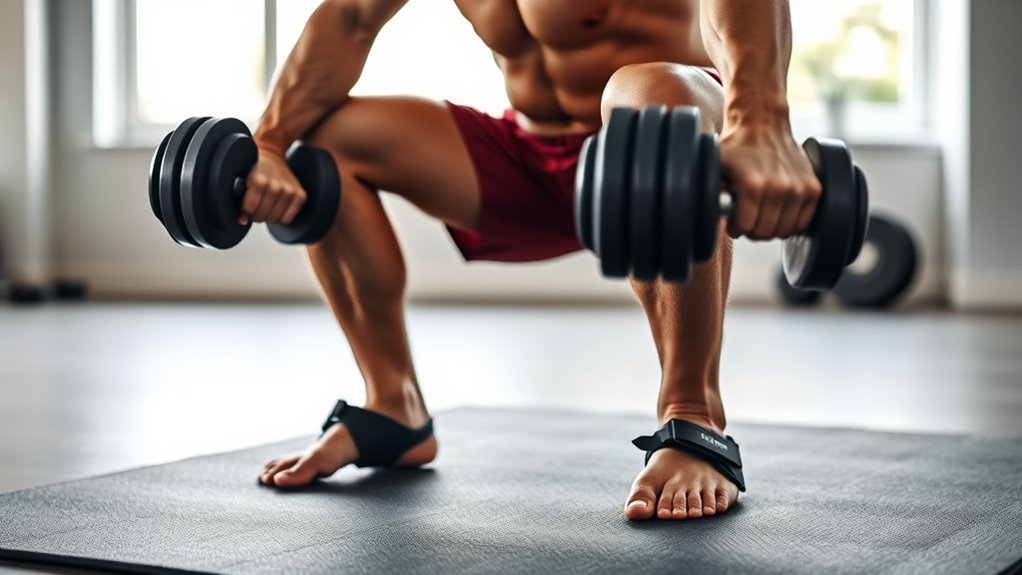
When you set your feet correctly for dumbbell squats, you create a stable foundation that enhances balance and power throughout the movement. Position your feet shoulder-width apart or slightly wider, with toes angled out about 15 to 30 degrees.
This stance allows your knees to track naturally over your toes as you squat down. Keep your weight evenly distributed across your entire foot—heel to toe—to avoid leaning forward or losing balance.
Make sure your feet stay flat on the ground during the squat to maximize stability and prevent injury. Adjust your stance slightly if you feel discomfort or limited mobility, but maintain consistency to build proper muscle engagement and form.
A well-set stance is key to performing dumbbell squats safely and effectively.
How to Hold Dumbbells During Squats
Although holding dumbbells may seem straightforward, the way you grip and position them greatly affects your balance and form during squats.
To hold dumbbells effectively, here’s what you can do:
- Choose a comfortable grip — Hold the dumbbells firmly but avoid squeezing too tight. This helps prevent unnecessary tension.
- Keep your arms relaxed — Let your arms hang naturally by your sides. This keeps you stable without restricting your movement.
- Position dumbbells evenly — Make sure both dumbbells are at the same height. This way, your body stays balanced throughout the squat.
- Avoid swinging — Control the dumbbells so they don’t swing forward or backward. Swinging could throw off your form.
Follow these tips, and you’ll maintain proper posture while getting the most out of your dumbbell squats.
Step-by-Step Guide to Performing Dumbbell Squats
To perform dumbbell squats safely, you’ll want to start by gripping the dumbbells properly to maintain control.
Next, set your feet shoulder-width apart to guarantee a stable squat stance.
Finally, focus on moving in a slow, controlled manner to protect your joints and maximize effectiveness.
Proper Dumbbell Grip
Gripping the dumbbells correctly guarantees you maintain control and prevent injury during your squats. Here’s how to get it right:
- Choose the right dumbbells: Pick weights that feel secure and balanced in your hands. You want something comfortable to hold, not too heavy or too light.
- Wrap your fingers firmly: Grab each dumbbell with all your fingers wrapped around the handle. Avoid gripping too loosely — a firm hold keeps things safe and steady.
- Keep your wrists neutral: Don’t bend your wrists; keep them straight to reduce strain and maintain stability. This helps you avoid unnecessary stress or injury.
- Position dumbbells by your sides: Hold the dumbbells close to your body for better control and balance during the squat. It makes the movement smoother and more effective.
Correct Squat Stance
When you set your feet correctly, you create a strong foundation that supports your entire squat movement. Start by standing with your feet shoulder-width apart, toes pointing slightly outward—about 15 to 30 degrees. This stance allows for natural hip and knee alignment.
Distribute your weight evenly across your whole foot, keeping your heels firmly planted. Avoid letting your knees cave inward or bow outward during the squat.
Keep your chest up and engage your core to maintain balance. Adjust your stance slightly if you feel discomfort, but aim to keep it consistent every time you squat.
A proper squat stance ensures stability, helps prevent injury, and maximizes the effectiveness of your dumbbell squats by promoting correct form throughout the exercise.
Controlled Movement Execution
Establishing a solid squat stance sets you up for success, but executing each movement with control brings the full benefits of dumbbell squats. To perform controlled dumbbell squats, follow these steps:
- Start Slowly: Lower yourself by bending your knees and pushing your hips back. Keep your chest up and back straight.
- Maintain Balance: Keep your weight evenly distributed on your feet. This helps you avoid leaning forward or backward.
- Engage Core: Tighten your core muscles to support your spine throughout the movement.
- Rise Smoothly: Push through your heels to return to standing. Extend your hips and knees, but don’t lock them out.
Common Mistakes to Avoid When Squatting With Dumbbells
When squatting with dumbbells, you need to keep your back aligned properly to avoid injury. Make sure the weights are positioned correctly so they don’t throw off your balance.
Also, pay close attention to your knee placement to protect your joints and maintain good form. It’s all about staying safe and getting the most out of your workout!
Improper Back Alignment
Although it might seem minor, improper back alignment during dumbbell squats can lead to serious injuries and reduce the effectiveness of your workout. Keeping your back straight is essential for protecting your spine and maximizing muscle engagement.
Here’s how to avoid common mistakes:
- Keep your chest up and shoulders back to maintain a neutral spine.
- Avoid rounding or arching your lower back; engage your core to stabilize.
- Look straight ahead, not down, to help keep your back aligned.
- Control your descent and ascent, preventing jerky movements that strain your back.
Incorrect Weight Placement
If you don’t place the dumbbells correctly during your squats, you risk losing balance and putting unnecessary strain on your wrists and shoulders. Holding the dumbbells too far from your body causes instability and forces your arms to work harder just to keep the weights steady.
Instead, keep the dumbbells close to your sides or rest them on your shoulders to maintain control. Avoid gripping them too tightly, which can lead to wrist discomfort.
Also, don’t let the dumbbells swing or shift as you squat; this disrupts your form and increases injury risk. Proper placement ensures that your muscles engage correctly, letting you focus on your legs and glutes.
Always check your grip and position before each squat to stay safe and effective. It really makes a difference in how well you perform and how you feel afterward.
Neglecting Knee Position
Because proper knee alignment plays a crucial role in preventing injury, you need to pay close attention to your knee position during dumbbell squats. Neglecting this can cause strain or damage to your joints.
To keep your knees safe and effective during the movement, follow these tips:
- Keep your knees aligned with your toes throughout the squat.
- Avoid letting your knees cave inward or push excessively outward.
- Ensure your knees don’t extend past your toes to reduce joint stress.
- Engage your glutes and core to stabilize your knees during the squat.
Tips for Increasing Weight Safely Over Time
When you want to build strength with dumbbell squats, increasing the weight gradually is key to avoiding injury and ensuring steady progress. Start by mastering your current weight with perfect form before adding more.
Increase the dumbbell weight in small increments—typically 2.5 to 5 pounds—to let your muscles adapt safely. Pay attention to how your body feels during and after each session; any sharp pain or discomfort signals it’s time to hold back.
Give yourself at least a week or two at a new weight before increasing again. Also, focus on controlled movements and avoid rushing through sets.
Incorporating Dumbbell Squats Into Your Workout Routine
Although dumbbell squats target multiple muscle groups, you can easily fit them into your workout routine to maximize overall strength and balance.
To get started, follow these steps:
- Schedule dumbbell squats 2-3 times a week, allowing rest days between sessions for muscle recovery.
- Combine them with complementary exercises like lunges, deadlifts, and calf raises to build lower body strength.
- Start with lighter weights and increase gradually as you master form and build endurance.
- Warm up properly before squatting and stretch afterward to prevent injury and improve flexibility.
Give it a try, and you’ll see how these simple adjustments can make a big difference!
Frequently Asked Questions
Can Dumbbell Squats Help Improve Balance and Coordination?
Yes, dumbbell squats can boost your balance and coordination by engaging stabilizer muscles. As you control weights, you improve proprioception and body awareness.
This helps you stay steady and move more confidently in daily activities and workouts. So, it’s not just about building strength—it’s about enhancing how you move overall.
How Do Dumbbell Squats Compare to Barbell Squats in Muscle Activation?
Dumbbell squats activate stabilizer muscles more due to balance demands, while barbell squats generally engage larger muscles like quads and glutes more intensely.
You’ll find dumbbells offer versatility, but barbells build maximal strength faster. It really depends on your training goals and what feels best for you.
Are Dumbbell Squats Suitable for People With Knee Problems?
Yes, dumbbell squats can be suitable if you focus on proper form and avoid deep bends that strain your knees. Always start light, listen to your body, and consult a healthcare professional before beginning any new exercise.
It’s all about being cautious and paying attention to how your knees feel during the movement. If something hurts, it’s a good idea to stop and reassess your technique or try a different exercise. Taking these steps can help you stay safe and get the most out of your workouts.
What Are the Best Recovery Practices After Dumbbell Squat Workouts?
Prioritize proper protein, plenty of water, and purposeful rest. You’ll want to stretch and soothe soreness with slow, soothing self-massage.
Make sure you get enough sleep too. Staying consistent with these steps supports speedy, safe, and successful squat recovery.
Can Dumbbell Squats Aid in Weight Loss Effectively?
Yes, dumbbell squats can help you lose weight effectively by boosting your metabolism and building muscle.
Combine them with a healthy diet and cardio for the best results, and stay consistent with your workouts.
It’s all about sticking with it and making sure you’re fueling your body right. Keep at it, and you’ll see progress!
Conclusion
Now that you know how to squat with dumbbells safely and effectively, you’re just a few reps away from building legs stronger than steel beams! Remember to choose the right weights and warm up properly to get started.
Focus on your form to avoid injuries—this is key. Keep challenging yourself gradually, and don’t rush the process.
With consistency and care, dumbbell squats will become a powerhouse move in your workout. They’re great for transforming your strength and confidence like never before.
So, stick with proper technique and make dumbbell squats a regular part of your routine. Your legs, glutes, and overall fitness will thank you!