

How Do You Do a Dumbbell Bench Press on the Floor Safely
To safely do a floor dumbbell bench press, start by lying flat on your back with your knees bent and feet firmly planted on the floor. Hold the dumbbells at chest height, making sure your shoulders and back stay flat against the ground. This setup helps protect your shoulders and ensures proper form throughout the exercise.
Lower the weights slowly until your elbows gently touch the floor, then press the dumbbells back up while exhaling. Keep your movements controlled and steady—avoid any jerky or fast motions to prevent injury.
It’s best to start with manageable weights and always warm up well before you begin.
Keep at it, and you’ll find useful tips to improve your form and progress steadily. Remember, consistency and proper technique are key to getting the most out of your dumbbell bench press on the floor.
Key Takeaways
- Lie flat with knees bent and feet planted, holding dumbbells at chest height. Keep your shoulders and back stable on the floor.
- Lower the dumbbells slowly until your elbows touch the floor. Make sure to maintain controlled, steady movements without flaring your elbows too much.
- Inhale deeply while lowering the weights, and exhale forcefully during the press. This helps engage your chest and triceps effectively.
- Always warm up properly and start with manageable dumbbell weights. This way, you can master the form and reduce the risk of injury.
- Use a clear, stable workout space with proper flooring. Also, avoid jerky motions to keep the exercise safe and smooth.
Benefits of the Floor Dumbbell Bench Press

Although it may seem less common than the traditional bench press, the floor dumbbell bench press offers unique benefits that can enhance your workout. By limiting your range of motion, it reduces shoulder strain, making it a safer option if you’re recovering from an injury.
You’ll also engage your triceps more effectively since your elbows stop when they hit the floor, forcing your muscles to work harder. Plus, using dumbbells instead of a barbell increases muscle activation by requiring more stabilization, improving your overall strength and coordination.
This exercise also helps correct muscle imbalances, as each arm works independently. Incorporating the floor dumbbell bench press can boost your upper body strength while minimizing injury risk, making it a smart addition to your routine.
Equipment Needed for the Exercise
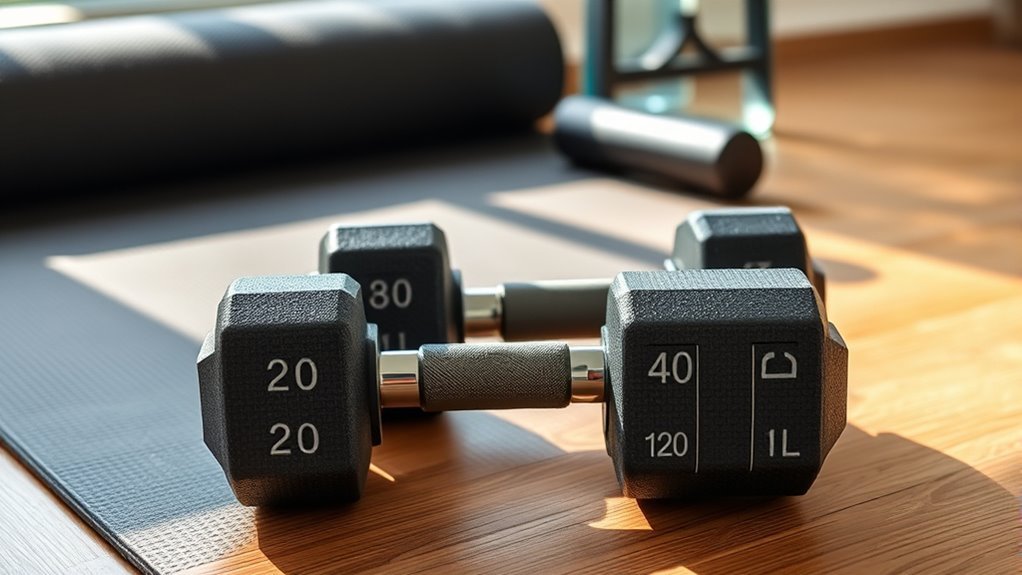
To perform a dumbbell bench press safely, you’ll need some essential equipment that supports proper form and stability. First, grab a pair of dumbbells that match your current strength level—choose weights you can control without compromising technique.
Next, use a sturdy, flat surface like an exercise mat or low-pile carpet to lie on; this cushions your back and prevents slipping. Wrist wraps can offer extra support, especially if you’re lifting heavier.
Use a sturdy, flat surface like a mat to cushion your back and prevent slipping during your dumbbell bench press.
A mirror nearby helps you monitor your form throughout the movement. Finally, consider wearing proper workout shoes to maintain foot stability.
Having this equipment ready ensures you focus on your exercise safely and effectively without unnecessary risk or discomfort. It just makes the whole process smoother and safer!
Preparing Your Workout Space
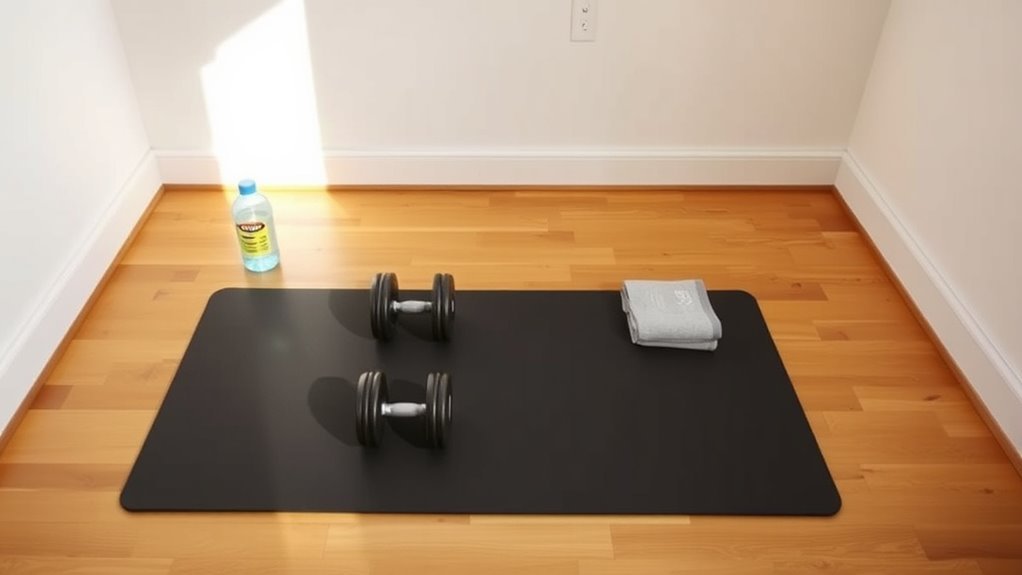
Before you start, make sure your workout area is clear and level to prevent any accidents. Lay down protective flooring to cushion your bench and protect your floor from damage.
Taking these steps helps create a safe and stable environment for your dumbbell bench press. It’s all about making sure you can focus on your workout without worrying about slips or scratches.
Clear and Level Area
Since safety starts with your environment, make sure you clear and level the area where you’ll be working out. Remove any clutter, furniture, or objects that could cause tripping or interfere with your movement.
A tidy space helps you focus and reduces the risk of accidents. Check the floor surface for stability; uneven or slippery spots can throw off your balance during the dumbbell bench press.
If you find bumps or inclines, choose a different spot or adjust the area to make it flat. Ensuring the space is level also helps maintain proper form and control throughout the exercise.
Use Protective Flooring
After clearing and leveling your workout area, adding protective flooring can further safeguard your space. It cushions the impact of dropped dumbbells, protects your joints during presses, and prevents damage to both your floor and equipment.
Choose flooring that’s easy to clean and slip-resistant to keep your workout safe and comfortable. Consider these options:
- Rubber mats for shock absorption and durability
- Foam tiles to reduce joint strain and provide grip
- Carpet remnants for basic cushioning and noise reduction
- Vinyl flooring for easy maintenance and moisture resistance
Installing protective flooring helps you focus on your form without worrying about slips or damage. It’s a simple step that enhances safety and prolongs the life of your gear and flooring.
Step-by-Step Guide to the Floor Dumbbell Bench Press
Start by positioning yourself flat on the floor with a dumbbell in each hand, palms facing forward. Keep your elbows bent at about 45 degrees to protect your shoulders as you press the weights upward.
Focus on controlled, steady movements to maximize effectiveness and reduce injury risk. Take your time with each press—it’s all about quality over speed here!
Proper Starting Position
Before you lift the dumbbells, position yourself correctly on the floor to guarantee safety and maximize effectiveness. Start by lying flat on your back with your knees bent and feet firmly planted on the floor.
Hold the dumbbells close to your chest with your palms facing forward. Make sure your shoulders, head, and hips stay in contact with the floor throughout the movement.
Key points for the proper starting position:
- Keep your shoulder blades retracted and pressed into the floor for stability.
- Position the dumbbells at chest height, elbows bent about 90 degrees.
- Maintain a neutral spine by engaging your core muscles.
- Ensure your feet are flat and stable to support balance.
This setup helps you lift efficiently while reducing injury risk. It’s all about getting comfortable and stable before you start.
Controlled Movement Technique
When you’re ready to press the dumbbells, lower them slowly and with control until your elbows gently touch the floor. Keep your movements steady to engage your muscles fully and avoid injury.
Focus on a smooth descent, resisting the urge to drop the weights quickly. Keep your wrists aligned with your forearms to maintain joint stability.
Pause briefly when your elbows reach the floor, then press the dumbbells upward by contracting your chest and triceps evenly. Avoid locking your elbows at the top to maintain tension on the muscles.
Throughout the movement, breathe steadily—inhaling as you lower the weights and exhaling as you press up. This controlled technique ensures you work your muscles effectively while minimizing the risk of strain or injury during your floor dumbbell bench press.
Proper Breathing Techniques During the Exercise
Although it might seem minor, proper breathing techniques play a crucial role in performing the dumbbell bench press safely and effectively. You need to coordinate your breath with your movements to maintain stability and prevent injury.
Here’s how to breathe right during the exercise:
- Inhale deeply as you lower the dumbbells toward your chest, filling your lungs to brace your core.
- Exhale forcefully as you press the dumbbells upward, engaging your muscles fully.
Avoid holding your breath throughout the lift to prevent unnecessary pressure buildup. It’s important to keep the air flowing.
Maintain a steady, rhythmic breathing pattern to support endurance and focus. This way, you stay in control and get the most out of your workout.
Common Mistakes to Avoid
If you want to get the most out of your dumbbell bench press while staying safe, you need to watch out for common mistakes that can compromise your form and increase injury risk. First, avoid flaring your elbows out too wide, as this stresses your shoulders. Keep them at about a 45-degree angle.
Don’t arch your lower back excessively; keep your spine neutral against the floor. Also, don’t rush through the movement—control both the lowering and pressing phases to engage muscles properly.
Avoid letting the dumbbells collide or drift too far apart, which can cause imbalance. Finally, don’t neglect a proper warm-up or use weights too heavy for your current strength level.
These mistakes can limit progress and increase your chance of injury. So, take your time and focus on good form to get the best results.
Modifications for Different Fitness Levels
Since everyone’s strength and experience vary, you’ll want to adjust the dumbbell bench press to match your fitness level. If you’re a beginner, start with lighter weights and focus on mastering your form on the floor.
As you gain confidence, gradually increase the dumbbell weight and reps. For intermediate lifters, try slowing your tempo to build muscle control and endurance. Advanced users can incorporate pauses at the bottom of the press to boost strength.
Here are some modifications to fit your level:
- Use lighter dumbbells or resistance bands for easier control
- Limit the range of motion if shoulder flexibility is an issue
- Perform the press with one dumbbell at a time for stability
- Add slow negatives to increase muscle tension and challenge
Adjust smartly to stay safe and effective.
Tips for Gradual Progress and Injury Prevention
To make steady gains and avoid setbacks, you need to increase your dumbbell bench press weight and reps gradually. Start with a manageable weight to master form, then add small increments each week. Don’t rush; your muscles and joints need time to adapt.
Always warm up with lighter sets to prepare your body and reduce injury risk. Pay close attention to any discomfort—stop if you feel sharp pain.
Keep your movements controlled, avoiding jerky or fast motions that strain muscles. Incorporate rest days to allow recovery and prevent overtraining.
Finally, maintain proper posture throughout the exercise, keeping your back flat on the floor and shoulders stable. Following these tips will help you progress safely and build strength effectively.
Frequently Asked Questions
Can I Use Wrist Wraps for Extra Support During the Floor Dumbbell Bench Press?
Yes, you can use wrist wraps for extra support during the floor dumbbell bench press. They help stabilize your wrists, reduce strain, and improve grip.
This means you can lift more comfortably and safely throughout your workout. Wrist wraps are especially handy if you’re pushing heavier weights or have wrist discomfort. So, go ahead and give them a try!
How Often Should I Include the Floor Dumbbell Bench Press in My Routine?
How often do you want to see progress? You should include the floor dumbbell bench press 2-3 times weekly, allowing rest days between sessions.
This helps you recover and build strength effectively without overtraining or risking injury.
Is the Floor Dumbbell Bench Press Suitable for People With Shoulder Injuries?
You should be cautious with a shoulder injury; the floor dumbbell bench press can limit range of motion, which might help.
But always consult your doctor or physical therapist before trying it to avoid aggravating your injury.
What Are the Best Recovery Methods After Doing the Floor Dumbbell Bench Press?
You should ice your shoulders, stretch gently, and rest adequately to recover after a floor dumbbell bench press. Hydrate well to help your muscles recover faster.
Using foam rolling can really help too. It reduces stiffness and promotes healing effectively.
Also, consider doing light mobility exercises. These keep you moving without overdoing it and aid recovery.
How Does the Floor Dumbbell Bench Press Compare to the Traditional Bench Press?
If you’re looking for a gentler challenge, the floor dumbbell press limits your range but protects your shoulders more than the traditional bench press.
You’ll engage stabilizers differently, making it a smart alternative for safer gains. It’s a great option if you want to mix things up without risking injury.
Conclusion
By choosing the floor dumbbell bench press, you not only build strength but also protect your shoulders—coincidence or not, the limited range of motion naturally keeps you safer.
As you prepare your space and focus on proper form, you’ll find that progress and injury prevention go hand in hand.
So, take your time, breathe right, and embrace the floor as your reliable spotter in this effective exercise journey. Doing the dumbbell bench press on the floor safely means paying attention to technique, controlling your movements, and listening to your body.
With these tips, you’ll maximize your workout benefits while minimizing injury risks, making the floor dumbbell bench press a smart, shoulder-friendly choice for building upper body strength.