How to Change Treadmill Belt in 3 Easy Steps
First, unplug your treadmill to ensure safety before you begin. Give the deck area a good clean to remove any dust or debris.
Then, loosen the rear roller bolts to release the old treadmill belt.
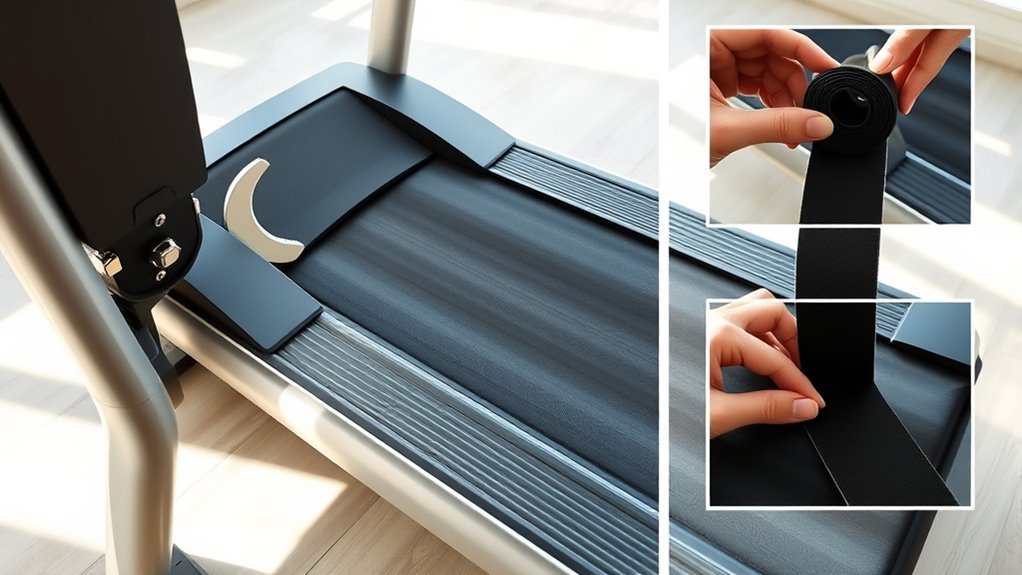
Next, carefully slide off the worn belt. Lay the new one flat over the deck and rollers, making sure to pull it tight to avoid any slack. This will help the belt run smoothly once installed.
Finally, power on the machine at a low speed. Adjust the roller bolts to center the belt perfectly. Tighten everything securely and test the treadmill for smooth operation.
Keep going to uncover tips for perfect alignment and maintenance that will prolong the life of your treadmill belt!
Key Takeaways
- Unplug the treadmill first, then clean the deck to get rid of any dust or debris. After that, loosen the rear roller bolts to reduce the tension on the belt.
- Now, carefully slide off the old belt from the deck and rollers. Take your time here so you don’t damage anything.
- Next, position the new belt so it’s centered on both the deck and rollers. Make sure there’s no slack in the belt.
- Gradually tighten the rear roller bolts while checking the belt alignment. You can do this by walking on the belt at a low speed.
- If the belt isn’t running smooth or centered, adjust the roller bolts as needed. Once everything looks good, give the bolts a final tightening.
Preparing Your Treadmill for Belt Replacement
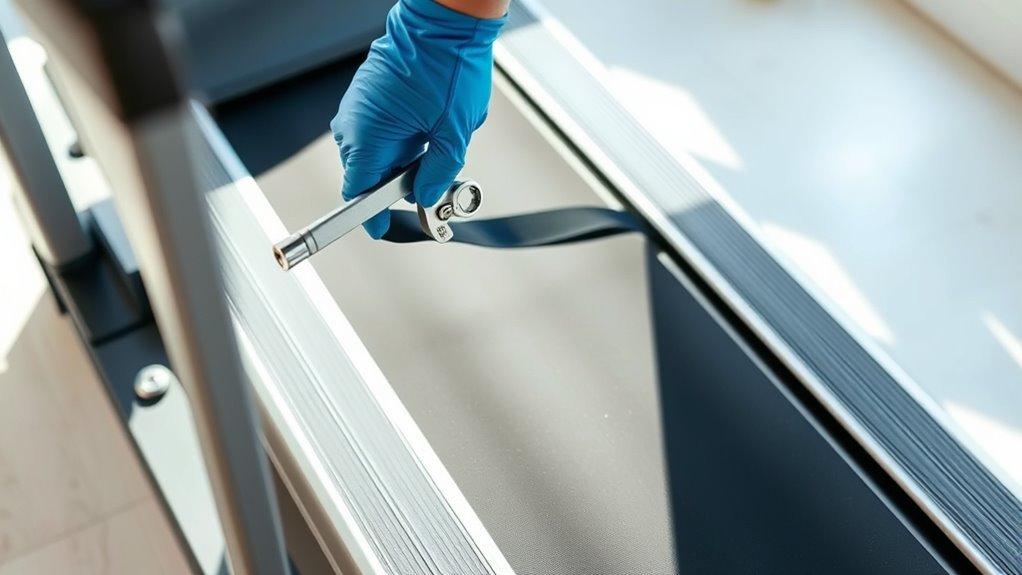
Before you replace the treadmill belt, make sure to unplug the machine and move it to a clear workspace. This prevents accidents and gives you enough room to work comfortably.
Next, clean the treadmill deck and belt area to remove dust, dirt, and sweat buildup. This helps the new belt slide smoothly.
Check the treadmill manual for any specific instructions or tools you might need. Gather all necessary tools like screwdrivers, Allen wrenches, and a replacement belt.
Inspect the treadmill for any signs of wear or damage, especially on rollers and the deck. Finally, loosen the tension on the current belt by adjusting the rear rollers or bolts, so it’s easier to remove later.
These steps will set you up for a smooth belt replacement process.
Removing the Old Treadmill Belt
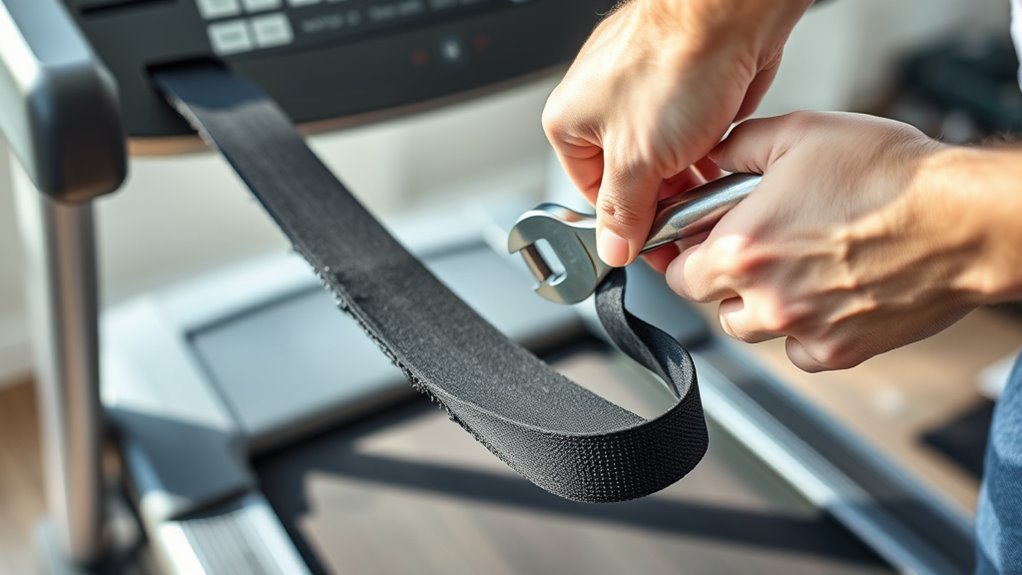
Once you’ve loosened the tension, you can carefully lift the edges of the old belt to slide it off the treadmill deck. Start by grabbing the belt near the front roller, lifting it gently to avoid damaging the deck or rollers.
Slowly pull the belt backward, guiding it off the rear roller. If the belt feels stuck, double-check that the tension bolts are fully loosened to prevent unnecessary force.
Be mindful of any dust or debris underneath; it’s a good idea to clean the deck while the belt is off. Set the old belt aside safely, as you’ll no longer need it.
Removing the belt completely exposes the deck and rollers, preparing your treadmill for the next step: installing the new belt.
Installing and Aligning the New Belt
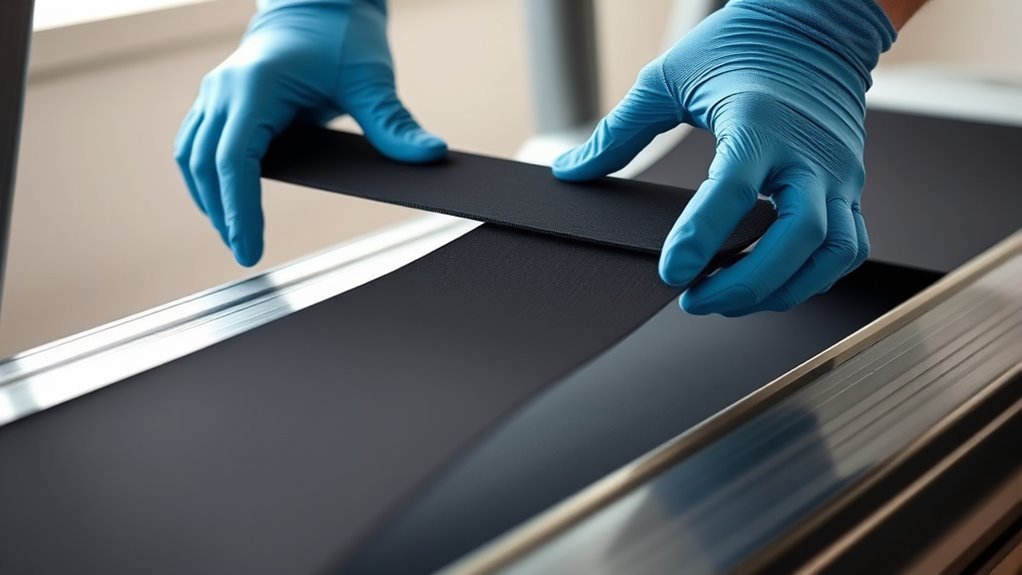
Although installing a new treadmill belt might seem tricky, you can handle it step-by-step by positioning the belt evenly over the deck and rollers. First, lay the belt flat, making sure it’s centered with equal overhang on both sides.
Next, gently pull the belt tight to remove any slack. Then, reinstall the front roller bolts loosely to hold the belt in place.
Power on the treadmill and walk slowly to check alignment. If the belt drifts to one side, use the rear roller adjustment bolts to shift it back to center—turn clockwise to move the belt right, counterclockwise to move it left.
Keep adjusting until the belt runs smoothly without slipping or rubbing. Finally, tighten all bolts securely, and your new belt is ready for use.
Frequently Asked Questions
How Often Should I Replace My Treadmill Belt?
You should replace your treadmill belt every 3 to 5 years, depending on usage.
If you notice slipping, fraying, or unusual noise, it’s time to change it. This helps keep your workouts safe and smooth.
What Are the Signs My Treadmill Belt Needs Replacement?
If your treadmill belt squeaks like an old phonograph, slips during workouts, or shows frayed edges, it’s time to replace it.
You’ll notice uneven running or a burning smell, signaling wear and tear you can’t ignore.
These signs mean your belt is past its prime, so don’t wait too long to change it. Your workouts will feel smoother once it’s replaced!
Can I Use Any Treadmill Belt Brand for Replacement?
You can’t just use any treadmill belt brand; you need one that matches your treadmill’s model and specifications. Using the wrong belt can cause damage or poor performance, so always check compatibility before purchasing a replacement.
It’s really important to get the right fit. Otherwise, you might end up with a belt that wears out quickly or doesn’t work smoothly. So, take your time to find the correct belt for your treadmill.
How Do I Maintain My Treadmill Belt to Extend Its Life?
You should regularly clean and lubricate your treadmill belt, keep it aligned, and avoid running with sharp objects on your shoes.
Also, check tension periodically and follow the manufacturer’s maintenance guidelines to extend its life effectively.
Taking these small steps can really make a big difference in how long your treadmill belt lasts!
What Tools Are Required for Treadmill Belt Replacement?
Like a knight preparing for battle, you’ll need an Allen wrench, screwdriver, and possibly a socket wrench. These tools help you loosen bolts, remove the old belt, and secure the new one tightly in place.
Having the right tools makes the job way easier, trust me. So, make sure you have them ready before you start!
Conclusion
Now that you’ve replaced your treadmill belt, you’re ready to hit the ground running with your workouts again. It might seem tricky at first, but once you get the hang of it, you’ll find it’s a piece of cake.
Just remember to keep everything aligned properly to avoid any hiccups down the road. With these simple steps, you’ve taken a big step toward maintaining your treadmill’s performance and longevity.
Changing your treadmill belt not only improves your workout experience but also extends the life of your machine. So, keep an eye on the belt’s condition and don’t hesitate to replace it when needed. This simple maintenance task ensures your treadmill runs smoothly and safely, letting you focus on reaching your fitness goals without interruptions.