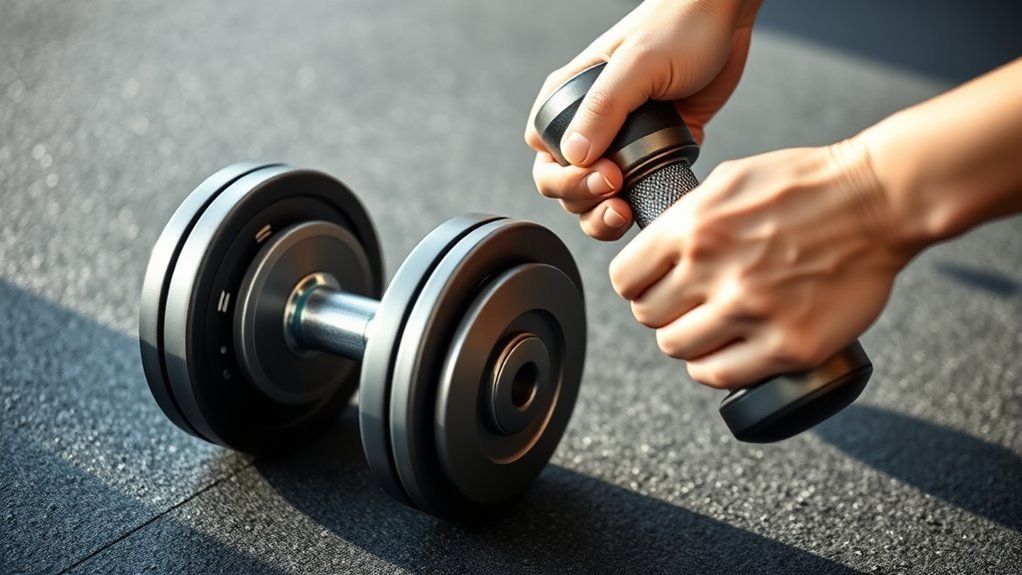
How to Use Adjustable Dumbbells Safely: Complete Guide
To use adjustable dumbbells safely, start by choosing a weight that feels manageable for you. Make sure the plates are securely locked in place before you begin lifting. This helps prevent any accidents or injuries during your workout.
Grip the handle firmly, with your thumb opposing your fingers, and keep your wrists straight to avoid strain. It’s a good idea to warm up properly with some light cardio and dynamic stretches first.
This prepares your muscles and joints for the workout ahead.
As you exercise, maintain a neutral spine and perform movements in a controlled manner. Don’t rush through your reps—focus on form to get the most benefit and avoid injury.
After your session, store your adjustable dumbbells properly. Regularly check them for any damage or loose parts to keep everything safe and secure.
Keep these basics in mind, and you’ll discover even more tips to boost your workout safety and effectiveness.
Key Takeaways
– Always select and securely lock the desired weight plates before lifting to prevent accidents or injuries.
This step is super important because you don’t want any plates slipping off mid-exercise.
– Warm up with light cardio and dynamic stretches to prepare muscles and maintain proper posture during exercises.
Warming up gets your body ready and helps you avoid strains.
– Use a firm but comfortable grip, keeping wrists straight and aligned with forearms for stability and safety.
This helps keep everything stable and reduces the chance of injury.
– Store dumbbells on a sturdy rack in a clutter-free, stable area to avoid damage and ensure easy access.
Having a dedicated spot means less risk of tripping or dropping them.
– Regularly inspect and clean dumbbells, checking for damage or loose parts to maintain safe and effective use.
Taking care of your equipment means it lasts longer and stays safe to use.
Understanding Adjustable Dumbbells and Their Mechanism
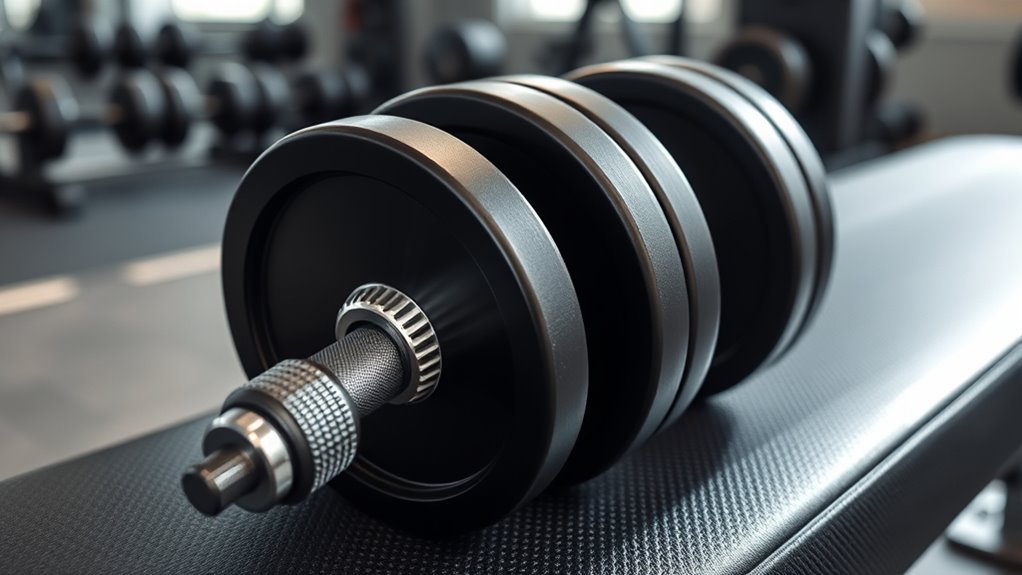
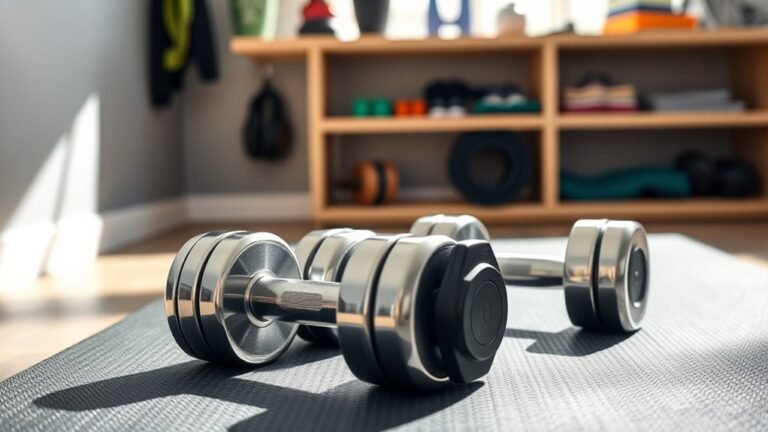
Before you start using adjustable dumbbells, it’s important to understand how they work. These dumbbells allow you to change the weight by adding or removing plates, giving you flexibility without needing multiple sets.
Typically, you’ll find a dial, pin, or selector mechanism that locks the desired weight securely in place. When you adjust the weight, only the selected plates lift with the handle, while the rest stay in the base.
This design saves space and makes switching weights quick and easy. Knowing this mechanism helps you avoid mistakes like lifting unsecured plates, which can cause injury.
Selecting the Appropriate Weight for Your Fitness Level
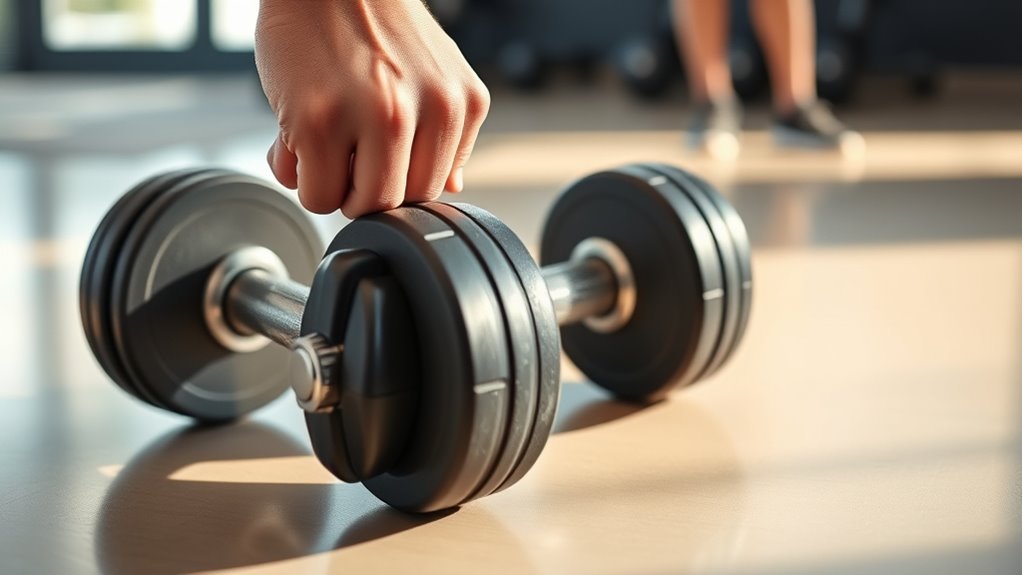
When choosing the right weight for your adjustable dumbbells, consider your current strength and fitness goals to avoid injury and maximize progress. Start with a lighter weight that allows you to complete your exercises with proper form and control.
If you’re new to strength training, pick a weight you can lift comfortably for 12 to 15 repetitions without straining. As you build strength, gradually increase the weight in small increments.
Pay attention to how your muscles feel during and after your workouts; persistent pain signals that the weight might be too heavy. Remember, it’s better to progress steadily than to rush and risk injury.
Adjust the dumbbells thoughtfully to match your evolving fitness level and ensure safe, effective training sessions every time. You got this!
Proper Grip and Hand Positioning Techniques
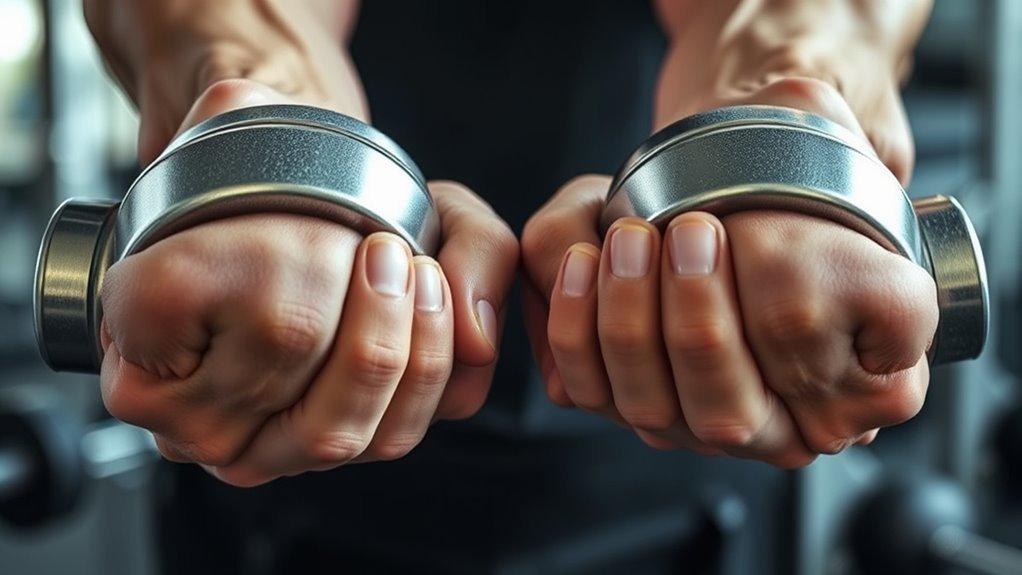
Although selecting the right weight is essential, maintaining a proper grip and hand position guarantees you perform each exercise safely and effectively. Start by wrapping your fingers firmly around the dumbbell handle, ensuring your thumb opposes your fingers for a secure hold.
Avoid gripping too tightly, as this can cause unnecessary strain. Position your wrists straight and aligned with your forearms to prevent injury and maintain control throughout the movement.
For exercises like curls or presses, keep your palms facing the intended direction of force. Adjust your grip slightly based on the exercise but always prioritize comfort and stability.
Checking and Securing Weight Plates Before Use
Getting your grip right sets the stage for a safe lift, but securing the weight plates firmly on your adjustable dumbbells keeps everything stable during your workout.
Before you start, always double-check that each plate is properly locked in place. Here’s how to guarantee safety:
- Inspect the plates for any cracks or damage that could compromise stability.
- Make sure the locking mechanism or selector pin clicks securely into position, preventing any movement.
- Give a gentle shake to confirm the plates don’t shift or wobble once locked.
Taking these steps prevents accidents and helps you focus on your form without distractions.
Warm-Up Exercises to Prevent Injury
Before lifting adjustable dumbbells, you should always perform warm-up exercises to prepare your muscles and joints. Start with 5 to 10 minutes of light cardio, like jogging in place or jumping jacks, to increase your heart rate and blood flow.
Then, follow with dynamic stretches such as arm circles, leg swings, and torso twists to loosen up the muscles you’ll engage during your workout. Focus on movements that mimic the exercises you plan to do with your dumbbells.
This helps improve your range of motion and reduces stiffness. Just avoid static stretching before lifting, since it can temporarily weaken muscles.
Maintaining Correct Posture During Dumbbell Workouts
Keep your spine neutral and avoid arching or rounding your back while lifting. Focus on controlled movements to maintain balance and prevent strain.
This approach helps you get the most from your workout without risking injury. Just take it slow and steady—you’ll thank yourself later!
Neutral Spine Alignment
Maintaining a neutral spine alignment is essential for protecting your back and maximizing the effectiveness of your dumbbell workouts. When your spine is in a neutral position, it distributes stress evenly and reduces injury risk.
To keep your spine neutral during exercises, follow these steps:
- Engage your core: Tighten your abdominal muscles to support your lower back and maintain stability.
- Keep your head aligned: Avoid jutting your chin forward or tilting your head back; your ears should line up with your shoulders.
- Maintain natural curves: Preserve the slight inward curve of your lower back without overarching or flattening it.
Controlled Movements
Once you’ve established a neutral spine, focus on controlled movements to protect your joints and enhance workout effectiveness. Move the dumbbells deliberately, avoiding jerky or rushed motions that can strain muscles or cause injury.
Keep your core engaged and breathe steadily throughout each repetition. Control both the lifting and lowering phases, ensuring you don’t rely on momentum.
This helps maximize muscle engagement and builds strength safely. Pay attention to your form at all times—if you feel your posture slipping or muscles compensating, pause and reset.
Controlled movements allow you to target specific muscle groups accurately, reduce the risk of overuse injuries, and improve balance. Staying mindful during each exercise will make your workouts safer and more productive.
Common Mistakes to Avoid When Using Adjustable Dumbbells
When using adjustable dumbbells, choosing the wrong weight can lead to poor form or injury. So, always pick a load that matches your strength and experience.
You also need to focus on your grip technique—holding the dumbbells improperly can cause strain or make your workout less effective.
Avoid these common mistakes to keep your sessions safe and productive. Trust me, a little extra attention goes a long way!
Incorrect Weight Selection
Although adjustable dumbbells offer great flexibility, choosing the wrong weight can lead to poor form and increase your risk of injury. To avoid this, follow these key tips:
Start light. Begin with a manageable weight so you can master your form before progressing. Jumping too heavy too soon strains muscles and joints.
Progress gradually by increasing weight in small increments. This helps build strength steadily without compromising your technique.
Match the exercise to your weight choice. Use heavier weights for compound movements and lighter ones for isolation exercises. This way, you maintain control and prevent injury.
Poor Grip Technique
Selecting the right weight is just one part of using adjustable dumbbells effectively. If you don’t maintain a proper grip, you risk dropping the dumbbell or injuring your wrist.
Avoid gripping too loosely, which can cause the dumbbell to slip, especially during dynamic movements. At the same time, don’t squeeze so tightly that your forearms fatigue quickly or your form breaks down.
Instead, hold the dumbbell with a firm but relaxed grip, keeping your wrists straight and aligned with your forearms. Make sure your fingers wrap securely around the handle.
If you feel any discomfort or instability, adjust your grip. Practicing good grip technique helps safeguard your joints and ensures you lift safely and efficiently every time.
Safe Storage and Maintenance Practices
To keep your adjustable dumbbells in top condition, you need to store and maintain them properly. Neglecting this can cause damage, reduce their lifespan, and create safety hazards.
Proper storage and maintenance of adjustable dumbbells prevent damage, extend their life, and ensure safety.
Follow these steps to ensure your equipment stays safe and functional:
- Store them securely – Place your dumbbells on a sturdy rack or designated area to prevent them from rolling or falling. This can help avoid injury or damage.
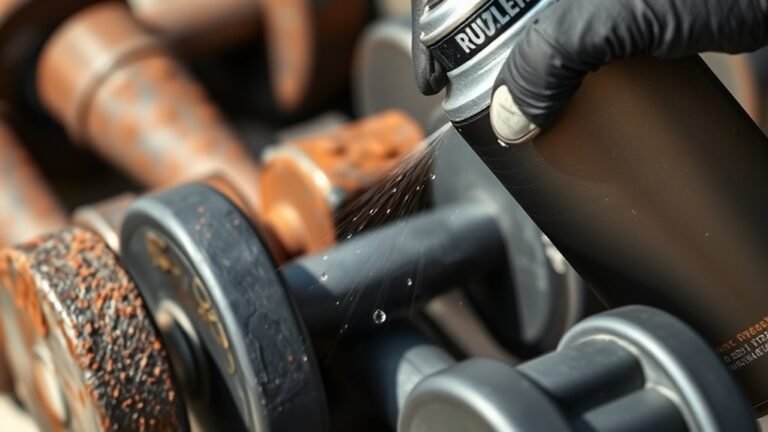
- Clean regularly – Wipe down the dumbbells with a damp cloth after each use to remove sweat and dirt. Try to avoid harsh chemicals that can degrade the materials.
- Inspect for wear – Check locking mechanisms and weight plates frequently. If you find any loose parts, tighten them up, and replace damaged components right away to keep things safe.
Frequently Asked Questions
Can Adjustable Dumbbells Replace All Types of Gym Equipment?
Adjustable dumbbells can’t replace all gym equipment since some machines target specific muscles or provide unique resistance.
However, they’re super versatile for strength training. You can do a lot of exercises effectively, whether you’re at home or in the gym.
How Do Adjustable Dumbbells Compare to Fixed-Weight Dumbbells for Muscle Growth?
You’ll find adjustable dumbbells just as effective as fixed-weight ones for muscle growth, as long as you challenge yourself progressively.
They let you switch weights easily, keeping your workouts efficient and varied without sacrificing results.
Are Adjustable Dumbbells Suitable for Rehabilitation Exercises?
Yes, adjustable dumbbells are great for rehabilitation since you can easily change the weight to match your strength level. Just start light, focus on controlled movements, and gradually increase resistance as you recover safely.
It’s all about pacing yourself. You want to avoid pushing too hard too fast, right? So, take your time and listen to your body as you progress.
What Is the Average Lifespan of Adjustable Dumbbells?
You can expect adjustable dumbbells to last around 5 to 10 years with regular use. Taking care of them by cleaning and storing properly will help extend their lifespan and keep them functioning smoothly.
It’s pretty straightforward, really. Just a little maintenance goes a long way in making sure your dumbbells stay in great shape for years!
Can Children Safely Use Adjustable Dumbbells Under Supervision?
Like handling a fragile bird, children can safely use adjustable dumbbells under your watchful eye.
You’ll need to guarantee proper weight, technique, and supervision to prevent injury and build their strength confidently and securely.
It’s all about making sure they use the right form and don’t lift too heavy too soon.
With the right guidance, it can be a great way to encourage healthy habits early on.
Conclusion
By understanding your adjustable dumbbells, selecting the right weight, and ensuring a secure grip, you’ll set yourself up for success.
Warming up properly, maintaining correct posture, and avoiding common mistakes will help protect you from injury.
Also, storing and maintaining your equipment safely will extend its life and keep your workouts consistent.
Follow these steps, stay attentive, and enjoy a safer, more effective fitness journey every time you train.
Remember, using adjustable dumbbells safely isn’t just about avoiding injury—it’s about getting the most out of every workout.
So take the time to learn proper techniques and care for your equipment.
That way, you can build strength confidently and enjoy long-lasting results with your adjustable dumbbells.