
How to Determine If Gyms Are Profitable
To determine if gyms are profitable, you need to track key indicators like member growth and retention rates. Understanding why people leave is also crucial because it helps ensure a steady income over time.
Next, analyze your revenue streams beyond just memberships. Personal training, merchandise sales, and classes can all boost your profit margins.
Don’t forget to get a clear picture of your fixed and variable costs. Also, think about how your gym’s location affects traffic and demand—it can make a big difference.
It’s important to measure how well your marketing efforts are working and how productive your staff is. These factors play a huge role in maximizing operational efficiency.
Lastly, focusing on customer experience helps build loyalty and a strong community around your gym. Keeping an eye on all these elements will give you deeper insights into your gym’s financial health.
Key Takeaways
- Analyze membership metrics like retention rates and average membership duration to ensure steady revenue flow. Keeping an eye on these numbers helps you understand how loyal your members are and how long they stick around.
- Calculate gross and net profit margins to assess operational efficiency and overall financial sustainability. This way, you can spot where you’re making money and where costs might be eating into your profits.
- Diversify revenue streams by including personal training, merchandise sales, and specialty classes for stable income. It’s smart to have multiple income sources so you’re not relying on just membership fees.
- Monitor fixed, variable, and semi-variable operating costs relative to revenue to maintain healthy profit margins. Knowing your expenses inside and out means you can manage your budget better.
- Evaluate staff productivity and customer experience to enhance service quality and boost member loyalty. Happy members and efficient staff usually mean a thriving gym.
Evaluating Membership Growth and Retention
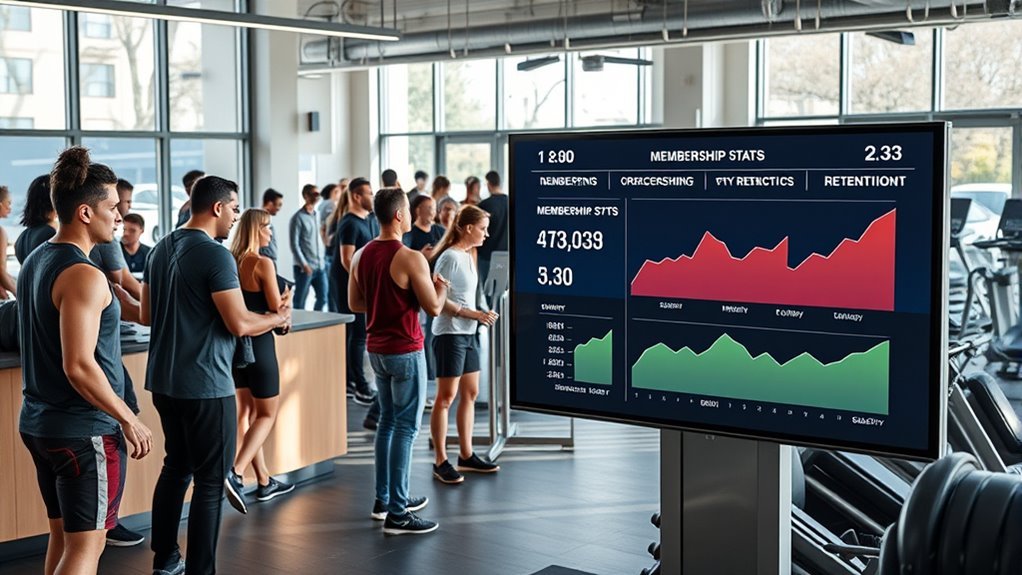
Although attracting new members is important, you’ll find that evaluating membership growth and retention is key to a gym’s long-term profitability. You need to track how many members join, how long they stay, and why they leave.
Tracking member growth and retention is essential for a gym’s lasting success and profitability.
By analyzing these trends, you can spot issues early and adjust your services or pricing to keep members satisfied. High retention rates mean steady income and less effort spent on recruiting new members constantly.
You should regularly gather feedback to understand what members value most and what might be driving them away. This insight helps you improve the gym experience, making your business more sustainable.
Focusing on both growth and retention ensures your gym remains profitable over time, not just through quick spikes in membership. It’s about creating a lasting community, not just quick wins.
Analyzing Revenue Streams Beyond Membership Fees

While membership fees form the backbone of your gym’s income, exploring additional revenue streams can substantially boost your profitability. Consider offering personal training sessions, which often come with higher margins and attract clients seeking customized workouts.
Selling branded merchandise like apparel or water bottles not only enhances brand loyalty but also adds a steady income source. Don’t overlook group classes or specialty workshops, which can command premium pricing and fill off-peak hours.
Nutrition counseling or supplement sales can further diversify your offerings. By identifying and developing these supplementary revenue streams, you’ll reduce reliance on membership fees alone.
This approach helps stabilize cash flow, especially during membership fluctuations, and positions your gym for long-term financial success.
Understanding Fixed and Variable Operating Costs

Since managing expenses is essential to your gym’s profitability, you need to clearly understand the difference between fixed and variable operating costs.
Fixed costs stay the same regardless of gym usage, while variable costs fluctuate with member activity.
Knowing these helps you control spending and improve margins.
| Cost Type | Description | Example |
|---|---|---|
| Fixed Costs | Constant expenses | Rent, salaried staff |
| Variable Costs | Change with usage | Utilities, cleaning supplies |
| Semi-Variable | Part fixed, part variable | Maintenance, part-time wages |
| Importance | Helps budgeting & forecasting | Planning for growth |
| Impact on Profit | Fixed costs affect break-even point | Variable costs affect margins |
Assessing the Impact of Location on Profitability
Choosing the right location can make or break your gym’s profitability, as it directly influences foot traffic, accessibility, and local demand. You need to carefully evaluate these factors to guarantee your gym attracts and retains members.
Consider these key points:
- Demographics: Analyze the age, income, and lifestyle of the local population to match your gym’s offerings.
- Competition: Check nearby gyms and fitness centers; too many competitors can limit your market share.
- Accessibility: Ensure your gym is easy to reach by car, public transport, or on foot, and has convenient parking options.
Assessing these elements helps you position your gym where demand is high and convenience encourages consistent visits. That way, you directly boost your profitability.
Measuring the Effectiveness of Marketing Strategies
To maximize your gym’s profitability, you need to measure how well your marketing strategies perform. Start by tracking key metrics like customer acquisition cost, conversion rates, and return on investment (ROI) for each campaign.
Use tools like Google Analytics and social media insights to see which channels drive the most traffic and memberships. Pay attention to customer feedback and engagement rates to assess message resonance.
Regularly compare results against your goals and adjust campaigns accordingly. Don’t forget to test different offers, content, and targeting to find what works best.
The Role of Staff Efficiency and Management
You can boost your gym’s profitability by tracking staff productivity metrics to pinpoint areas for improvement.
Effective leadership strategies help you motivate your team and streamline operations. Let’s explore how managing your staff efficiently impacts your bottom line.
Staff Productivity Metrics
Although many factors influence a gym’s success, staff productivity metrics play a crucial role in maximizing profitability. You need clear, measurable data to evaluate how effectively your team contributes to your gym’s goals.
Tracking these metrics helps you identify areas for improvement and ensures your staff is performing at their best.
Focus on these three key staff productivity metrics:
- Client-to-Staff Ratio: Measures how many clients each staff member supports, affecting service quality and efficiency.
- Revenue per Employee: Tracks the amount of income generated by each staff member, indicating their impact on sales and retention.
- Utilization Rate: Assesses how much of a staff member’s available time is spent on productive tasks versus downtime.
Monitoring these metrics keeps your gym profitable and your team accountable. It’s really about making sure everyone’s efforts are aligned with your business goals.
Effective Leadership Strategies
Staff productivity metrics give you a clear picture of your team’s performance, but strong leadership shapes how efficiently those efforts come together. You need to focus on clear communication, setting realistic goals, and providing regular feedback to keep your staff motivated and aligned with your gym’s objectives.
Effective leaders empower their team by fostering a positive work environment and encouraging collaboration. When you invest in staff training and development, you enhance their skills and boost overall efficiency.
Don’t overlook the importance of recognizing achievements; it drives morale and productivity. By actively managing schedules and workloads, you guarantee your team isn’t overwhelmed or underutilized.
In the end, your leadership directly impacts staff efficiency, which plays a vital role in your gym’s profitability. So, stay engaged and lead with intention—it really makes all the difference.
Importance of Customer Experience and Community Building
How can gyms stand out in a crowded market? You do it by prioritizing customer experience and building a strong community.
When members feel valued and connected, they stay loyal and bring others along. Focus on these three key areas:
- Personalize interactions — Learn members’ names, goals, and preferences to create a welcoming atmosphere.
- Foster social connections — Host group classes, challenges, and events that encourage members to bond.
- Provide consistent support — Offer knowledgeable staff and accessible resources to help members succeed.
Utilizing Financial Metrics to Gauge Gym Performance
You need to track key profitability ratios to see how well your gym is performing financially. Analyzing your revenue streams alongside your expenses helps you spot areas for improvement.
Key Profitability Ratios
Although running a gym involves many moving parts, key profitability ratios offer a clear snapshot of its financial health. These ratios help you quickly assess how well your gym converts revenue into profit and manages costs.
Here are three essential profitability ratios to watch:
- Gross Profit Margin – Shows the percentage of revenue left after covering direct costs like equipment and staff. A higher margin means better control over expenses.
- Net Profit Margin – Reveals the overall profitability after all expenses, including overhead and taxes. It tells you how much profit you keep from each dollar earned.
- Return on Assets (ROA) – Measures how efficiently your gym uses its assets to generate profits, indicating operational effectiveness.
Monitoring these ratios regularly lets you make informed decisions to boost your gym’s profitability. It’s a great way to stay on top of your financial game.
Revenue and Expense Analysis
When you analyze your gym’s revenue and expenses using key financial metrics, you gain a clear picture of its operational performance. Start by tracking total revenue streams like memberships, personal training, and merchandise sales.
Compare these against fixed costs such as rent and salaries, plus variable expenses like utilities and maintenance. Calculate your gross profit margin to see how efficiently you turn revenue into profit after direct costs.
Then, assess your operating margin to understand profitability after all expenses. Monitoring metrics like average revenue per member and cost per acquisition helps pinpoint growth opportunities or cost-saving areas.
Frequently Asked Questions
How Do Seasonal Trends Affect Gym Profitability Throughout the Year?
Seasonal trends affect your gym’s profitability by increasing memberships in January and summer, then dropping during holidays and colder months.
You’ll need to plan promotions and manage expenses carefully to maintain steady income year-round.
It’s all about balancing the busy and slow times so your gym stays profitable no matter the season.
What Legal Considerations Impact Gym Financial Performance?
You must comply with health and safety regulations, liability waivers, employment laws, and data protection rules. Ignoring these can lead to fines or lawsuits, directly harming your gym’s financial performance and reputation.
It’s really important to stay on top of these legal requirements. Think of it as protecting not just your business, but also your customers and employees. When you do that, you’re building trust and avoiding costly problems down the line.
How Does Equipment Depreciation Influence Overall Profitability?
You’ll see equipment depreciation reduces your taxable income, improving cash flow short-term. However, it also signals asset value loss, affecting long-term profitability.
Monitoring depreciation helps balance expenses and plan for future equipment investments wisely. It’s all about keeping an eye on the numbers so you can make smart decisions down the road.
Can Partnerships With Local Businesses Boost Gym Income?
Yes, partnering with local businesses can boost your gym’s income by attracting new members, offering joint promotions, and creating additional revenue streams.
You’ll expand your network and enhance community engagement, driving profitability.
It’s a win-win situation that helps both you and the local businesses grow together.
Plus, it makes your gym a more integrated part of the community, which people really appreciate.
What Role Does Technology Adoption Play in Gym Success?
Isn’t staying ahead essential? Technology adoption boosts your gym’s success by streamlining operations, enhancing member experience, and offering data insights.
You’ll attract and retain clients more effectively, making your gym more competitive and profitable. It’s all about working smarter, not harder!
Conclusion
To determine if your gym is truly profitable, you’ve got to look beyond the surface and dig into every corner—from membership trends to marketing impact. It’s not just about how many people walk through the door, but how those numbers translate into steady revenue.
Remember, profits don’t just grow on trees; they’re nurtured through smart management, loyal customers, and efficient operations. Keeping track of expenses and identifying which areas bring the most return is key.
By keeping a close eye on your numbers and listening to your community, you’ll turn your gym into a well-oiled machine that not only survives but thrives in a competitive market. Understanding profitability means balancing costs with customer satisfaction and marketing effectiveness. When you focus on these elements, your gym’s profitability will become clear, helping you make informed decisions that lead to long-term success.