How You Can Safely Use a Vibration Plate While Breastfeeding
You can safely use a vibration plate while breastfeeding by starting with low intensity and short sessions (5-10 minutes) after nursing or pumping to avoid engorgement.
Hydrate well and wait at least 30 minutes post-feeding before exercising. This helps keep you comfortable and supports your milk supply.
Make sure to maintain proper posture with feet flat and knees slightly bent. Keep an eye out for any discomfort or changes in your milk supply and your baby’s behavior.
If you notice anything unusual, it’s best to pause and consult a healthcare professional.
Gradually build your routine, balancing exercise with breastfeeding needs. Remember, consistency is key but listen to your body too.
To optimize safety and benefits, there’s more helpful guidance to explore.
Key Takeaways
- Wait at least 30 minutes after breastfeeding or pumping before starting vibration plate sessions. This helps prevent engorgement and milk flow issues.
- Keep your sessions short, about 5-10 minutes, and limit them to 3-4 times a week. Start with low intensity to avoid overstimulation.
- Wear a supportive, well-fitted sports bra. It’ll help minimize breast movement and keep you comfortable during vibration exercises.
- Make sure you maintain proper body positioning. Keep your feet flat, knees slightly bent, and core engaged for stability and safety.
- Stay well-hydrated before, during, and after your sessions. Also, pay attention to any breast or body discomfort, and adjust the intensity or timing if needed.
Understanding the Benefits of Vibration Plate Exercise Postpartum
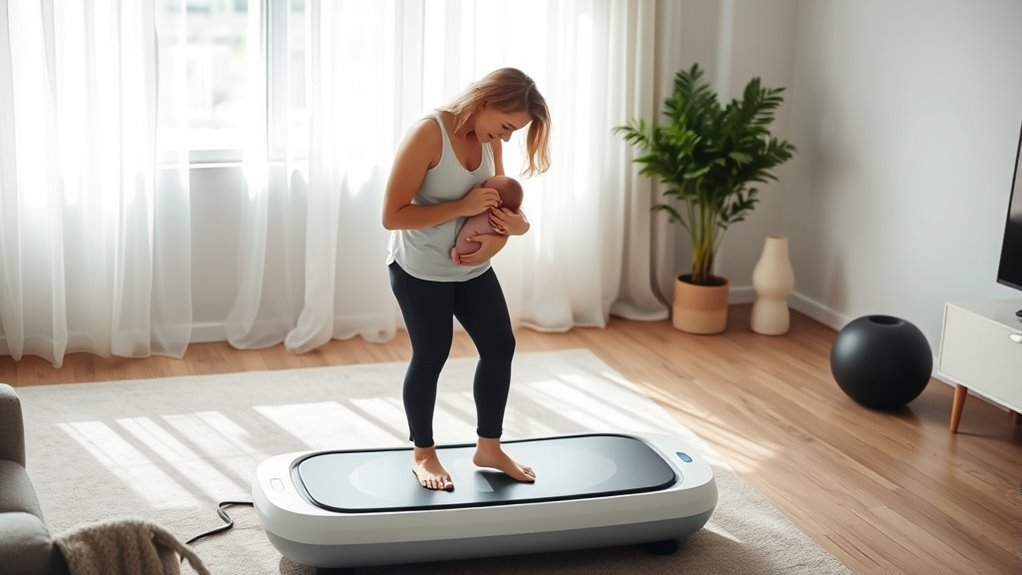
Although postpartum recovery can be challenging, using a vibration plate can help you regain strength and improve circulation efficiently. This low-impact exercise boosts muscle activation, making it easier to rebuild your core and pelvic floor muscles without overexerting yourself.
Improved blood flow aids in reducing swelling and speeds up healing, which is vital after childbirth. You’ll notice enhanced balance and flexibility, helping you manage daily activities with less discomfort.
Plus, the vibration plate can increase your energy levels by stimulating your lymphatic system, supporting detoxification. Since it requires less time than traditional workouts, you can fit sessions into your busy breastfeeding schedule.
Consult Your Healthcare Provider Before Starting
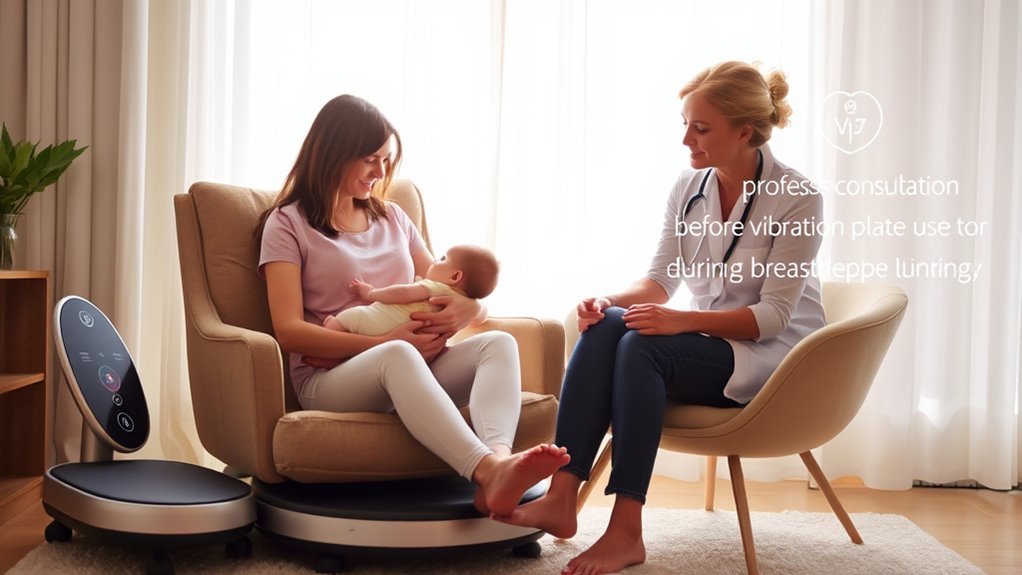
Before you begin using a vibration plate while breastfeeding, it’s important to consult your healthcare provider to verify it’s safe for your specific situation. Your provider can assess your postpartum recovery and any health conditions that might affect your ability to use the device safely.
They’ll also help you tailor the exercise to your needs and make sure it won’t interfere with breastfeeding or milk supply.
Here are four reasons to talk to your healthcare provider first:
- Identify any postpartum complications or injuries that need special care.
- Evaluate your overall health and fitness level for vibration plate use.
- Get personalized guidance on frequency, duration, and intensity.
- Ensure the exercise won’t negatively impact your breastfeeding routine.
Taking this step helps you exercise confidently and safely. It’s always better to be cautious and get the green light from your provider before starting something new.
Optimal Timing for Using a Vibration Plate While Breastfeeding

You’ll want to wait until after breastfeeding to use the vibration plate, avoiding immediate sessions to prevent disrupting milk flow.
Aim for intervals that give your body time to recover and maintain comfort. Finding the right timing helps guarantee both your well-being and your baby’s feeding needs are met.
Best Post-Feeding Intervals
When you finish breastfeeding, waiting at least 30 minutes before using a vibration plate helps guarantee comfort and safety for both you and your baby. This interval allows your body to settle and reduces any discomfort from the stimulation.
To optimize your post-feeding routine, consider these best intervals:
- Wait 30-45 minutes after feeding to start your vibration session.
- Keep sessions short, ideally 10-15 minutes, to avoid overexertion.
- Stay hydrated before and after using the vibration plate.
- Monitor how your body feels and adjust timing accordingly for future sessions.
Just listen to your body and take it easy. That way, you’ll get the most benefit without any unnecessary stress.
Avoiding Immediate Use
Waiting a suitable amount of time after breastfeeding helps you avoid any discomfort caused by using a vibration plate too soon. Your body needs time to settle, and jumping onto the vibration plate immediately can cause unnecessary strain or agitation in your breasts.
Give yourself at least 30 minutes to an hour before starting your session to ensure your milk ducts aren’t sensitive or engorged. This pause allows your body to adjust, reducing the risk of pain or leaking.
Using the vibration plate too quickly may also interfere with your comfort and focus during exercise. By waiting, you protect your breastfeeding experience while still benefiting from the vibration plate’s advantages safely and effectively.
Timing for Milk Flow
Although using a vibration plate can support your postpartum fitness, timing it around your milk flow is essential to avoid discomfort or disruption. To make the most of your sessions without affecting breastfeeding, consider these steps:
- Use the vibration plate after breastfeeding or pumping to reduce the chance of engorgement or blocked ducts.
- Wait at least 1-2 hours post-feeding to allow your milk flow to stabilize.
- Pay attention to your body’s signals; if you feel discomfort or pressure in your breasts, pause and try later.
- Schedule your vibration plate sessions during times when you don’t need to breastfeed immediately afterward, ensuring your milk supply remains consistent.
Just keep an eye on how you feel, and don’t hesitate to adjust your timing if needed. Your body will let you know what works best!
Choosing the Right Vibration Plate Settings for Safety
You’ll want to pick vibration plate settings that keep your sessions safe and comfortable while breastfeeding. Start with low intensity levels and limit your session duration to avoid overstimulation.
Also, spacing out your use throughout the week helps your body adjust without added stress. Taking it slow really makes a difference!
Optimal Intensity Levels
Because your body is more sensitive while breastfeeding, you should choose vibration plate settings that prioritize safety and comfort. Start with low intensity to avoid overstimulation and gradually increase as you feel comfortable.
Here’s how to find the ideal intensity:
- Begin at the lowest setting to assess your body’s reaction.
- Increase intensity slowly, monitoring for any discomfort or unusual sensations.
- Avoid high frequencies that might cause excessive muscle fatigue or stress.
- Prioritize settings that allow you to maintain good posture and balance without strain.
Session Duration Guidelines
When using a vibration plate while breastfeeding, keeping your session duration within safe limits helps prevent fatigue and discomfort. Start with short sessions, around 5 to 10 minutes, especially if you’re new to vibration training. This allows your body to adjust without overexertion.
Gradually increase the time if you feel comfortable, but avoid exceeding 15 to 20 minutes per session to maintain safety. Listen closely to your body—if you notice any unusual soreness, dizziness, or nipple tenderness, reduce your session length immediately.
Always include breaks between sets to avoid continuous vibration exposure. By managing your session duration carefully, you’ll support both your wellbeing and your breastfeeding routine effectively without unnecessary strain.
Frequency Recommendations
Managing how often you use the vibration plate plays a big role in maintaining comfort and safety during breastfeeding. To guarantee you’re using it effectively without overdoing it, consider these frequency recommendations:
Limit sessions to 3-4 times per week to avoid overstimulation. It’s important to give your body a break.
Space out your sessions by at least one day for muscle recovery. Your body will thank you for the rest!
Observe how your body responds; if you feel any discomfort, reduce frequency. Listen to what your body is telling you.
Align vibration plate use with your breastfeeding schedule to prevent any added stress or fatigue. Finding the right balance makes all the difference.
Maintaining Proper Posture and Positioning During Use
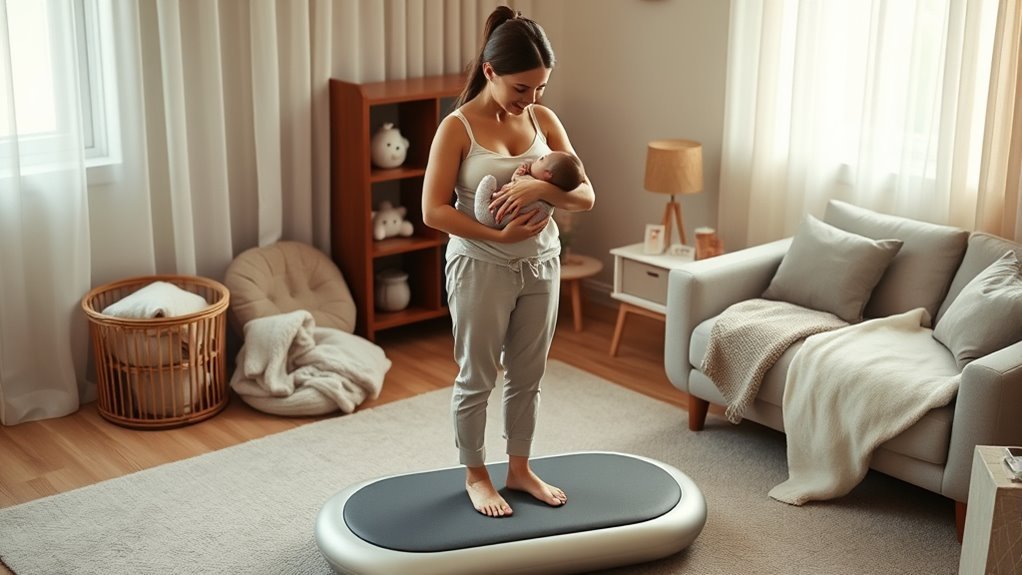
Although using a vibration plate can offer benefits during breastfeeding, you need to maintain proper posture and positioning to guarantee both your comfort and your baby’s safety.
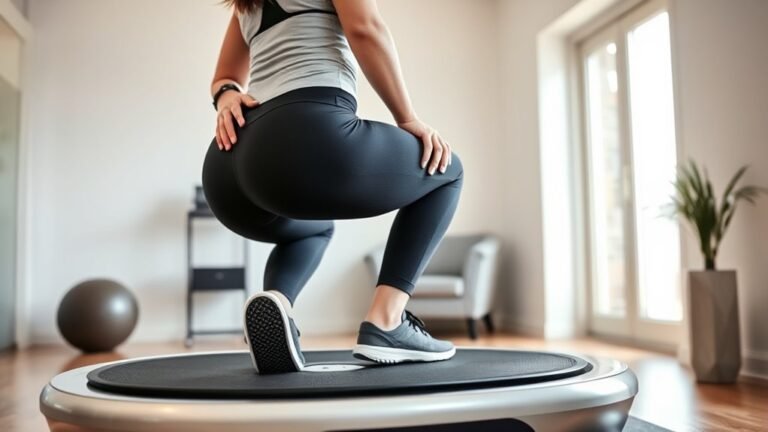
Stand with your feet shoulder-width apart and keep your knees slightly bent. Engage your core to support your lower back and avoid leaning forward excessively.
Hold your baby securely, ensuring their head and neck are well supported.
| Posture Tip | Why It Matters | Quick Reminder |
|---|---|---|
| Feet flat & apart | Stability on the plate | Avoid shifting or swaying |
| Slight knee bend | Shock absorption | Protects joints |
| Core engaged | Supports back | Prevents strain |
| Secure baby hold | Ensures safety and comfort | Keep baby close to chest |
Monitoring Your Body’s Response and Baby’s Comfort
Keeping a close eye on how your body reacts and how comfortable your baby feels guarantees a safe and pleasant experience on the vibration plate. You should:
- Notice any discomfort in your muscles or joints. If you feel pain or dizziness, stop right away.
- Observe your baby’s behavior—if they seem restless or fussy, pause to check their comfort.
- Monitor your heart rate to make sure it stays within a safe range. This helps you avoid overexertion.
- Check for any unusual sensations like numbness or tingling. If you notice anything odd, adjust your session accordingly.
Incorporating Vibration Plate Sessions Into Your Daily Routine
When you add vibration plate sessions to your daily routine, you create a consistent way to enjoy their benefits while breastfeeding. Start by scheduling short sessions, around 5 to 10 minutes, at times that fit your feeding schedule. This helps you avoid disrupting your baby’s routine.
Choose a quiet, comfortable spot where you can relax during your session. Consistency is key, so try to use the vibration plate at the same time each day to build a habit. Listen to your body and adjust the intensity or duration as needed.
You can also combine these sessions with gentle stretches or deep breathing to enhance relaxation. Remember, a steady routine helps you stay energized and supports your overall well-being while caring for your little one.
Additional Tips for Combining Breastfeeding and Exercise Safely
If you want to combine breastfeeding and exercise safely, it’s important to pay attention to your body’s signals and adapt your routine accordingly. Here are some key tips to help you stay balanced and healthy:
- Stay Hydrated – Drink plenty of water before, during, and after your workout. This helps support milk production and prevents dehydration.
- Time Your Sessions – Try to exercise when your breasts feel less full to avoid discomfort. For example, right after nursing or pumping is usually a good time.
- Wear Supportive Gear – Make sure you have a well-fitted, supportive sports bra. It helps minimize breast movement and protects sensitive tissue.
- Monitor Your Baby’s Reaction – Keep an eye on any changes in your baby’s feeding or digestion. If you notice anything unusual, consider adjusting your routine.
Following these tips will help you and your baby stay comfortable and healthy while you keep active. It’s all about finding the right balance for both of you!
Frequently Asked Questions
Can Vibration Plate Use Affect Breast Milk Supply?
Vibration plate use generally doesn’t influence your breast milk supply. However, stay hydrated and avoid overexertion to keep milk production steady.
If you notice any changes, consult your healthcare provider to ensure both you and baby stay healthy. It’s always better to be safe and get personalized advice.
Is It Safe to Use a Vibration Plate Immediately After a C-Section?
You shouldn’t use a vibration plate immediately after a c-section.
It’s important to wait until your doctor gives you the green light, which usually happens after your incision has fully healed.
Jumping in too soon can stress your incision or lead to complications.
How Does Vibration Therapy Impact Pelvic Floor Recovery Postpartum?
Think of vibration therapy as a gentle wave that stimulates your pelvic floor muscles, helping them regain strength and tone faster postpartum. It boosts circulation and muscle activation.
But you should start slowly and consult your healthcare provider first. That way, you make sure it’s safe and effective for your recovery journey.
Are There Specific Vibration Plate Brands Recommended for New Mothers?
You won’t find specific brands solely for new mothers, but look for vibration plates with adjustable settings, low frequencies, and good stability, like LifePro or Confidence Fitness.
Always consult your healthcare provider before starting. It’s super important to make sure it’s safe for you and your body right now.
Can Vibration Plates Help With Postpartum Weight Loss While Breastfeeding?
Vibration plates can gently support your postpartum journey by boosting circulation and muscle tone. While they won’t magically melt pounds, combining them with balanced nutrition and rest can help you feel more energized and confident.
It’s not about quick fixes, but small, consistent steps. So, if you’re breastfeeding, just make sure to listen to your body and take things at your own pace.
Conclusion
Remember, “slow and steady wins the race.” By consulting your healthcare provider and listening to your body, you can safely enjoy the benefits of vibration plate exercise while breastfeeding.
Start with gentle settings, maintain good posture, and pay attention to both your comfort and your baby’s. It’s important to take things at your own pace to avoid any strain.
With careful timing and consistency, you’ll find a balanced routine that supports your postpartum wellness without compromising your breastfeeding journey.
Take it one step at a time—you’ve got this! Using a vibration plate safely while breastfeeding can enhance your recovery and boost your energy levels. Just keep tuning in to how you feel, and you’ll create a healthy, enjoyable routine that works for both you and your baby.