10 Reasons Kettlebells Are Better Than Dumbbells
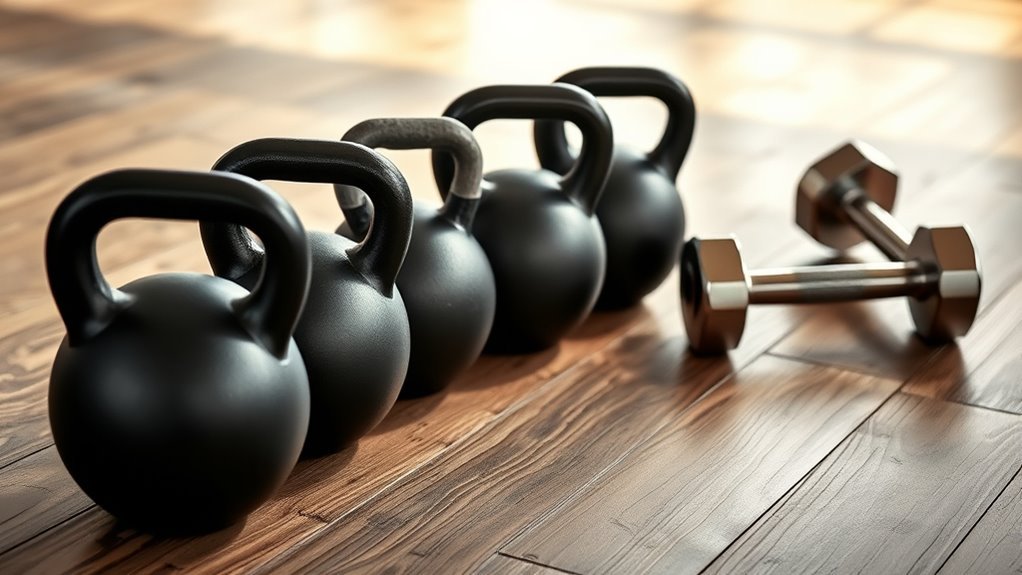
Kettlebells give you a total-body workout that improves functional strength, stability, and coordination more than dumbbells. They boost your heart rate with dynamic swings, burning more calories while building serious grip and core strength.
Their off-center weight challenges your balance and joint mobility, which helps reduce the risk of injury.
Plus, kettlebells require less space and offer versatile moves you simply can’t do with dumbbells.
Keep exploring, and you’ll find how kettlebell training can truly transform your fitness routine. It’s a game-changer if you want to build strength, improve endurance, and stay injury-free.
Give kettlebells a try—you might just prefer them over dumbbells!
Key Takeaways
- Kettlebells engage the core and posterior chain more effectively through dynamic, full-body movements. This enhances functional strength and stability in ways dumbbells often can’t match.
- Their off-center weight demands superior grip strength and wrist stability. That means your hand endurance improves beyond what dumbbells typically offer.
- Kettlebells combine strength and cardio, elevating your heart rate and calorie burn. Explosive swings and ballistic exercises really get you moving.
- They enable versatile, flowing movements that improve joint mobility and proprioception. Plus, they reduce injury risk while fitting into compact, space-saving designs.
- Fluid momentum control in kettlebell exercises develops explosive power, coordination, and athletic performance. Honestly, this is something dumbbells just can’t match.
Enhanced Functional Strength
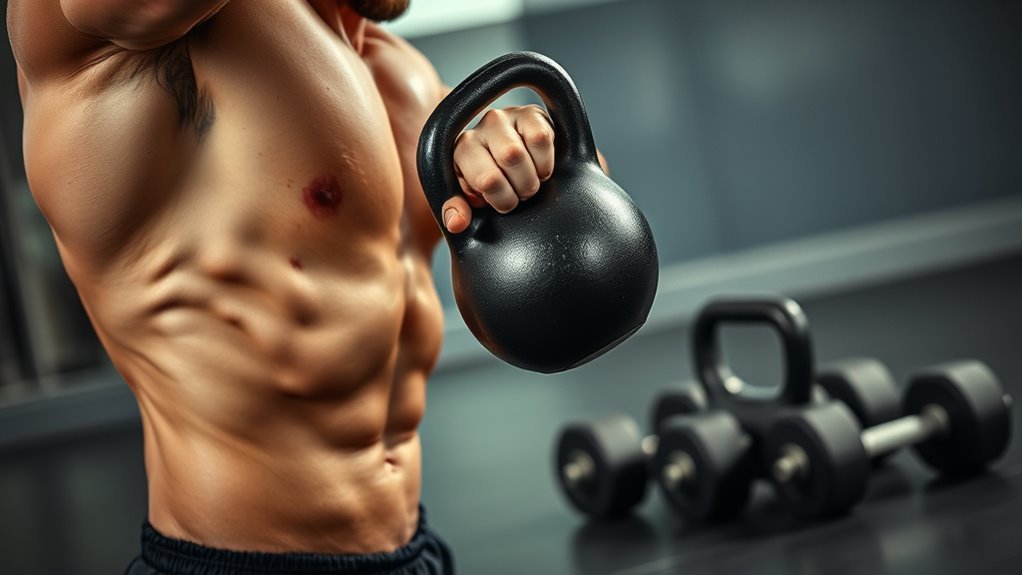
While both kettlebells and dumbbells build muscle, kettlebells excel at developing enhanced functional strength by engaging multiple muscle groups simultaneously. When you swing or snatch a kettlebell, your body must stabilize itself through dynamic movement, activating your core, legs, and upper body all at once.
This mimics real-life activities better than isolated dumbbell exercises. You’ll improve coordination, balance, and power because kettlebell training forces your muscles to work together in a fluid, natural way.
Rather than simply lifting weight up and down, you move the kettlebell through space, which challenges your body’s ability to control momentum and maintain posture. By incorporating kettlebells into your routine, you’ll build practical strength that supports everyday movements and athletic performance more effectively than dumbbells.
Improved Cardiovascular Conditioning
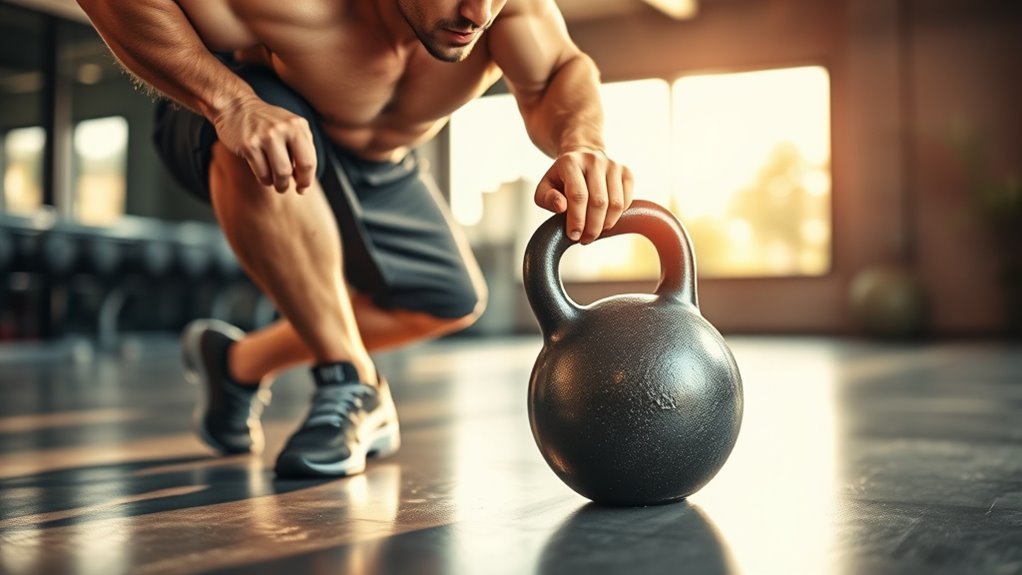
Because kettlebell exercises combine strength and dynamic movement, they boost your cardiovascular fitness more effectively than traditional dumbbell workouts. When you swing, snatch, or clean a kettlebell, you engage multiple muscle groups at once while keeping your heart rate elevated.
This continuous, full-body motion challenges your heart and lungs, improving endurance and stamina over time. Unlike dumbbells, which often isolate muscles, kettlebell routines demand coordination, balance, and explosive power, pushing your cardiovascular system harder.
You’ll find that your breathing becomes more efficient, and recovery time shortens as your conditioning improves. Incorporating kettlebells into your training not only strengthens muscles but also enhances your overall cardiovascular health. It makes your workouts more well-rounded and effective.
Greater Calorie Burn
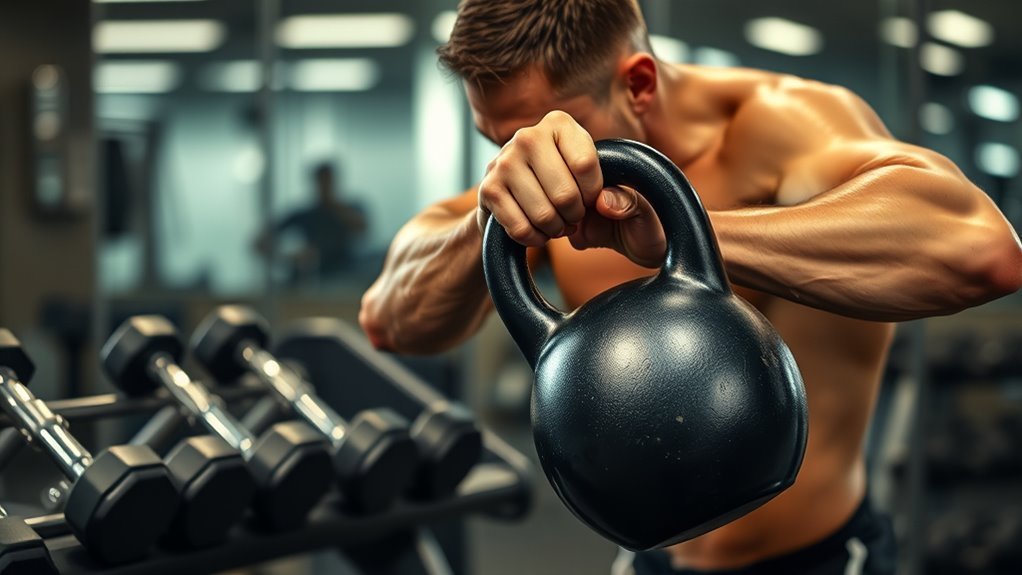
If you want to burn more calories in less time, kettlebell workouts deliver results that dumbbells simply can’t match. Their dynamic, full-body movements engage multiple muscle groups simultaneously, increasing your heart rate and boosting calorie expenditure.
Unlike dumbbells, kettlebells combine strength and cardio, making every session more efficient. Pretty cool, right?
Here’s why kettlebells ramp up calorie burn:
- Explosive swings activate fast-twitch muscles, torching calories.
- Continuous motion keeps your metabolism elevated post-workout.
- Core stabilization demands extra energy, intensifying calorie use.
- High-intensity interval training (HIIT) with kettlebells maximizes fat loss.
Superior Grip Development
Though dumbbells can help build your grip, kettlebells take it to the next level by challenging your hands and forearms in unique ways. The offset center of mass forces you to stabilize the handle throughout swings, cleans, and snatches, demanding continuous grip engagement.
This dynamic loading strengthens your grip more effectively than the balanced weight of dumbbells. You’ll notice improved hand endurance and wrist stability as you maintain control during fluid, ballistic movements.
Kettlebells also encourage a thicker grip, which activates more muscle fibers in your forearms. By regularly training with kettlebells, you’ll develop a stronger, more resilient grip that carries over to other lifts and everyday activities.
Simply put, kettlebells push your grip strength further, making your hands and forearms tougher and more capable.
Increased Core Activation
As you strengthen your grip with kettlebells, your core also gets more involved than with dumbbells. The unique shape and offset weight of kettlebells force your body to stabilize constantly, engaging your abdominal and lower back muscles more intensely.
This means every swing, clean, or snatch not only works your arms but also activates your core for balance and power.
Using kettlebells boosts core activation by:
- Challenging your balance with dynamic, swinging motions
- Requiring continuous stabilization to control momentum
- Engaging deep core muscles for spinal support
- Promoting full-body coordination that dumbbells don’t demand
With kettlebells, your core works harder, improving strength, stability, and injury prevention in ways dumbbells simply can’t match. It’s like giving your entire body a smarter workout, not just your arms.
Versatile Exercise Options
Because kettlebells combine weight and momentum, they let you perform a wider range of exercises than dumbbells. You can swing, snatch, clean, press, and even do ballistic movements that challenge your strength and cardio simultaneously.
This versatility means you don’t need multiple pieces of equipment to get a full-body workout. Dumbbells mostly focus on isolated muscle groups, while kettlebells engage your whole body dynamically.
| Exercise Type | Kettlebell Options |
|---|---|
| Strength | Goblet squat, Turkish get-up |
| Cardio & Conditioning | Kettlebell swings, snatches |
| Functional Training | Windmills, cleans |
With kettlebells, you get a compact, all-in-one tool that keeps your workouts varied and effective. It’s pretty handy when you want to mix things up without cluttering your space.
Better Joint Mobility and Stability
When you train with kettlebells, you engage muscles and joints through natural, flowing movements that enhance both mobility and stability. Unlike dumbbells, kettlebells demand dynamic control, which strengthens the connective tissues and improves joint function.
Kettlebell training uses natural, flowing movements that boost mobility, stability, and strengthen joint function beyond dumbbells.
This leads to better movement quality and reduces injury risk. Pretty cool, right?
Here’s how kettlebell training boosts joint health:
- Promotes full range of motion with swinging, pressing, and twisting exercises
- Develops joint stability by activating smaller stabilizing muscles
- Encourages coordinated, multi-planar movement patterns
- Improves proprioception, helping you better sense joint position and movement
Compact and Space-Efficient Design
Improving your joint mobility and stability with kettlebells also means you’ll appreciate how their compact design fits seamlessly into your workout space.
Unlike dumbbells, which often require a bulky rack or take up floor space, kettlebells occupy minimal room and can be stored easily on a small shelf or corner. Their uniform shape allows you to stack multiple weights without clutter, making them ideal for home gyms with limited space.
You won’t have to worry about tripping over scattered equipment or dedicating a large area just for your weight training. With kettlebells, you get a practical, space-efficient solution that keeps your workout area neat and accessible.
Effective Full-Body Workouts
When you use kettlebells, you engage multiple muscle groups at once, making your workouts more efficient. They also boost your functional movement, helping you perform everyday activities with ease.
You’ll get a full-body workout that builds strength and coordination simultaneously. It’s a great way to get stronger while moving better every day.
Engages Multiple Muscle Groups
Because kettlebells require coordinated movement, they engage multiple muscle groups simultaneously, giving you a more thorough full-body workout.
When you swing, press, or clean a kettlebell, your body recruits muscles from your core, legs, arms, and back all at once. This synergy helps improve strength and endurance faster than isolated dumbbell exercises. You’ll also boost your calorie burn by working more muscles in less time.
With kettlebells, you:
- Activate your core for stability and balance
- Strengthen your posterior chain, including glutes and hamstrings
- Develop upper body strength through dynamic pressing and pulling
- Improve coordination by linking multiple joints and muscle groups
This comprehensive engagement means you get more out of every workout session. It’s a smart way to train efficiently and effectively.
Enhances Functional Movement
Though many workouts isolate muscles, kettlebell exercises mimic real-life movements, making your training more functional. When you swing, clean, or snatch a kettlebell, you engage your entire body in coordinated motion, just like lifting a heavy box or playing sports.
This dynamic movement pattern improves your balance, coordination, and core stability, which dumbbells often can’t replicate as effectively. Because kettlebell training requires you to control momentum and maintain proper form throughout, you develop strength that translates directly to everyday activities.
Instead of just building muscle, you enhance your ability to move efficiently and safely. That means when life throws challenges your way—carrying groceries, climbing stairs, or shoveling snow—you’ll handle them with greater ease and less risk of injury.
Unique Swing and Momentum Training
You’ll find kettlebells excel in dynamic movement patterns that dumbbells just can’t match. Their design lets you harness fluid momentum, which challenges your core like no other tool.
Mastering these swings sharpens your control and boosts overall strength. It’s a unique way to train that really sets kettlebells apart!
Dynamic Movement Patterns
When you swing a kettlebell, you engage your muscles in fluid, dynamic movements that dumbbells simply can’t replicate. This dynamic pattern challenges your body to stabilize and coordinate, building functional strength and agility.
Unlike dumbbells, kettlebells create a continuous momentum that forces you to control and redirect force throughout the movement. This unique aspect really boosts your workout by:
- Improving joint mobility through natural, flowing motions
- Developing explosive power via momentum-based lifts
- Training multiple muscle groups simultaneously for efficiency
- Enhancing your proprioception as you adjust to shifting weight
Enhanced Core Engagement
The continuous momentum of kettlebell swings doesn’t just challenge your joints and muscles—it forces your core to engage like never before. Unlike dumbbells, kettlebell swings create an unpredictable force that your core must stabilize against, activating deep abdominal and lower back muscles.
You’ll feel your entire midsection working to control the momentum, improving balance and posture with every rep. This dynamic engagement strengthens your core in a functional way, preparing you for real-world movements.
While dumbbells isolate muscles, kettlebells integrate your core into the exercise, making every swing a full-body challenge. So, if you want to build a stronger, more responsive core, kettlebells offer a unique advantage that dumbbells simply can’t match.
Fluid Momentum Control
Because kettlebells rely on swinging motions, they teach you to control fluid momentum in ways dumbbells can’t. When you swing a kettlebell, you learn to harness and redirect its energy smoothly rather than just lifting or pressing weight.
This unique momentum training improves your coordination and timing, making your movements more efficient and powerful.
With kettlebells, you’ll develop enhanced grip strength from managing dynamic forces and improved joint stability through controlled momentum shifts. You’ll also get better at proprioception by feeling and anticipating movement flow.
Plus, you’ll increase your ability to generate and absorb force dynamically.
This fluid momentum control translates to better athletic performance and functional strength. That’s what really sets kettlebell training apart from traditional dumbbell workouts.
Frequently Asked Questions
Are Kettlebells Safe for Beginners to Use Without Supervision?
You can use kettlebells safely as a beginner, but it’s best to start with supervision or guidance. Learning proper form prevents injury, so don’t skip instruction before trying complex moves on your own.
It really helps to get some tips from a trainer or watch tutorials when you’re just starting out. That way, you build good habits and avoid hurting yourself. Once you’re comfortable, you can practice more on your own.
How Do Kettlebells Compare in Price to Dumbbells?
You’ll find kettlebells usually cost about 10-20% more than dumbbells, but they offer versatile workouts.
Considering that, investing a bit extra gives you a dynamic tool that targets strength and cardio simultaneously.
Can Kettlebells Be Used Effectively for Rehabilitation Exercises?
Yes, you can use kettlebells effectively for rehabilitation exercises. Their unique shape and movement patterns help improve strength, mobility, and coordination.
This allows you to target specific muscles gently and progressively during your recovery process. It’s a great way to regain function without overloading your body.
What Materials Are Kettlebells Typically Made From?
Kettlebells typically come forged from cast iron or steel, like a trusty old friend built to last.
You’ll find some with a vinyl or rubber coating to protect floors and add grip, making your workouts smoother and safer.
How Do I Choose the Right Kettlebell Weight for My Fitness Level?
Choose a kettlebell weight that challenges you without compromising form. Start lighter to master technique, then gradually increase.
For beginners, women typically start around 8-12 kg, men around 12-16 kg depending on strength. It’s all about finding what feels right for your body and goals.
Conclusion
If you want to shake up your workout, kettlebells are your secret weapon. They don’t just build strength—they ignite your entire body, boosting cardio, grip, and core like no dumbbell can.
Compact and versatile, they fit right into your busy life while challenging your muscles in fresh ways. Embrace kettlebells, and watch your fitness soar—they’re the spark that turns ordinary training into something extraordinary.
Kettlebells offer dynamic movement patterns that dumbbells simply can’t match. They improve functional strength and coordination, making everyday activities easier and workouts more effective. Plus, their unique design engages multiple muscle groups at once, giving you a full-body workout in less time.
So if you’re looking for a fitness tool that combines strength, cardio, and core training, kettlebells are your go-to. They’re better than dumbbells for building endurance, boosting metabolism, and enhancing grip strength. Ready to elevate your routine? Kettlebells are the game-changer your workouts have been waiting for!