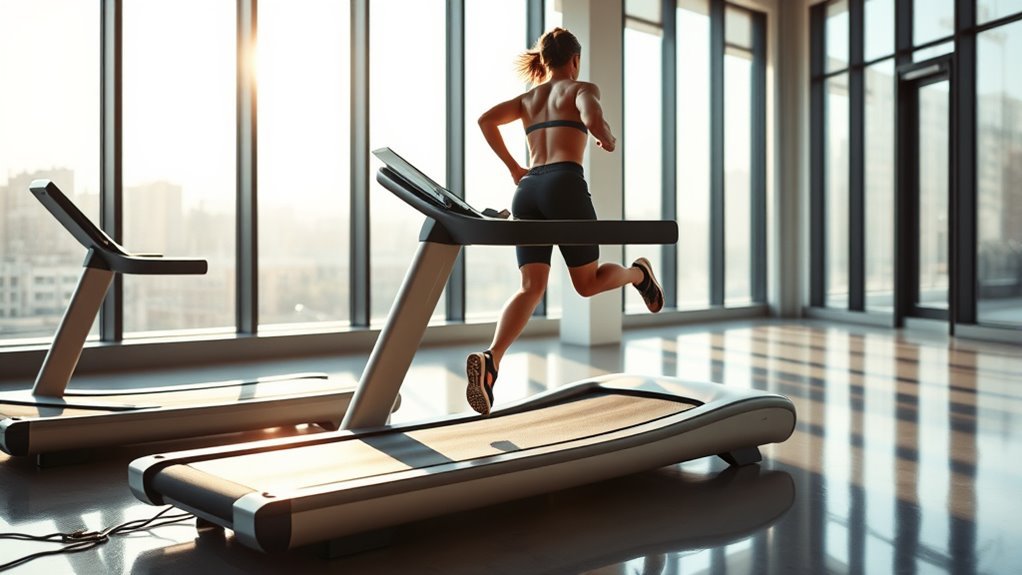
5 Reasons Curved Treadmills Are Better Than Traditional Treadmills
You’ll get a more natural running stride on a curved treadmill because it encourages proper foot placement and posture. This helps you run more efficiently and comfortably.
Plus, you’ll burn more calories since you control the speed with your effort, which means you engage more muscles during your workout.
These treadmills also reduce joint impact thanks to their unique design, making workouts easier on your body.
Another great perk is that they don’t need electricity, so they’re quieter and often more durable than traditional treadmills.
If you want to know how all these benefits can improve your workout experience, keep exploring these advantages.
Key Takeaways
- Curved treadmills promote natural running form by encouraging midfoot strikes and proper posture. This helps reduce the risk of injury, which is great news for anyone who runs regularly.
- Users burn more calories thanks to higher muscle engagement and the ability to control intensity at their own pace. It’s like getting a more effective workout without even trying harder.
- They offer lower joint impact and better shock absorption. This not only makes running more comfortable but also supports long-term joint health.
- Because of their mechanical simplicity, curved treadmills are super durable and run quieter. Plus, they don’t use electricity and need very little maintenance, saving you money and hassle.
- The speed and effort on these treadmills are fully customizable. That means workouts can be adapted for all fitness levels, making them accessible and personalized for everyone.
Enhanced Running Mechanics
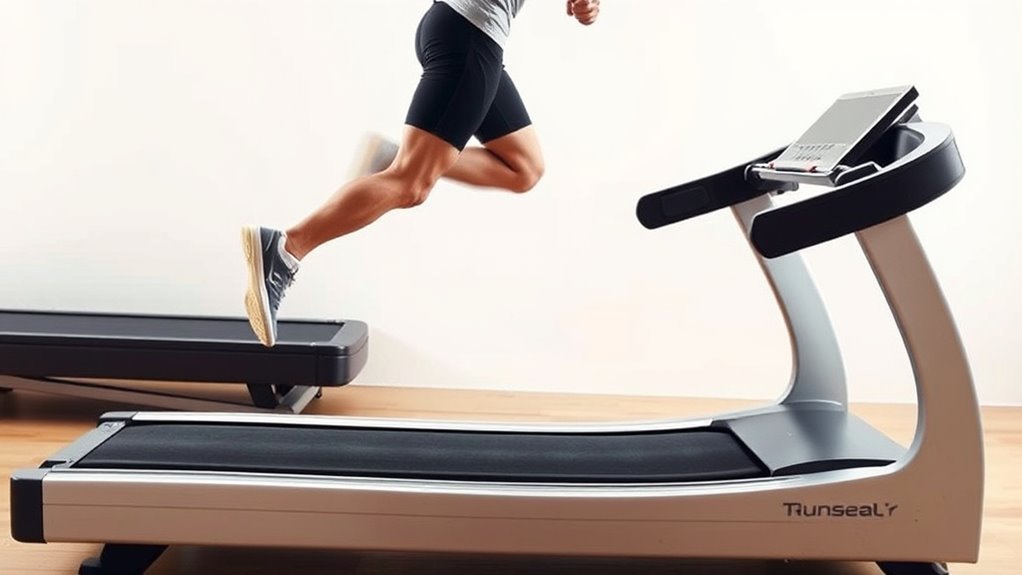
Although traditional treadmills keep you moving, curved treadmills actively improve your running form by encouraging a natural stride. When you run on a curved treadmill, your feet land directly under your hips, promoting better posture and reducing the risk of injury.
You’ll notice that your foot strike shifts toward the midfoot or forefoot, which aligns with proper running mechanics. Because the belt moves only when you push it, you control your pace naturally, helping you maintain an efficient cadence.
This self-paced design forces you to engage your core and leg muscles more effectively. Over time, running on a curved treadmill can help you develop better balance, coordination, and overall running efficiency.
It makes each workout more beneficial for your body.
Increased Calorie Burn
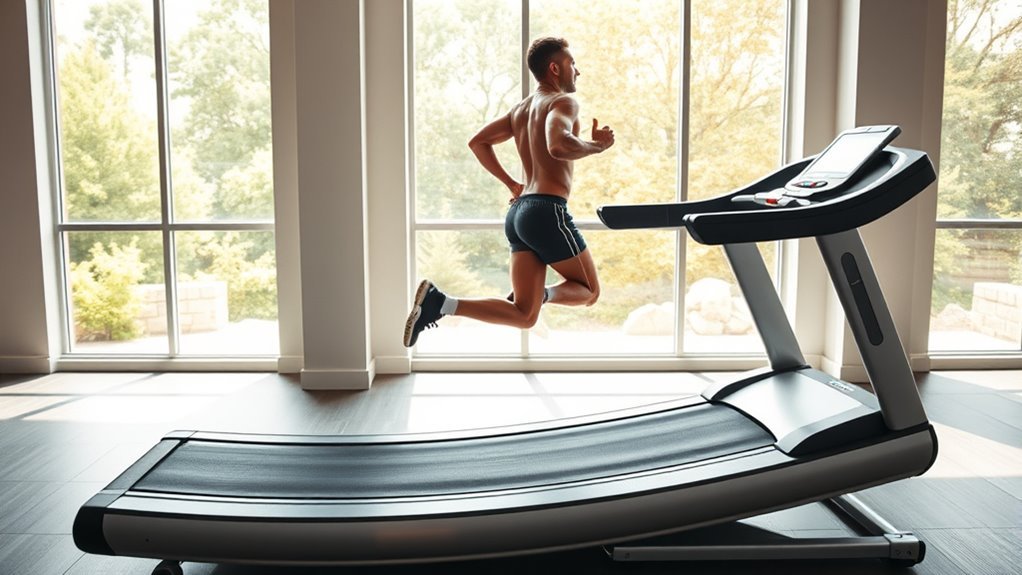
As you engage more muscles and maintain a natural pace on a curved treadmill, your body works harder than it would on a traditional belt. This increased effort leads to a higher calorie burn, helping you reach your fitness goals faster.
Since you control the speed by your own movement, you naturally push yourself more, activating your core, legs, and glutes simultaneously.
Here’s how calorie burn compares between curved and traditional treadmills:
| Activity Type | Curved Treadmill (cal/hr) | Traditional Treadmill (cal/hr) |
|---|---|---|
| Walking | 300 | 200 |
| Jogging | 600 | 450 |
| Running | 900 | 700 |
| Sprinting | 1200 | 900 |
| Interval Training | 1100 | 800 |
With a curved treadmill, you get more from every step.
Reduced Impact on Joints
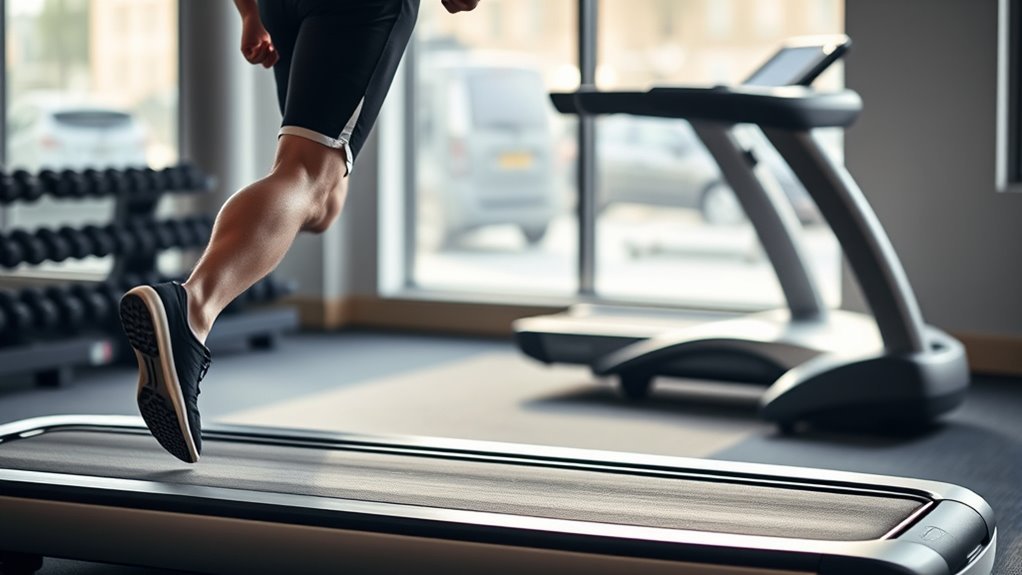
You’ll feel less strain on your joints when you use a curved treadmill because it encourages a natural running motion. The design helps absorb shock better than traditional models, reducing impact stress.
This means you can run longer and recover faster without unnecessary joint pain. It’s like giving your body a break while still getting a great workout in.
Lower Joint Stress
Because curved treadmills rely on your own momentum, they naturally reduce the impact on your joints compared to traditional motorized models. When you run on a curved treadmill, you control the speed and intensity with each step, which means less harsh pounding on your knees, ankles, and hips.
This self-paced motion allows your muscles and joints to absorb shock more effectively, lowering the risk of joint pain and injury. Unlike motorized treadmills that force a set pace regardless of your body’s readiness, curved treadmills give you the freedom to adjust instantly, promoting healthier joint movement.
If you’re looking to protect your joints while still getting a solid workout, curved treadmills offer a gentler, more joint-friendly option that supports long-term fitness. It’s a smart choice for anyone wanting to stay active without the extra wear and tear.
Natural Running Motion
When you run on a curved treadmill, your body naturally adopts a more efficient stride that mimics outdoor running. Unlike traditional treadmills with flat, motorized belts, the curved design requires you to engage your muscles more actively, promoting a midfoot or forefoot strike.
This encourages proper posture and foot placement, reducing unnatural impact forces on your joints. Because you control the speed with your own effort, your running motion becomes fluid and self-paced, just like running outside.
This natural gait lessens stress on your knees, ankles, and hips, helping to prevent injuries. By encouraging biomechanics closer to outdoor running, curved treadmills support a healthier, more comfortable workout that feels more intuitive and joint-friendly than traditional treadmill running.
Enhanced Shock Absorption
Although traditional treadmills provide a stable surface, curved treadmills offer enhanced shock absorption that considerably reduces impact on your joints. Their curved design naturally cushions each footstrike, absorbing more shock than flat belts.
This means less stress on your knees, ankles, and hips, helping you avoid common running injuries. As you run, the curved surface encourages a softer landing, promoting better form and smoother strides.
You’ll notice less fatigue and discomfort during and after workouts. If you’re recovering from injury or want to protect your joints long-term, this feature makes curved treadmills a smart choice.
No Electricity Required
Since curved treadmills don’t need electricity, you can use them anywhere without worrying about outlets or power cords. This means you’re free to place your treadmill in any room, garage, or even outdoors, without hunting for a nearby plug.
You won’t have to deal with tripping hazards from cords or worry about power outages interrupting your workout. Plus, without a motor, curved treadmills are quieter, making them ideal for shared living spaces or apartments.
You also save on electricity costs, which adds up over time. This independence from power gives you flexibility and convenience, so you can focus on your training wherever and whenever you want, without restrictions tied to electrical access or extra utility bills.
Improved Muscle Engagement
Because you control the speed and pace on a curved treadmill, your muscles work harder to propel you forward, engaging more muscle groups than a traditional motorized treadmill. This means your legs, glutes, core, and even upper body activate more intensely, improving overall strength and stability.
Unlike a motorized treadmill that moves beneath you, a curved treadmill requires your effort to keep it moving, boosting muscle activation naturally.
| Muscle Group | Engagement Benefit |
|---|---|
| Legs | Increased power and endurance |
| Glutes | Enhanced strength and tone |
| Core | Improved balance and stability |
| Upper Body | Better posture and coordination |
With improved muscle engagement, your workouts become more effective and functional. It’s a smart way to get more out of every session!
Customizable Workout Intensity
You can easily tailor your workout intensity with a curved treadmill by adjusting the speed and incline to match your fitness level. These machines also offer personalized training programs that keep your routine challenging and effective.
With this level of customization, you control how hard you push yourself every session. It’s all about making your workout fit you perfectly.
Adjustable Speed Control
When you use a curved treadmill, you’re in complete control of your speed without pressing any buttons. The curved design responds directly to your stride, so you naturally speed up or slow down as you move.
This means you can easily adjust your pace on the fly, whether you’re warming up, sprinting, or cooling down. You don’t have to interrupt your workout to fiddle with controls—your body sets the pace.
This seamless speed control lets you customize your workout intensity precisely to your needs, making each session more effective and engaging. It also encourages a more natural running form, reducing the risk of injury.
With a curved treadmill, you get a dynamic, responsive workout experience tailored entirely by you. It’s all about moving how you want, when you want.
Variable Incline Options
Although curved treadmills don’t rely on electronic settings, they let you naturally vary your incline by adjusting your stride and body position. When you lean forward or take longer strides, you increase the effort, simulating an uphill climb.
Conversely, a more upright posture and shorter strides reduce resistance, mimicking a downhill or flat surface. This hands-on control lets you instantly customize your workout intensity without pressing buttons or waiting for adjustments.
You engage more muscles as you respond to your body’s feedback, leading to a more dynamic and effective workout. Unlike fixed electronic inclines, the curved treadmill’s design encourages you to listen to your body and modify your effort in real time.
That way, every session feels uniquely tailored to your fitness goals.
Personalized Training Programs
Adjusting your stride and posture on a curved treadmill lets you control workout intensity naturally, but personalized training programs take customization even further. These programs adapt to your fitness level, goals, and preferences, ensuring every session challenges you just right.
With personalized training, you can set specific speed and resistance goals tailored to your progress. Plus, you get to track performance metrics like heart rate and calories burned in real time.
You’ll also receive customized workout plans that evolve based on your improvements. This means you can focus on target areas, such as endurance, strength, or interval training.
And the best part? You get feedback and motivation to keep pushing your limits safely. This level of customization guarantees you stay engaged, avoid plateaus, and make the most of every workout on your curved treadmill.
Durability and Maintenance Benefits
Because curved treadmills rely on your own motion to power the belt, they have fewer mechanical parts that can wear out or break down. This means less frequent repairs and lower maintenance costs for you.
Without a motor or complex electronics, you avoid the usual treadmill headaches like belt slippage or motor failure. Plus, the sturdy design often uses durable materials built to withstand intense workouts.
| Feature | Benefit |
|---|---|
| No motor | Reduced mechanical failures |
| Fewer moving parts | Less frequent maintenance |
| Durable frame | Longer lifespan |
| Manual operation | No power consumption |
| Simple design | Easy cleaning and upkeep |
This durability keeps your treadmill reliable and ready whenever you want to train.
Suitable for All Fitness Levels
The low maintenance and durable design of curved treadmills make them a practical choice for everyone, regardless of fitness level. Whether you’re just starting out or training for a marathon, these treadmills adapt to your pace naturally, giving you control over speed and intensity without complicated settings.
You’ll appreciate how they encourage natural running form, which helps reduce injury risk. Plus, they allow easy speed adjustments based on your effort, making workouts feel more intuitive.
They offer a low-impact workout that’s great for beginners but also challenge advanced users with increased resistance from self-propulsion. Best of all, you get immediate feedback through your own movement, so you always know how you’re doing.
Frequently Asked Questions
How Much Do Curved Treadmills Typically Cost Compared to Traditional Ones?
Curved treadmills typically cost more than traditional ones, often ranging from $2,000 to $4,000. Meanwhile, traditional treadmills usually fall between $500 and $2,000.
You’ll pay extra for the curved design and durability. It’s kind of like buying a premium gadget versus a standard one. So, if you’re looking for something unique and built to last, expect to spend a bit more.
Can Curved Treadmills Be Used for Walking as Well as Running?
Absolutely, you can use curved treadmills for walking and running—they’re like a chameleon adapting to your pace.
You’ll find walking feels natural, while running engages more muscles, giving you a versatile, efficient workout every time.
Are Curved Treadmills Suitable for People Recovering From Injuries?
Yes, curved treadmills can suit injury recovery since you control the pace, reducing impact.
But you should consult your doctor or therapist first to make certain it’s safe and fits your specific rehab needs and limitations.
Do Curved Treadmills Require Special Flooring or Space Considerations?
Oh sure, you’ll need a dance floor—just kidding!
Curved treadmills don’t demand special flooring but do need enough space to move around safely.
How Loud Are Curved Treadmills During Use Compared to Traditional Models?
Curved treadmills are generally quieter than traditional motorized ones since they’re self-powered and lack noisy motors. You’ll still hear your footsteps, but overall, they produce less mechanical noise during your workout sessions.
It’s kind of like running outside—just the sound of your steps. So, if noise is a concern for you, curved treadmills might be a better fit. They keep things quieter without sacrificing your workout quality.
Conclusion
When you choose a curved treadmill, you’re stepping into the future while enjoying the timeless benefits of a good old-fashioned workout. You’ll burn more calories, protect your joints, and engage muscles better—all without plugging in.
Plus, it adapts to your pace, whether you’re a beginner or a seasoned pro. So why stick to the past with traditional treadmills when you can upgrade to a smarter, more efficient way to run?
Curved treadmills offer a natural running experience that helps improve your form and reduces impact. They’re perfect for anyone looking to maximize their workout, whether at home or in the gym.
In short, curved treadmills are better than traditional treadmills because they provide a more effective, joint-friendly, and energy-efficient workout. Ready to make the switch? Your body and your fitness goals will thank you!