How to Use Ellipticals Without Making Your Knees Bad
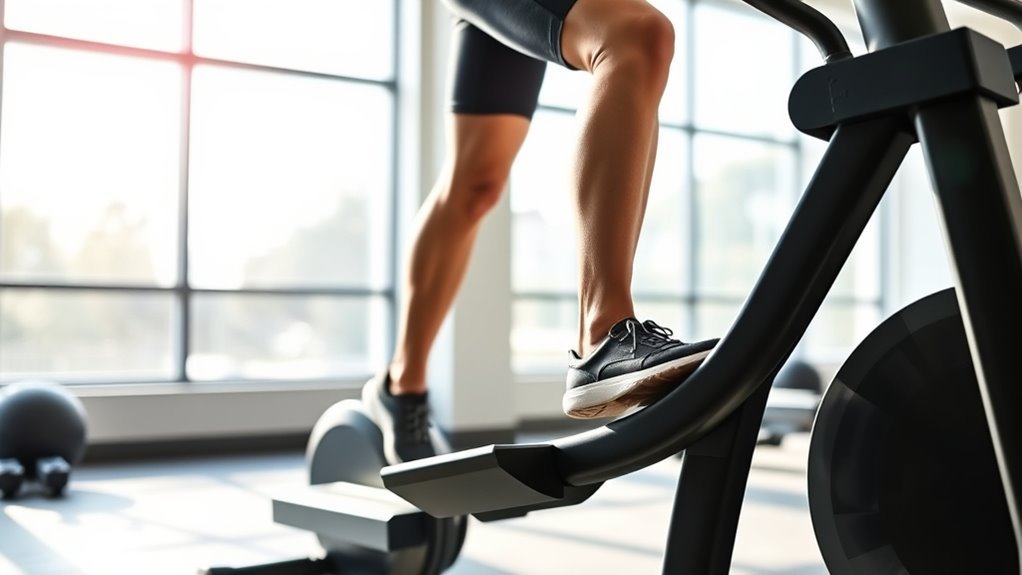
To safeguard your knees on an elliptical, keep your knees slightly bent and aligned with your feet while pedaling smoothly and steadily.
Using an elliptical machine correctly is essential to protect your knees from strain and injury.
Choose a machine with an adjustable stride and low resistance to avoid putting too much pressure on your joints.
Place your feet flat and centered on the pedals for better stability and comfort.
Engage your core and maintain good posture with relaxed shoulders.
This helps distribute your effort evenly and reduces unnecessary stress on your knees.
Don’t forget to warm up before your workout and cool down afterward to prevent injuries.
If you want to make sure your knees stay healthy, there are important techniques and tips worth exploring.
Taking these simple steps can make your elliptical workouts both safe and effective.
Key Takeaways
- Maintain proper knee alignment by keeping your feet flat and knees slightly bent. Avoid locking your joints while using the elliptical.
- Start with low resistance and a moderate incline to prevent putting too much strain on your knees. You can gradually increase the intensity as you get more comfortable.
- Use smooth, controlled circular motions and engage your core muscles. This helps stabilize your pelvis and reduces stress on your knees.
- Warm up with gentle pedaling and some dynamic stretches. When you’re done, cool down with slow pedaling and static stretches to help your muscles recover.
- If you feel sharp knee pain, stop right away. If you notice any discomfort, try reducing the intensity. And don’t hesitate to seek medical advice if problems persist.
Understanding Knee Mechanics on Elliptical Machines
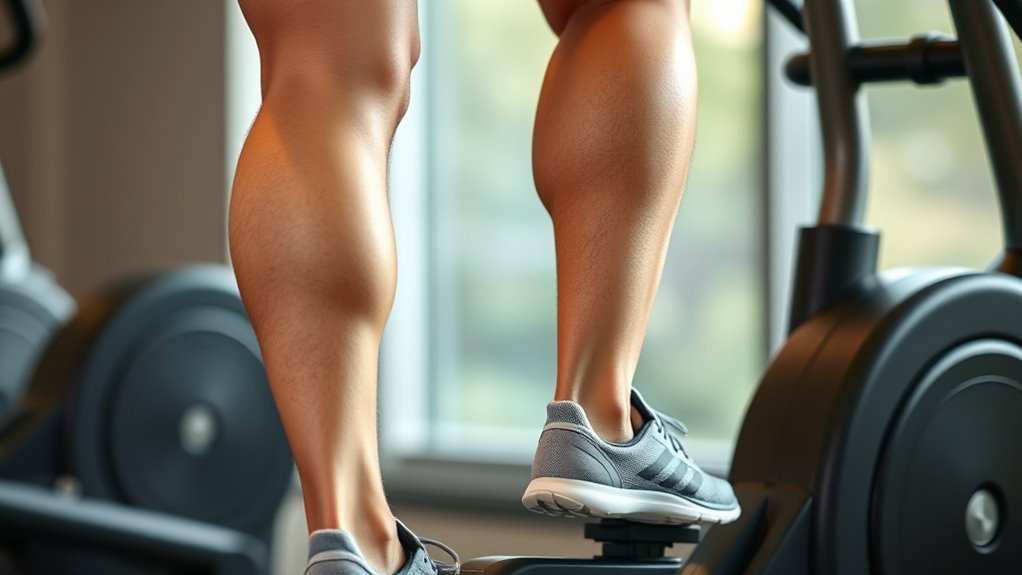
Before you hop on an elliptical, it’s important to understand how your knees move during exercise. Your knees primarily flex and extend as you pedal, mimicking a natural walking or running motion.
Unlike high-impact activities, ellipticals reduce stress by keeping your feet in constant contact with the pedals, limiting sudden jolts. However, improper form or excessive resistance can still strain your knees.
You want to maintain a smooth, controlled motion without locking your knees at full extension. Keeping a slight bend helps protect the joint and prevents unnecessary pressure.
Also, aligning your knees with your feet during each stride reduces twisting forces that could cause discomfort. By knowing these mechanics, you’ll safeguard your knees while getting the most from your elliptical workout.
Choosing the Right Elliptical Machine for Knee Health
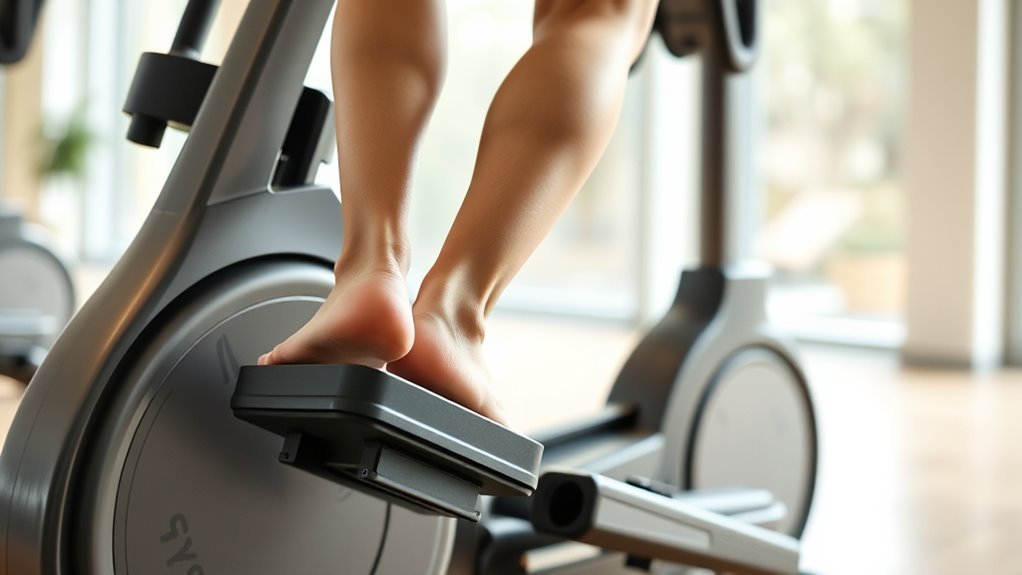
When selecting an elliptical, you want to prioritize features that support your knee health to prevent strain and discomfort. Look for machines with adjustable stride lengths, as this lets you customize your movement to match your natural gait, reducing knee stress.
Choose ellipticals with adjustable stride lengths to align with your natural gait and protect your knees from strain.
Smooth, quiet motion is essential—opt for ellipticals with well-designed, fluid mechanisms to avoid jarring impacts. Also, consider models with good shock absorption to cushion your joints during exercise.
A machine that offers multiple resistance levels helps you gradually build strength without overloading your knees. Finally, confirm the pedals are wide and stable to provide solid support, but avoid overly rigid platforms that restrict natural foot movement.
Choosing the right elliptical sets the foundation for knee-friendly workouts. It really makes a difference in how comfortable and safe your exercise sessions feel.
Proper Foot Placement and Pedal Technique
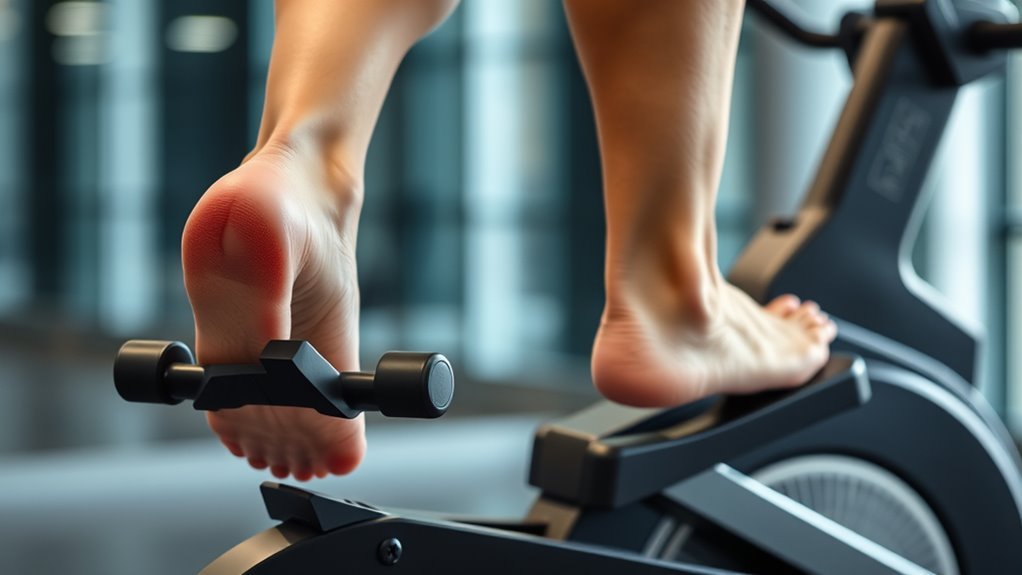
You’ll want to place your feet flat and centered on the pedals to maintain proper alignment and reduce knee strain. Keep your movements smooth and controlled to avoid unnecessary impact on your joints.
Mastering these techniques helps protect your knees while getting the most from your workout. It’s all about finding that balance and keeping things comfortable as you ride.
Optimal Foot Positioning
Although many focus on pace and resistance, your foot placement on the elliptical pedals plays a crucial role in protecting your knees. Position your feet flat and centered on the pedals to distribute pressure evenly.
Avoid letting your heels hang off or placing your toes too far forward, as this can strain your knee joints. Keep your feet aligned with the pedal’s natural motion path to prevent twisting or unnatural angles.
Make sure your entire foot contacts the pedal surface to maintain stability and reduce stress. Adjust your stance width if the machine allows, aiming for a comfortable position that doesn’t force your knees inward or outward.
Smooth Pedal Movements
Because smooth pedal movements reduce joint stress, mastering proper foot placement and pedal technique is essential for protecting your knees on an elliptical. Keep your feet flat and centered on the pedals, avoiding pressure on your toes or heels.
This balance distributes force evenly and prevents unnecessary strain. Focus on a fluid, circular motion by pushing down and pulling back with each stride, rather than stomping or jerking.
Engage your core and maintain a slight bend in your knees to absorb shock. Avoid locking your joints at any point during the motion.
Adjusting Resistance and Incline to Protect Your Knees
When adjusting the resistance and incline on an elliptical, aim for settings that challenge your muscles without overloading your knees. Start with low resistance and a flat incline to warm up.
Increase resistance gradually to build strength, but avoid settings that cause knee discomfort. Incline raises knee flexion, so keep it moderate to prevent strain.
Listen to your body and reduce intensity if you feel pain.
| Resistance Level | Incline Level | Knee Impact |
|---|---|---|
| Low | Flat | Minimal |
| Moderate | Low | Safe for most |
| High | Moderate | Increased strain |
| Very High | High | Risk of knee pain |
Adjust carefully to protect your knees while improving fitness.
Maintaining Correct Posture During Your Workout
To protect your knees, you need to maintain correct posture throughout your elliptical workout. Keep your spine aligned, engage your core muscles, and relax your shoulders to avoid unnecessary strain.
These simple adjustments will help you exercise safely and effectively. Trust me, it’s worth paying attention to your form!
Align Your Spine
Although it might seem minor, aligning your spine correctly during elliptical workouts plays an essential role in protecting your knees. When your spine is properly aligned, it helps distribute your body weight evenly, reducing unnecessary strain on your knee joints.
Stand tall with your head in a neutral position, shoulders relaxed but not slouched. Avoid leaning forward or backward.
Keep your chest open and your back straight to maintain this alignment throughout your workout. If you notice yourself hunching or arching excessively, pause and reset your posture.
Proper spinal alignment encourages smooth, controlled movements on the elliptical. This prevents imbalances that can lead to knee pain or injury.
Engage Core Muscles
Keeping your spine aligned sets the stage for properly engaging your core muscles during your elliptical workout. When you activate your core, you stabilize your pelvis and lower back, reducing unnecessary strain on your knees.
Here’s how you can engage your core effectively:
- Tighten your abdominal muscles as if preparing for a light punch.
- Maintain this gentle contraction throughout your workout without holding your breath.
- Focus on drawing your navel slightly toward your spine to deepen engagement.
- Keep your hips level and avoid swaying side to side to ensure your core supports your movement.
Keep Shoulders Relaxed
While you focus on your lower body, don’t forget to keep your shoulders relaxed to prevent unnecessary tension that can affect your posture and overall comfort during your elliptical workout. Tensing your shoulders can lead to stiffness and even neck pain, which distracts from your exercise benefits.
Keep your shoulders down and slightly back, avoiding the urge to hunch or raise them toward your ears. Check in with your posture every few minutes and consciously release any tightness.
Incorporating Warm-Up and Cool-Down Exercises
Since your knees take a lot of impact during elliptical workouts, you should always include warm-up and cool-down exercises to protect them. Warming up prepares your joints and muscles, reducing injury risk, while cooling down helps your body recover and prevents stiffness.
Here’s how to do it effectively:
- Start with 5 minutes of gentle pedaling at low resistance to increase blood flow.
- Perform dynamic stretches like leg swings and ankle circles to loosen your knee joints.
- After your workout, pedal slowly for 3-5 minutes to gradually lower your heart rate.
- Finish with static stretches focusing on your quads, hamstrings, and calves to maintain flexibility.
Incorporating these steps will keep your knees safe and improve your overall elliptical experience. It’s a simple routine that makes a big difference!
Recognizing Warning Signs of Knee Discomfort
After warming up and cooling down properly, pay close attention to how your knees feel during and after your elliptical sessions. If you notice sharp pain, persistent soreness, or swelling, stop exercising and rest.
Mild discomfort can occur, but it shouldn’t worsen or linger beyond a few hours. Watch for stiffness or a feeling of instability when you stand or walk.
Catching these early warning signs helps prevent long-term damage. Avoid pushing through pain, as it often signals strain or injury.
If discomfort continues, consider consulting a healthcare professional to rule out underlying issues. Listening to your body and adjusting your workout intensity or form can protect your knees and keep your elliptical routine safe and effective.
Combining Elliptical Workouts With Knee-Strengthening Exercises
To protect your knees and enhance your elliptical workouts, you should combine cardio sessions with targeted knee-strengthening exercises. Strengthening the muscles around your knees provides better support and reduces injury risk.
Focus on exercises that build stability and flexibility.
Here are four effective exercises to complement your elliptical routine:
- Straight Leg Raises – Strengthen your quadriceps without straining the joint.
- Hamstring Curls – Improve the balance between your front and back thigh muscles.
- Calf Raises – Enhance lower leg support and ankle stability.
- Wall Sits – Build endurance in your thigh muscles while minimizing knee pressure.
Try to incorporate these exercises 2-3 times a week. You’ll notice improved knee comfort and better performance on the elliptical in no time!
Frequently Asked Questions
Can Elliptical Workouts Help With Existing Knee Arthritis?
Yes, elliptical workouts can help ease knee arthritis by providing low-impact exercise that strengthens muscles around your joint.
Just start slowly, listen to your body, and avoid overdoing it to prevent pain or injury. It’s all about finding the right balance for you.
How Often Should I Replace Elliptical Machine Pedals?
You should replace your elliptical pedals every 1 to 2 years, or sooner if you notice wear, cracks, or instability. Regular checks help prevent injury and guarantee smooth, comfortable workouts.
Don’t wait until they’re damaged! Keeping an eye on your pedals means you can enjoy a safer, more effective exercise every time.
Are Elliptical Workouts Suitable During Pregnancy?
Coincidentally, elliptical workouts are generally safe during pregnancy if you listen to your body and avoid overexertion. You should consult your doctor first, stay hydrated, and modify intensity to keep both you and baby comfortable.
It’s really important to pay attention to how you feel while exercising. If anything feels off, don’t push through it. Taking it easy and adjusting your routine can make a big difference.
Can I Use an Elliptical if I Have a Knee Replacement?
You can use an elliptical after knee replacement, but consult your doctor first. Start slowly, use low resistance, and focus on smooth, controlled movements to avoid strain.
Listen to your body and stop if you feel pain. It’s all about easing into it and making sure you don’t push too hard too soon.
What Shoes Are Best for Elliptical Workouts to Protect Knees?
Did you know 70% of knee injuries relate to improper footwear? You’ll want cushioned, supportive shoes with good arch support and shock absorption to protect your knees during elliptical workouts.
This helps keep your joints comfortable and safe. Choosing the right shoes makes a big difference in preventing pain and injury.
Conclusion
If you don’t use your elliptical properly, your knees might as well file a formal complaint! But by choosing the right machine, adjusting resistance wisely, and keeping perfect form, you’ll glide through workouts pain-free.
Remember to warm up, listen to your body, and strengthen those knees outside the gym. These steps aren’t just tips—they’re your ticket to enjoying elliptical workouts without knee pain.
Follow these simple guidelines, and your knees won’t just survive—they’ll thrive. With the right elliptical use, your knees can become stronger and more resilient. So, take care of your knees by using the elliptical correctly, and get ready to conquer every session with unstoppable power and confidence!