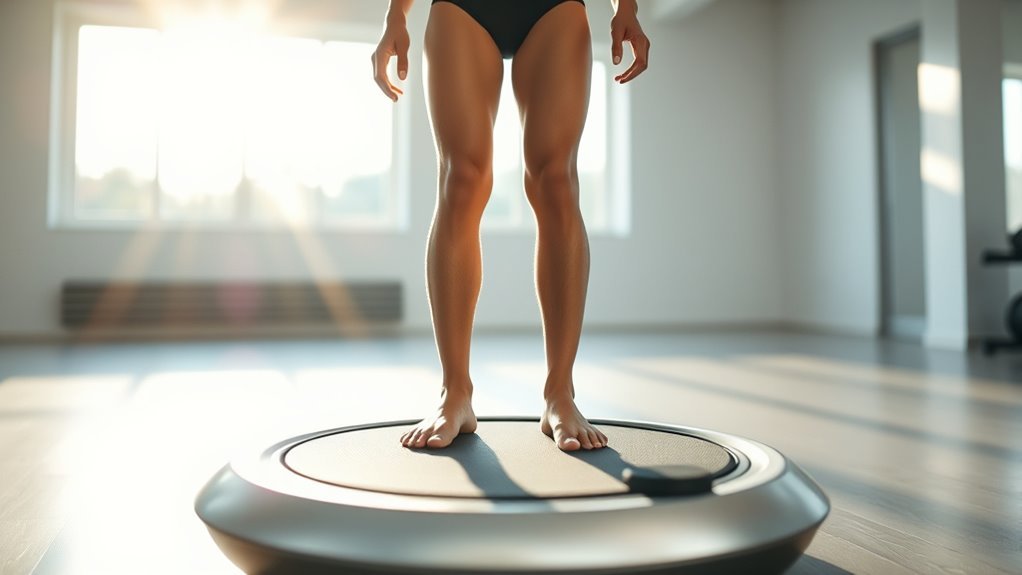
How Long Do You Stand on a Vibration Plate for Best Results
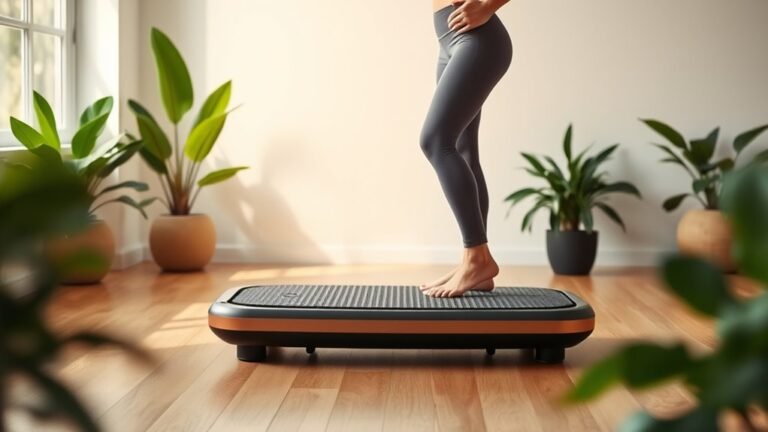
You should start with 5 to 10 minutes on the vibration plate if you’re a beginner. Gradually increasing to 10 to 15 minutes as you adapt. Using a vibration plate can be a fantastic way to boost your fitness routine, but knowing how long to stand on it is key for best results.
For intermediate users, 15 to 20 minutes per session works well. But always listen to your body and take breaks when needed. Keep your knees slightly bent and maintain good posture for safety.
Curious about how to tailor sessions to your fitness level and get the most out of your routine? It’s all about finding what works best for you and progressing steadily.
Key Takeaways
- Beginners should start with 5–10 minutes per session, gradually increasing duration and frequency to 2–3 times per week for best results. It’s all about easing into it and letting your body adapt.
- Intermediate users can aim for 15–20 minutes per session, 3–4 times weekly. Make sure to take short breaks every 5 minutes to prevent fatigue and keep things comfortable.
- Maintain knees slightly bent and proper posture to reduce joint stress. This also helps enhance muscle engagement during vibration plate sessions.
- Use vibration plates as a warm-up, strength training aid, or cool-down. Doing this maximizes benefits and improves muscle activation and recovery.
- Always listen to your body. Start with shorter sessions and increase duration gradually to avoid dizziness, discomfort, or injury. Taking it slow is key!
Understanding Vibration Plate Therapy
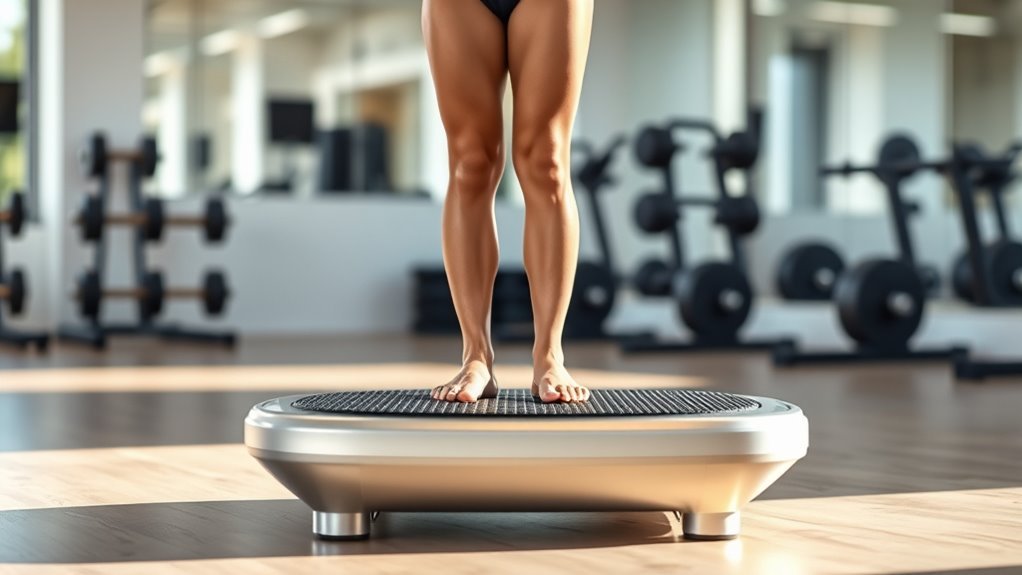
Although vibration plate therapy might seem unfamiliar at first, it offers a simple way to enhance your fitness routine. When you stand on a vibration plate, it generates rapid mechanical oscillations that cause your muscles to contract and relax multiple times per second.
This stimulates muscle fibers more intensely than traditional exercises, improving strength, balance, and circulation. You don’t need extensive training to use it; just position yourself comfortably and let the machine do the work.
It’s especially helpful if you want a low-impact workout or recovery aid. As you get used to the vibrations, you’ll notice increased muscle activation and improved flexibility.
Understanding this helps you appreciate why even short sessions can be effective in complementing your fitness goals.
Factors Influencing Session Duration
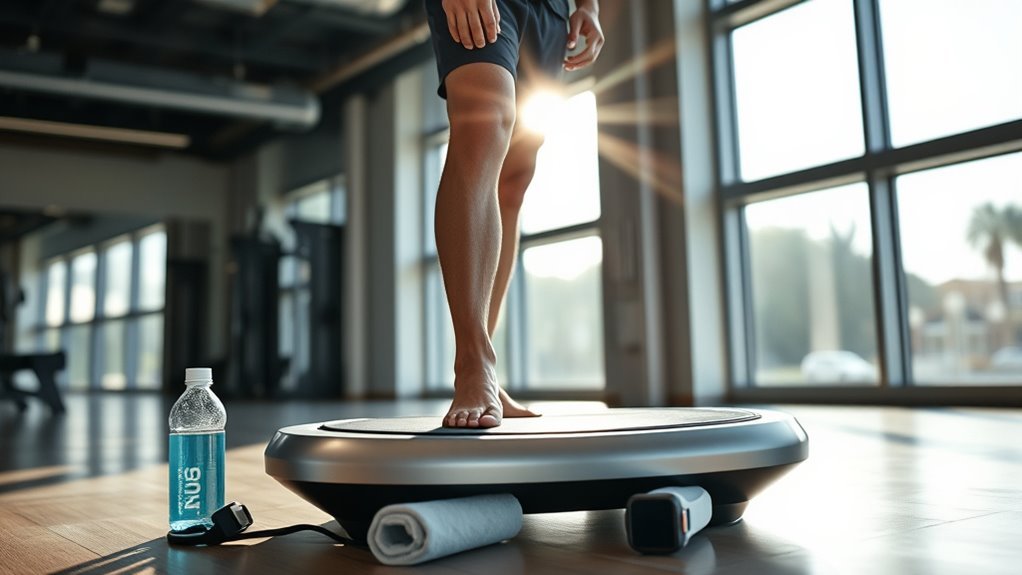
Since everyone’s fitness level and goals differ, the ideal time you spend on a vibration plate varies accordingly. Your endurance plays a big role; if you’re just starting out, shorter sessions prevent fatigue and injury.
The intensity of the vibration also matters—higher frequencies might require less time to be effective. What you aim to achieve influences duration too: muscle toning, weight loss, or flexibility improvements may call for different session lengths.
Additionally, your body’s response during and after sessions guides adjustments; if you feel overly tired or sore, shorter or less frequent use is better. Finally, the type of exercises you perform on the plate affects how long you should stay on it.
Listening to your body helps you find the right balance for ideal results.
Recommended Time for Beginners
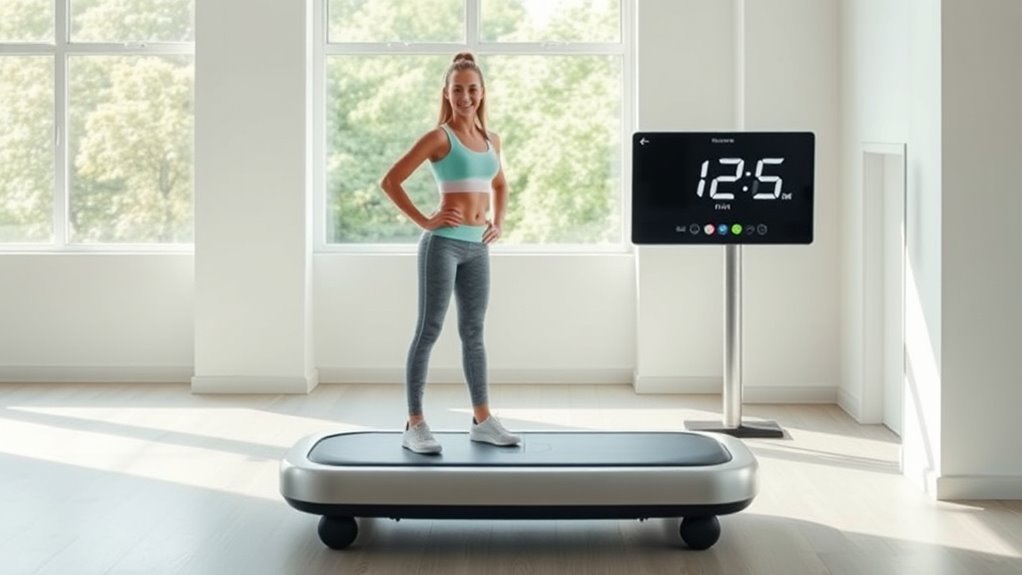
When you’re just starting out, aim for about 5 to 10 minutes per session on the vibration plate.
Gradually increase your time as your body gets used to the vibrations to avoid overexertion. Try to use the plate 2 to 3 times a week for the best results without risking fatigue.
Starting Duration Guidelines
Before diving into longer sessions, you should start with short durations on the vibration plate to let your body adapt. This approach helps prevent muscle strain and allows your nervous system to get used to the vibrations.
For beginners, follow these guidelines:
- Begin with 5 minutes per session to gauge your comfort level.
- Perform sessions 2 to 3 times a week to allow recovery.
- Maintain proper posture and steady footing to maximize benefits and reduce injury risk.
Starting with these short, controlled sessions ensures you build a strong foundation for more intense workouts later. Always listen to your body and stop if you feel discomfort or dizziness.
This cautious start sets you up for safe and effective vibration plate use.
Gradual Time Increase
After getting comfortable with short sessions, you can gradually increase your time on the vibration plate to build endurance and enhance results.
Start by adding 30 seconds to each session every few days, paying attention to how your body feels. Avoid pushing too hard too fast to prevent fatigue or injury.
Here’s a simple progression plan for beginners:
| Week | Session Duration | Notes |
|---|---|---|
| 1 | 5 minutes | Focus on form and balance |
| 2 | 6 minutes | Increase time slightly |
| 3 | 7 minutes | Monitor comfort levels |
| 4 | 8 minutes | Maintain steady pace |
Stick to this gradual increase to improve strength and stamina safely while maximizing the benefits of your vibration plate workouts.
Session Frequency Tips
Although increasing your session duration is important, you should also focus on how often you use the vibration plate each week.
For beginners, consistency matters more than long sessions. Here’s a simple frequency guide to help you get started:
- Start with 2-3 sessions per week – This allows your muscles to adapt without overtraining.
- Rest at least one day between sessions – Your body needs time to recover and build strength.
- Gradually increase frequency to 4-5 times weekly – Once you’re comfortable, more frequent sessions can boost results.
Optimal Duration for Intermediate Users
Now that you’ve got some experience, it’s time to adjust your session length to around 15-20 minutes.
You’ll want to use the vibration plate consistently, aiming for 3-4 times a week to see steady progress.
Finding the right balance between duration and frequency will help you get the most out of your workouts.
Recommended Session Length
When you’ve moved beyond the beginner stage, you’ll want to aim for vibration plate sessions lasting between 15 and 20 minutes. This duration strikes a balance between effectiveness and safety, allowing your muscles to engage fully without overexertion.
To get the most from your session, consider these key points:
- Gradually increase session length as your body adapts to avoid strain.
- Include short breaks or position changes every 5 minutes to maintain comfort and efficiency.
- Monitor how your body responds, adjusting time if you experience excessive fatigue or discomfort.
Sticking within this recommended session length helps maximize muscle activation and recovery while minimizing the risk of injury. Remember, quality beats quantity, so focus on proper form throughout.
Frequency and Consistency
Once you’ve established a comfortable session length on the vibration plate, the next step is to focus on how often and consistently you should train. For intermediate users, aiming for 3 to 4 sessions per week strikes the right balance between progress and recovery.
Consistency is key — regular sessions help your muscles adapt and improve over time. Avoid overdoing it; your body needs time to rest and rebuild.
If you feel sore or tired, take a day off or opt for a lighter session. Sticking to a routine not only maximizes your results but also builds a habit that keeps you motivated.
How Advanced Users Can Maximize Results
Although vibration plates offer great benefits for beginners, advanced users can push their results further by incorporating varied intensity levels and targeted exercises.
Advanced users can enhance results by adjusting intensity and focusing on specific exercises with vibration plates.
To maximize your session, try these strategies:
- Increase Intensity Gradually: Boost frequency and amplitude to challenge your muscles without risking injury.
- Incorporate Dynamic Movements: Add squats, lunges, or push-ups on the plate to engage multiple muscle groups simultaneously.
- Cycle Through Different Positions: Alternate between standing, sitting, and balancing to target different muscle fibers and improve stability.
Signs You Should Limit Your Time on the Plate
If you start feeling persistent fatigue, dizziness, or muscle soreness during your vibration plate sessions, it’s time to cut back on your time. These signs indicate your body is overstressed and needs rest.
Pay attention to how you feel after each session—overdoing it can lead to injury or setbacks.
| Sign | What It Means | Action to Take |
|---|---|---|
| Fatigue | Overexertion | Reduce session duration |
| Dizziness | Blood flow issues | Stop and rest |
| Muscle soreness | Muscle strain | Limit time, hydrate |
Listen to your body and adjust accordingly. Limiting your time when these signs appear ensures you stay safe and make progress without harm.
Combining Vibration Plate Use With Other Exercises
When you combine vibration plate sessions with other exercises, you can boost your overall fitness and target muscles more effectively. Using the vibration plate as a warm-up or cool-down enhances circulation and muscle activation.
You can also integrate it into strength training routines to increase muscle engagement. To get the most out of your workouts, consider these tips:
- Use the vibration plate before weightlifting to activate muscles and improve stability.
- Incorporate balance exercises on the plate to enhance coordination and core strength.
- Follow vibration sessions with stretching to improve flexibility and reduce soreness.
Safety Tips for Effective Vibration Plate Workouts
Combining vibration plate workouts with other exercises can amplify your fitness results, but it’s important to prioritize safety to prevent injury and maximize benefits. Always start with shorter sessions—about 10 to 15 minutes—and gradually increase as your body adapts.
Keep your knees slightly bent to reduce joint stress and maintain proper posture. Avoid locking your joints or standing stiffly.
Use the vibration plate on a stable, flat surface to prevent slips or falls. If you have any medical conditions, consult your doctor before starting.
Stay hydrated and listen to your body—stop immediately if you feel dizziness, pain, or discomfort. And hey, wear comfortable, supportive shoes to protect your feet during workouts.
Following these tips helps you enjoy safe and effective vibration plate training. So, take it easy at first and have fun with your sessions!
Frequently Asked Questions
Can Vibration Plates Help With Weight Loss Alone?
Vibration plates alone won’t melt fat effectively; you’ll need to combine them with a healthy diet and regular exercise for weight loss.
They can boost metabolism and muscle tone but shouldn’t be your only strategy.
Think of them as a helpful extra, not a magic solution. Adding some good eating habits and moving your body regularly is key.
Are Vibration Plates Suitable for Pregnant Women?
You shouldn’t use vibration plates while pregnant without consulting your doctor first. They can cause unwanted stress or balance issues.
Always prioritize safety and get professional advice before trying any new exercise during pregnancy. It’s better to be cautious and keep both you and your baby safe.
How Often Should You Clean Your Vibration Plate?
Picture wiping down your vibration plate’s smooth surface after every workout session.
You should clean it at least once a week, or more if you sweat heavily, to keep it fresh, safe, and working perfectly for you.
Can Vibration Plate Therapy Improve Bone Density?
Yes, vibration plate therapy can improve bone density by stimulating bone growth and increasing strength.
You’ll benefit most by using it regularly alongside weight-bearing exercises. And don’t forget to maintain a healthy lifestyle to support your bone health.
Is It Safe to Use a Vibration Plate With Existing Medical Conditions?
Using a vibration plate with medical conditions is like walking a tightrope—you need balance and caution. Always check with your doctor first, so you don’t tip over into harm while seeking benefits safely.
It’s important to listen to your body and start slow. If anything feels off, pause and get advice before continuing. Stay safe out there!
Conclusion
Remember, “slow and steady wins the race.” When using a vibration plate, it’s better to start with shorter sessions and gradually increase your time as your body adapts.
Listen to your body, avoid overdoing it, and combine your vibration plate workouts with other exercises for the best results.
By balancing duration and intensity, you’ll maximize benefits safely and effectively. This way, every minute on the vibration plate counts toward your fitness goals.
For the best results, keep your sessions between 10 to 20 minutes, depending on your fitness level. Consistency is key, so make vibration plate workouts a regular part of your routine to see improvements in strength, flexibility, and circulation.
Remember, standing on a vibration plate for the right amount of time combined with proper technique will help you achieve your desired outcomes safely.