Does the Elliptical Build Glutes Effectively?
You can build your glutes effectively on the elliptical by using proper resistance, incline, and technique like pushing through your heels and maintaining good posture.
The elliptical is great for moderate glute activation and supports endurance training with low impact on your joints.
However, it won’t replace targeted strength exercises if you’re aiming for maximum muscle growth. So, combining elliptical workouts with moves like squats or lunges can really amplify your results.
To truly optimize glute engagement and avoid common pitfalls, understanding the right strategies makes all the difference. It’s all about working smarter, not just harder!
Key Takeaways
- The elliptical moderately activates glute muscles, especially with increased resistance and incline, but provides less intensity than targeted strength exercises. Using proper form—pushing through heels, maintaining posture, and incorporating backward pedaling—maximizes glute engagement on the elliptical.
- Elliptical workouts primarily improve endurance and cardiovascular health, offering lower muscle fatigue needed for significant glute growth. So, while it’s great for your heart and stamina, it might not be enough if you’re aiming for bigger glutes.
- Combining elliptical cardio with squats, lunges, or hip thrusts yields better glute development than elliptical use alone. Think of the elliptical as a helpful tool, not the whole solution.
- The elliptical is ideal for beginners or injury recovery but should be part of a comprehensive routine for effective glute building. In other words, mix it up and don’t rely on it exclusively!
How the Elliptical Engages the Glute Muscles
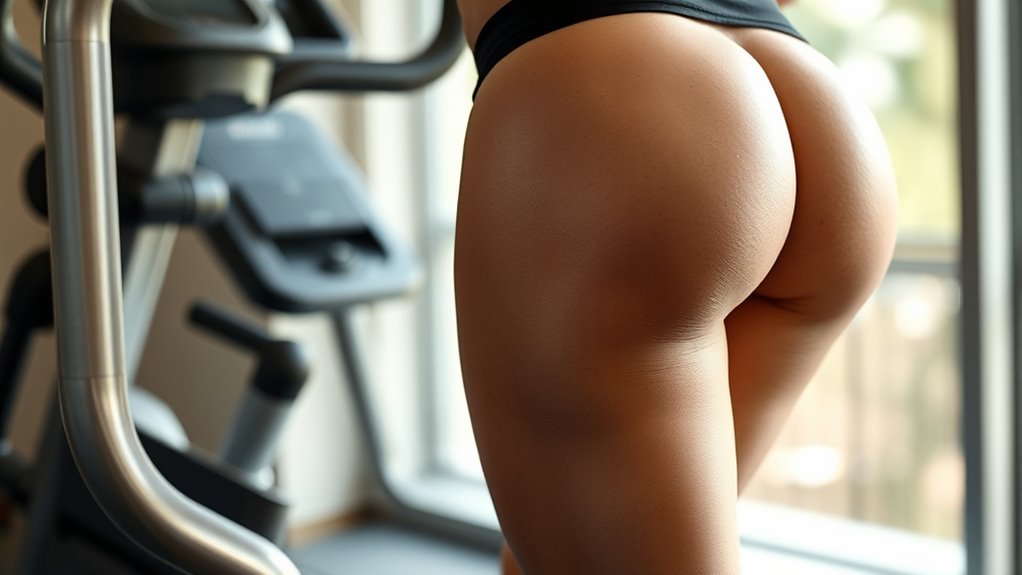
Although many people see the elliptical as just a cardio machine, it actively involves your glute muscles with each stride. When you push down and back on the pedals, you recruit your gluteus maximus to generate power.
The elliptical’s natural elliptical motion mimics a climbing pattern, which targets your glutes more than flat-surface activities. Increasing the incline or resistance on the machine forces your glutes to work harder, enhancing muscle activation.
You also stabilize your hips and core as you maintain balance, indirectly engaging your glutes further. By focusing on a deliberate, controlled stride instead of just spinning your legs, you ensure your glutes remain engaged throughout the workout.
This controlled effort helps you build strength alongside cardiovascular endurance. So, it’s not just about cardio—your glutes get a solid workout too!
Comparing Elliptical Workouts to Traditional Glute Exercises

When you compare elliptical workouts to traditional glute exercises, you’ll notice differences in muscle activation and intensity. The elliptical engages your glutes continuously but in a lower-impact way.
Traditional exercises often target those muscles more directly and intensely. Understanding these differences can help you choose the best workout for your goals.
Muscle Activation Differences
How do elliptical workouts stack up against traditional glute exercises in activating your muscles? When you use an elliptical, your glutes engage, but often less intensely than during targeted moves like squats or hip thrusts.
Ellipticals provide continuous, low-impact motion that involves your glutes, hamstrings, and quads. But the muscle activation tends to be moderate because the machine supports much of your body weight.
In contrast, traditional glute exercises force your muscles to work harder through greater resistance and specific movement patterns. This results in higher muscle fiber recruitment.
So, while the elliptical offers some glute activation, it typically doesn’t match the focused, powerful engagement you get from dedicated glute exercises designed to maximize muscle activation.
Using both can complement each other, but for serious glute building, targeted exercises are key.
Exercise Intensity Comparison
Because elliptical workouts offer steady, low-impact movement, they generally deliver lower exercise intensity compared to traditional glute exercises that demand more force and targeted effort from your muscles. When you perform squats, lunges, or hip thrusts, you actively engage and overload your glutes, which promotes muscle growth.
Elliptical machines primarily provide aerobic conditioning with repetitive motion, so your glutes work but rarely reach the fatigue needed for significant strengthening. While you can increase intensity on the elliptical by adjusting resistance or incline, it still won’t match the direct muscle recruitment you get from weighted or bodyweight glute exercises.
To effectively build your glutes, prioritize exercises that challenge your muscles through full range of motion and added resistance rather than relying solely on elliptical workouts. It’s all about working your muscles hard enough to grow!
Benefits of Using an Elliptical for Lower Body Toning

Although many workouts target the lower body, an elliptical stands out by engaging multiple muscle groups simultaneously, making it a highly effective tool for toning your legs and glutes. You activate your quads, hamstrings, and calves while also working your glutes through smooth, controlled motion.
Plus, the low-impact nature reduces joint stress, allowing you to exercise longer and more comfortably.
| Benefit | Why It Matters |
|---|---|
| Full-body engagement | Targets more muscles in one session |
| Low-impact exercise | Protects joints, reduces injury risk |
| Adjustable resistance | Increases muscle challenge progressively |
Using an elliptical regularly helps sculpt your lower body while boosting endurance and strength without excessive wear and tear. It’s a smart choice if you want results without harsh impact.
Tips for Maximizing Glute Activation on the Elliptical
To get the most out of your elliptical workout for glute building, you’ll want to focus on specific techniques that engage those muscles more intensely. Start by increasing the resistance; this forces your glutes to work harder with each stride.
Push through your heels rather than your toes to target the glute muscles effectively. Incorporate backward pedaling—it’s a great way to activate different parts of your glutes.
Maintain an upright posture and avoid leaning too much on the handlebars, so your lower body does the work. Ultimately, try interval training by alternating between high resistance and recovery periods to maximize muscle engagement and growth.
Common Mistakes That Reduce Glute Engagement
If your foot placement is off, you won’t fully engage your glutes on the elliptical. Using too little resistance also lessens the workout’s effectiveness.
Plus, slouching or poor posture can stop your glutes from firing properly. So, keep an eye on how you stand and adjust as needed to get the best results.
Incorrect Foot Placement
One of the biggest mistakes you can make during elliptical workouts is placing your feet incorrectly, which considerably reduces glute activation. If your feet sit too far forward on the pedals, you’ll shift the effort to your quads and reduce the engagement of your glutes.
Similarly, positioning your feet too close to the center can limit the range of motion needed to fully activate those muscles. To maximize glute involvement, place your feet flat and centered on the pedals, allowing for a natural stride.
Avoid pushing through your toes or heels exclusively; instead, distribute your weight evenly. This proper foot placement promotes a fuller hip extension, which directly targets your glutes and helps you get the most out of every elliptical session.
Insufficient Resistance Levels
Proper foot placement sets the foundation, but without adequate resistance, your glutes won’t receive the challenge they need to grow stronger.
If you keep the elliptical resistance too low, your glute muscles won’t activate fully, turning your workout into mostly a cardiovascular session. To build glutes effectively, increase the resistance until you feel your muscles working harder, especially during the pushing phase of your stride.
Don’t settle for an easy glide; challenge yourself enough to induce muscle fatigue by the end of your session. Remember, glute growth requires progressive overload, so gradually raise the resistance as your strength improves.
Avoid the trap of prioritizing speed over resistance, as this limits glute engagement and reduces the effectiveness of your elliptical workout.
Improper Posture Alignment
While focusing on resistance is essential, neglecting your posture can considerably reduce glute activation during your elliptical workout. If you slouch or lean heavily on the handles, you shift the effort away from your glutes to your upper body and quads.
Stand tall with a slight forward lean from your hips, keeping your core engaged and shoulders relaxed. Avoid locking your knees; instead, keep them soft to allow full hip extension, which is critical for activating your glutes.
Make sure your feet stay flat on the pedals, pushing through your heels rather than your toes. By maintaining proper posture alignment, you’ll target your glutes more effectively and get better results from your elliptical sessions.
Incorporating Resistance and Incline for Better Results
When you adjust the resistance and incline on your elliptical, you challenge your muscles in new ways that promote glute growth and overall strength. Increasing resistance forces your glutes to work harder to push the pedals, activating more muscle fibers.
Adding incline shifts your focus to the upper legs and glutes, simulating hill climbing, which further engages these muscles. Start with moderate levels and gradually increase to avoid strain and maintain proper form.
Varying resistance and incline keeps your workouts dynamic, preventing plateaus and encouraging continuous progress. Remember to maintain a steady pace and avoid relying solely on momentum.
Combining Elliptical Training With Strength Exercises
To maximize your glute gains, you should combine elliptical training with targeted strength exercises. While the elliptical activates your glutes through cardio, adding moves like squats, lunges, and hip thrusts directly challenges and builds muscle.
After your elliptical session, focus on these compound exercises to stimulate hypertrophy and improve muscle tone. Incorporate resistance bands or weights for added intensity. This blend ensures you work both endurance and strength, accelerating glute development.
Keep your elliptical workouts varied with incline and resistance changes, then follow up with focused strength training to target glute fibers effectively. By pairing cardio and resistance work, you’ll sculpt your glutes more efficiently than relying on the elliptical alone.
Consistency in both areas is key to noticeable results. So, stick with it and watch your glutes transform!
Who Should Consider the Elliptical for Glute Building
Combining elliptical workouts with strength exercises sets a solid foundation, but you might wonder if the elliptical alone suits your glute goals.
If you’re new to fitness or recovering from injury, the elliptical provides a low-impact way to engage your glutes without stressing your joints. It’s also ideal if you prefer cardio machines to traditional weightlifting or want to add variety to your routine.
However, if you aim for significant glute growth or definition, relying solely on the elliptical won’t be enough. Use it as a supportive tool rather than your primary method.
Ultimately, the elliptical suits you if you seek moderate glute activation combined with overall cardiovascular benefits while minimizing injury risk.
Frequently Asked Questions
Can Elliptical Workouts Help With Overall Weight Loss?
Yes, elliptical workouts can help you lose weight overall. They burn calories, boost your metabolism, and provide a low-impact cardio option.
If you stick with it consistently and pair it with a balanced diet, you’ll see the best results. Plus, it’s a great way to stay motivated on your fitness journey.
How Long Should a Typical Elliptical Session Last for Fitness?
You should aim for 20 to 45 minutes, balancing intensity and duration. Push hard, yet pace yourself so you don’t burn out too quickly.
Sweat consistently but make sure you’re also recovering well. This range helps build endurance, burn calories, and improve your overall fitness effectively.
Is the Elliptical Safe for People With Knee Problems?
Yes, the elliptical is generally safe for people with knee problems because it provides low-impact exercise.
Just make sure you start slow, use proper form, and consult your doctor if you experience any pain or discomfort during workouts.
What Are the Best Shoes to Wear on the Elliptical?
You should wear supportive cross-training shoes with good cushioning and a snug fit on the elliptical. They’ll provide stability, absorb impact, and prevent slipping.
This helps you stay comfortable and safe throughout your workout sessions. Plus, having the right shoes can make your elliptical time more enjoyable.
How Does Elliptical Training Affect Cardiovascular Health?
Want to boost your heart health without pounding the pavement? Elliptical training raises your heart rate, improving cardiovascular endurance and circulation while being low-impact.
You’ll get a solid cardio workout that’s easy on your joints. It’s a great way to stay fit and protect your knees and hips at the same time.
Conclusion
If you’re aiming to build your glutes, the elliptical can definitely help—especially when you increase resistance and incline. Studies show that adding incline can boost glute activation by up to 30%, making your workout more effective.
Just remember to avoid common mistakes like relying solely on momentum. Combine elliptical sessions with targeted strength exercises, and you’ll see better, faster results in your lower body toning journey.
Keep pushing, and those glutes will thank you! Using the elliptical for glute building is a smart choice when done right. By adjusting resistance and incline, you engage your muscles more deeply. Pairing this cardio with focused strength training enhances muscle growth and tone. So, if you want to build glutes effectively, the elliptical should definitely be part of your fitness routine!