Does Using a Vibration Plate Burn Calories?
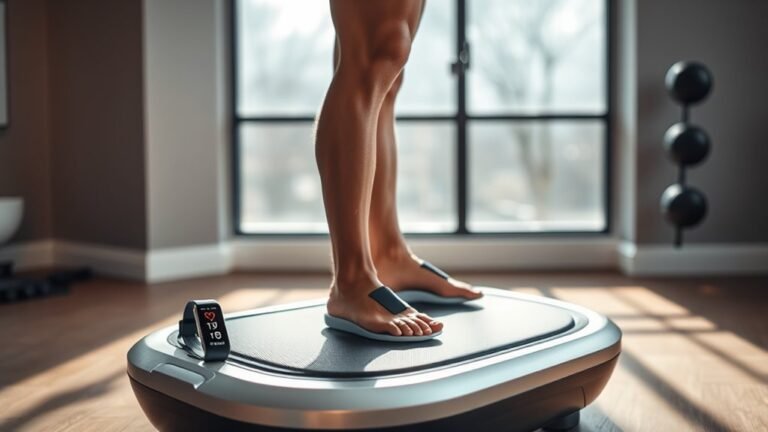
Yes, using a vibration plate does burn calories. It works by activating your muscles through rapid vibrations that trigger reflexive contractions. This means multiple muscle groups get stimulated, boosting muscle engagement.
Because of this, you end up burning more calories than if you were just standing still. But keep in mind, it burns fewer calories compared to traditional cardio exercises like running or cycling.
Your calorie burn also depends on a few things like how intense your workout is and how long you use the vibration plate. If you’re curious about how vibration plates fit into your fitness routine or want to learn about their other benefits, keep exploring what these machines have to offer!
Key Takeaways
- Vibration plates cause rapid muscle contractions, which ramp up muscle activation and calorie burn more than just resting. However, they still burn fewer calories than traditional cardio exercises.
- How many calories you burn depends on things like how long your session is, the intensity of the vibrations, what exercises you do, and your body composition.
- Mixing static and dynamic exercises while on the plate helps you get the most calorie burn during your vibration sessions.
- Plus, if you use vibration plates alongside your regular cardio or strength training workouts, you can boost your overall calorie burn and workout intensity.
- That said, vibration plates are mainly great for muscle engagement and improving circulation. So, think of them as a helpful add-on rather than the main way to burn calories.
How Do Vibration Plates Work?
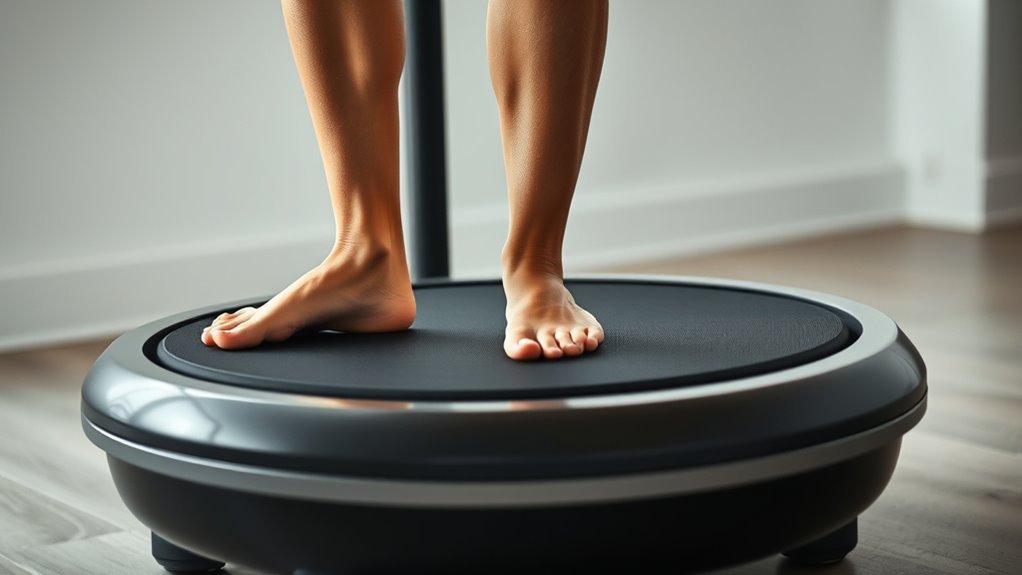
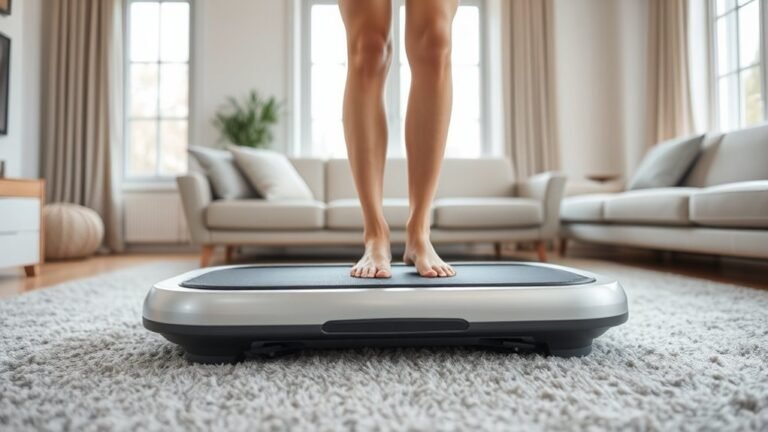
Although vibration plates might seem simple, they work by sending rapid vibrations through your body, forcing your muscles to contract and relax multiple times per second. When you stand, sit, or perform exercises on the plate, these vibrations stimulate your muscles, making them respond to maintain balance and stability.
This constant adjustment engages various muscle groups simultaneously, even those you might not typically activate during regular workouts. You’ll find that the device’s intensity can be adjusted, allowing you to customize the vibration speed and amplitude to match your fitness level.
The Science Behind Muscle Activation

When you stand on a vibration plate, your muscles react to the rapid shaking by contracting reflexively, a process known as the tonic vibration reflex. This involuntary muscle activation engages multiple muscle fibers at once, increasing muscle tension without you consciously moving.
The vibrations stimulate sensory receptors, triggering these quick contractions to help stabilize your body. This mechanism allows you to activate muscles more intensely compared to standing still.
Here’s what happens during muscle activation on a vibration plate:
- Rapid muscle contractions increase neuromuscular efficiency
- More muscle fibers are recruited simultaneously
- Enhanced muscle spindle sensitivity improves coordination
- Reflexive contractions reduce the need for voluntary effort
Understanding this helps you see how vibration plates target muscles differently than regular movements. Pretty cool, right?
Calorie Burn Compared to Traditional Exercises
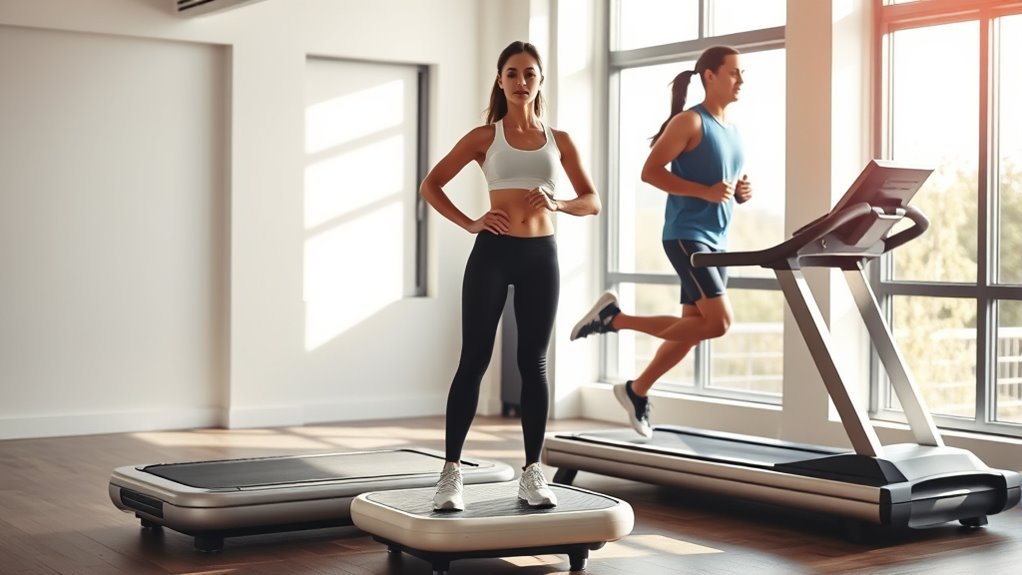
Since vibration plates engage your muscles reflexively, they can boost calorie burn more than just standing still. But how do they compare to traditional exercises like running or cycling?
While vibration plates increase muscle activity, the calorie burn usually falls way short of what you’d get from steady aerobic exercises. Running or cycling, for example, raises your heart rate significantly and keeps it up, which means you burn more energy overall.
Vibration plates mainly enhance muscle engagement in short bursts. They can be a nice addition to your workout, but they rarely replace the calorie-burning benefits of longer cardio sessions.
Factors Influencing Calorie Expenditure on Vibration Plates
When you use a vibration plate, the calories you burn depend on how long and intense your session is. Your body composition also plays a role in how much energy you expend.
Plus, mixing up your exercises on the plate can change the overall calorie burn. So, it’s not just about standing there; what you do and for how long really matters.
Duration and Intensity
Although vibration plates offer a convenient way to burn calories, the amount you expend largely depends on how long and how intensely you use the machine. To maximize calorie burn, you need to find the right balance between session duration and vibration intensity.
Short sessions at high intensity might be effective but can be tiring, while longer sessions at low intensity may burn fewer calories overall. It’s all about what works best for your body and fitness level.
Consider these tips to optimize your workout:
- Start with moderate intensity and gradually increase it.
- Aim for sessions lasting at least 15-20 minutes.
- Incorporate multiple sets with short breaks in between.
- Combine vibration plate exercises with active movements for better results.
Give these a try, and you’ll likely see better results without overdoing it!
Body Composition Impact
Your body composition plays a key role in how many calories you burn on a vibration plate. If you have more lean muscle mass, your body requires more energy to maintain and activate those muscles during vibration sessions, increasing calorie burn.
On the other hand, higher body fat levels might reduce the efficiency of muscle contractions, which can lower calorie expenditure. Your metabolism ties into this too; muscle-rich bodies tend to have higher resting metabolic rates. That means you burn more calories even without intense activity.
Plus, your weight affects the force your muscles must exert to stabilize on the plate. Heavier individuals may burn more calories because their muscles are working harder. So, understanding your body composition helps you set realistic expectations and tailor your vibration plate use for better calorie-burning results.
Exercise Variation Effects
Since different exercises engage your muscles in various ways, the type and intensity of movements you perform on a vibration plate considerably influence how many calories you burn. You’ll burn more calories when you challenge your muscles with varied exercises instead of sticking to a single movement.
For example, combining static holds, dynamic squats, or push-ups on the plate activates different muscle groups and boosts calorie expenditure. Key factors to contemplate include:
- Exercise intensity and duration
- Muscle groups targeted
- Movement complexity and range of motion
- Rest periods between sets
Mixing things up keeps your body guessing and working harder. So, don’t just do the same move over and over—try switching it up to get the best results!
Potential Benefits Beyond Calorie Burning
While vibration plates are often praised for their calorie-burning effects, they offer several other benefits that can enhance your overall health and fitness. You can improve muscle strength, increase bone density, and boost circulation by regularly using one.
These benefits support better balance and flexibility, which are vital as you age or recover from injury.
| Benefit | How It Helps You |
|---|---|
| Muscle Strength | Stimulates muscle contractions |
| Bone Density | Encourages bone growth and health |
| Circulation | Enhances blood flow |
| Balance & Flexibility | Improves stability and range of motion |
Incorporating vibration plate sessions into your routine can complement other workouts, making your fitness journey more effective. It’s a simple addition that packs a punch!
Limitations and Considerations for Weight Loss
Besides the added benefits vibration plates bring to muscle strength and circulation, it’s important to recognize their limits when it comes to weight loss. You can’t rely solely on vibration plates to shed pounds effectively. They offer low to moderate calorie burn compared to traditional cardio.
For meaningful weight loss, consider these factors:
- Vibration plates should complement, not replace, a balanced diet.
- The intensity and duration of workouts on vibration plates are generally low.
- Individual metabolism and body composition influence results.
- Consistency and a holistic approach are key to sustainable weight loss.
Understanding these limitations helps set realistic expectations and motivates you to integrate vibration plates wisely into your fitness routine. So, while they’re a great tool, think of them as part of the bigger picture, not the whole solution.
Combining Vibration Plate Workouts With Other Exercises
You can boost your calorie burn by mixing vibration plate workouts with cardio sessions. Adding strength training alongside vibration exercises helps build muscle more effectively.
Plus, using the plate for recovery and flexibility can speed up your progress and reduce soreness. It’s a smart way to get more from your workouts without spending extra time.
Enhancing Cardio Benefits
To maximize your cardio benefits, combining vibration plate workouts with traditional exercises can be highly effective. You can boost your heart rate and calorie burn by integrating the vibration plate into your routine rather than relying on it alone.
Try doing jumping jacks or high knees on the plate to increase intensity. You can also incorporate short bursts of cardio like mountain climbers between vibration sets.
Using the plate as an active recovery tool during your cardio circuit works well, too. Or, alternate between treadmill or cycling sessions and vibration plate exercises.
This approach keeps your workouts dynamic and challenges your cardiovascular system in varied ways. By blending vibration plate sessions with established cardio moves, you enhance endurance and calorie expenditure more efficiently.
Strength Training Integration
When you combine vibration plate workouts with traditional strength exercises, you can amplify muscle activation and improve overall results. Using the vibration plate during squats, push-ups, or lunges forces your muscles to contract more intensely, boosting calorie burn.
It also challenges your balance, engaging stabilizer muscles that typical workouts might miss. To get the most from your sessions, alternate between vibration plate exercises and free weights or resistance training.
Here’s a quick guide:
| Exercise Type | Vibration Plate Benefit | Calorie Burn Impact |
|---|---|---|
| Squats | Increased muscle engagement | Moderate to high |
| Push-ups | Enhanced core activation | Moderate |
| Lunges | Improved balance and strength | Moderate |
| Resistance bands | Added muscle tension | High |
| Free weights | Builds muscle mass | High |
Integrate these wisely for better strength and calorie burning. Give it a try and see how mixing things up can really up your game!
Recovery and Flexibility Aid
Although vibration plate workouts primarily target strength and calorie burn, they also play an essential role in enhancing recovery and flexibility when paired with stretching or yoga exercises.
You can boost muscle relaxation and range of motion by combining these methods. To get the most from this combo, consider the following:
- Use the vibration plate before stretching to warm up muscles.
- Incorporate gentle yoga poses after vibration sessions for deeper flexibility.
- Focus on areas that feel tight or sore to accelerate recovery.
- Keep sessions short and controlled to avoid overstimulation.
Expert Opinions on Vibration Plate Effectiveness
Since many people are curious about how effective vibration plates truly are, experts have weighed in to separate fact from fiction. While some trainers praise their ability to improve muscle activation and circulation, others caution that vibration plates alone won’t considerably burn calories or replace traditional workouts.
Medical professionals often recommend them as a supplement rather than a primary fitness tool.
| Expert Type | Opinion on Calorie Burn | Recommended Use |
|---|---|---|
| Fitness Trainers | Moderate, aids muscle tone | Supplement to strength training |
| Medical Experts | Minimal direct calorie burn | Recovery and circulation aid |
| Researchers | Limited evidence for fat loss | Combined with exercise for best results |
Frequently Asked Questions
Are Vibration Plates Safe for People With Joint Problems?
You should be cautious using vibration plates if you have joint problems. They might cause discomfort or worsen issues.
Always check with your doctor first to guarantee it’s safe and appropriate for your specific condition. It’s better to be safe than sorry!
How Long Should a Typical Vibration Plate Session Last?
You should typically use a vibration plate for about 10 to 15 minutes per session. Start with shorter durations and gradually increase as you get comfortable.
Make sure to listen to your body and avoid overdoing it. It’s all about finding the right balance for you.
Can Vibration Plates Improve Bone Density?
You’ll feel like a superhero because vibration plates can improve bone density by stimulating your bones with mechanical vibrations. They boost bone growth and strength, making your skeleton tougher and more resilient with regular use.
Pretty cool, right? It’s like giving your bones a gentle workout without lifting heavy weights. Just a few minutes a day can make a difference!
Do Vibration Plates Help Reduce Cellulite?
Yes, vibration plates can help reduce cellulite by stimulating blood flow and muscle contractions. You’ll improve skin tone and firmness.
But, here’s the thing — combining vibration with a proper diet and exercise routine gives you the best results for cellulite reduction. It’s all about working multiple angles to see real change.
Are There Any Age Restrictions for Using Vibration Plates?
Worried about age limits? Generally, vibration plates are safe for adults, but kids and seniors should check with their doctor first.
You wouldn’t want to risk injury, right? Always follow guidelines and start slow.
Conclusion
Using a vibration plate can help you burn some calories, but don’t expect it to replace traditional workouts entirely. It activates muscles and offers benefits beyond just calorie burning.
The results vary based on how you use it and your overall routine. Remember, “Rome wasn’t built in a day”—consistent effort combining vibration plates with other exercises will give you the best results for weight loss and fitness.
Incorporating a vibration plate into your fitness regimen can boost your calorie burn and muscle activation. However, for effective weight loss and improved fitness, it’s important to pair it with regular cardio and strength training. Vibration plates can be a helpful tool, but they work best as part of a balanced workout plan rather than a standalone solution.