How Long Does a Gym Pump Last?
You can expect your gym pump to last anywhere from 30 minutes up to two hours after your workout. The gym pump, which is that satisfying feeling of muscle fullness and tightness, depends on several factors.
How long it stays really varies based on your hydration, workout intensity, nutrition, and training methods.
Staying well-hydrated and fueling your body properly helps keep your muscles looking and feeling full longer. Plus, certain training techniques can extend the pump’s duration.
So, if you want to maximize that pumped-up feeling, paying attention to these details is key.
Keep exploring these factors to get the most out of every session. It’s all about finding the right balance to enjoy the benefits of your hard work!
Key Takeaways
- A gym pump typically lasts between 30 minutes to 2 hours after exercise. Peak muscle fullness usually happens within the first 15 minutes post-workout.
- Things like hydration, workout intensity, and nutrition play a big role in how long that pump sticks around.
- Doing higher reps, taking short rests, and using nitric oxide boosters can all help keep the pump going longer.
- Also, drinking water and eating the right nutrients after your workout help maintain that muscle engorgement and keep your muscles looking defined.
What Is a Gym Pump?

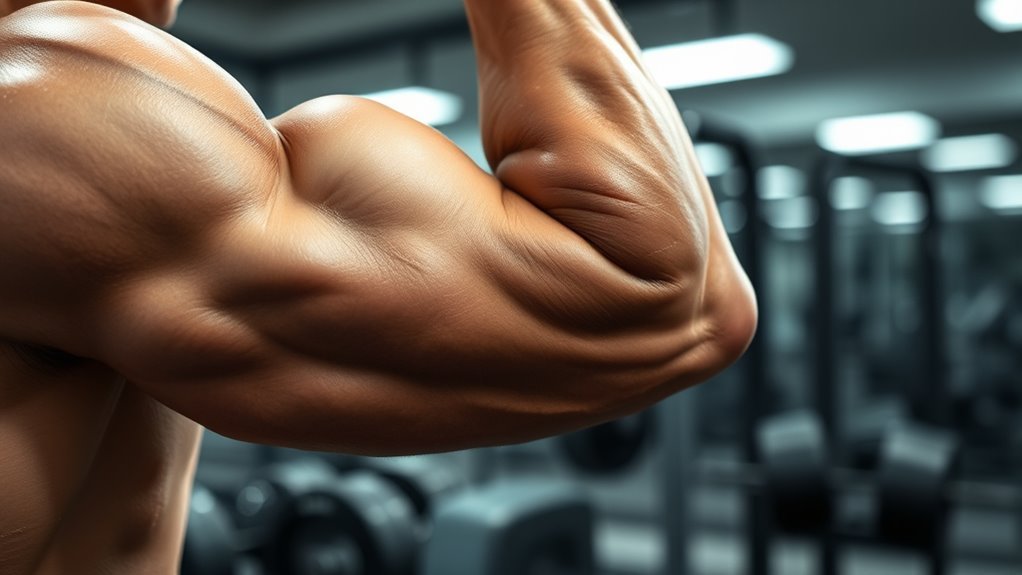
A gym pump is the temporary swelling of your muscles during and after a workout. When you lift weights or do resistance exercises, blood rushes to the muscles you’re working, making them look fuller and feel tighter.
You’ll notice this especially when you perform high-rep sets or exercises targeting smaller muscle groups. The pump not only enhances your muscle definition but also gives you that satisfying feeling of strength and accomplishment.
It’s a visible sign your muscles are getting a good workout, and many people find it motivating. While it feels great, remember it’s a short-lived effect.
The pump itself doesn’t mean you’ve built long-term muscle, but it’s a clear indicator that you’ve stimulated your muscles effectively.
The Science Behind Muscle Pump

Although it might seem like just a visual effect, the muscle pump results from complex physiological processes triggered by your workout.
When you exercise, your muscles demand more oxygen and nutrients, causing blood vessels to dilate and increase blood flow. This leads to a temporary swelling and fuller appearance of the muscles.
Here’s what happens during the muscle pump:
- Increased Blood Flow: Your heart pumps more blood to active muscles, delivering oxygen and nutrients.
- Vasodilation: Blood vessels expand, allowing more blood to fill muscle tissues.
- Fluid Accumulation: Plasma leaks into surrounding tissues, causing that tight, swollen feeling.
Understanding this helps you appreciate the pump as more than skin-deep—it’s your body responding dynamically to effort.
Typical Duration of a Gym Pump

You’ll usually notice your gym pump lasts anywhere from 30 minutes to a couple of hours after your workout.
How long it sticks around depends on factors like hydration, workout intensity, and your nutrition.
Let’s explore what influences the pump’s longevity and what to expect once you step away from the weights.
Average Pump Duration
How long does a gym pump typically last after your workout? On average, you can expect your muscles to stay pumped for about 30 minutes to 2 hours. This timeframe varies depending on your workout’s intensity and your body’s response.
Here’s a quick snapshot of what you might notice over time:
- First 15 minutes: Your muscles feel tight, swollen, and full of blood.
- 30 to 60 minutes: The pump starts to fade, but your muscles still look more defined than normal.
- After 2 hours: The pump generally disappears, and your muscles return to their usual size and feel.
Knowing this helps you time your post-workout activities, like photos or meals, to maximize the pump’s visual impact.
Factors Affecting Longevity
The length of your gym pump depends on several factors beyond just the time since your workout ended. Your hydration level plays a big role; staying well-hydrated helps maintain blood volume and muscle fullness longer.
The type of exercises you perform matters too—high-rep, moderate-weight sets often create a longer-lasting pump than heavy, low-rep lifts. Nutrition also impacts pump longevity, especially if you consume carbs and nitrates that boost blood flow.
Your individual muscle size and genetics influence how long you hold the pump, as some people naturally retain more blood in their muscles. Finally, rest periods during your workout affect pump duration; shorter breaks keep muscles engorged with blood, extending the sensation.
Paying attention to these factors helps you maximize how long your pump lasts. So, if you want that pumped feeling to stick around, it’s worth considering all these little details.
Post-Workout Pump Timeline
When exactly does your gym pump start to fade after a workout? Typically, your muscles stay engorged with blood for about 30 minutes to an hour post-exercise.
Here’s how the timeline usually unfolds:
- Immediate Post-Workout (0-15 minutes): Your muscles feel tight and full, with the pump at its peak due to increased blood flow.
- Short-Term Fade (15-45 minutes): The pump starts to diminish as blood flow normalizes, but you still notice some muscle fullness.
- Return to Baseline (45-60 minutes): The swelling subsides, and your muscles return to their normal size, though you might still feel slight tightness.
Understanding this timeline helps you maximize the visual and motivational benefits of your gym pump. So, enjoy that feeling while it lasts!
Factors That Influence Pump Longevity
Your gym pump’s duration depends on several key factors. Staying hydrated, pushing your workout intensity, and fueling your body with the right nutrition and supplements all play a role.
Let’s look at how each one affects how long your pump lasts. It’s pretty interesting once you break it down!
Hydration Levels
Although you might not realize it, staying properly hydrated plays an essential role in how long your gym pump lasts. Water keeps your blood volume up, allowing more oxygen and nutrients to reach your muscles. This enhances the pump and its duration.
Dehydration can make your muscles feel flat and reduce the fullness you crave post-workout. So, it’s definitely something to watch out for.
To maximize your pump through hydration, focus on drinking water consistently throughout the day, not just during exercise. It’s about staying hydrated all day long, really.
Also, consuming electrolytes helps maintain fluid balance and muscle function. That’s key to keeping everything working smoothly.
And try to avoid excessive caffeine or alcohol. They can dehydrate you and shorten how long your pump lasts. It’s all about balance!
Workout Intensity
Keeping hydration in check sets a strong foundation, but the intensity of your workout plays a big role in how long your pump sticks around. When you push yourself with higher reps, shorter rest periods, and heavier weights, your muscles demand more blood flow, which prolongs that pumped feeling.
If you dial back the intensity, your muscles won’t need as much oxygen and nutrients, causing the pump to fade quicker. You’ll notice that supersets, drop sets, and circuit training keep your muscles under constant tension, extending the pump’s duration.
On the other hand, if you’re too easy on yourself or rest too long between sets, the effect won’t last as long. So, to maximize pump longevity, maintain a challenging, consistent workout intensity that keeps blood flowing steadily to your muscles.
Nutrition and Supplements
Since nutrition directly fuels your workouts, what you eat and supplement can considerably impact how long your gym pump lasts. Proper nutrition ensures your muscles get the oxygen and nutrients needed to stay engorged and energized.
Supplements can enhance blood flow and nutrient delivery, prolonging the pump effect.
Here are three key nutrition and supplement factors to take into account:
- Carbohydrates: They replenish glycogen stores, providing sustained energy to maintain muscle fullness.
- Nitric Oxide Boosters: Ingredients like beetroot or L-arginine increase blood flow, intensifying and extending your pump.
- Hydration: Water retention in muscle cells keeps them plump, so staying well-hydrated maximizes pump duration.
How Hydration Affects Your Pump
When you stay properly hydrated, your muscles can fill with blood more easily, enhancing the fullness and duration of your pump. Water helps maintain blood volume, which is essential for delivering oxygen and nutrients to your working muscles during exercise.
If you’re dehydrated, your blood thickens, making it harder to achieve that tight, swollen feeling in your muscles. Plus, hydration supports better muscle function and reduces fatigue, allowing you to push harder and sustain your pump longer.
Make it a habit to drink water before, during, and after your workout to keep those pumps alive. Remember, even slight dehydration can shorten the time your muscles stay engorged, so keeping fluids up is key to maximizing your gym pump’s impact.
Nutritional Tips to Enhance Pump Duration
Although your workout routine plays a major role, what you eat before and after exercise can considerably impact how long your gym pump lasts.
To maximize your pump duration, focus on fueling your body with the right nutrients at the right times.
- Carbohydrates before training: Eating complex carbs about 30-60 minutes before you hit the gym boosts glycogen stores. This provides sustained energy and enhances blood flow to muscles.
- Protein intake post-workout: Consuming lean protein within 30 minutes after exercise helps muscle repair and growth. This keeps that pumped feeling going longer.
- Nitrate-rich foods: Incorporate beets, spinach, or arugula into your meals to increase nitric oxide levels. That dilates blood vessels and improves muscle fullness.
These nutritional strategies will help you hold onto that satisfying gym pump well after your session ends. Give them a try and see the difference!
Training Techniques to Maximize Pump Effect
Nutritional strategies set a strong foundation, but how you train directly influences the intensity and duration of your gym pump. To maximize this effect, focus on higher rep ranges—typically 12 to 20 reps per set—to increase blood flow in your muscles.
Keep your rest periods short, around 30 to 60 seconds, to maintain muscle engorgement. Incorporate techniques like supersets and drop sets to push muscles beyond fatigue, stimulating greater vascularity.
Also, emphasize controlled, slow eccentric movements to enhance muscle tension and pump. Don’t neglect proper hydration during your workout, as it supports blood volume and muscle fullness.
Post-Workout Activities and Their Impact on Pump
Even after you leave the gym, your actions continue to influence how long your pump lasts. What you do post-workout can either extend that tight, full feeling or cause it to fade quickly.
To keep your pump going, focus on these key activities:
- Hydrate adequately – Drinking water replenishes fluids lost through sweat, maintaining blood volume and muscle fullness.
- Consume protein and carbs – Eating soon after training helps restore glycogen and repair muscle tissue, supporting sustained vascularity.
- Avoid excessive cool-down stretching – Overstretching can reduce muscle tightness and diminish the pump’s visual effect.
It’s all about what you do right after your session that counts. So, keep these tips in mind to hold on to that awesome pump a little longer!
Frequently Asked Questions
Can Supplements Permanently Increase Muscle Pump Size?
No, supplements can’t permanently increase muscle pump size. They might boost blood flow temporarily, but lasting muscle growth comes from consistent training and nutrition.
You’ll see real changes by working hard, not relying solely on supplements. Keep at it, and your muscles will grow over time.
Does Muscle Pump Contribute to Long-Term Muscle Growth?
You might be surprised that up to 70% of muscle growth is linked to increased blood flow.
While muscle pump doesn’t directly cause growth, it boosts nutrient delivery, helping your muscles recover and grow over time.
Is Muscle Pump Safe for People With Heart Conditions?
You should be cautious with muscle pumps if you have heart conditions. It’s best to consult your doctor before intense workouts.
Increased blood flow and pressure might pose risks depending on your specific health situation. So, getting professional advice is always a smart move.
How Does Muscle Pump Differ Between Men and Women?
You’ll notice muscle pumps differ because men typically have more muscle mass and testosterone, enhancing blood flow and pump intensity.
Women experience pumps too, but hormonal differences and muscle size usually make it less pronounced.
It’s pretty interesting how these biological factors play a role in how our bodies respond during workouts.
Can Muscle Pump Improve Athletic Performance Immediately?
Yes, you can boost strength, enhance endurance, and sharpen focus with a muscle pump. It temporarily increases blood flow, delivering nutrients and oxygen.
This helps you perform better during your workout or athletic event right away. So, if you’re looking for an immediate edge, a muscle pump can definitely help.
Conclusion
So, how long does your gym pump last? Usually, it sticks around for about 30 minutes to an hour. But, factors like hydration, nutrition, and training style can stretch that feeling.
Think of your pump as a wave—you can ride it longer with the right moves. Keep fueling your body with good nutrition, stay hydrated, and train smart to make every pump count.
After all, isn’t chasing that perfect muscle swell part of the fun? By understanding how long a gym pump lasts and what affects it, you can maximize your gains and enjoy that satisfying muscle fullness longer. So next time you hit the gym, remember these tips to keep your pump going strong!