What Is the Standard Weight of Heavy Gym Bars?
You’ll typically use a standard Olympic barbell weighing 45 pounds (20 kilograms) as your heavy gym bar. These bars are the go-to choice in most gyms for strength training and weightlifting because they balance durability with versatility.
Men’s bars usually weigh around 20 kg and are longer, while women’s bars are lighter at 15 kg with a shorter length. This difference helps accommodate varying strength levels and body mechanics.
Specialty bars like trap or safety squat bars can vary from 45 to 55 pounds depending on design.
Picking the right bar affects your workout performance and safety, so it’s important to choose one that suits your training needs. Also, maintaining your bar properly keeps it in top shape and ensures it lasts longer.
Explore further to find which bar fits your training best.
Key Takeaways
- The standard Olympic barbell typically weighs 45 pounds (20 kilograms) and measures about 7 feet in length.
- Men’s bars generally weigh 20 kg (44 pounds), while women’s bars weigh around 15 kg (33 pounds).
- Specialty bars like trap bars weigh between 45 to 55 pounds depending on design and purpose.
- Bar weight varies based on material, length, and intended use, affecting workout suitability and performance.
- Choosing the right bar weight is essential for safety, effective training, and matching strength levels.
Overview of Common Gym Bar Types
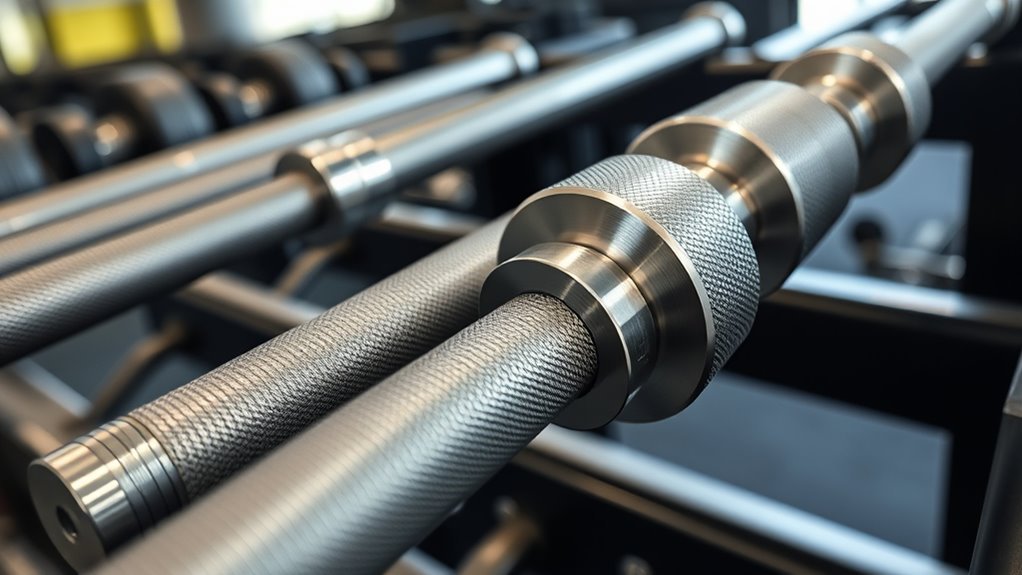
What types of gym bars are you likely to encounter in a typical workout setting? You’ll find several common varieties designed for different exercises. The straight barbell is the most familiar, used for deadlifts, squats, and presses.
Then there’s the curl bar, which has angled grips to reduce wrist strain during bicep curls. Trap bars or hex bars surround you, letting you lift with a more natural grip, great for deadlifts and shrugs.
Don’t forget the specialty bars like the safety squat bar, which features padding and handles to help with squats. You might also see the EZ bar, a shorter, curved bar that targets the arms and shoulders.
Understanding these types helps you choose the right bar for your workout goals. It’s all about picking what feels best and works for the moves you want to nail.
Standard Olympic Barbell Weight
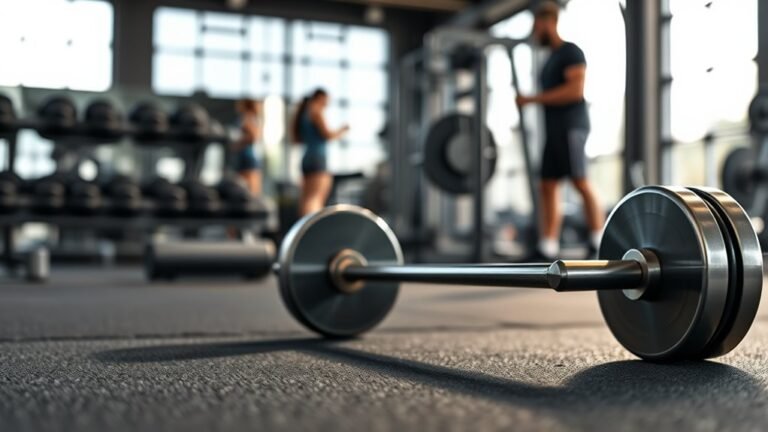
Olympic barbells typically weigh 45 pounds (20 kilograms), making them the standard choice in most gyms. When you pick up one, you’ll notice it’s designed for versatility, handling everything from squats to deadlifts.
This weight is ideal because it balances strength and control, allowing you to add plates progressively without feeling unwieldy. The bar’s length, usually around 7 feet, gives you the leverage needed for various lifts.
Plus, its rotating sleeves reduce strain during dynamic movements, so you can focus on form and power. Whether you’re a beginner or advanced lifter, understanding the standard Olympic barbell weight helps you plan your workouts effectively and track progress accurately.
This bar sets the foundation for serious strength training.
Differences Between Men’s and Women’s Bars
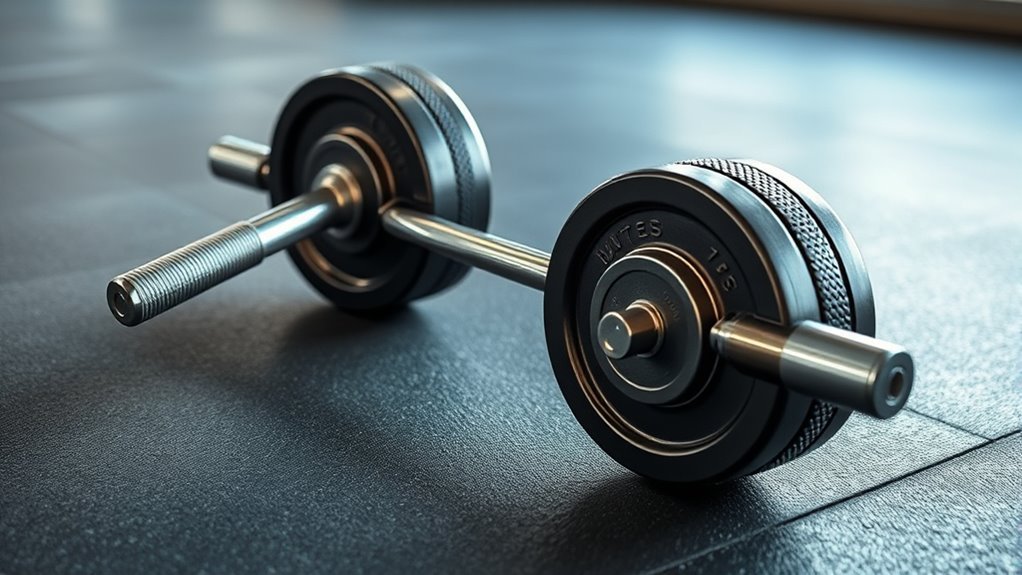
You’ll notice men’s and women’s gym bars differ in weight and design to suit various strength levels and lifting styles. Understanding these variations helps you choose the right bar for your workout.
Let’s explore how these bars compare and why those differences matter. It’s pretty interesting once you get into it!
Weight Variations by Gender
How do men’s and women’s heavy gym bars differ in weight? Typically, men’s bars weigh 20 kilograms (44 pounds), while women’s bars are lighter at 15 kilograms (33 pounds). This weight difference reflects the common standards in competitive lifting, like Olympic weightlifting and powerlifting.
When you pick up a men’s bar, you’ll notice it’s heavier and a bit longer, designed to accommodate greater lifting loads. Women’s bars not only weigh less but are also slightly shorter, making them easier to handle if you have smaller hands or less upper body strength.
Knowing these weight variations helps you choose the right bar for your training needs, ensuring safety and effectiveness during your workouts without overloading or under-challenging yourself. It’s all about finding what works best for you!
Design Differences Explained
Although both men’s and women’s gym bars serve the same purpose, their design differs to suit various strength levels and body types.
When you pick up a men’s bar, you’ll notice it typically weighs 20 kilograms and measures about 7.2 feet long. It’s designed for broader grip and heavier lifts.
Women’s bars, on the other hand, usually weigh 15 kilograms and are slightly shorter, around 6.5 feet, with a narrower grip to match generally smaller hand spans.
The diameter also varies—men’s bars often have a thicker shaft, while women’s bars are slimmer. This helps you maintain control and comfort during lifts.
These thoughtful design differences guarantee you can train safely and effectively, regardless of your gender or build.
Usage Preferences Overview
Understanding the design differences between men’s and women’s gym bars helps explain why users often prefer one over the other based on their training goals and physical characteristics.
Men’s bars usually weigh 20 kg and have a thicker grip diameter. This makes them ideal if you have larger hands and focus on heavy lifting.
Women’s bars, typically 15 kg with a smaller grip, suit you better if you have smaller hands or want more control during lifts like Olympic weightlifting.
Your choice depends on comfort and performance.
If you’re training for powerlifting, a men’s bar might feel more stable. But if you’re into technique and speed, a women’s bar could enhance your form.
Ultimately, pick the bar that fits your needs and maximizes your workout efficiency.
Weight Variations in Specialty Bars
Why do specialty gym bars come in so many different weights? It’s because each bar serves a unique purpose and targets specific training goals.
Specialty gym bars vary in weight because each is designed for distinct training goals and purposes.
For example, a trap bar often weighs around 45 to 55 pounds, while a safety squat bar might be heavier due to added padding and handles.
You’ll also find lighter bars designed for women or youth, typically weighing 15 to 35 pounds.
Olympic bars standardly weigh 44 pounds, but specialty bars can deviate to accommodate exercises like deadlifts, bench presses, or Olympic lifts.
When you choose a specialty bar, consider its weight carefully, as it directly impacts your lifting technique and overall workout intensity.
Understanding these variations helps you pick the right bar for your training needs.
Factors Influencing Bar Weight Standards
You’ll notice that the material composition plays a big role in how much a gym bar weighs. Bar length variations also affect the standard weight you can expect.
Plus, the intended use of the bar changes the design and weight to suit specific exercises. It’s all about making the bar work best for what you need.
Material Composition Impact
Although it might seem straightforward, the material composition of heavy gym bars plays a crucial role in determining their standard weight. When you choose a bar, you’re not just picking length or grip style—you’re also dealing with steel types and coatings that affect weight.
High-quality steel alloys tend to be denser, adding weight without increasing size. Meanwhile, some bars use lighter materials like aluminum to cater to specific training needs, but they usually don’t meet heavy lifting standards.
The bar’s finish, such as chrome or zinc, adds a few extra grams but can influence durability and grip. Understanding these material differences helps you select a bar that feels right and performs consistently, keeping you aligned with recognized weight standards during your workouts.
Bar Length Variations
Because bar length directly affects both handling and weight distribution, it plays a key role in setting weight standards for heavy gym bars. When you pick up a longer bar, you’ll notice it spreads the load over a wider area, which often means it has to be sturdier and heavier to maintain balance and durability.
Standard Olympic bars typically measure 7 feet, weighing around 20 kilograms (44 pounds), but shorter bars—like 5 or 6-foot variants—are lighter due to reduced material. This length difference impacts how much steel is used, influencing the bar’s total weight.
Intended Use Differences
When you choose a heavy gym bar, its intended use substantially shapes the weight standards manufacturers set. For example, Olympic bars designed for weightlifting typically weigh 20 kilograms (44 pounds) for men and 15 kilograms (33 pounds) for women, aligning with competition rules.
Powerlifting bars often have slightly different weights and specifications to accommodate lifts like squats, bench presses, and deadlifts. If you’re into CrossFit or general strength training, bars might vary in weight and flexibility to suit diverse exercises.
Even specialty bars, like trap bars or safety squat bars, have distinct weight standards based on their design and function. Understanding these differences helps you pick the right bar for your training goals while ensuring safety and performance.
How Bar Weight Affects Your Workout
Understanding how the weight of a gym bar influences your workout can help you optimize strength gains and prevent injury. When you use a heavier bar, you challenge your muscles more, which promotes growth and increases overall strength.
Using a heavier gym bar challenges muscles, boosting growth and enhancing overall strength while helping prevent injury.
However, starting with a bar that’s too heavy can compromise your form, leading to poor technique and potential injury. Lighter bars allow you to focus on mastering movement patterns before adding extra weight.
Additionally, the bar’s weight affects your workout volume and intensity. You might perform fewer reps with a heavier bar, emphasizing strength, or more reps with a lighter bar, targeting endurance.
Being aware of how bar weight impacts your performance helps you tailor workouts to your fitness goals effectively and safely. It’s all about finding the right balance that works for you.
Tips for Choosing the Right Barbell
Choosing the right barbell can make a big difference in how effective and safe your workouts are. To pick the perfect one, focus on a few key factors.
First, think about the weight and length. Make sure the bar matches your strength level and the exercises you plan to do. Standard gym barbells usually weigh 20 kg (44 lbs) and measure about 7 feet, but there are variations.
Next, consider the material and durability. Look for high-quality steel with good tensile strength so it won’t bend or break under heavy loads.
Finally, pay attention to the grip and knurling. Choose a barbell that has comfortable knurling—it should give you a secure grip without being too rough on your hands.
Maintenance and Care for Heavy Gym Bars
Regular maintenance keeps your heavy gym bars in top condition and guarantees they last longer. Start by wiping down the bars with a dry cloth after every use to remove sweat and moisture.
Wipe down your heavy gym bars after each use to remove sweat and moisture, ensuring durability and performance.
Every week, clean them with a mild detergent and water solution, then dry thoroughly to prevent rust. It’s a simple step that makes a big difference over time.
Apply a light coat of oil to the sleeves and knurling monthly to keep the metal from corroding and ensure smooth rotation. Don’t forget to check for any loose or damaged parts regularly. Tighten or replace them as needed to keep everything safe and functional.
Store your bars in a dry, cool place, ideally on a rack to avoid bending. By following these simple steps, you’ll protect your investment and maintain ideal performance during your workouts.
Frequently Asked Questions
Can Gym Bars Be Customized With Different Grip Textures?
Yes, you can customize gym bars with different grip textures to suit your preferences. Many manufacturers offer options like knurling patterns or rubber grips.
These options help you improve your hold and comfort during workouts. So, you can pick what feels best for you and your training style.
How Do Temperature Changes Affect Gym Barbell Materials?
Temperature changes cause gym barbell materials to expand or contract, affecting grip feel and durability. You’ll notice metal bars might get slippery when cold and softer when hot.
Are There Specific Bars Designed for Olympic Weightlifting Competitions?
Absolutely, athlete! Olympic weightlifting bars boast built-in bearings, bouncy flexibility, and specific specifications—28mm diameter, 20kg weight for men, 15kg for women.
These features optimize your lifts and meet international competition standards perfectly. So, when you’re competing, you can trust the bar to perform just right!
What Is the Average Lifespan of a Heavy Gym Bar?
You can expect a heavy gym bar to last 5 to 10 years with regular use and proper maintenance.
Keeping it clean and lubricated helps prevent rust and wear, extending its lifespan considerably.
How Do Gym Bars Differ in Terms of Knurling Patterns?
Knurling patterns on gym bars are like fingerprints—each varies in texture and placement. You’ll find aggressive knurling for grip, smoother sections for comfort, and sometimes a center knurl to prevent slipping during heavy lifts.
It’s pretty cool how these patterns are designed with different purposes in mind. Some bars have really rough knurling so your hands don’t slip, especially when things get heavy.
Other bars keep it smoother in spots so it’s more comfortable during certain lifts. And that center knurl? It helps keep the bar from sliding against your body when you’re doing squats or other moves.
Conclusion
Now that you know the standard weight of heavy gym bars, remember this: a typical men’s Olympic barbell weighs 20 kilograms (44 pounds), while women’s bars usually weigh 15 kilograms (33 pounds). This difference can impact your workout intensity and progression.
Choosing the right bar helps you train smarter and safer. Keep in mind, specialty bars vary widely, so always verify the weight before lifting.
Proper maintenance guarantees your bar lasts and performs well every time. Understanding the standard weight of heavy gym bars is key to effective and safe training. Whether you’re lifting men’s or women’s bars, knowing the weight helps you plan your workouts better and avoid injury. Always check the bar’s weight, especially with specialty bars, to ensure you’re lifting appropriately. With the right bar and good upkeep, you can maximize your performance and reach your fitness goals confidently.