How Much Does a Gym Bar Weigh?
A standard Olympic gym bar usually weighs about 20 kilograms (44 pounds), while women’s Olympic bars are lighter at around 15 kilograms (33 pounds). These bars are common in most gyms and are designed to handle heavy weights safely.
Knowing the weight of a gym bar is important for accurate workout planning.
Specialty bars like trap or curl bars can vary from 15 to 55 pounds depending on their design and purpose. Each type of bar serves different training goals, so it’s good to understand their weight differences.
This knowledge helps you avoid unexpected loads during lifts and improves your overall performance.
If you want to get the most from your training, understanding these differences can really boost your performance. Plus, being aware of bar weights lets you track your progress more precisely and avoid injuries.
So, next time you hit the gym, take a moment to check the bar’s weight—it’s a small step that makes a big difference!
Key Takeaways
- Standard Olympic bars typically weigh about 20 kg (44 lbs) and measure around 7.2 feet in length.
- Women’s Olympic bars are lighter, usually around 15 kg (33 lbs), designed for easier handling and technique focus.
- Powerlifting bars generally weigh 45 lbs, are stiffer with minimal whip, and have a slightly larger diameter than Olympic bars.
- Specialty bars vary widely, with trap bars between 35-75 lbs and curl bars around 15-25 lbs depending on design.
- Accurate bar weight knowledge is essential for correct load calculation, workout planning, and tracking strength progress.
Knowing exactly how much your bar weighs helps you plan your workouts better and see real progress. It’s a small detail that makes a big difference!
Standard Olympic Bar Weight and Dimensions
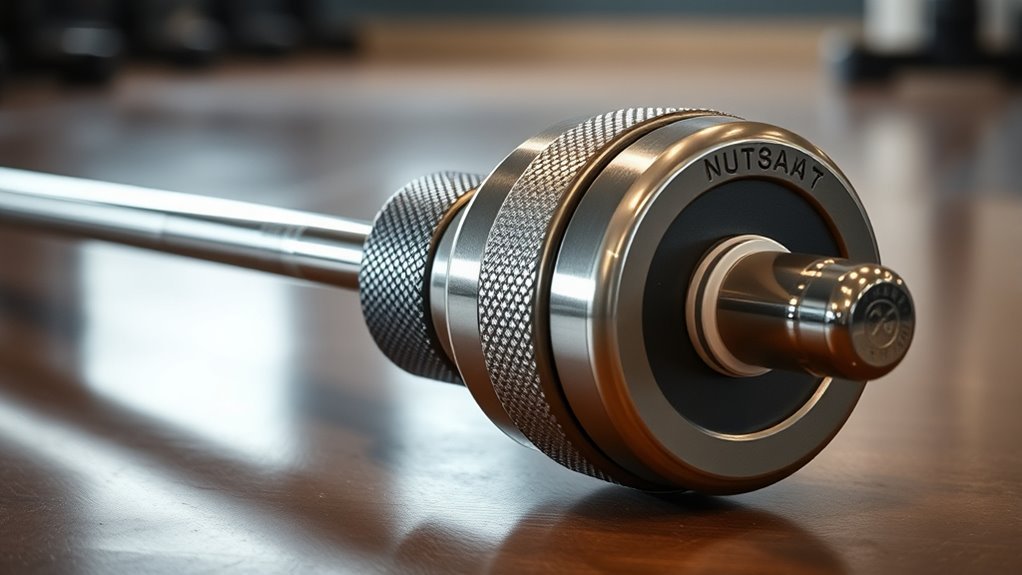
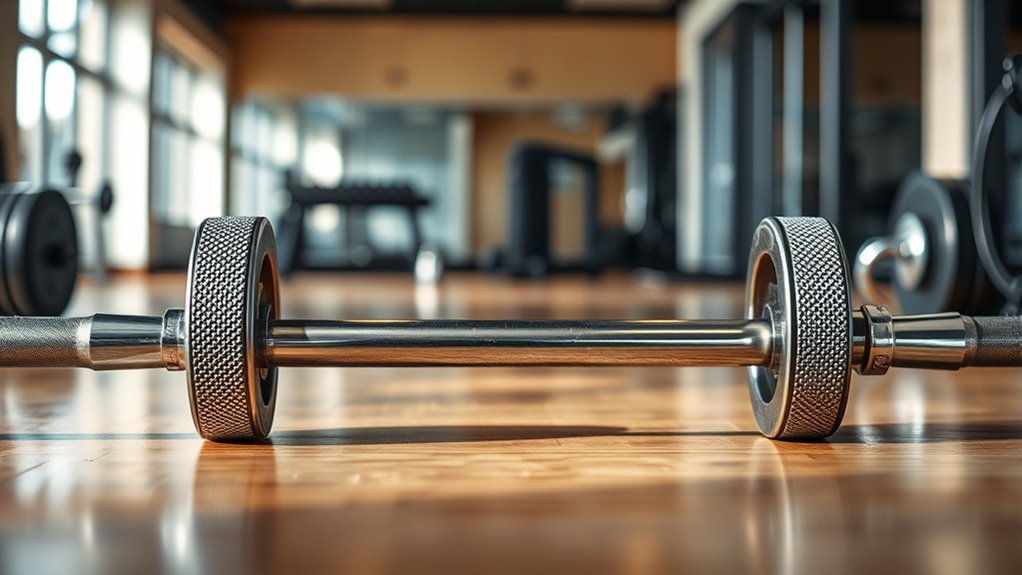
Although you might find various types of gym bars, the standard Olympic barbell is the most common and widely used in weightlifting. When you pick one up, you’ll notice it typically weighs 20 kilograms (about 44 pounds).
The bar measures 7.2 feet (2.2 meters) in length and has a diameter of 28 millimeters. Its sleeves, where you load the weights, spin smoothly to help reduce stress on your wrists during lifts.
The bar’s knurling provides a secure grip, ensuring you don’t lose control during heavy lifts. Knowing these dimensions helps you understand the baseline weight before adding plates, so you can track your progress accurately and train safely.
This standardization also means bars are interchangeable across gyms worldwide. It’s pretty handy because no matter where you work out, the bar feels familiar and performs just the way you expect.
Women’s Olympic Bar Specifications
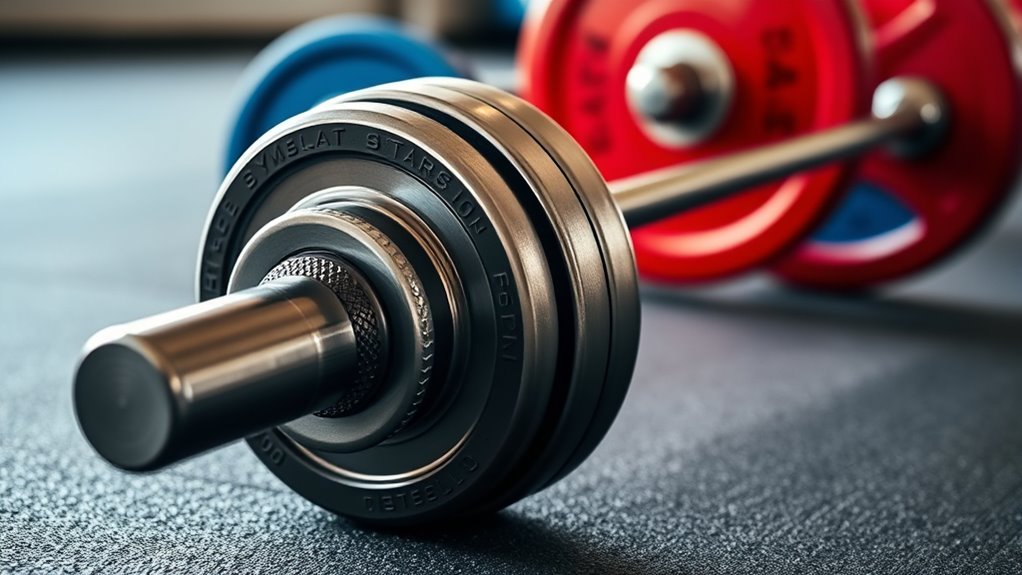
When you pick up a women’s Olympic bar, you’ll notice it typically weighs 15 kilograms and measures about 2.01 meters long. The grip diameter is slimmer than a men’s bar, usually around 25 millimeters, making it easier to handle.
Plus, the bar’s made from high-quality steel with a special coating to boost durability and grip. It’s designed to help you perform your best while feeling comfortable in your hands.
Standard Weight and Length
Since you’re looking to understand women’s Olympic bar specifications, it’s important to know that these bars typically weigh 15 kilograms (33 pounds) and measure 6.5 feet (2 meters) in length. This size difference from the men’s bar, which weighs 20 kilograms, caters specifically to female athletes, making the bar easier to handle during lifts.
The length ensures it fits standard Olympic plates and fits comfortably within most gym racks. Because of the reduced weight and length, these bars help you focus on technique and form without the extra burden of a heavier bar.
When you pick up a women’s Olympic bar, you can expect consistent performance tailored to female lifters. This helps you progress safely and effectively in your training.
Grip Diameter Details
Understanding the grip diameter is essential because it directly affects your comfort and control during lifts. Women’s Olympic bars typically feature a grip diameter of 25 millimeters (about 0.98 inches).
This slightly smaller diameter compared to men’s bars helps you maintain a secure hold, especially during high-rep sets or heavy lifts. A proper grip diameter reduces hand fatigue and improves your performance.
Here’s a quick look at the grip diameter specifications for women’s Olympic bars:
| Specification | Measurement |
|---|---|
| Grip Diameter | 25 mm (0.98 in) |
| Bar Length | 6.5 ft (201 cm) |
| Weight | 15 kg (33 lbs) |
| Sleeve Diameter | 50 mm (1.97 in) |
| Knurling Type | Moderate |
This sizing optimizes your control without compromising comfort.
Material and Coating
Although weight and grip matter, the material and coating of a women’s Olympic bar play a crucial role in its durability and performance. You’ll find most women’s bars made from high-quality steel, typically around 190,000 PSI tensile strength. This ensures they withstand heavy loads without bending.
The coating protects the bar from rust and wear. Common coatings include black oxide, zinc, chrome, and stainless steel. Black oxide offers a smooth, natural feel but requires more care to prevent rust.
Zinc provides corrosion resistance with a matte finish, while chrome offers a shiny, durable surface that resists rust and wear well. Stainless steel bars are premium, combining strength and corrosion resistance with minimal maintenance.
Choosing the right material and coating ensures your bar lasts longer and performs reliably during intense workouts. So, it’s worth considering these details when picking your bar.
Specialty Bars and Their Weights
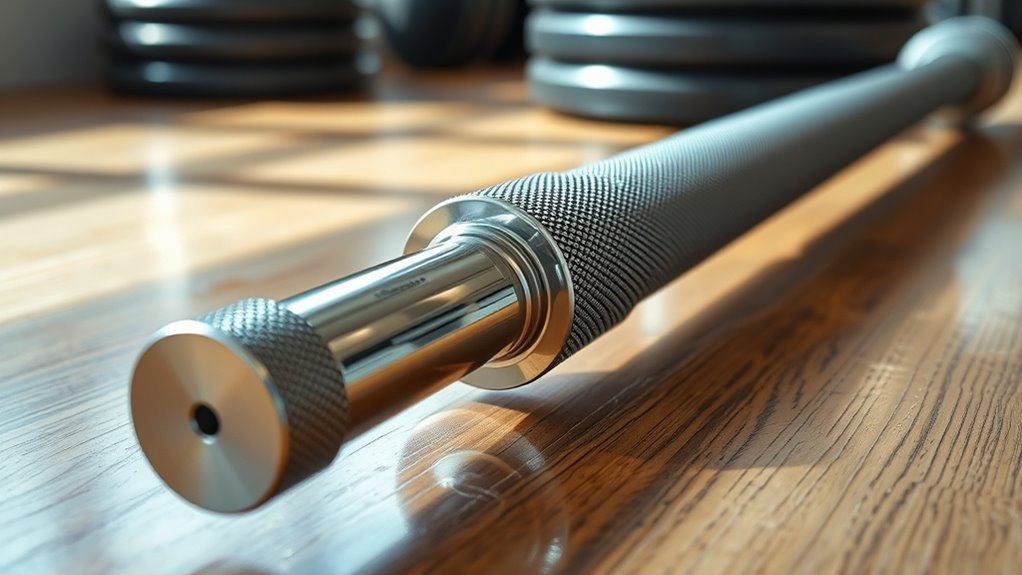
When you explore specialty bars, you’ll find types like trap bars, safety squat bars, and EZ curl bars, each designed for specific lifts. These bars often differ in weight from standard bars, affecting how you plan your workouts.
Knowing their exact weights helps you adjust your load accurately and train smarter. It’s all about getting the most out of every session without guessing.
Common Specialty Bar Types
Since specialty bars are designed for specific lifts and training goals, their weights can vary considerably from standard bars. For example, a trap bar usually weighs between 45 to 55 pounds, offering a more comfortable deadlift and squat experience.
A safety squat bar often tips the scales around 55 pounds, featuring padded handles to reduce shoulder strain. You’ll find that a Swiss bar, designed for pressing variations, typically weighs about 25 to 35 pounds and has neutral grips for wrist comfort.
Meanwhile, a cambered bar, which helps reduce shoulder stress in squats, usually weighs close to 45 pounds. Each bar’s unique shape and function impact its weight, so knowing these common types helps you choose the right one for your training needs.
Weight Differences Explained
Because specialty bars serve different purposes and target various muscle groups, their weights can differ quite a bit from standard bars. For example, a Swiss bar typically weighs around 25 to 30 pounds, lighter than the standard 45-pound Olympic bar. This allows you to focus on pressing movements with less load.
Trap bars usually weigh between 45 and 55 pounds, designed to support deadlifts and shrugs with a balanced feel. Meanwhile, safety squat bars can weigh anywhere from 50 to 65 pounds due to their extra padding and handles. These features help reduce shoulder strain.
When you choose a specialty bar, knowing its weight helps you adjust your plates accordingly. It also lets you plan your workouts efficiently, ensuring you lift safely and meet your strength goals.
Differences Between Powerlifting and Olympic Bars
Although both powerlifting and Olympic bars look similar at a glance, they serve distinct purposes and have unique features that affect your training.
Powerlifting bars are designed for maximal strength in squats, bench presses, and deadlifts. They offer less whip and more stiffness.
Olympic bars, on the other hand, are built for dynamic lifts like the snatch and clean & jerk. They feature more flexibility and rotating sleeves for smoother lifts.
| Feature | Powerlifting Bar |
|---|---|
| Flexibility | Low (stiff) |
| Sleeve Rotation | Minimal |
| Diameter | Thicker (29mm) |
| Usage | Squat, Bench, Deadlift |
| Feature | Olympic Bar |
| Flexibility | High (whip) |
| Sleeve Rotation | Smooth, high-speed |
| Diameter | Thinner (28mm) |
| Usage | Snatch, Clean & Jerk |
Weight Variations in Curl and Trap Bars
When you pick up a curl or trap bar, you’ll notice their weights vary more than standard bars. This can affect your workout intensity and form.
Curl bars typically weigh between 15 to 25 pounds, while trap bars often range from 35 to 75 pounds, depending on design and manufacturer. So, it’s important to consider the bar’s weight when loading plates to ensure balanced resistance.
Curl bars weigh 15-25 lbs; trap bars range from 35-75 lbs—know your bar weight for balanced lifts.
Curl bars, with their unique bends, may feel lighter or heavier depending on your grip positioning. Meanwhile, trap bars’ hexagonal shape redistributes weight differently, which impacts how much you actually lift.
Being aware of these differences helps you adjust your training loads accurately and maintain proper technique. That way, you can avoid surprises during your lifts and get the most out of your workout.
How Bar Weight Impacts Your Workout
Understanding the weight of the bar itself can considerably influence how you plan and execute your workouts. When you know the exact weight, you can better gauge the total load and adjust your sets accordingly.
This awareness helps prevent overloading or under-challenging yourself, which directly impacts your progress.
Keep these points in mind as you approach your training:
- Accurate tracking: Knowing bar weight lets you track your strength gains precisely.
- Technique focus: Lighter or heavier bars affect your form and muscle engagement differently.
- Workout efficiency: Adjusting for bar weight ensures each set targets the intended muscle groups properly.
It’s a simple step that can make a big difference in your routine. So, don’t overlook the bar itself when you’re setting up your workout!
Choosing the Right Bar for Your Training Needs
Picking the right bar for your training needs can boost your progress and reduce injury risk. First, consider the type of lifts you focus on.
Choosing the right bar tailored to your lifts enhances progress and minimizes injury risks.
If you prioritize Olympic lifts, choose a bar with good whip and rotating sleeves. For powerlifting, select a stiffer bar that handles heavier loads with less flex.
If you’re into general strength training or CrossFit, a versatile bar with moderate whip and durability works best. Also, check the bar’s diameter and knurling to ensure a comfortable grip.
Don’t forget to match the bar’s weight to your experience and goals; beginners may prefer lighter bars to practice form safely.
Tips for Accurately Measuring Bar Weight
Knowing the exact weight of your gym bar helps you track progress and plan your workouts more effectively. To measure it accurately, you’ll want to eliminate guesswork and avoid relying solely on manufacturer claims.
Here are some tips to get you started:
- Use a calibrated scale: Place the bar on a reliable scale designed for heavy weights to get an exact reading. It’s the best way to know for sure what you’re working with.
- Measure multiple times: Weigh the bar at least two or three times to ensure consistency and rule out any errors. That way, you can be confident your measurement is accurate.
- Account for attachments: If your bar has collars or other accessories, weigh them separately and add their weight to the bar’s total. Don’t forget this step—it can make a difference in your calculations.
Frequently Asked Questions
How Do Environmental Conditions Affect the Barbell’s Weight Over Time?
Environmental conditions like humidity and temperature can cause your barbell to rust or corrode, slightly changing its weight over time.
You’ll want to keep it dry and clean to maintain its original weight and performance.
It’s a simple thing, but it really helps your barbell last longer and stay consistent when you’re lifting.
What Materials Are Used to Manufacture Gym Bars?
About 80% of gym bars are made from high-quality steel, often chrome or stainless steel, because it’s strong and resists rust.
You’ll also find some bars with zinc or black oxide coatings for extra durability.
These coatings help protect the bars even more, so they last longer in tough gym environments.
And honestly, using these materials makes sure the bars can handle heavy weights without bending or breaking.
Can Barbell Weight Affect Gym Flooring?
Yes, barbell weight can affect your gym flooring. Heavy bars can cause dents or cracks, especially on softer surfaces.
Using protective mats or rubber flooring helps absorb impact and keeps your floor safe and durable. It’s a simple way to protect your investment and keep your gym looking good.
How Should Gym Bars Be Maintained for Longevity?
You should regularly clean your gym bars, lubricate the sleeves, and store them in a dry place.
Inspect for damage often, avoid dropping them, and use protective collars to keep them in great condition longer.
Taking these simple steps will really help your bars last much longer. It’s all about a little care and attention!
Are There Safety Standards for Gym Bar Manufacturing?
Think of gym bars as knights—yes, they must follow strict codes. You’ll find safety standards like ASTM and IWF ensuring strength and durability, so you can lift confidently without fearing a sudden betrayal from your trusted bar.
These organizations set the bar (pun intended) for quality and safety, making sure every piece you use can handle the pressure. So, when you grab that gym bar, just know it’s been tested to keep you safe during your workout.
Conclusion
Now that you know a standard Olympic bar weighs 45 pounds, it’s pretty impressive to realize that powerlifters often train with bars weighing up to 55 pounds!
Choosing the right bar can seriously impact your workout effectiveness and safety. So, next time you’re at the gym, think about how the bar’s weight aligns with your goals.
With the right knowledge about gym bar weights, you’ll lift smarter and get stronger faster—making every rep count. Understanding how much a gym bar weighs helps you tailor your workouts better, whether you’re focusing on strength, endurance, or technique. Remember, the right bar weight supports proper form and reduces injury risk, so always consider this when planning your training sessions.