How Much Does a Standard Gym Bar Weigh?
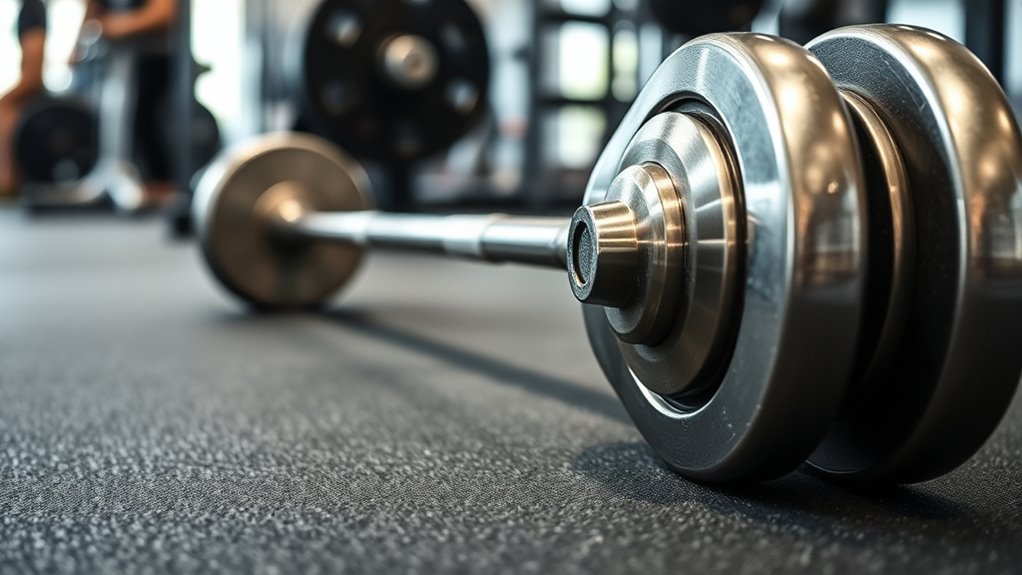
A standard gym bar, often called an Olympic barbell, typically weighs 20 kilograms (44 pounds). This weight is designed to support various lifts like squats, deadlifts, and presses. It gives you a solid foundation for strength training, which is essential whether you’re a beginner or a seasoned lifter.
Women’s bars tend to weigh around 15 kilograms (33 pounds), making them slightly lighter and easier to handle.
Specialty bars can vary quite a bit, usually between 15 and 65 pounds, depending on their specific purpose.
Understanding bar weights can really help you choose the right equipment and optimize your workouts effectively.
Keep exploring to learn more about different bar types and their benefits. Knowing this info will make your training sessions more efficient and enjoyable!
Key Takeaways
- A standard men’s gym barbell typically weighs 20 kg (44 lbs). Women’s standard gym bars usually weigh 15 kg (33 lbs).
- Standard bars are about 7 feet long with a 28 mm diameter for men. Specialty bars can vary widely, weighing between 15 kg to 30 kg depending on type.
- Bar weight affects exercise load and should be accounted for when tracking total lifted weight. It’s important to keep this in mind so you know exactly how much you’re lifting.
Understanding the Standard Olympic Barbell Weight

Although it might seem straightforward, understanding the standard Olympic barbell weight is key to tracking your progress accurately. The typical Olympic barbell weighs 20 kilograms, which is about 44 pounds.
Knowing this helps you calculate the total weight you’re lifting when you add plates. These bars are designed for versatility, used in various lifts like squats, deadlifts, and presses.
They’re usually about 7 feet long and made from high-quality steel, ensuring durability and consistent performance. The bar’s diameter is standardized for a comfortable grip and compatibility with Olympic weight plates.
Differences Between Men’s and Women’s Bars
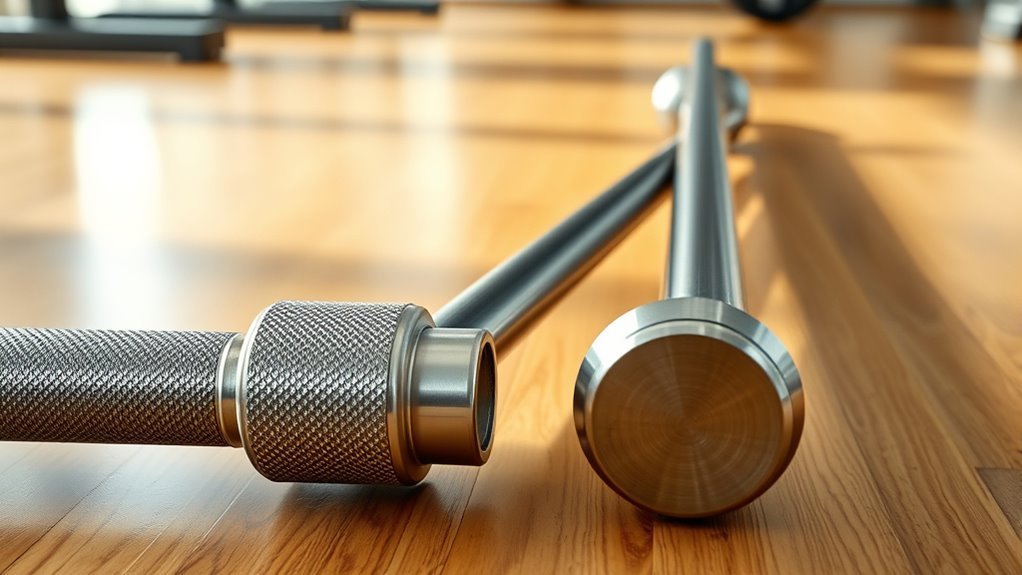
When you compare men’s and women’s bars, you’ll notice key differences in weight, length, and diameter that affect how they feel and perform during lifts. Men’s bars typically weigh 20 kg, while women’s bars weigh 15 kg. The length and thickness also vary, influencing grip and control.
| Feature | Men’s Bar | Women’s Bar |
|---|---|---|
| Weight | 20 kg (44 lbs) | 15 kg (33 lbs) |
| Length | 7.2 feet (2.2 m) | 6.6 feet (2.01 m) |
| Diameter | 28 mm | 25 mm |
| Sleeve Length | 16.3 inches (41.4 cm) | 13.8 inches (35 cm) |
| Max Load Capacity | ~1500 lbs (680 kg) | ~550 lbs (250 kg) |
These distinctions guarantee the bars suit different strength levels and body mechanics.
Specialty Bars and Their Typical Weights

Since specialty bars cater to specific training needs, their weights can vary markedly from standard men’s and women’s bars. When you pick up a trap bar, for example, expect it to weigh around 45 to 55 pounds. It’s designed for deadlifts and shrugs with a neutral grip.
If you’re into Olympic lifting, the technique bar usually weighs about 15 to 20 pounds. It’s lighter to help you focus on form. The safety squat bar, used for squats with added shoulder comfort, generally weighs between 55 and 65 pounds.
Meanwhile, a Swiss bar or football bar, great for pressing variations, typically tips the scale near 40 to 45 pounds. Understanding these differences really helps you choose the right bar for your workout goals.
Factors Affecting the Weight of Gym Bars
Because gym bars come in various shapes and designs, several factors influence their weight. When you choose a gym bar, keep these key elements in mind:
- Material: Steel is the most common, but different alloys and coatings can add or reduce weight. For example, stainless steel tends to be heavier than aluminum.
- Length and Diameter: Longer bars naturally weigh more, and thicker bars add density and heft. Standard bars usually measure 7 feet, but shorter or thicker bars change the total weight.
- Design Features: Some bars include knurling, sleeves, or added sleeves for plates, which contribute to the overall mass. Specialty bars may also have unique constructions affecting their weight.
Understanding these factors helps you pick the right bar for your workout needs.
How Bar Weight Influences Your Workout
Understanding the weight of your gym bar helps you maintain proper exercise form and avoid injury.
You can adjust your workout intensity by adding or removing plates based on the bar’s weight. This way, you get just the right challenge every time.
Tracking your strength progress becomes easier when you factor in the bar itself. It’s a simple step that makes a big difference.
Impact on Exercise Form
Although you might focus on reps and sets, the weight of the gym bar considerably affects your exercise form. Using a bar that’s too heavy or too light can throw off your technique, reducing effectiveness and increasing injury risk.
Here’s how bar weight influences your workout:
- Stability: A standard bar’s consistent weight helps you maintain balance, letting you control the lift and engage the right muscles.
- Range of Motion: Too heavy a bar might force you to shorten your movement, compromising form and limiting muscle activation.
- Posture: Using the correct bar weight encourages proper spinal alignment and reduces strain on joints.
Pay close attention to bar weight to keep your form sharp and your workouts safe and efficient. It really makes a difference!
Adjusting Workout Intensity
You are trained on data up to October 2023. When adjusting workout intensity, understanding the standard gym bar’s weight is vital. A typical bar weighs about 20 kilograms (44 pounds), which already adds significant load before you add plates.
If you’re new or recovering from injury, starting with just the bar helps you focus on form without overexerting. As you progress, adding weight in small increments challenges your muscles more, increasing intensity effectively.
Conversely, removing weight can reduce strain and prevent burnout on lighter days. Knowing the bar’s weight ensures you don’t underestimate your total load, helping you tailor workouts to your goals.
Adjusting intensity by managing bar and plate weight lets you train smarter and avoid injury. It’s a simple but powerful way to make your workouts both effective and safe.
Tracking Strength Progress
When tracking your strength progress, factoring in the bar’s weight is essential for accurate measurement. If you overlook the bar’s weight, your recorded lifts won’t reflect your true strength gains.
To keep precise logs, follow these steps:
- Record the Bar Weight: Know the exact weight of the bar you’re using, whether it’s a standard 45-pound Olympic bar or a lighter training bar.
- Add Weight Plates Correctly: Always include the combined weight of the bar and plates when noting your lifts.
- Adjust for Different Bars: If you switch bars, update your tracking system to reflect the new bar’s weight.
It might seem like a small detail, but trust me, it makes a big difference in seeing your real progress. So, keep an eye on that bar weight every time you log your lifts!
Comparing Standard Bars to Technique Bars
You’ll notice that standard bars and technique bars differ quite a bit in weight, design, and size. Understanding these differences helps you choose the right bar for your training goals.
Let’s look at how each type is built and the benefits they bring to your workout. This way, you can pick the bar that suits your needs best.
Weight Differences Overview
Although both standard gym bars and technique bars serve essential roles in weight training, they differ markedly in weight and purpose. Understanding these differences helps you select the right bar for your training goals.
- Standard Gym Bars typically weigh around 20 kilograms (44 pounds). They are designed to handle heavy loads for strength training.
- Technique Bars are much lighter, usually ranging from 5 to 15 kilograms (11 to 33 pounds). This lighter weight lets you focus on form without excessive strain.
- This weight disparity means you can use technique bars for skill development and warm-ups. Meanwhile, standard bars are better for building muscle and power.
Knowing these distinctions ensures you pick the best bar for your workout. This way, you balance safety and effectiveness.
Design and Dimensions
Since design directly affects performance, understanding the dimensions of standard gym bars versus technique bars helps you choose the right equipment for your training needs.
Standard gym bars typically measure about 7 feet long and 28 to 29 millimeters in diameter. They’re built to handle heavy loads, so you’ll notice thicker shafts and reinforced sleeves.
Technique bars, on the other hand, are usually shorter—around 5 to 6 feet—and thinner, often 25 millimeters or less in diameter. This slimmer design allows you to focus on form and control during lifts.
When you pick between them, consider how the length and thickness affect grip and balance. Standard bars suit heavy lifting, while technique bars let you practice movements with lighter weight and better precision.
Usage and Benefits
When you choose between standard bars and technique bars, understanding their distinct uses can really boost your training effectiveness. Standard bars usually weigh 20 kg and are great for building overall strength and handling heavier loads.
Technique bars, on the other hand, are lighter and shorter. They help you focus on form without the stress of heavy weight. Here’s how each one serves you:
- Standard Bars: These are ideal for experienced lifters aiming to increase muscle mass and power.
- Technique Bars: Perfect for beginners to practice movements safely and improve coordination.
- Versatility: Technique bars let you progress gradually, while standard bars prepare you for competitive lifts.
Tips for Choosing the Right Barbell for Your Needs
Choosing the right barbell can be important for your workout effectiveness and safety, so you’ll want to think about factors like weight, length, and grip texture carefully.
First, consider the bar’s weight: make sure it matches your strength level and training goals. Next, check the length—standard bars are usually 7 feet, but shorter bars can suit smaller spaces or specific lifts better.
Pay attention to grip texture, or knurling; it should provide enough friction without hurting your hands. Also, consider the bar’s sleeve type and rotation, especially if you plan Olympic lifts.
Finally, think about your budget and quality—investing in a durable barbell can save you money and injury risks in the long run. Choose wisely to support your progress safely.
How to Accurately Measure Your Gym Bar’s Weight
To accurately measure your gym bar’s weight, start by using a reliable scale that can handle heavier loads. Avoid bathroom scales, as they often lack the precision needed for bars weighing 15-45 pounds or more.
Here’s a simple process to get the exact weight:
A straightforward method to precisely determine your gym bar’s weight with consistent and accurate results.
- Prepare the bar: Remove any collars, clips, and plates to ensure you’re measuring just the bar itself.
- Use a calibrated scale: Place the bar evenly on the scale, making sure it’s balanced so you don’t get inaccurate readings.
- Record the weight: Note the displayed weight and, if you can, weigh the bar a few times to double-check for consistency.
Following these steps helps you know your equipment well. This way, you can track your progress accurately and avoid guesswork during workouts.
Frequently Asked Questions
How Do I Maintain and Clean My Gym Barbell?
You should regularly wipe your barbell with a dry cloth. Use a mild detergent for tough grime, and apply light oil to prevent rust.
Don’t forget to clean the collars and sleeves too. Also, avoid moisture to keep your barbell in top shape.
What Materials Are Gym Bars Typically Made From?
Gym bars are typically made from high-quality steel for durability and strength. You’ll often find them coated with chrome, zinc, or black oxide to prevent rust and improve grip during your workouts.
This coating not only protects the metal but also adds a little extra texture, making it easier to hold onto the bar. So, whether you’re lifting heavy weights or just doing some basic exercises, the material and finish really matter.
Can I Use a Standard Bar for Both Powerlifting and Olympic Lifting?
You can use a standard bar for both powerlifting and Olympic lifting, but it’s not ideal. Powerlifting bars are stiffer, while Olympic bars have more whip and rotating sleeves.
How Often Should I Replace My Gym Bar?
You should replace your gym bar when you notice excessive bending, rust, or worn-out bushings.
Typically, this happens every 1-3 years depending on usage and maintenance. Regularly inspect it to guarantee safety and performance.
It’s a good idea to keep an eye on it often, so you don’t miss any signs that it’s time for a new one.
Are There Any Safety Precautions When Using a Gym Bar?
Yes, you should always check the bar for damage and use collars to secure the weights. This helps keep everything in place while you’re lifting.
It’s also really important to maintain proper form and avoid dropping the bar uncontrollably. Trust me, this can prevent a lot of injuries.
Don’t forget to wear appropriate footwear. Warming up properly before your workout also plays a big role in staying safe.
Conclusion
Now that you know the weight behind every lift, choosing the right barbell feels like finding the perfect rhythm in your workout’s symphony. Whether you’re gripping a men’s bar or a specialty one, each bar carries more than just pounds—it carries your strength and progress.
So, lift with confidence, knowing the bar supports not just your body, but your journey. Embrace the weight, and let it fuel your power to rise higher every time. Understanding how much a standard gym bar weighs helps you train smarter and push your limits safely. Keep this in mind as you plan your sets and reps, and watch your gains grow stronger and steadier with each session.