Can You Put a Treadmill on Carpet?
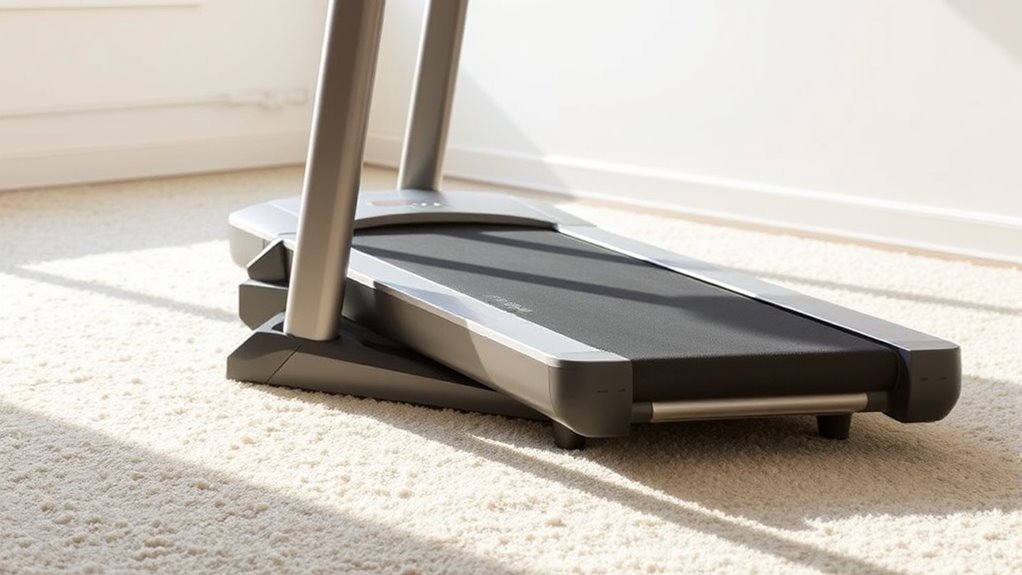
You can put a treadmill on carpet, but you’ll want to take some precautions to keep everything safe and stable. Low-pile, durable carpet works best because it helps keep your treadmill steady and protects your flooring underneath.
To prevent your treadmill from sinking into the carpet and to reduce vibrations that might cause wear and tear, consider using a treadmill mat or even a piece of plywood. This extra layer acts like a buffer and keeps things in place.
Also, make sure the area where you place your treadmill is level and well-ventilated. This helps avoid any mechanical issues and keeps your machine running smoothly.
With the right setup, both your treadmill and carpet can stay in good shape for a long time. Keep exploring for more tips on ensuring safety and extending the lifespan of your workout gear!
Key Takeaways
- You can place a treadmill on low-pile, durable carpet but avoid thick or deep-pile carpets to prevent instability and wobbling. Using a non-slip treadmill mat or plywood under the treadmill helps distribute weight evenly and protects the carpet.
- Make sure to regularly check and level the treadmill feet. This keeps the machine stable and prevents uneven mechanical wear.
- Carpet cushions noise and floor impact, which is great. However, it may trap dirt and moisture, so you’ll need to clean and maintain it frequently.
- If you’re looking for better stability and impact absorption, consider alternative flooring options like rubber mats or foam tiles. These can also help extend the life of your equipment.
Benefits of Placing a Treadmill on Carpet
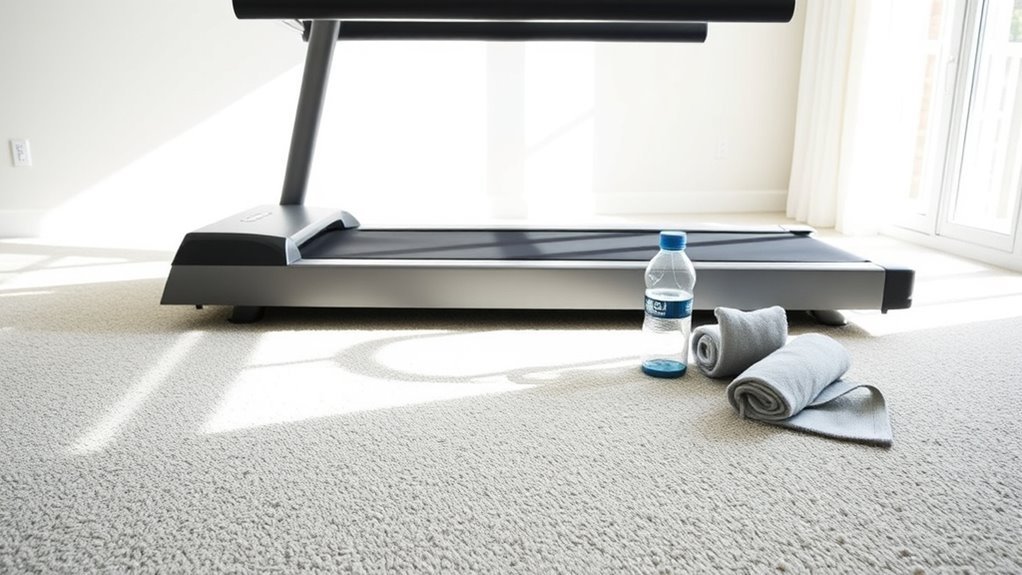
Although some people worry about stability, placing your treadmill on carpet can actually offer several benefits. For one, carpet helps absorb the noise and vibrations generated while you run, making your workout quieter for both you and those around you.
It also cushions the treadmill’s impact, protecting your floor from scratches and dents. Plus, the carpet creates a non-slip surface, reducing the chance that the treadmill will shift during use.
Additionally, carpeted flooring can provide extra insulation, helping to maintain a comfortable temperature in your workout space. When you place your treadmill on carpet, you’re also reducing wear on the treadmill’s frame and motor by minimizing vibrations.
Potential Drawbacks of Using Carpeted Floors
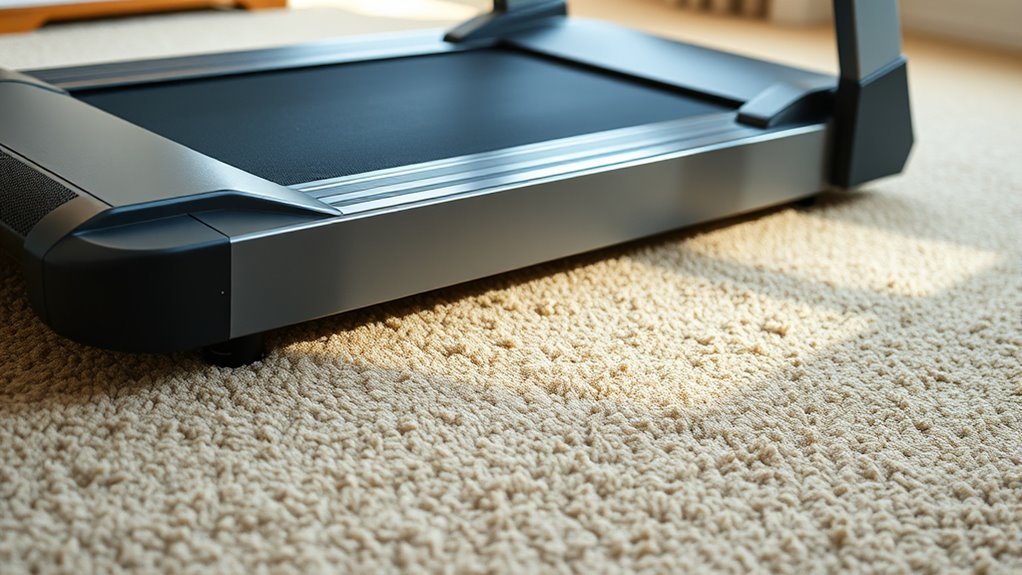
You might notice your treadmill feels less stable on carpeted floors, which can affect your workout safety. The carpet can also wear down faster under the treadmill’s weight and movement.
Let’s explore how these issues could impact your setup. It’s important to think about stability and durability when placing your treadmill on carpet.
Stability Concerns
When you place a treadmill on carpet, it can wobble or shift during use because the soft surface doesn’t provide a firm foundation. This instability may affect your workout rhythm and even pose safety risks if the machine unexpectedly moves.
You might notice the treadmill feels less steady, especially at higher speeds or when running. Over time, this can strain the treadmill’s frame and components, potentially leading to faster wear or mechanical issues.
To maintain stability, consider using a treadmill mat designed for carpeted floors or placing the machine on a hard, flat surface. These measures help keep your treadmill secure, ensuring a safer, smoother workout experience without compromising your carpeted area.
Impact on Carpet Durability
Placing a treadmill on carpet can gradually damage the fibers and padding beneath it. The constant pressure and vibrations wear down the carpet’s texture, causing indentations and reducing its lifespan.
Over time, you might notice flattened spots or even tears, especially on thinner carpets. Moisture and sweat can also seep into the carpet, promoting mold or mildew growth.
To help you understand the impact, here’s a quick overview:
| Factor | Effect on Carpet | Long-Term Result |
|---|---|---|
| Pressure | Carpet fibers compress | Permanent indentations |
| Vibration | Padding breakdown | Reduced cushioning |
| Moisture Retention | Promotes mold growth | Unpleasant odors |
To protect your carpet, consider using a treadmill mat or placing the treadmill on a hard surface instead. This little step can save your carpet a lot of wear and tear.
How Carpet Affects Treadmill Performance
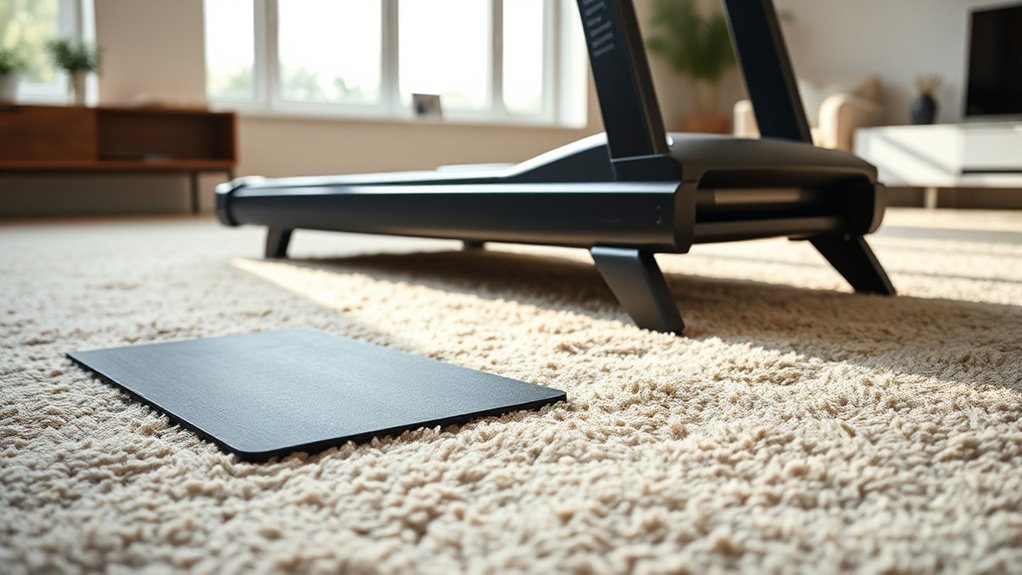
Although carpet provides a soft surface, it can negatively impact your treadmill’s performance by reducing stability and airflow. When you place a treadmill on carpet, the base may sink slightly, causing wobbling during use.
Placing a treadmill on carpet can cause instability and airflow issues, leading to wobbling during workouts.
This instability can affect your workout quality and increase wear on the treadmill’s components. Plus, carpets block the machine’s ventilation system, which relies on adequate airflow to prevent overheating.
Without proper cooling, your treadmill’s motor may run hotter, reducing its efficiency and lifespan. You might also notice that the treadmill belt doesn’t glide as smoothly because the carpet absorbs some of the treadmill’s impact energy.
To keep things running smoothly, consider using a treadmill mat designed to provide firmness and improve airflow. It’s a great way to protect your equipment while still enjoying the softness of your carpet underneath.
Impact on Carpet Durability and Maintenance
Using a treadmill on carpet doesn’t just affect the machine—it can also take a toll on your carpet’s condition. The constant pressure and movement can compress the carpet fibers, leading to visible wear and tear over time.
You might notice flattened areas where the treadmill sits, which can be tough to restore. Plus, the machine’s vibrations can push dirt and debris deeper into the carpet, making cleaning more challenging.
Spills and sweat can seep into the carpet padding, risking mold or unpleasant odors if not addressed quickly. So, to keep your carpet in good shape, you’ll need to vacuum more often and consider spot cleaning regularly.
Taking these steps helps extend your carpet’s life and keeps your workout space fresh and tidy. It’s all about a little extra care to make sure both your treadmill and carpet last longer!
Recommended Carpet Types for Treadmills
You’ll want to choose low-pile carpet when setting up your treadmill to guarantee stability and reduce wear. Durable materials like nylon or polypropylene can handle the treadmill’s weight better and last longer.
Also, keep carpet thickness in mind—thicker carpets might cause uneven surfaces and affect your workout. So, picking the right carpet can really help you get the most out of your treadmill sessions.
Low-Pile Carpet Benefits
Why choose low-pile carpet for your treadmill setup? Low-pile carpet offers a flat, dense surface that supports your treadmill evenly, preventing it from sinking or becoming unstable during workouts.
Since the fibers are shorter, it reduces friction and wear on your treadmill’s base, helping maintain its condition longer. You’ll also find it easier to clean and less likely to trap dust, which keeps your exercise area healthier.
Plus, low-pile carpet minimizes noise and vibration better than hard floors without the drawbacks of thick carpet. This balance ensures your treadmill performs smoothly and stays secure while protecting your floor beneath.
Choosing low-pile carpet means you get comfort, stability, and durability all in one smart setup. It’s really a win-win for your workout space!
Durable Carpet Materials
Although not all carpets handle treadmill use well, choosing durable materials can protect both your floor and equipment. When picking a carpet for your treadmill, look for synthetic fibers like nylon or olefin. These materials resist wear, stains, and moisture, making them ideal for heavy gym equipment.
Nylon stands out for its strength and resilience, while olefin offers excellent water resistance and affordability. Avoid natural fibers like wool, as they tend to crush and wear out quickly under constant pressure.
Additionally, carpets with tight, low-pile construction made from these durable fibers will hold up better over time. By selecting the right carpet material, you’ll minimize damage to both your treadmill and flooring, ensuring a safer and more stable exercise space.
Carpet Thickness Considerations
Choosing the right carpet thickness plays a big role in how well your treadmill performs and how long both the machine and floor last. You want a carpet that’s not too thick or plush, as deep pile carpets can cause your treadmill to wobble and strain its motor.
Ideally, opt for a low-pile or commercial-grade carpet with a thickness under 1/4 inch. This type offers enough cushioning to protect your floor and reduce noise without compromising stability.
Thinner carpets also help prevent dust and debris buildup beneath the treadmill, which can damage internal components. If your carpet is thicker, consider placing a treadmill mat underneath to create a stable, flat surface.
This simple step ensures your workout stays safe and your equipment lasts longer.
Tips for Protecting Carpet Under a Treadmill
When you place a treadmill on carpet, you’ll want to take steps to prevent damage and maintain stability. Start by laying a treadmill mat or a piece of plywood beneath the machine to distribute its weight evenly and reduce carpet compression.
Place a treadmill mat or plywood under your machine to protect carpet and ensure stability.
Make sure the mat is non-slip to keep your treadmill from shifting during use. Regularly check and adjust the treadmill’s feet to keep it level, which helps avoid uneven wear on the carpet.
Vacuum the carpet often to prevent fibers from getting caught in the treadmill’s base or belt. And when it’s time to move the treadmill, avoid dragging it across the carpet—lift it instead to prevent tearing.
These simple tips will keep your carpet intact and your treadmill steady. It’s all about protecting your floor and making your workout space safe and comfortable.
Alternative Flooring Solutions for Treadmills
If you want to protect your carpet and provide a stable base for your treadmill, consider alternative flooring options designed specifically for exercise equipment. Rubber mats are a popular choice because they absorb impact, reduce noise, and prevent the treadmill from shifting.
Interlocking foam tiles offer cushioning and are easy to assemble or remove, making them great for home gyms. Vinyl flooring is another durable, low-maintenance option that withstands heavy use and protects underlying surfaces.
Additionally, specialized treadmill pads combine grip and shock absorption, enhancing stability while safeguarding your floor. Choosing any of these alternatives not only preserves your carpet but also improves your treadmill’s performance and longevity.
Proper Treadmill Placement and Setup on Carpet
Although setting up a treadmill on carpet requires extra care, positioning it correctly can prevent damage and guarantee safe use. First, place your treadmill on a sturdy, low-pile carpet to reduce sinking and instability.
Use a treadmill mat beneath it to protect both the carpet and machine from wear and tear, while also minimizing noise and vibrations. It really helps keep things in good shape.
Make sure the treadmill is level by adjusting its feet. This prevents uneven stress on the motor and belt, which is important for longevity.
Leave enough clearance around the treadmill—at least two feet on each side and behind—to guarantee safe access and proper ventilation. You don’t want to feel cramped or risk overheating.
Also, regularly check for carpet fibers or debris that might interfere with the treadmill’s moving parts. Keeping it clean makes your workouts smoother and safer.
Frequently Asked Questions
How Often Should Treadmill Belts Be Lubricated?
You should lubricate your treadmill belt every three to six months, depending on usage. If you use it daily, check the manual and apply lubricant more often.
Keeping it running smoothly like this helps extend its lifespan. So, don’t skip those regular maintenance checks!
Can Treadmill Noise Disturb Neighbors in Apartments?
Yes, treadmill noise can disturb neighbors in apartments, especially if the floors are thin. It’s something to keep in mind if you’re living in close quarters.
You can reduce the noise by using a mat under the treadmill. Also, try running during reasonable hours so you don’t bother anyone late at night.
Keeping your treadmill well-maintained helps too. A properly oiled and tightened machine tends to run quieter, which is better for everyone around.
What Is the Average Lifespan of a Home Treadmill?
Your treadmill could outlast a marathon runner, lasting around 7 to 12 years with regular use.
If you maintain it well, you won’t have to replace it anytime soon—it’s built to endure countless workouts.
Are There Specific Treadmill Brands Better for Carpeted Areas?
Yes, you’ll find brands like NordicTrack and Sole that handle carpet well, thanks to sturdy frames and strong motors. They’re designed to reduce vibration and support stability, making your treadmill experience smoother on carpeted floors.
These features really help keep things steady, so you don’t have to worry about wobbling or noise. Plus, they often come with cushioning systems that add comfort while running or walking. It’s definitely worth considering these brands if you have carpeted areas at home.
How to Safely Move a Treadmill on Carpeted Floors?
Don’t worry about damaging the carpet—use furniture sliders or a sturdy blanket under the treadmill’s wheels.
Always lift with help, avoid dragging, and move slowly to keep both your treadmill and carpet safe from harm.
Taking it slow makes a big difference, and having a friend to help can really save you some trouble.
Conclusion
Placing your treadmill on carpet can offer cushioning and noise reduction, but it might also cause stability issues or carpet wear.
For example, Sarah noticed her treadmill wobbled slightly on thick carpet, prompting her to use a sturdy mat underneath. This simple step protected her carpet and improved treadmill performance.
By choosing the right carpet type and using protective measures, you can enjoy your workouts comfortably without compromising your flooring’s durability. So, if you’re wondering, “Can you put a treadmill on carpet?” the answer is yes, but with some precautions.
Using a treadmill mat or placing the treadmill on a low-pile carpet helps prevent damage and keeps the machine steady. This way, you get the best of both worlds—comfort and protection for your floors while keeping your workouts safe and effective.