Does Using an Elliptical Build Strong Glutes?
You can build stronger glutes on an elliptical by focusing on proper form, pushing through your heels, and using higher resistance or incline settings.
Using an elliptical is a great way to work on your glute muscles because it’s low-impact and joint-friendly, making it easier to stick with your workout routine without pain. Pedaling backward, in particular, engages your glute muscles more, especially the gluteus maximus.
Ellipticals offer low-impact, joint-friendly workouts that improve glute endurance but won’t replace targeted strength exercises like squats. To maximize results, vary speeds and resistance and consider combining elliptical sessions with strength training.
Keep exploring to find the best ways to tone and strengthen your glutes.
Key Takeaways
- Elliptical machines do engage your glutes, especially if you pedal backward with increased resistance or incline. This really helps activate your hip extension muscles more effectively.
- Make sure to maintain proper posture, push through your heels, and consciously squeeze your glutes. Doing this will maximize muscle engagement while you’re on the elliptical.
- Elliptical workouts offer a low-impact way to activate your glutes, which is great for joint health. However, they’re usually less intense compared to targeted resistance exercises like squats or lunges.
- To really build your glutes, it’s a smart move to combine elliptical training with strength exercises. This combo speeds up muscle growth and boosts your lower body strength.
- Trying interval training on the elliptical with varied resistance and speed can make a big difference. It enhances glute stimulation and helps you avoid hitting a workout plateau.
How Elliptical Machines Engage the Glute Muscles
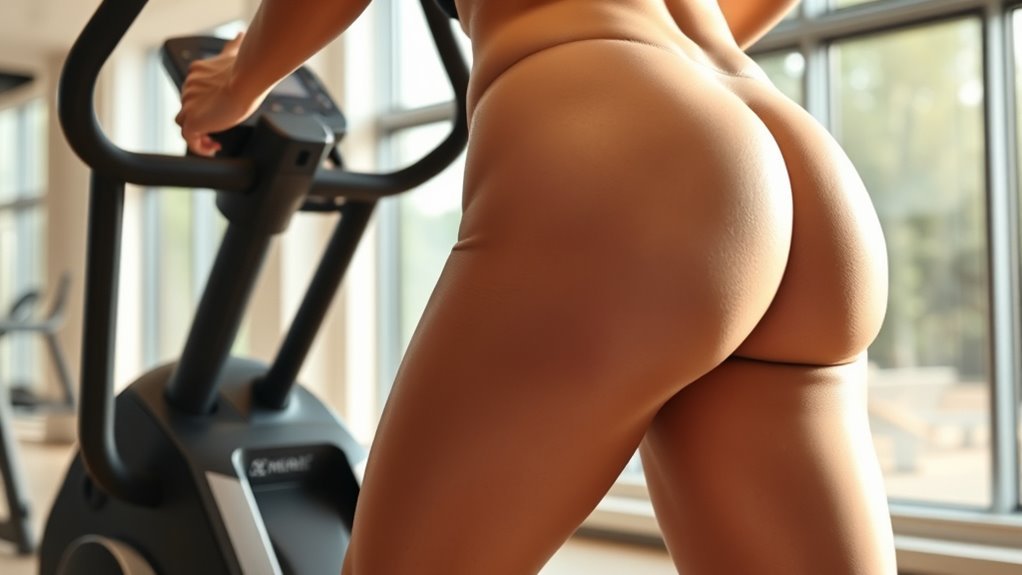
Although elliptical machines primarily target your cardiovascular system, they also engage your glute muscles effectively. When you pedal, your glutes contract to extend your hips, especially during the backward motion.
This movement activates the gluteus maximus, your largest glute muscle. You can increase this engagement by adjusting the machine’s incline or resistance, which forces your glutes to work harder.
Maintaining a proper posture—standing tall and pushing through your heels—also maximizes glute activation. Unlike running or walking, the elliptical’s low-impact design allows you to work your glutes without straining your joints.
Comparing Elliptical Workouts to Other Glute Exercises
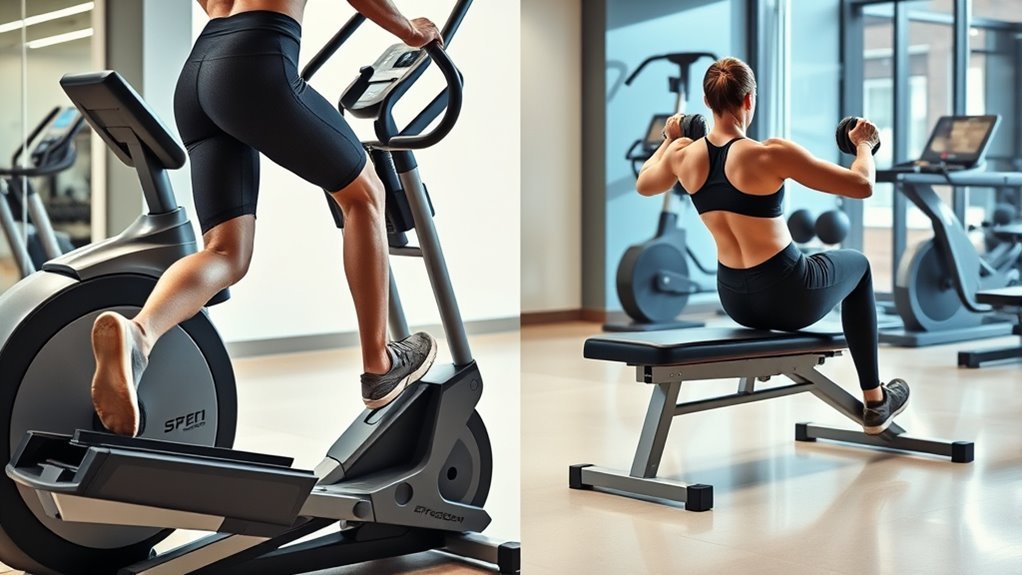
When you compare elliptical workouts to traditional glute exercises, you’ll notice differences in muscle activation and overall effectiveness. The elliptical engages your glutes in a low-impact way, which is great if you’re looking for something gentle on your joints.
On the other hand, resistance training targets your glutes more directly and intensely. So, if building serious glute strength is your goal, this might be the better choice.
Understanding these distinctions can really help you figure out the best approach for your fitness routine. It all depends on what you want to achieve and how your body responds.
Muscle Activation Differences
Since elliptical workouts engage your glutes differently than traditional exercises, understanding these muscle activation differences can help you tailor your routine for better results. When you use an elliptical, your glutes work primarily to stabilize your hips and assist in the forward and backward motion.
However, this activation is generally lower compared to exercises like squats or lunges, which require more intense glute contraction to lift and control your body weight.
Elliptical machines offer a low-impact way to keep your glutes engaged over extended periods, but they don’t recruit muscle fibers as deeply or intensely as targeted resistance exercises do.
Knowing this, you can combine elliptical sessions with strength training moves to maximize glute development effectively.
Effectiveness Versus Resistance Training
How well does using an elliptical compare to traditional resistance training for building glute strength? While ellipticals offer a low-impact way to engage your glutes, they generally don’t provide the same intensity or targeted muscle overload that resistance training does.
If you want serious glute gains, resistance exercises like squats and deadlifts are more effective because they focus on muscle activation and progressive overload.
Consider these points when choosing between elliptical workouts and resistance training:
- Ellipticals offer cardiovascular benefits with moderate glute engagement, ideal for beginners or recovery days.
- Resistance training targets glute muscles directly, promoting strength and size increases.
- Combining both can improve endurance and muscle tone without overtraining.
Ultimately, your choice depends on your fitness goals and workout preferences. So, think about what you want to achieve and what feels best for you!
The Role of Resistance and Incline in Glute Activation
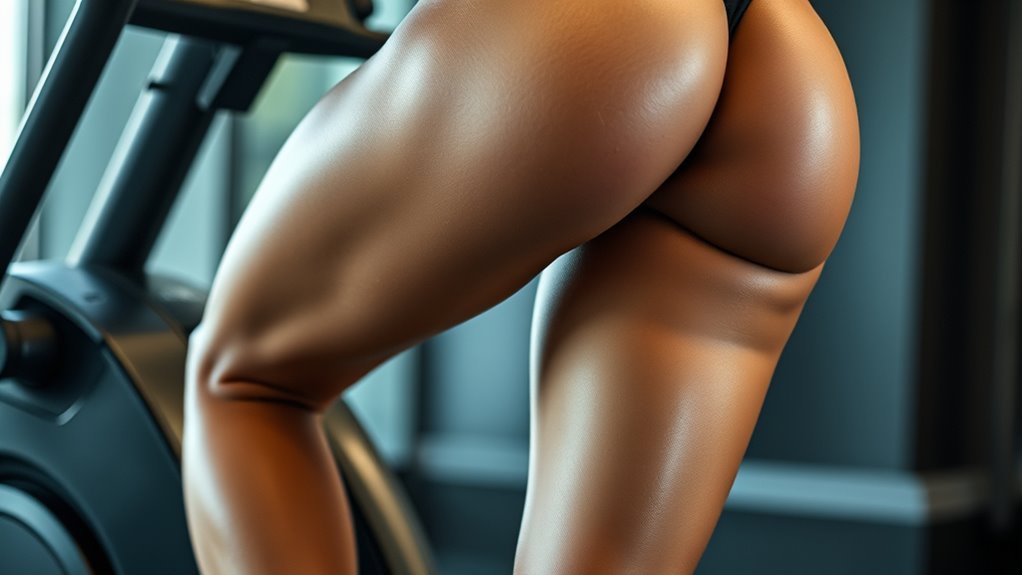
Although many people focus on simply moving their legs on an elliptical, adjusting resistance and incline plays a crucial role in targeting your glutes effectively. When you increase the resistance, your muscles must work harder, especially your glutes, to push through each stride.
Similarly, adding incline shifts the emphasis toward your posterior chain, engaging your glute muscles more deeply. By combining higher resistance with a steeper incline, you create a workout that mimics uphill climbing, which naturally activates your glutes.
Don’t just settle for a flat, easy setting; challenge yourself by gradually increasing these variables. This approach helps you strengthen and tone your glutes more efficiently while using the elliptical, making your workout both more effective and rewarding.
Benefits of Low-Impact Cardio for Glute Strengthening
You’ll find low-impact cardio exercises, like using the elliptical, are gentle on your joints while still engaging your glute muscles effectively. This means you can build strength without risking injury or overloading your body.
Let’s explore how this approach benefits your glutes and supports long-term fitness. It’s all about working smart, not hard, to keep your body strong and healthy.
Joint-Friendly Exercise
Since protecting your joints is essential for long-term fitness, choosing low-impact cardio exercises like the elliptical can help you build glute strength without unnecessary strain. The elliptical offers a smooth, gliding motion that minimizes stress on your knees, hips, and ankles. This makes it ideal if you have joint sensitivities or are recovering from injury.
You can still challenge your glutes effectively while keeping your joints safe.
Here’s why the elliptical is joint-friendly:
- Reduces Impact: Unlike running, it avoids harsh pounding on your joints.
- Supports Controlled Movement: Keeps your body aligned, lowering injury risk.
- Allows Adjustable Resistance: You control intensity without compromising joint health.
This way, you strengthen your glutes and protect your joints simultaneously. Easy, right?
Muscle Engagement Benefits
When you choose low-impact cardio like the elliptical, your glute muscles get engaged in a controlled yet effective way. Unlike high-impact exercises that may strain your joints, the elliptical allows you to work your glutes continuously without harsh impact.
This steady muscle engagement helps build strength and endurance over time. You activate your glutes more when you focus on pushing through your heels and maintaining proper posture.
Plus, the elliptical’s resistance settings let you increase the challenge, promoting muscle growth. This makes it easier to strengthen your glutes while protecting your body.
Common Mistakes That Limit Glute Engagement on the Elliptical
Although the elliptical offers a great way to work your glutes, certain common mistakes can prevent you from fully engaging these muscles. You might think you’re targeting your glutes, but if your technique is off, those efforts won’t pay off.
The elliptical can target your glutes effectively—if you avoid common technique mistakes that limit engagement.
Avoid these pitfalls to maximize your glute workout:
- Leaning too heavily on the handles: This shifts work away from your legs and glutes to your arms and upper body.
- Taking short, shallow strides: Small steps limit hip extension, reducing glute activation.
- Keeping resistance too low: Without enough resistance, your muscles won’t be challenged enough to grow stronger.
Incorporating Interval Training to Maximize Glute Development
To boost your glute development on the elliptical, you should incorporate interval training into your routine. By alternating between high-intensity bursts and recovery periods, you challenge your glutes more effectively than steady-state workouts.
This approach increases muscle activation and promotes strength gains. Focus on increasing resistance and speed during intense intervals, then lower both during recovery to prepare for the next push.
Here’s a simple interval plan to maximize glute engagement:
| Interval Type | Duration | Intensity Level |
|---|---|---|
| Warm-up | 5 minutes | Low |
| High-intensity | 1 minute | High resistance/speed |
| Recovery | 2 minutes | Low resistance/speed |
| Repeat Cycle | 4-6 rounds | Alternating intensities |
Try to use this structure 2-3 times weekly to see stronger glutes. Trust me, consistency here really makes a difference!
Combining Elliptical Sessions With Strength Training for Better Results
Since the elliptical targets your glutes through cardio, combining it with targeted strength training can accelerate your progress. By adding resistance exercises, you’ll build muscle mass and enhance glute strength more effectively than cardio alone.
To get the best results, focus on these key points:
- Incorporate exercises like squats, lunges, and hip thrusts to directly engage your glutes.
- Schedule strength training on alternate days or after your elliptical sessions to avoid fatigue.
- Gradually increase weights or resistance to continuously challenge your muscles.
This combination not only improves muscle tone but also boosts your overall lower body power. By blending elliptical workouts with strength training, you create a well-rounded routine that strengthens and sculpts your glutes efficiently.
Tips for Targeting Glutes Effectively During Elliptical Workouts
When you focus on engaging your glutes during elliptical workouts, you’ll maximize the benefits for muscle strength and tone. Start by consciously squeezing your glutes with each backward pedal stroke, as this activates the muscles more effectively.
Increase the incline or resistance to challenge your glutes further—higher settings require more effort from your glutes to push. Avoid leaning on the handles; instead, keep your posture upright and use your legs to power the movement.
Shorten your stride slightly to put more emphasis on the glutes rather than the quads. Try incorporating interval training by alternating between high resistance and recovery periods to stimulate muscle growth.
Frequently Asked Questions
Can Elliptical Workouts Help Reduce Cellulite on the Glutes?
Yes, elliptical workouts can help reduce cellulite on your glutes by improving blood circulation and burning fat.
But here’s the thing—combining cardio with strength training and a healthy diet will give you better, faster results.
How Long Should I Use the Elliptical to See Glute Improvements?
You should use the elliptical for at least 30 minutes, 3-5 times a week to see glute improvements. Consistency and gradually increasing resistance will help tone and strengthen your glutes over 4 to 6 weeks.
Stick with it regularly, and don’t rush the process. Little by little, you’ll notice your glutes getting stronger and more defined.
Is It Safe to Use the Elliptical Daily for Glute Building?
You can use the elliptical daily safely if you listen to your body, vary your intensity, and maintain proper form. Don’t overdo it, and balance workouts with rest days to build strong glutes effectively and avoid injury.
Just make sure to pay attention to how your muscles feel. Mixing up your routine keeps things interesting and helps prevent strain. Rest days? They’re super important for recovery and growth!
Do Different Elliptical Brands Affect Glute Muscle Engagement?
Yes, different elliptical brands can affect glute engagement due to variations in stride length, resistance levels, and incline options.
You should try machines to see which one challenges your glutes the most for better results. It’s all about finding the right fit for your workout style.
Can Elliptical Training Improve Glute Muscle Symmetry and Tone?
You’ll find that elliptical training can improve glute muscle symmetry and tone if you consistently push yourself and mix up resistance levels.
It’s not just a walk in the park—it demands effort to see real balance.
Stick with it, challenge those muscles regularly, and you’ll start noticing the difference.
Conclusion
Using the elliptical can definitely help sculpt your glutes, but it’s not a magic wand. Think of it as planting seeds—you need resistance, incline, and focused effort to watch those muscles bloom.
Avoid common pitfalls that wilt your progress, and mix in strength training to really fan the flames of growth. With the right approach, your elliptical sessions become a powerful wave, shaping strong, toned glutes one stride at a time.
So, if you’re wondering, “Does using an elliptical build strong glutes?” the answer is yes, but only when combined with proper technique and additional exercises. Keep your workouts challenging and consistent, and you’ll see those glutes grow stronger and more defined over time.