How Does Bench Press Weight Include the Bar
When you record your bench press weight, you always include the bar’s weight along with the plates. Most standard Olympic bars weigh 45 pounds (20 kg), so adding that to your plate total gives you the accurate load you’re lifting.
This precision helps track your true strength gains and avoid underestimating your progress.
Since bars can vary by gym or type, knowing your bar weight is key. Keep going to uncover how these details impact your training and tracking.
Understanding how bench press weight includes the bar is essential for accurate workout records and steady improvement.
Key Takeaways
- Always include the bar’s weight when calculating total bench press load to ensure accurate strength tracking. Standard Olympic bars typically weigh 45 pounds, so add this to the weight of the plates lifted.
- Recording the combined weight of the bar plus plates prevents underestimating workout intensity and progress. It’s a simple step that makes a big difference.
- Verify the bar’s exact weight before lifting, as some bars vary (e.g., women’s bars weigh about 33 pounds). You don’t want to guess and throw off your numbers.
- Consistently logging total weight, including the bar, allows clear, comparable records across different sessions and equipment. That way, you can really see how you’re improving over time.
Understanding the Standard Barbell Weight
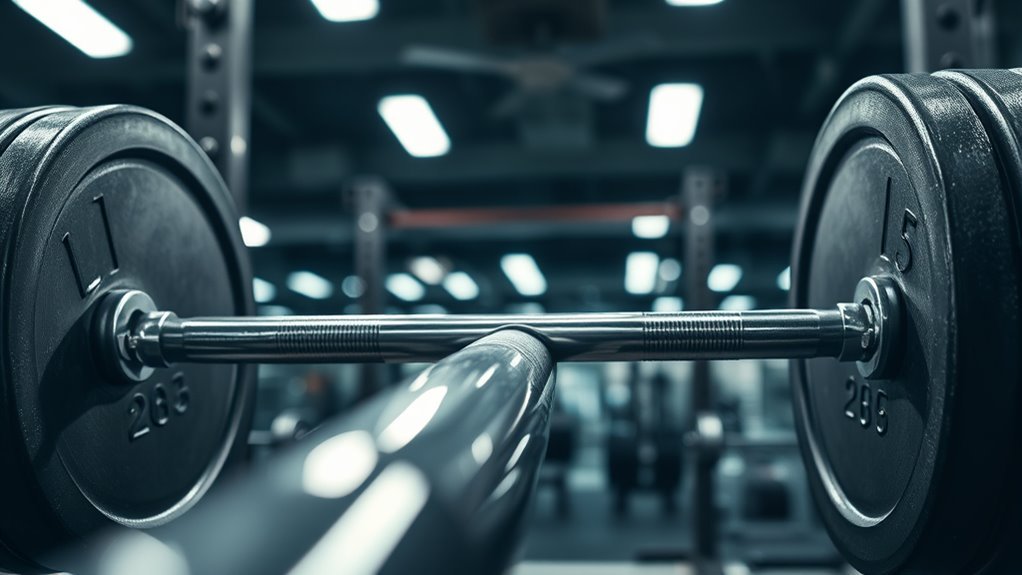
How much does a standard barbell really weigh? Most standard barbells used in bench pressing weigh 45 pounds (20.4 kilograms).
When you load plates onto this bar, you need to factor in the bar’s weight to understand the total load you’re pressing. This 45-pound barbell is the benchmark in most gyms and competitions, so knowing its weight helps you accurately track your progress and avoid underestimating your lifts.
While some bars can vary slightly, the 45-pound bar is the most common and widely accepted standard. By including the bar’s weight in your calculations, you get a true sense of the effort required for each bench press.
This helps you set realistic goals and measure improvements effectively.
Types of Bars Used in Bench Pressing
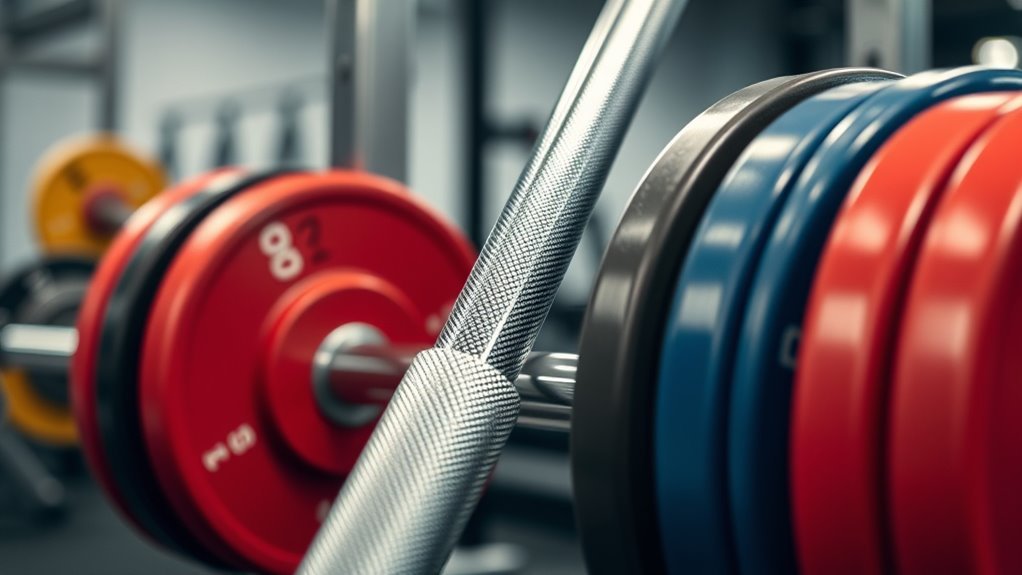
Although the standard 45-pound barbell is most common, you’ll encounter various types of bars designed for different bench pressing styles and goals.
The standard 45-pound barbell is common, but many bar types suit different bench press styles and goals.
For example, an Olympic barbell, typically 45 pounds, features rotating sleeves that reduce wrist strain during lifts. You might also see a powerlifting bar, which is stiffer and has less whip, providing better control for heavy bench presses.
If you prefer a more specialized grip, a Swiss bar or football bar offers multiple hand positions, reducing shoulder stress. Women and youth lifters often use lighter bars, usually weighing 33 or 15 pounds, to match their strength levels.
Knowing these options helps you understand how the bar’s weight and design affect your total bench press load and performance. It’s pretty handy info to have when you’re setting up your next workout!
How Plate Weights Contribute to Total Load
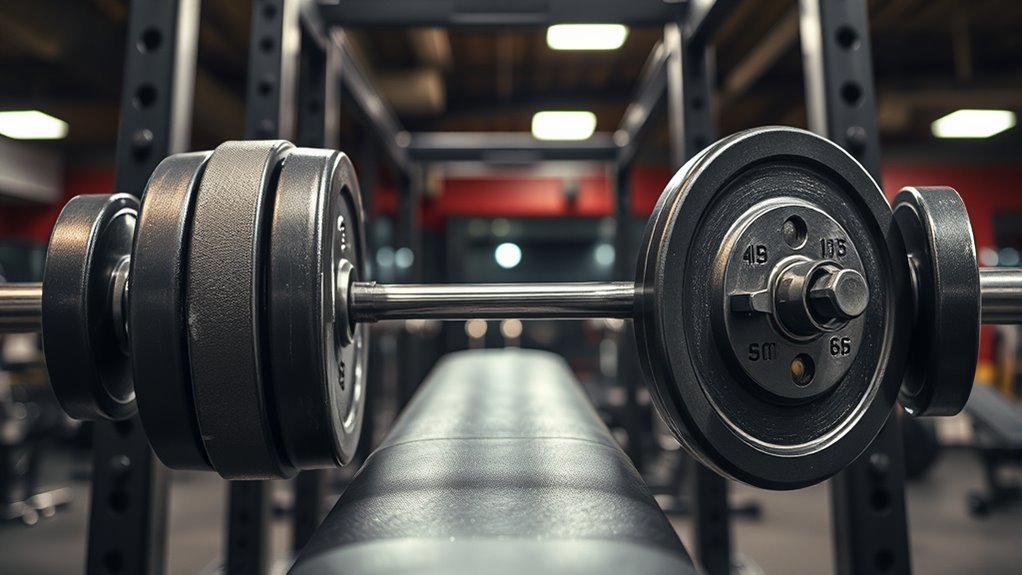
Understanding the bar’s weight is only part of the equation when calculating your total bench press load. The plates you add to the bar play a vital role in determining how much weight you’re actually lifting.
Each plate has a specific weight, commonly ranging from 2.5 to 45 pounds. You’ll typically load them evenly on both sides of the bar.
When you add up the weight of all the plates on both ends, this total combines with the bar’s weight to give you the full load. Remember, even small plates can make a difference, especially when you’re working with heavier lifts or aiming for precise increments.
Paying attention to your plate weights ensures you know exactly what you’re pressing every time. It’s all about keeping track so you can push yourself safely and effectively.
Calculating Total Bench Press Weight
When calculating your total bench press weight, you need to include the bar’s weight along with the plates. Don’t forget that the standard bar itself weighs around 45 pounds, which adds to your overall load.
Adding the combined weight of all the plates to the bar gives you the exact total you’re lifting. It’s a simple step but super important to get your numbers right!
Bar Weight Importance
Since the bar itself adds significant weight to your bench press, you can’t just count the plates on each side. The standard Olympic barbell typically weighs 45 pounds (20.4 kilograms), and that alone contributes a large portion of the total load you’re lifting.
Ignoring the bar’s weight can lead to underestimating your actual strength or incorrectly tracking your progress. When you include the bar, you get an accurate representation of the total resistance your muscles face.
This is vital not only for monitoring improvements but also for ensuring safety and proper workout programming. So, always factor in the bar’s weight before calculating your total bench press.
It’s the foundation of accurate measurement and effective training.
Adding Plate Weights
Although the barbell itself weighs 45 pounds, you need to add the weight of the plates on each side to calculate your total bench press weight accurately. Each plate’s weight is clearly marked, usually in increments like 2.5, 5, 10, 25, 35, or 45 pounds.
To find the total plate weight, add the weight of all plates on one side and multiply by two since you have plates on both sides. Then, add this number to the barbell’s 45 pounds.
For example, if you have two 25-pound plates on each side, that’s (25 + 25) x 2 = 100 pounds, plus the bar’s 45, totaling 145 pounds. This method guarantees you know exactly how much you’re lifting every time.
Importance of Including the Bar in Weight Measurements
When you include the bar in your weight calculations, you guarantee a standard measurement every time. This consistency helps you track your progress accurately without confusion.
Skipping the bar’s weight can lead to inconsistent records and slow your improvement. So, always count the bar—it makes a real difference!
Standard Weight Calculation
How do you accurately measure the total weight during a bench press? You include both the bar and the plates. The standard barbell typically weighs 45 pounds (20.4 kg), so you start with that baseline.
Then, add the weight of all the plates loaded onto the bar. For example, if you have two 25-pound plates on each side, that’s 100 pounds plus the 45-pound bar, totaling 145 pounds. This combined weight reflects the actual resistance you’re lifting.
Ignoring the bar’s weight can lead to underestimating your performance and progress. Always verify your barbell’s weight since some bars vary. By consistently adding the bar and plate weights, you ensure precise tracking and a true understanding of your bench press strength.
Consistency in Tracking
Since you want to accurately track your progress, you need to include the bar’s weight every time you log your bench press totals. Ignoring the bar can lead to inconsistent records, making it harder to see real improvements.
By consistently including the bar, you ensure your data reflects the actual load you’re lifting.
Here’s why consistency matters:
- Accurate Progress Monitoring – You see true gains over time.
- Reliable Comparisons – Compare sessions fairly without guesswork.
- Proper Goal Setting – Set realistic targets based on total weight.
- Injury Prevention – Know the exact weight to avoid overloading.
Always add the bar’s weight to your numbers, so your tracking stays precise and meaningful. It really makes a difference!
Variations in Bar Weight Across Gyms
Although standard Olympic bars typically weigh 45 pounds, you might find that bar weights vary depending on the gym you visit. Some gyms use specialty bars like women’s bars, which usually weigh 33 pounds, or shorter bars that can weigh less.
Additionally, older or non-standard bars might not match the typical weight exactly. If you don’t account for these differences, your recorded lifts might not reflect your true progress.
To stay consistent, always check the bar’s weight before starting your set. Many gyms label their bars, but if not, ask staff or weigh the bar yourself.
Being aware of these variations ensures you track your bench press accurately across different locations. This attention to detail helps you maintain realistic expectations and measure strength gains properly.
Impact of Bar Weight on Training Progress
When you overlook the exact weight of the bar during your bench press sessions, you might misjudge your progress and training effectiveness. Knowing the bar’s weight is essential because it directly affects the total load you’re lifting.
If you assume the bar weighs less or more than it actually does, your performance tracking can become inaccurate. And that can lead to a few problems.
For one, you might end up overestimating your strength gains, which is super frustrating when your progress suddenly stalls. Or, you might be underloading the bar, which limits muscle growth and strength improvements.
It can also mess with your workout planning since you might not adjust the weights properly. Plus, it makes comparing different sessions tricky, so assessing long-term progress becomes a challenge.
Tips for Accurately Recording Bench Press Weight
To track your bench press progress accurately, you need to include the bar’s weight along with the plates. Start by knowing your barbell’s exact weight—standard Olympic bars usually weigh 45 pounds (20 kg), but some bars differ.
Always add this to the total weight of the plates on each side. Use weight plates with clearly marked numbers to avoid errors.
When logging your workout, write down the combined total, not just the plates. If you switch bars or plates, update your records accordingly.
Consistently accounting for the bar’s weight guarantees your progress reflects true strength gains. Finally, consider using a workout app or notebook to keep reliable, precise records, helping you set realistic goals and avoid plateaus.
Frequently Asked Questions
How Does Grip Width Affect Bench Press Performance?
Your grip width changes which muscles you target during bench press. A wider grip emphasizes your chest, while a narrow grip focuses more on your triceps.
Adjusting grip can also affect your range of motion and leverage. So, depending on your goals, tweaking your grip might help you lift better or focus on different muscle groups.
What Muscles Are Primarily Engaged During the Bench Press?
You primarily engage your pectoral muscles during the bench press, along with your anterior deltoids and triceps brachii.
These muscles work together to push the barbell away from your chest effectively. It’s a great compound movement that targets the upper body. Plus, it helps build strength and muscle mass in those areas.
How Often Should I Increase My Bench Press Weight?
You should increase your bench press weight when you can complete all your sets and reps with good form comfortably.
Usually, that’s every 1-2 weeks, but listen to your body to avoid injury and plateaus.
If something feels off, give yourself more time before adding weight. It’s better to progress steadily than to rush and risk setbacks.
What Are Common Bench Press Injuries and Prevention Tips?
Oh, nothing like a shoulder strain or pec tear to spice up your workout! To avoid these, you should warm up properly and use correct form.
Also, avoid ego lifting and gradually increase weight. Stay safe and smart!
Can Bench Pressing Improve Posture and Upper Body Strength?
Yes, bench pressing can improve your posture and upper body strength. It targets your chest, shoulders, and triceps, helping you build muscle and stabilize your upper body.
This support plays a big role in better alignment and overall posture. So, not only are you getting stronger, but you’re also standing taller and feeling more balanced.
Conclusion
Remember, the barbell is more than just a handle—it’s the backbone of your bench press total. Just like a ship’s mast supports the sails, the bar supports all the weight you’re lifting.
Always include its weight when calculating your bench press to get an accurate measure of your progress. Paying attention to these details helps you steer your training in the right direction and avoid unexpected setbacks on your strength journey.
When you count the bar’s weight along with the plates, you get the full picture of your bench press weight. This way, you know exactly how much you’re lifting and can track your strength gains properly. So, never forget to include the bar when you log your bench press weight—it’s key to understanding your true progress and pushing your limits safely.