How to Use Vibration Plates Safely With Back Problems
If you have back problems, using a vibration plate can be beneficial, but it’s important to do so safely. Start with low frequency and intensity settings to avoid straining your back.
Keep your sessions brief, around 5 to 15 minutes, to prevent overloading your spine.
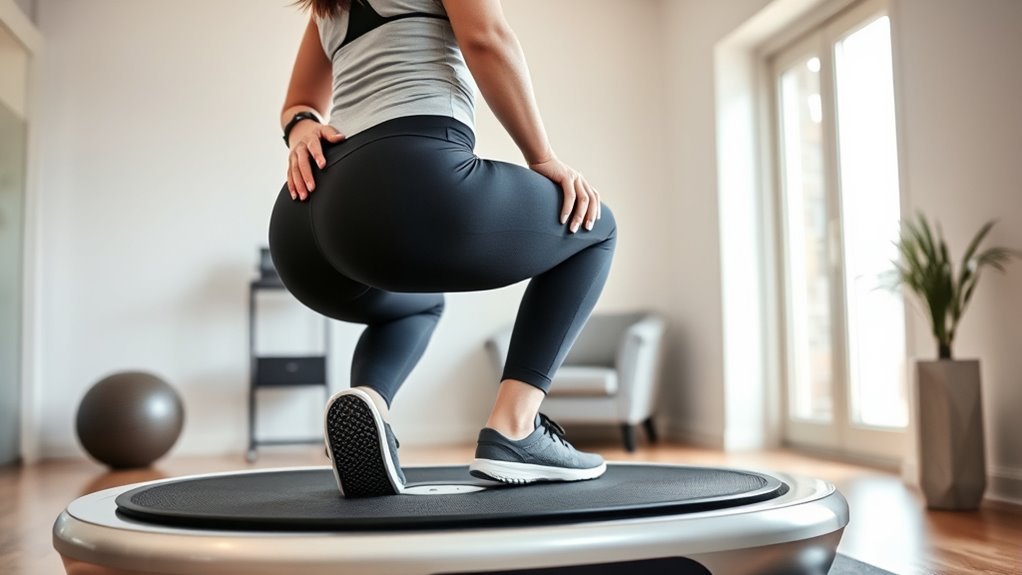
Always focus on maintaining proper posture. Slightly bend your knees and engage your core muscles to support your spine throughout the workout.
Avoid any sudden movements that might cause discomfort or injury.
If you feel pain or dizziness at any point, stop immediately. It’s also a good idea to talk to your healthcare provider before starting.
They can help tailor the vibration plate settings and exercises specifically for your back condition.
Knowing these basics will help you use your vibration plate effectively.
This way, you can stay safe while enjoying the benefits it offers for your back health.
Key Takeaways
- Consult a healthcare professional before using vibration plates to ensure safety based on your specific back condition and medical history.
- Start with low frequency and intensity settings, gradually increasing as comfort and tolerance improve to prevent strain.
- Maintain proper posture with slightly bent knees, engaged core, and even weight distribution to support spinal alignment during use.
- Focus on low-impact, controlled exercises that stabilize the spine and avoid rapid or high-impact movements that could aggravate your back.
- Stop immediately if you experience pain, dizziness, numbness, or muscle spasms, then rest and seek medical advice if symptoms persist.
Understanding the Impact of Vibration Plates on the Back
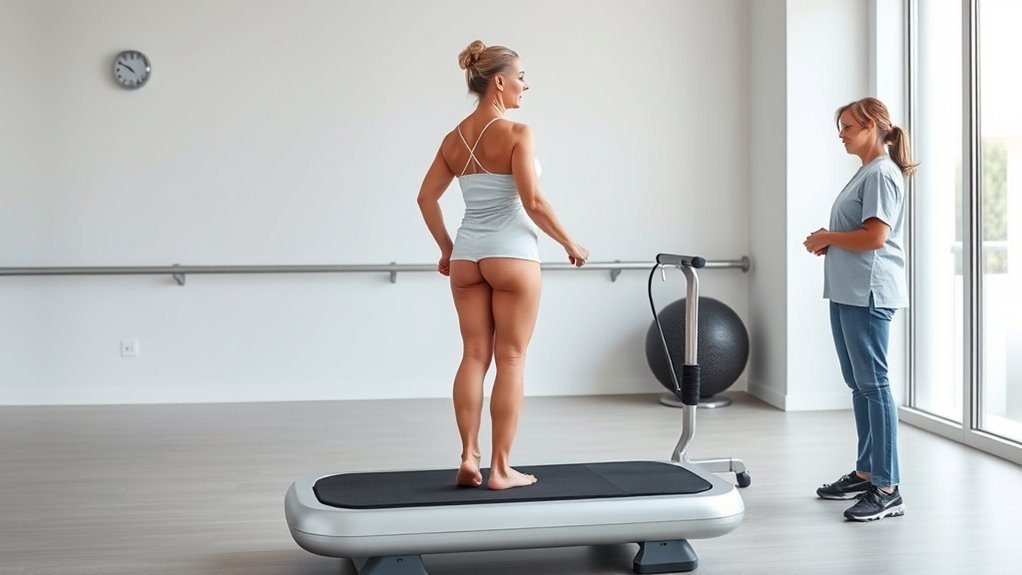
Although vibration plates offer numerous fitness benefits, you need to understand how they affect your back to use them safely. When you stand or exercise on a vibration plate, the platform sends mechanical oscillations through your body.
These vibrations stimulate muscle contractions and improve circulation, but they also place additional stress on your spine and surrounding muscles. If your back is healthy, this can enhance muscle strength and flexibility.
However, if you have existing back issues, the vibrations might aggravate pain or cause discomfort. You should focus on maintaining proper posture during use, keeping your core engaged to support your spine.
Start with short sessions at low intensity, and avoid sudden movements. This approach helps your back adapt gradually, reducing the risk of strain or injury.
Consulting a Healthcare Professional Before Starting

Before you start using a vibration plate, it’s important to get medical advice to make sure it’s safe for you. Share your personal health history with your healthcare professional so they can identify any risks.
This step helps you avoid potential problems and use the device effectively. It’s always better to be safe and informed before trying something new!
Importance of Medical Advice
When you’re planning to use a vibration plate, consulting a healthcare professional can help guarantee it’s safe for your specific health conditions. They can assess your back problems and determine whether vibration therapy is appropriate for you.
Medical advice ensures you avoid exercises or settings that might worsen your condition. Your doctor or physical therapist can recommend the right duration, intensity, and frequency tailored to your needs.
They’ll also watch for any contraindications or risks you might not be aware of. By seeking professional guidance, you prevent potential injuries and maximize the benefits of vibration plate use.
Don’t skip this step—medical advice acts as an essential safeguard, helping you use vibration plates effectively and safely while protecting your back health.
Discussing Personal Health History
Since your personal health history directly affects how your body responds to vibration therapy, you should share detailed information with your healthcare professional before starting. Be honest about any current or past back problems, surgeries, chronic conditions, or injuries.
Mention medications you’re taking and any symptoms you experience, such as pain or numbness. This helps your healthcare provider assess whether vibration therapy suits your situation and tailor recommendations accordingly.
Don’t hesitate to discuss your fitness level and any previous experiences with similar exercises. Providing a complete picture ensures you receive safe, effective advice that minimizes complications.
Understanding Potential Risks
Although vibration plates offer many benefits, they also carry potential risks that you need to understand fully. Before you start using one, it’s essential to consult a healthcare professional, especially if you have back problems.
They can assess your specific condition and advise whether vibration plates are safe for you. Using these devices improperly might worsen your back pain or cause new injuries.
Your doctor or physical therapist can recommend the right settings, duration, and exercises tailored to your needs. Don’t ignore this step—it helps prevent complications and guarantees you get the most from your workouts safely.
Always prioritize professional guidance over self-experimentation when dealing with health issues related to your back. It’s better to be safe and make sure you’re doing what’s best for your body.
Selecting the Right Vibration Plate Settings
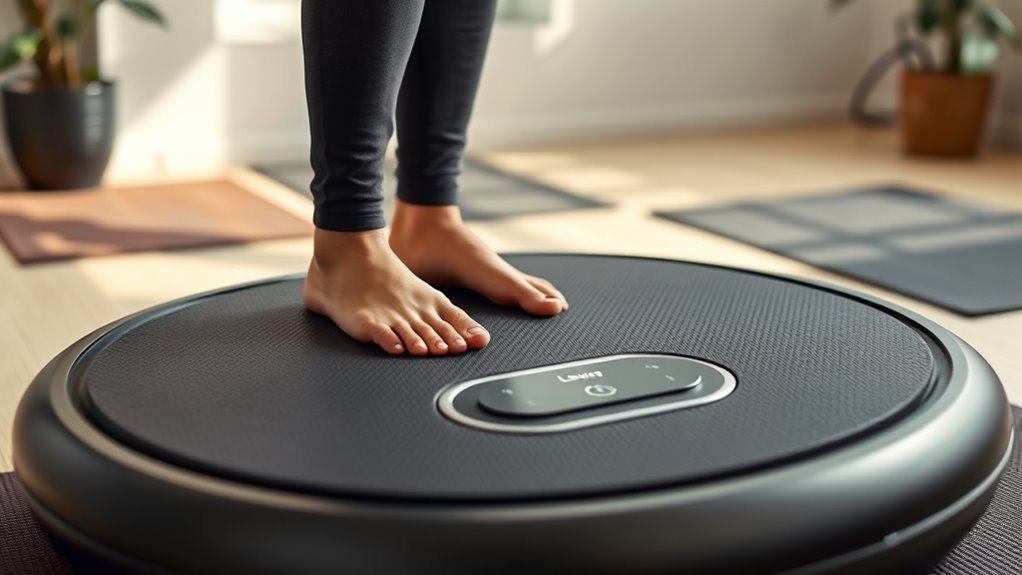
You’ll want to start by choosing the right frequency and intensity levels that match your fitness and comfort. Pay close attention to how long you stay on the plate and your body’s positioning to avoid strain.
Adjust these settings gradually as you get more comfortable with the machine. It’s all about finding what works best for you and taking it step by step.
Frequency and Intensity Levels
When adjusting the frequency and intensity levels on your vibration plate, it’s important to match the settings to your fitness goals and experience. Start with lower frequencies (around 15-20 Hz) and low intensity to avoid straining your back.
As you gain comfort, you can gradually increase both frequency and intensity. Keep in mind that higher frequencies and intensities provide more intense muscle stimulation but may increase risk if not used carefully.
| Frequency (Hz) | Intensity Level |
|---|---|
| 15-20 (Beginner) | Low (Gentle vibrations) |
| 20-30 (Intermediate) | Medium (Moderate) |
| 30+ (Advanced) | High (Intense) |
Always listen to your body and avoid settings that cause discomfort or pain. Trust your instincts and take it slow if you’re unsure.
Duration and Positioning Tips
Adjusting frequency and intensity is just part of using vibration plates effectively. You should also pay close attention to how long you use the machine and your positioning to protect your back.
Start with short sessions—around 5 minutes—to see how your body responds. Gradually increase to no more than 15 minutes to avoid overstraining your muscles.
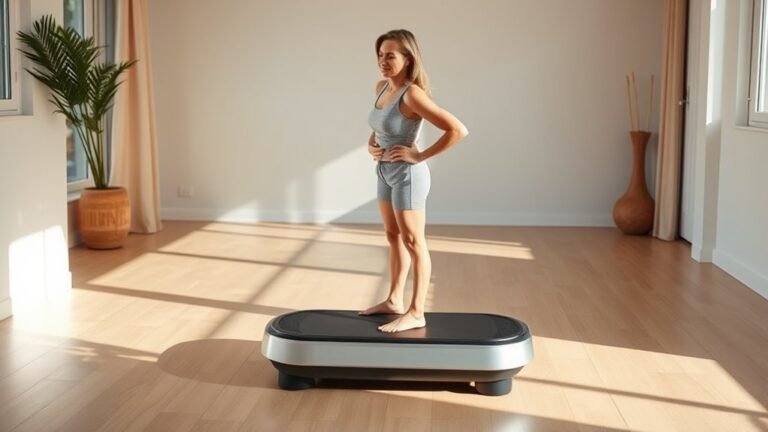
When positioning yourself, stand with a slight bend in your knees to reduce pressure on your spine. Avoid locking your joints or leaning too far forward or backward.
If standing feels uncomfortable, try sitting or placing your hands on the platform for balance. Always listen to your body; if you experience pain or discomfort, stop immediately and consult a healthcare professional before continuing.
Proper Posture and Positioning on the Vibration Plate
Although it might seem simple, maintaining proper posture and positioning on the vibration plate is essential to maximize benefits and prevent injury.
Proper posture on the vibration plate is key to enhancing results and avoiding injury during use.
When you stand or perform exercises on the plate, your body alignment impacts how vibrations affect your muscles and spine.
Here are three key tips to keep in mind:
- Keep your knees slightly bent to reduce shock to your lower back and joints.
- Engage your core muscles to support your spine and maintain stability.
- Distribute your weight evenly on both feet, avoiding leaning forward or backward.
Recommended Duration and Frequency of Use
Since overusing a vibration plate can lead to muscle fatigue or discomfort, you should limit your sessions to short, controlled intervals. Start with 5 to 10 minutes per session, focusing on maintaining proper posture throughout.
Gradually increase the duration only if your body feels comfortable and you don’t experience any pain. Aim to use the vibration plate about two to three times per week, allowing ample rest days for recovery.
Consistency matters more than duration; frequent brief sessions provide better results without overloading your back. Always listen to your body—if you notice increased discomfort or stiffness, reduce the time or frequency of use.
And hey, consulting a healthcare professional before starting is essential, especially if you have back problems. That way, you can tailor a safe schedule that suits your specific needs.
Exercises to Combine With Vibration Plate Therapy
When you use a vibration plate, combining it with targeted exercises can really boost your overall results and help improve muscle strength. To get the most benefits while protecting your back, try to focus on low-impact, controlled movements that engage your core and stabilize your spine.
Here are three exercises you might want to try:
- Standing Balance Holds – Stand on the plate with your knees slightly bent. Engage your core to maintain balance. This helps strengthen stabilizing muscles without putting strain on your body.
- Seated Core Twists – Sit on the plate with your feet flat on the ground. Slowly twist your torso from side to side. This activates your obliques and supports spinal mobility.
- Wall Squats – Lean against a wall with the plate under your feet, then slide down into a squat. It’s a great way to build leg strength while reducing pressure on your back.
Always remember to move mindfully and adjust the intensity based on how comfortable you feel and your condition.
Recognizing Warning Signs and When to Stop
If you start feeling sharp pain, dizziness, or excessive fatigue during your vibration plate session, it’s important to stop immediately and assess how you feel. Ignoring these warning signs can worsen your back problems.
Listen to your body and take breaks as needed.
| Warning Sign | Possible Cause | Action to Take |
|---|---|---|
| Sharp Pain | Nerve irritation or injury | Stop, rest, consult a doctor |
| Dizziness | Low blood pressure or fatigue | Pause, hydrate, sit down |
| Excessive Fatigue | Overexertion | Rest, reduce session length |
| Numbness/Tingling | Nerve compression | Stop, seek medical advice |
| Muscle Spasms | Overuse or strain | Stretch gently, rest |
Always prioritize safety over progress. Don’t push through pain or discomfort—your body knows best!
Maintenance and Care of Your Vibration Plate Device
Listening to your body during workouts helps prevent injury, but keeping your vibration plate in good condition also plays a big role in safety. Regular maintenance ensures the device functions properly, reducing the risk of malfunctions that could harm your back.
Listening to your body and maintaining your vibration plate are key to a safe, injury-free workout.
To care for your vibration plate, follow these steps:
- Clean the surface and controls regularly with a damp cloth. This helps avoid dust buildup and keeps the grip steady.
- Check all screws and bolts periodically. Tighten any that have loosened to keep the platform stable and safe.
- Inspect the power cord and connections for damage. If you see any frayed wires, replace them right away to prevent electrical hazards.
Frequently Asked Questions
Can Vibration Plates Help Improve Posture Over Time?
Yes, vibration plates can help improve your posture over time by strengthening your core and stabilizing muscles.
Just make sure you use them correctly and consistently to see lasting benefits. That way, you can avoid any strain or injury.
Are There Specific Brands Recommended for Back Problem Users?
You won’t find one miracle brand fixing your back overnight, but brands like LifePro and Confidence Fitness offer models designed with adjustable settings and sturdy support.
These features help you tailor vibrations safely and effectively for your back issues. It’s all about finding what works best for your specific needs.
How Does Vibration Therapy Compare to Traditional Physical Therapy?
Vibration therapy complements traditional physical therapy by improving muscle strength and circulation quickly. You’ll find it less time-consuming but shouldn’t replace conventional methods, especially for complex back issues or personalized rehabilitation plans.
It’s a great add-on to your routine, helping speed up recovery and boost overall muscle function. But remember, for more serious or specific conditions, sticking with traditional therapy is key.
Can Vibration Plates Be Used Alongside Back Braces or Supports?
Absolutely, you can combine vibration plates with back braces, but cautiously.
Consult your clinician to customize your care. Wearing supports while using the plate might stabilize your spine, so stay safe and steady throughout your sessions.
Is There an Optimal Time of Day for Vibration Plate Sessions?
You should use vibration plates when you feel most energetic, often in the morning or early afternoon.
Avoid late sessions that might disrupt sleep. Listen to your body and keep sessions brief to prevent strain.
Conclusion
Using vibration plates with back problems can feel risky, but with the right precautions, they’re safe and effective. You might worry about making your pain worse, but by consulting your healthcare professional, choosing proper settings, and maintaining good posture, you’ll minimize any risks.
Start slow, listen to your body, and combine exercises wisely. It’s important to ease into the routine to avoid overloading your back. Pay attention to how your body responds and adjust accordingly.
When used correctly, vibration plates can be a valuable part of your back care routine. They help improve muscle strength, increase circulation, and may reduce stiffness. So, if you approach vibration plate workouts carefully and stay in tune with your body, they can support your recovery and overall back health safely and effectively.