Do Exercise Bikes Work the Abs?
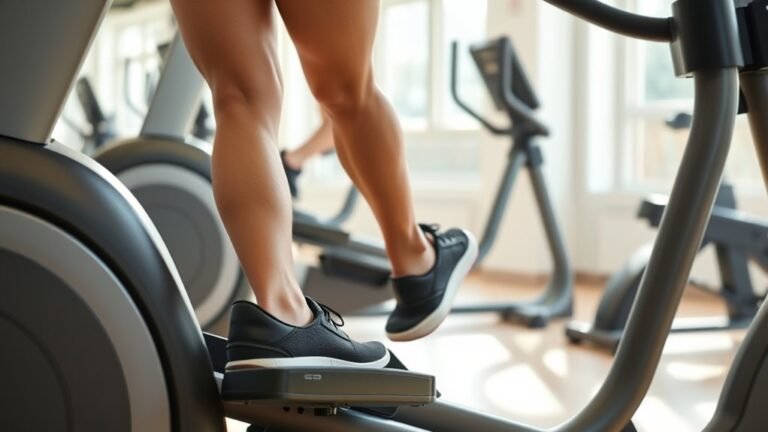
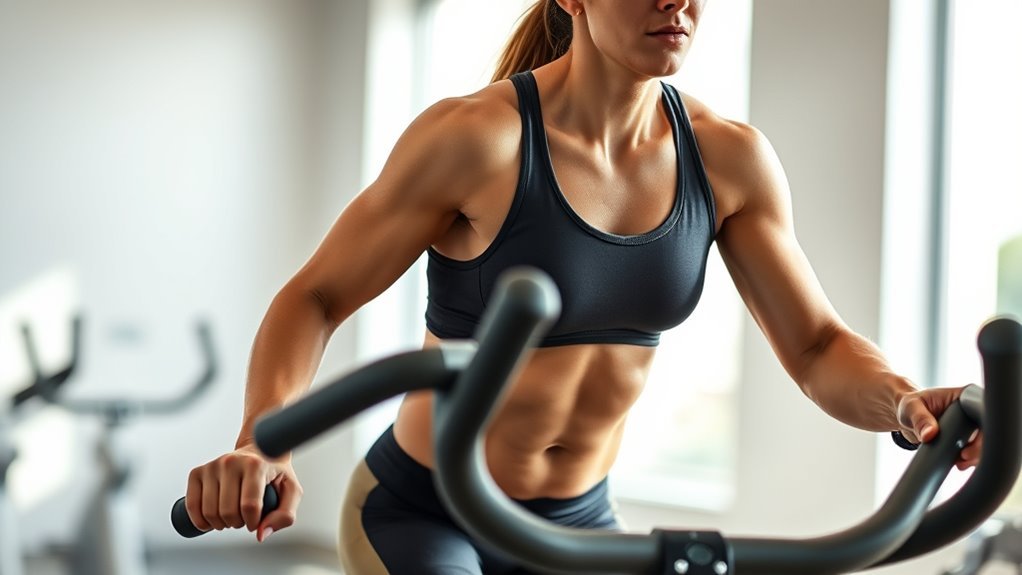
Yes, exercise bikes do work your abs by engaging your core muscles to stabilize your torso while pedaling. When you’re cycling, your core is constantly activated to keep you balanced and upright. This makes exercise bikes a great option for incorporating core workouts into your routine.
Your posture plays a big role—sitting upright and avoiding slouching improves core activation. The more you focus on maintaining good form, the more your abs and obliques get involved.
Plus, adding workout variations like standing climbs or sprints can really challenge your core muscles.
Although cycling activates your core differently than traditional ab exercises, it still helps build strength and endurance. Keep going, and you’ll discover different techniques and tips to maximize your core workout on the bike.
It’s a fun way to tone your abs while getting a great cardio session too!
Key Takeaways
- Exercise bikes engage core muscles, especially the abs and obliques, to stabilize your torso during pedaling and help maintain balance. So, you’re not just working your legs; your core gets involved too.
- Keeping proper posture and alignment on the bike really enhances core activation. It encourages your abdominal muscles to engage naturally as you ride.
- When you increase resistance, speed, or try standing climbs, your core muscles have to work harder. This means better abdominal engagement and a more effective workout.
- Cycling offers sustained, moderate core activation. It’s a nice complement to traditional ab exercises if you want to build overall core strength.
- Just watch out for common mistakes like slouching or passive pedaling—they can reduce how much your abs get worked. Being mindful and consciously bracing your core makes a big difference in effectiveness.
How Exercise Bikes Engage Your Core Muscles
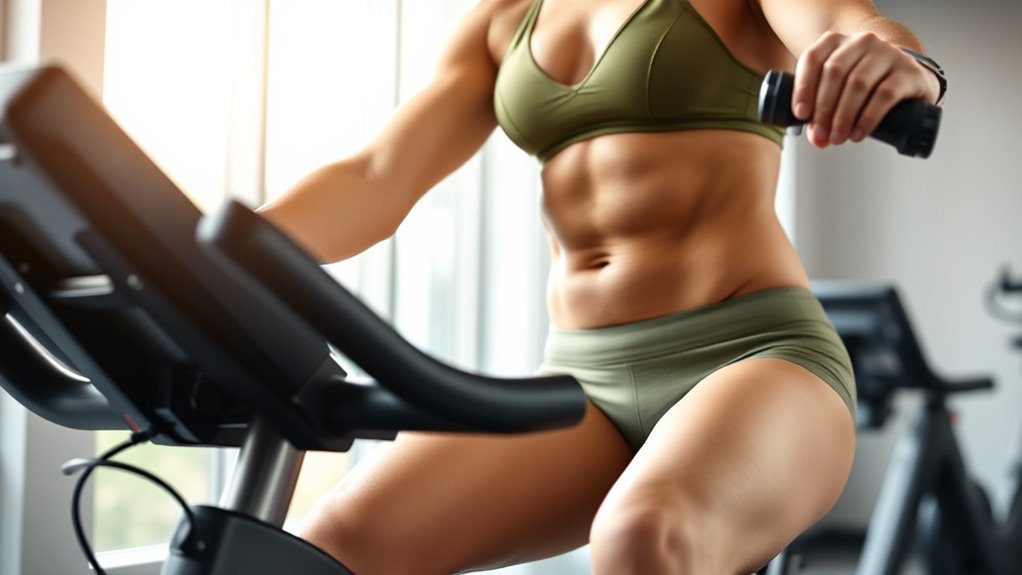
Although exercise bikes primarily target your lower body, they also engage your core muscles more than you might expect. When you pedal, your abdominal muscles stabilize your torso, helping you maintain balance and control.
This constant engagement strengthens your abs over time, even if it’s not as intense as direct ab exercises. Your obliques activate to support side-to-side movements, especially during faster or more vigorous cycling.
Additionally, your lower back muscles work alongside your abs to keep your spine aligned and reduce strain. By keeping your core engaged throughout your ride, you improve overall stability and endurance.
The Role of Posture in Core Activation
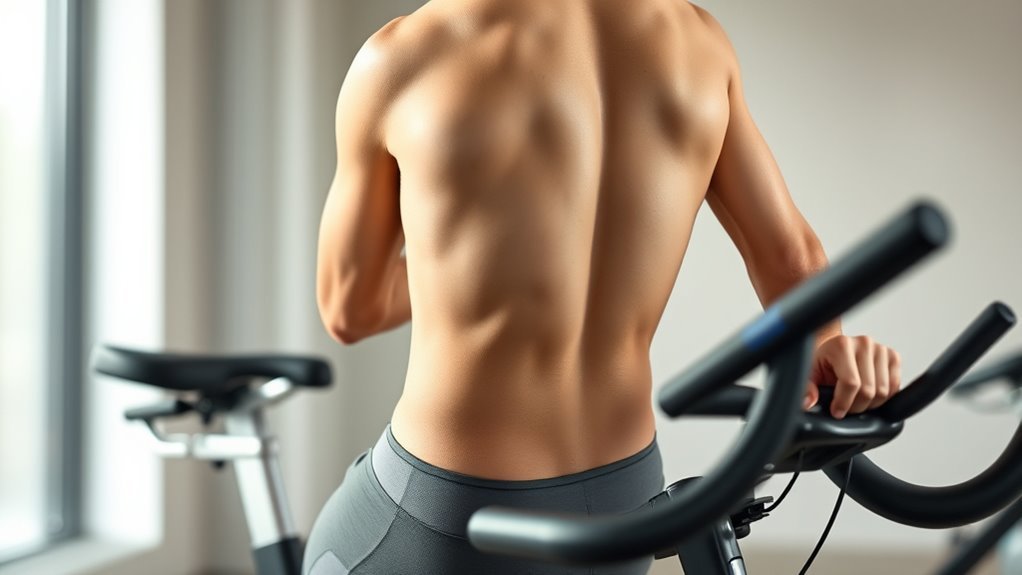
To get the most from your workout, you need to keep proper alignment on your exercise bike. Engaging your core muscles starts with maintaining good posture, which helps you avoid slouching and potential strain.
Focusing on how you sit can make a big difference in activating your abs effectively. So, try to stay upright and keep your shoulders relaxed. It really helps your core kick in better!
Proper Alignment Importance
When you maintain proper alignment on an exercise bike, your core muscles engage more effectively, enhancing both stability and workout efficiency. Keeping your spine neutral—neither slouched nor overly arched—ensures your abs and lower back work together to support your posture.
Align your shoulders directly over your hips and avoid leaning too far forward or backward. This balance reduces strain on your neck and lower back while maximizing core engagement.
Proper alignment also helps distribute your weight evenly through your sit bones, preventing unnecessary pressure and discomfort. By focusing on how you position your body, you create a solid foundation that supports every pedal stroke.
This makes your workout safer and more productive. Remember, alignment isn’t just about comfort—it’s key to activating your core muscles properly.
Engaging Core Muscles
Because your posture directly influences how your core muscles engage, maintaining proper form on an exercise bike is essential for maximizing abdominal activation. When you sit upright with your shoulders back and spine neutral, your core muscles naturally engage to stabilize your torso.
This active engagement helps you work your abs more effectively, rather than relying solely on your legs. Keep your abdominal muscles slightly contracted throughout your ride, as if bracing for a light punch.
This conscious effort activates deep core muscles like the transverse abdominis. Additionally, avoid gripping the handlebars too tightly; a relaxed upper body allows your core to do its job.
Avoiding Slouching Risks
Maintaining proper posture not only boosts your core engagement but also helps you steer clear of common risks tied to slouching. When you slouch on an exercise bike, you reduce the effectiveness of your abs and put unnecessary strain on your lower back.
Keeping your spine aligned activates your core muscles more effectively, making your workout safer and more efficient.
| Posture Tip | Benefit | Risk if Ignored |
|---|---|---|
| Sit upright | Better core activation | Weak core, back pain |
| Engage abs | Supports lower back | Muscle strain |
| Keep shoulders back | Prevents neck tension | Shoulder discomfort |
| Maintain neutral spine | Enhances balance | Poor form, injury risk |
Focus on posture to maximize your core workout and avoid slouching pitfalls. It really makes a difference!
Comparing Exercise Bikes to Traditional Ab Workouts
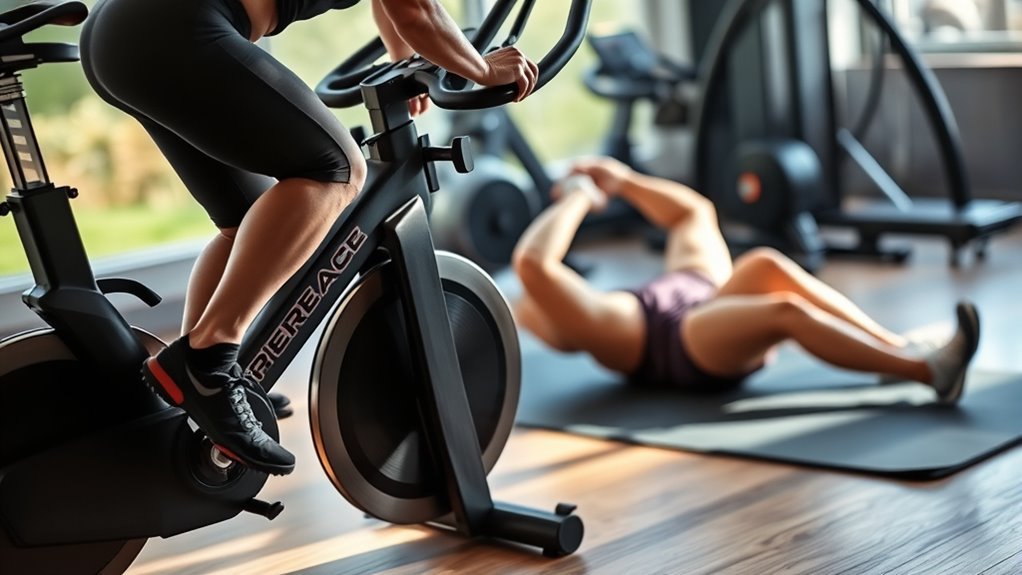
When you use an exercise bike, your core activates differently than during traditional ab workouts. You’ll notice variations in intensity levels and which muscles get engaged the most.
Understanding these differences can help you choose the best approach for your fitness goals. It’s all about what works best for your body and what keeps you motivated.
Core Activation Differences
Although exercise bikes primarily target your lower body, they also engage your core muscles differently than traditional ab workouts. When you pedal, your core stabilizes your body, especially during high resistance or standing cycling.
In contrast, traditional ab workouts isolate and directly target specific abdominal muscles through controlled movements.
Here’s a quick comparison of core activation between the two:
| Aspect | Exercise Bikes | Traditional Ab Workouts |
|---|---|---|
| Muscle Engagement | Core stabilizers (obliques, lower abs) | Targeted abs (rectus abdominis) |
| Movement Type | Dynamic stabilization | Controlled, isolated contractions |
| Posture Impact | Requires balance and posture control | Focused on abdominal muscle flexion |
| Muscle Endurance | Moderate, sustained during cycling | High, short bursts |
| Functional Benefit | Improves overall stability | Builds abdominal strength |
You’ll find both complement each other well when it comes to core fitness. So, mixing them up can really boost your results!
Intensity Levels Compared
Since exercise bikes involve continuous movement and endurance, they tend to provide a moderate but sustained intensity level, especially when you increase resistance or pedal faster. This steady cardiovascular challenge can burn calories and engage your core to some extent, but it rarely matches the intensity of focused ab workouts.
Traditional ab exercises—like planks, crunches, or leg raises—target your core muscles directly and often push them to fatigue in a shorter time. When you do those, you’re working your abs with higher intensity through controlled, isolated movements.
Muscle Engagement Variations
Even though exercise bikes engage your core to help stabilize your body during pedaling, they don’t activate your abdominal muscles as directly as traditional ab workouts do.
When you pedal, your abs work isometrically to maintain posture, but they rarely contract through a full range of motion like they do during crunches or leg raises.
Traditional ab exercises specifically target the rectus abdominis, obliques, and transverse abdominis by requiring deliberate flexion, rotation, or stabilization of the torso.
On the other hand, exercise bikes provide more of a secondary, supportive engagement.
If your goal is to build or define your abs, you’ll get better results by incorporating targeted ab workouts alongside cycling.
The bike helps overall fitness, but for abs, you need focused muscle activation.
The Impact of Intensity on Core Muscle Engagement
When you increase the intensity on an exercise bike, your core muscles have to work harder to maintain stability and balance. This means your abs engage more as you pedal faster or add resistance.
Here’s how intensity impacts your core:
Increasing exercise bike intensity boosts core muscle activation to stabilize and maintain balance effectively.
- Higher Resistance: The harder you push against the pedals, the more your core stabilizes your torso.
- Increased Speed: Pedaling faster challenges your balance, activating your abdominal muscles to keep you steady.
- Standing vs. Sitting: Standing climbs amplify core engagement as you shift weight and resist wobbling.
Variations of Exercise Bike Workouts for Core Strength
To build core strength effectively on an exercise bike, you’ll want to vary your workouts beyond steady pedaling. Incorporate intervals, standing climbs, and core-focused postures to engage your abs more intensely.
Mixing these variations challenges your muscles in different ways, improving overall core stability.
| Workout Variation | Core Focus |
|---|---|
| Interval Sprints | Engages deep core during bursts |
| Standing Climbs | Activates obliques and lower abs |
| Seated High Resistance | Requires strong core control |
| One-Leg Pedaling | Enhances core balance and stability |
Try combining these variations in your routine to keep your core engaged and avoid workout plateaus.
This strategic approach will help you maximize the abs workout potential of your exercise bike sessions.
Benefits of a Strong Core Beyond Aesthetics
Although a strong core often gets attention for its impact on appearance, its benefits go far beyond aesthetics.
When you build core strength, you’re enhancing your overall health and functionality. Here are three key benefits you’ll notice:
- Improved Posture: A strong core supports your spine, helping you maintain better posture and reducing the risk of back pain.
- Enhanced Balance and Stability: Your core stabilizes your body during movement, making everyday tasks and workouts safer and more efficient.
- Increased Athletic Performance: Whether cycling or doing other activities, a solid core provides the power and endurance you need to perform at your best.
Focusing on your core doesn’t just sculpt your abs—it transforms how your body functions daily. It’s pretty amazing how much of a difference it can make!
Common Mistakes That Limit Core Activation on Exercise Bikes
Building core strength plays a big role in how effectively you use an exercise bike, but some common mistakes can hold you back from fully engaging those muscles.
One major error is slouching or leaning too heavily on the handlebars. This shifts the effort away from your abs and onto your arms and shoulders.
Leaning heavily on handlebars shifts effort from your abs to arms and shoulders, reducing core engagement.
Another is pedaling with a passive core—if you don’t consciously brace your midsection, your abs won’t activate.
Also, staying too relaxed in your upper body reduces core engagement. Avoid locking your hips or sitting too rigidly.
Instead, maintain a slight forward lean with your spine neutral. This encourages your core to stabilize your body throughout the workout.
Incorporating Core-Focused Exercises With Cycling Sessions
When you combine core-focused exercises with your cycling sessions, you’ll see faster improvements in stability and overall strength. To maximize your ab engagement, try adding these moves before or after hopping on your exercise bike:
- Plank variations – Hold a forearm plank or try side planks to target your entire core.
- Bicycle crunches – Mimic the cycling motion while lying down to engage your obliques effectively.
- Russian twists – Sit with your feet elevated and twist your torso side to side for rotational core strength.
These exercises complement your cycling by activating muscles the bike alone can’t fully engage. Try to incorporate them 3 to 4 times per week for balanced results.
This approach makes sure your abs get a thorough workout, which improves your posture and power on the bike. Give it a go and notice the difference!
Frequently Asked Questions
Can Exercise Bikes Help With Lower Back Pain Relief?
Yes, exercise bikes can help relieve lower back pain by strengthening your core and improving posture.
Just make sure you maintain proper form and start slowly to avoid straining your back muscles during your workouts.
Taking it easy at first really makes a difference, and before you know it, you might notice less discomfort in your lower back.
How Long Should I Ride an Exercise Bike for Weight Loss?
Think of riding your exercise bike like a marathon, not a sprint—you’ll want to aim for at least 30-60 minutes most days.
Consistency and intensity will torch calories, helping you shed weight effectively over time.
Just keep at it regularly, and you’ll start seeing results!
Are Exercise Bikes Suitable for People With Knee Problems?
Yes, exercise bikes are great if you have knee problems because they provide low-impact cardio.
Just adjust the seat height and resistance to avoid strain. Always check with your doctor before starting any new workout routine.
What Are the Best Exercise Bike Brands for Home Use?
You’ll love brands like Peloton, NordicTrack, and Schwinn for home use. Did you know Peloton’s user base grew 140% in 2020?
These bikes offer durability, interactive features, and smooth rides to keep you motivated. Plus, they’re perfect for all fitness levels.
Can Exercise Bikes Improve Cardiovascular Health Effectively?
Yes, exercise bikes can effectively improve your cardiovascular health by boosting heart rate and endurance. Consistent cycling strengthens your heart, lungs, and circulation.
This helps you build stamina and reduce risks of heart-related issues over time. So, hopping on an exercise bike regularly is a great way to keep your heart in good shape!
Conclusion
You might be surprised to learn that engaging your core properly on an exercise bike can activate up to 30% of your abdominal muscles. This makes it a valuable part of your workout routine.
By maintaining good posture and increasing intensity, you’ll get more from each session than just leg strength. It’s not just about pedaling hard; it’s about pedaling smart.
Remember, combining bike workouts with targeted core exercises guarantees balanced development. So, don’t just pedal—focus on your core to maximize your results.
Incorporating the exercise bike into your fitness plan can definitely help work the abs when done correctly. Pairing it with specific core workouts enhances muscle activation and overall strength. So, if you’re wondering, “Do exercise bikes work the abs?” the answer is yes—when you engage your core and use proper form. This approach makes your workout more effective and helps you achieve a stronger, more toned midsection.