How Can Vibration Plates Cause Blood Clots and How to Prevent Them?
Vibration plates cause rapid muscle contractions that boost circulation, which is great for your overall health. However, standing too long or using high intensities on these plates can actually disrupt blood flow.
This disruption can cause blood to pool, increasing the risk of blood clots.
To stay safe, limit your sessions to 10–15 minutes and take regular breaks. Avoid locking your knees while using the vibration plate, and make sure to stay hydrated throughout your workout.
If you have any circulatory issues, it’s a good idea to consult your doctor before starting vibration plate exercises.
Also, keep an eye out for symptoms like swelling or pain, as these can help catch potential problems early.
Keep these tips in mind and explore more ways to safely use vibration plates for the best results.
Key Takeaways
- Vibration plates can disrupt blood flow by causing blood pooling and vessel constriction, increasing blood clot risks, especially in those with circulatory issues.
- Prolonged or static standing on vibration plates may reduce venous return, promoting clot formation in the legs.
- Limiting sessions to 10–15 minutes with breaks and proper posture helps maintain healthy circulation during vibration plate use.
- Individuals with preexisting conditions like DVT or varicose veins should consult healthcare providers before using vibration plates.
- Monitoring for symptoms such as swelling, redness, or pain and stopping use immediately prevents clot complications.
Understanding Blood Clots and Their Causes
Although blood clots play a crucial role in stopping bleeding, they can become dangerous when they form inside your veins without injury. When a clot develops in a vein, it can block blood flow, leading to complications like deep vein thrombosis (DVT).
You’re at higher risk if you stay immobile for long periods, have certain medical conditions, or experience injury to your veins. Factors like obesity, smoking, and age also increase your chances.
Your body usually balances clotting and dissolving clots, but sometimes this system malfunctions. Understanding these causes helps you recognize risk factors and take preventive measures.
How Vibration Plates Work on the Body
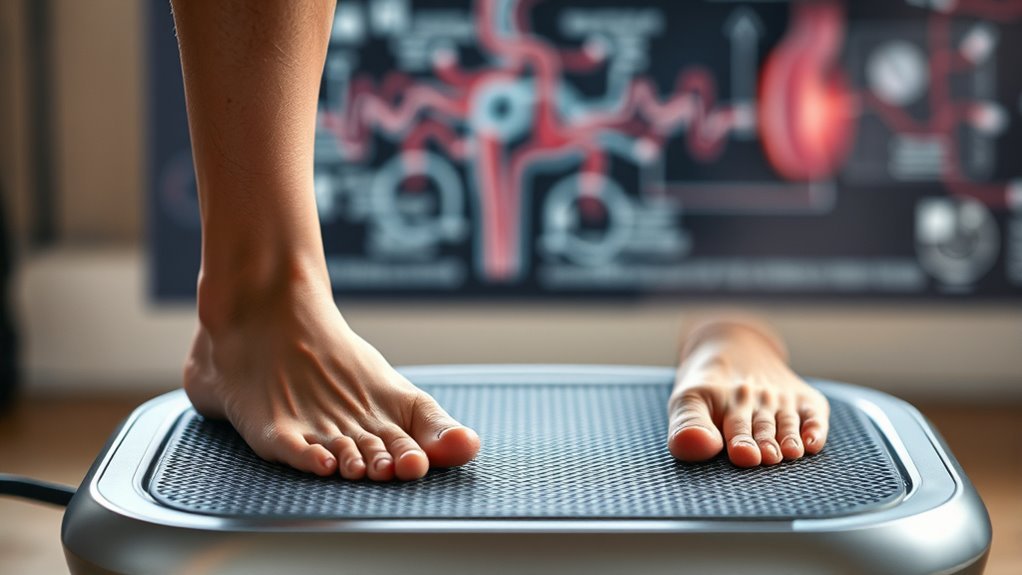
When you stand on a vibration plate, the rapid movements cause your muscles to contract and relax repeatedly, boosting muscle stimulation. This action helps improve your blood flow by enhancing circulation throughout your body.
Understanding these effects is key to seeing how vibration plates might influence blood clot risks. It’s pretty interesting how something as simple as vibration can have such an impact on your body’s internal systems.
Muscle Stimulation Mechanism
Since vibration plates deliver rapid oscillations to your body, they stimulate your muscles to contract reflexively. This unique muscle stimulation mechanism engages fibers more intensely than usual movements.
When standing on the plate, the vibrations cause your muscles to activate involuntarily, leading to enhanced muscle tone as fibers contract and relax repeatedly. You also get increased muscle strength through these rapid reflexive responses. Plus, it improves neuromuscular coordination by training your nervous system to react more efficiently.
These contractions mimic natural muscle activity but happen faster and more frequently. This stimulation helps you build muscle and improve stability without heavy strain.
However, it’s important to understand this mechanism to use vibration plates safely and effectively, especially if you have underlying health concerns. Next, we’ll explore how these muscle actions impact your circulatory system.
Circulatory System Effects
The rapid muscle contractions caused by vibration plates don’t just build strength—they also boost your blood flow. As your muscles contract and relax quickly, your veins experience increased pressure, which helps push blood back toward your heart.
This enhanced circulation can reduce blood pooling and lower the risk of clot formation. However, if you have existing circulatory issues or remain immobile after using the plate, blood flow might not improve sufficiently, potentially raising clot risks.
To keep your circulatory system healthy, stay active before and after sessions, and avoid prolonged sitting. Hydrating well also supports optimal blood viscosity.
Potential Risks of Vibration Plates Related to Blood Clots
You need to be cautious about how vibration plates might affect your blood flow, especially if you use them for long periods.
If you have preexisting health conditions, these vibrations could increase your risk of blood clots.
Understanding these factors helps you use vibration plates safely.
Blood Flow Disruption
Although vibration plates can boost circulation for many users, they might also disrupt blood flow in some cases, increasing the risk of blood clots. When blood flow is uneven or slowed, it can pool in veins, creating an environment where clots form more easily.
You should be aware of factors that contribute to this disruption during vibration plate use:
- Prolonged standing or static positions on the plate, which can reduce venous return.
- Excessive vibration intensity, potentially causing blood vessel constriction.
- Pre-existing circulatory issues that make you more sensitive to changes in blood flow.
Plate Usage Duration
Understanding how long you spend on a vibration plate plays a key role in managing the risk of blood clots. Prolonged sessions can lead to decreased circulation because your muscles aren’t moving enough to promote healthy blood flow.
Staying on the plate for too long may cause blood to pool, increasing clot risk. To minimize this, limit each session to recommended durations, typically around 10–15 minutes. Also, avoid long, continuous use without breaks to keep your blood circulating properly.
If you feel discomfort, numbness, or unusual sensations, stop immediately and rest. By controlling your session length and listening to your body, you help maintain healthy circulation and reduce the chances of clot formation while benefiting safely from vibration plate workouts.
Preexisting Health Conditions
Since certain health conditions affect blood flow and clotting, using vibration plates can pose extra risks if you have preexisting issues like deep vein thrombosis, varicose veins, or cardiovascular problems. These conditions already compromise your circulatory system, making your blood more prone to clotting.
When you use a vibration plate, the increased pressure and movement might aggravate these risks. Before starting, consider how your health might interact with vibration therapy:
- Deep vein thrombosis (DVT) history increases clot risk due to disrupted blood flow.
- Varicose veins weaken vein walls, heightening vulnerability to injury from vibrations.
- Cardiovascular conditions may cause irregular blood flow or clot formation.
Always consult your healthcare provider before using vibration plates if you have these or similar health concerns. It’s better to be safe and get professional advice first!
Who Is Most at Risk When Using Vibration Plates?
If you have a history of blood clots or certain medical conditions, using vibration plates could increase your risk of complications. People with clotting disorders, such as deep vein thrombosis (DVT) or pulmonary embolism, should be especially cautious.
Those with clotting disorders like DVT or pulmonary embolism should use vibration plates cautiously due to increased risk.
Those with cardiovascular issues, varicose veins, or limited mobility may also face higher risks. Pregnant women and individuals on blood-thinning medications need to consult a healthcare provider before use.
Even if you don’t have these conditions, prolonged immobility or dehydration during vibration plate sessions can elevate clot risk. To stay safe, assess your health status honestly and discuss vibration plate use with your doctor.
Being proactive helps you enjoy benefits while minimizing the chance of blood clots or related problems.
Symptoms to Watch For During and After Vibration Plate Use
Knowing who is most at risk helps you stay alert to warning signs while using vibration plates. During and after your sessions, watch for symptoms that might indicate blood clots or circulation issues.
If you notice any of these signs, stop using the machine and seek medical advice promptly: swelling, warmth, or redness in your legs or arms. Sudden, unexplained pain in your limbs or chest is another red flag.
Also, be mindful of shortness of breath, dizziness, or a rapid heartbeat. These symptoms can signal potentially serious problems, so don’t ignore them.
Early detection is key to preventing complications. By paying close attention to how your body feels during and after vibration plate use, you can protect your health and enjoy your workouts safely.
Best Practices for Safe Vibration Plate Workouts
To minimize the risk of blood clots and other complications, you should follow specific safety guidelines when using vibration plates. Start with short sessions, around 5 to 10 minutes, and gradually increase as your body adapts.
Always maintain proper posture and avoid locking your knees to promote healthy blood flow. Wear comfortable, non-restrictive clothing and stay hydrated before and after workouts.
Avoid using the vibration plate if you feel dizzy, experience pain, or notice swelling. Incorporate regular breaks and combine vibration training with light aerobic exercises to improve circulation.
Finally, listen to your body closely—if anything feels off, stop immediately and consult a healthcare professional. These best practices help you safely enjoy the benefits of vibration plates while reducing your risk of blood clots.
Medical Conditions That Require Caution With Vibration Plates
While following safety guidelines helps reduce risks, certain medical conditions call for extra caution when using vibration plates.
If you have any of these issues, consult your healthcare provider before starting:
- Circulatory problems: Conditions like deep vein thrombosis (DVT) or varicose veins increase the risk of blood clots when exposed to vibration.
- Heart conditions: Arrhythmias or heart disease may worsen with the increased cardiovascular demands vibration plates create.
- Joint or bone issues: Osteoporosis or recent fractures can be aggravated by the mechanical stress from vibration, leading to injury.
Being aware of these conditions helps you avoid complications. Always prioritize your health and seek professional advice before incorporating vibration plates into your routine if you fall into any of these categories.
Alternative Exercises to Reduce Blood Clot Risk
If you want to minimize the risk of blood clots, choosing low-impact exercises can be a safer alternative to vibration plates. Walking is simple yet effective, improving circulation without putting excessive strain on your body.
Swimming provides gentle resistance and boosts blood flow, making it ideal if you have joint issues. Cycling, especially on a stationary bike, helps maintain leg movement and prevents blood pooling.
Yoga and stretching exercises enhance flexibility and promote steady circulation, reducing clot risk. Remember to move regularly throughout the day, especially if you sit for long periods.
Always consult your healthcare provider before starting a new exercise routine, especially if you have underlying health conditions. These alternatives help keep your blood flowing smoothly while lowering clot risks safely.
Frequently Asked Questions
Can Vibration Plates Improve Circulation to Prevent Clots?
Yes, vibration plates can improve circulation by stimulating blood flow in your muscles.
Just make sure you use them properly and consult a doctor if you have clotting risks.
That way, you can prevent any potential complications safely.
How Long Should One Rest Between Vibration Plate Sessions?
You should rest at least 24 hours between vibration plate sessions to allow your body to recover and reduce clot risk.
Listen to your body, stay hydrated, and consult a doctor if you have clotting concerns or health issues.
Taking it easy between sessions helps you get the most out of your workouts without overdoing it.
Are There Specific Vibration Frequencies Safer for Blood Clot Prevention?
Yes, you should stick to lower frequencies around 20-30 Hz, as higher vibrations might increase clot risk.
Always consult your doctor before starting, and avoid prolonged sessions to keep blood flowing safely during workouts.
It’s better to be cautious and keep the vibrations gentle to help prevent any issues with blood clots.
Can Wearing Compression Socks During Use Reduce Clot Risk?
When it comes to clot risk, wearing compression socks during vibration plate use can help keep blood flowing smoothly. They’re not a silver bullet, but they sure do reduce chances and keep you safer.
Think of them like a little boost for your circulation. So, while they don’t eliminate the risk entirely, they definitely make a positive difference.
Do Vibration Plates Affect Blood Thinner Medications?
Yes, vibration plates might influence blood thinner medications by increasing circulation, which could alter medication effectiveness.
You should consult your doctor before using them to guarantee safe use and avoid potential complications or interactions with your treatment.
Conclusion
Using vibration plates is like steering a river—you want the current to energize, not overwhelm you. While these machines can boost your fitness, they might stir up hidden risks like blood clots if you’re not careful.
Stay aware of your body’s signals, follow safe practices, and know when to pause. If you feel unusual pain, swelling, or discomfort, it’s important to stop and consult a healthcare professional.
By respecting your limits and health, you’ll keep your journey smooth, flowing, and free from dangerous blockages. Remember, preventing blood clots while using vibration plates involves moderation, proper technique, and listening to your body. Taking these steps helps you enjoy the benefits safely without increasing your risk.