Does the Elliptical Machine Burn Belly Fat?
Yes, the elliptical machine can help you burn belly fat, but it’s important to know that it promotes overall fat loss rather than spot reduction. Using the elliptical regularly, especially with higher resistance and interval training, boosts your calorie burn.
This process engages multiple muscle groups, helping you shed fat from all over your body, including your midsection.
Pairing your elliptical workouts with proper nutrition and core exercises really speeds up the results. So, keep at it! Stick with consistent workouts and healthy habits to maximize your fat-burning efforts and see real progress.
Key Takeaways
- The elliptical machine burns calories and reduces overall body fat, which includes belly fat as part of systemic fat loss.
- It provides a low-impact, full-body workout engaging legs, core, and arms, enhancing fat burn and muscle tone.
- Spot reduction of belly fat is a myth; fat loss occurs throughout the body with consistent cardio like elliptical use.
- Increasing resistance and using interval training on the elliptical maximizes calorie burn and accelerates belly fat reduction.
- Combining elliptical workouts with core-strengthening exercises boosts metabolic rate and supports faster belly fat loss.
How the Elliptical Machine Works
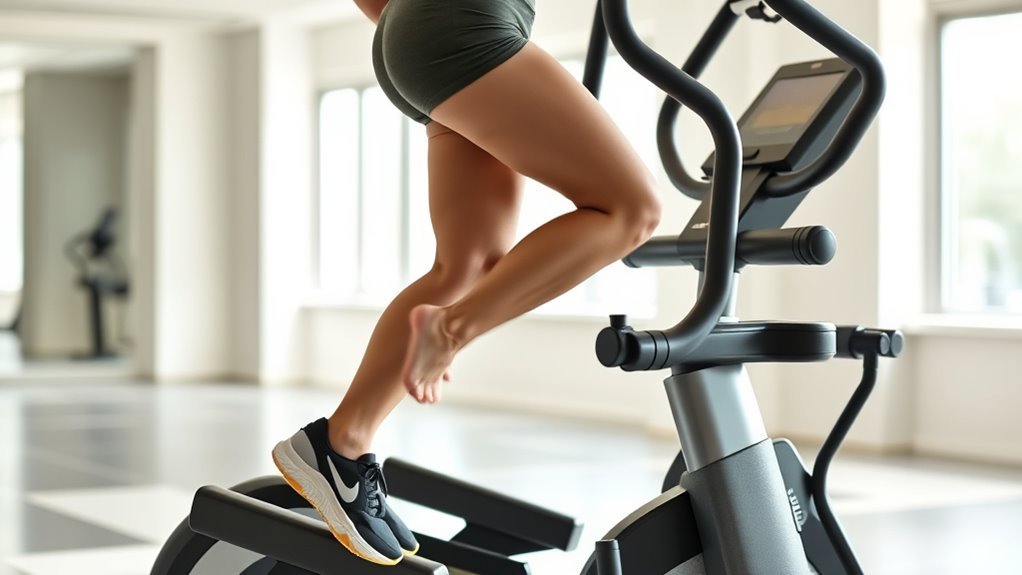
Although it may look simple, the elliptical machine offers a full-body workout by combining arm and leg movements in a smooth, low-impact motion.
The elliptical machine delivers a full-body workout through smooth, low-impact arm and leg movements.
When you step on, you push the pedals in an elliptical path, engaging your legs, glutes, and core. At the same time, the handles move back and forth, activating your arms and shoulders.
This simultaneous movement boosts your heart rate, improving cardiovascular fitness. You can adjust resistance and incline to increase intensity, making your muscles work harder.
Because it’s low-impact, you reduce joint strain while still burning calories effectively. Using the elliptical regularly helps you build endurance and strength, making it a versatile choice for your overall fitness routine.
Understanding Belly Fat and Its Causes

When you gain weight, belly fat often shows up first because your body stores excess calories there. This fat isn’t just under your skin; it also surrounds your organs, which can affect your health.
Several factors contribute to belly fat, including diet, stress, lack of exercise, and genetics. Understanding these causes helps you take control of your health.
| Cause | How It Affects Belly Fat |
|---|---|
| Poor Diet | Excess calories lead to fat gain |
| Stress | Increases cortisol, promoting fat |
| Inactivity | Reduces calorie burn, fat accumulates |
The Science Behind Spot Reduction Myths
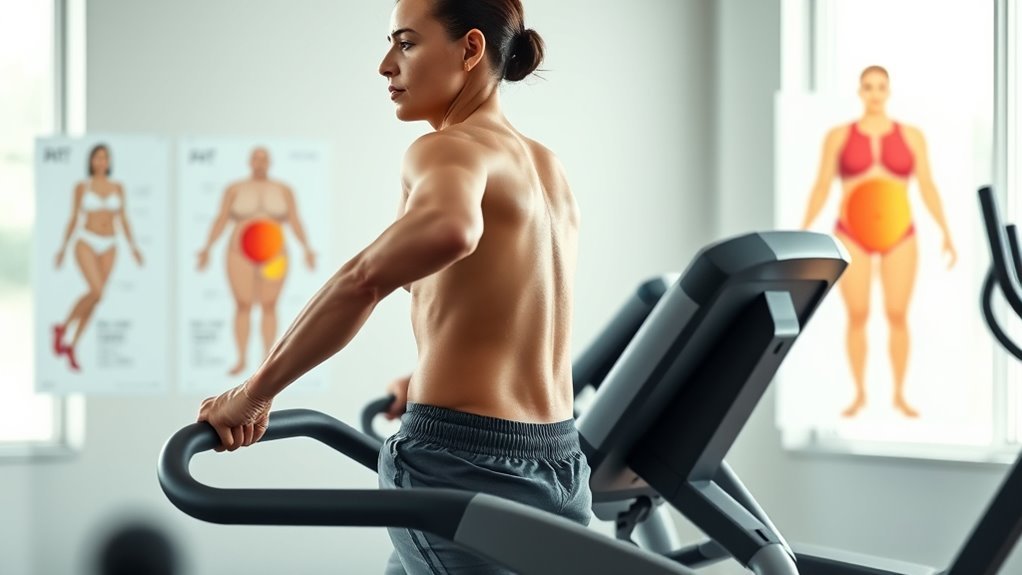
You might think targeting your belly with specific exercises burns fat only there, but that’s not how fat loss works.
Your body uses energy from fat stores all over, not just the muscles you’re working.
Understanding how fat loss mechanisms function can help you set realistic goals and avoid common spot reduction myths.
Understanding Spot Reduction
Even if you focus all your effort on exercising a specific body part, your body won’t burn fat from that area alone. This is because fat loss happens systemically, not locally. When you exercise, your body draws energy from fat stores all over, not just the muscles you’re working.
Spot reduction—the idea that you can target fat loss in one area—is a common myth. Your genetics and overall body composition influence where you lose fat first. So, doing endless crunches or using the elliptical with the hope of trimming belly fat won’t give you spot-specific results.
Instead, you need to focus on overall fat loss through full-body workouts and proper nutrition. That’s how you’ll see changes in stubborn areas like the belly.
Fat Loss Mechanisms
Although many believe they can target fat loss in specific areas, your body actually burns fat through complex metabolic processes that involve the entire system.
When you exercise, your muscles demand energy, prompting your body to break down fat stores from all over, not just the belly.
This process is regulated by hormones and enzymes that mobilize fat into the bloodstream to be used as fuel.
| Process | Description |
|---|---|
| Lipolysis | Breakdown of fat cells into fatty acids |
| Hormonal Regulation | Insulin, adrenaline affect fat release |
| Energy Demand | Muscles use fatty acids for energy |
| Fat Oxidation | Burning fatty acids to produce energy |
Cardio Exercise and Overall Fat Loss
Since targeting belly fat directly is challenging, focusing on cardio exercise like using an elliptical machine helps you burn calories and reduce overall body fat. When you engage in regular cardio workouts, your body taps into stored fat for energy, which leads to fat loss throughout your body, including the abdominal area.
Consistency is key; the more frequently you use the elliptical, the more calories you burn, contributing to a calorie deficit essential for fat loss. While cardio alone won’t specifically trim your waist, it plays a vital role in overall fat reduction.
Combining elliptical workouts with a balanced diet and strength training enhances your results. So, prioritize steady cardio sessions to support your goal of losing belly fat as part of whole-body fat loss.
Benefits of Using an Elliptical for Weight Management
Using an elliptical machine offers several advantages that make it an effective tool for managing your weight. It provides a full-body workout, engaging both your upper and lower muscles, which helps increase calorie burn.
The low-impact nature means you can work out longer and more frequently without stressing your joints, reducing the risk of injury. You can easily adjust resistance and incline to keep challenging yourself, preventing workout plateaus.
Plus, the machine’s smooth motion supports consistent cardiovascular exercise, improving your metabolism and promoting fat loss. Regular elliptical sessions boost endurance and stamina, making it easier to stay active overall.
Combining Elliptical Workouts With Nutrition
To maximize the fat-burning benefits of your elliptical workouts, you’ll need to pay close attention to your nutrition as well. What you eat fuels your exercise and affects how effectively your body burns fat, especially around your belly.
Focus on balanced meals with lean proteins, healthy fats, and complex carbs to keep your energy steady and metabolism active. Avoid sugary snacks that can spike insulin and promote fat storage.
| Nutrition Tips | Why It Helps |
|---|---|
| Eat protein with every meal | Supports muscle repair and keeps you full longer |
| Choose whole grains | Provides sustained energy |
| Hydrate adequately | Maintains metabolism and workout performance |
Tips for Maximizing Fat Burn on the Elliptical
Although the elliptical provides an excellent low-impact workout, you can increase fat burn by adjusting your routine strategically. Start by incorporating intervals—alternate between high intensity and moderate pace to boost calorie burn.
Use the machine’s resistance settings to challenge your muscles; higher resistance means more effort and fat burned. Don’t forget to engage your core by maintaining good posture and pulling the handles to work your upper body.
Increase resistance and engage your core to boost effort and maximize fat burn on the elliptical.
Aim for sessions lasting 30 to 45 minutes, ensuring you stay in your target heart rate zone for *ideal* fat loss. *Finally*, mix up your workouts regularly to prevent plateaus and keep your body adapting.
These tweaks help you maximize fat burning while enjoying your elliptical sessions. Give them a try and see how much more effective your workouts can become!
Alternative Exercises to Target Belly Fat
If you want to target belly fat more effectively, try incorporating high-intensity interval training into your routine. You’ll also benefit from core-strengthening workouts that build muscle and boost metabolism.
These alternatives can complement your elliptical sessions and help you see faster results. Give them a shot and notice the difference!
High-Intensity Interval Training
When you want to burn belly fat efficiently, high-intensity interval training (HIIT) offers a powerful alternative to traditional elliptical workouts. HIIT involves short bursts of intense exercise followed by brief recovery periods, which revs up your metabolism and helps you burn more calories in less time.
You can mix exercises like sprinting, jumping jacks, or burpees to keep your heart rate elevated. This approach not only targets fat but also improves cardiovascular fitness and muscle tone.
Unlike steady-state cardio, HIIT keeps your body working hard even after you finish, thanks to the afterburn effect. If you want faster, more effective belly fat reduction, incorporating HIIT sessions two to three times a week can make a significant difference.
Core-Strengthening Workouts
Since burning belly fat requires more than just cardio, incorporating core-strengthening workouts can help you build muscle and improve your overall posture. Exercises like planks, Russian twists, and bicycle crunches directly target your abdominal muscles, enhancing muscle tone and stability.
When you strengthen your core, you increase your metabolism because muscles burn more calories at rest than fat. Plus, a strong core supports your body during elliptical sessions, making your workouts more effective and reducing injury risk.
Try adding core exercises two to three times a week alongside your elliptical routine. This combination accelerates fat loss and sculpts your midsection more efficiently.
Frequently Asked Questions
Can Elliptical Machines Improve Cardiovascular Endurance?
Yes, elliptical machines can improve your cardiovascular endurance. By consistently using them, you’ll strengthen your heart and lungs, boost stamina, and enhance overall fitness.
Just keep a steady pace and challenge yourself regularly for the best results. It’s all about staying consistent and pushing a little bit each time. You’ve got this!
How Often Should I Clean My Elliptical Machine?
Oh, who needs a clean elliptical, right? You should clean your machine after every few workouts and give it a deep clean monthly.
Sweat and dust buildup can mess with its performance and your workout experience. Taking a little time to wipe it down regularly really helps keep things running smoothly.
Are Elliptical Workouts Safe for People With Joint Issues?
Yes, elliptical workouts are generally safe for people with joint issues because they provide low-impact exercise.
Just make sure you start slowly, use proper form, and consult your doctor before beginning any new workout routine. It’s always better to be cautious, right?
What Is the Average Calorie Burn per Elliptical Session?
You’ll burn about 300 to 600 calories per 30-minute elliptical session, depending on intensity and your weight.
Keep pushing yourself, and you’ll see improvements in overall fitness and calorie burn over time. It’s all about staying consistent and challenging yourself a bit more each time.
Can I Use an Elliptical Machine During Pregnancy?
You won’t be moonwalking on the elliptical like it’s a zero-gravity dance floor during pregnancy.
But yes, you can use it—just keep it light, listen to your body, and check with your doctor first.
Conclusion
While the elliptical machine helps burn calories and supports overall fat loss, it won’t target belly fat specifically—spot reduction is a myth. In fact, studies show that you need to create a calorie deficit of about 3,500 calories to lose one pound of fat.
By combining regular elliptical workouts with a healthy diet, you can steadily reduce body fat, including around your belly. Keep consistent, and you’ll see results over time.
So, does the elliptical machine burn belly fat? Not directly, but it’s a fantastic tool for overall fat loss when paired with good nutrition. Stick with it, and the belly fat will start to shrink as your body fat decreases. Keep moving and eating well—your progress will show!