What Is the Standard Heavy Gym Barbell Weight?
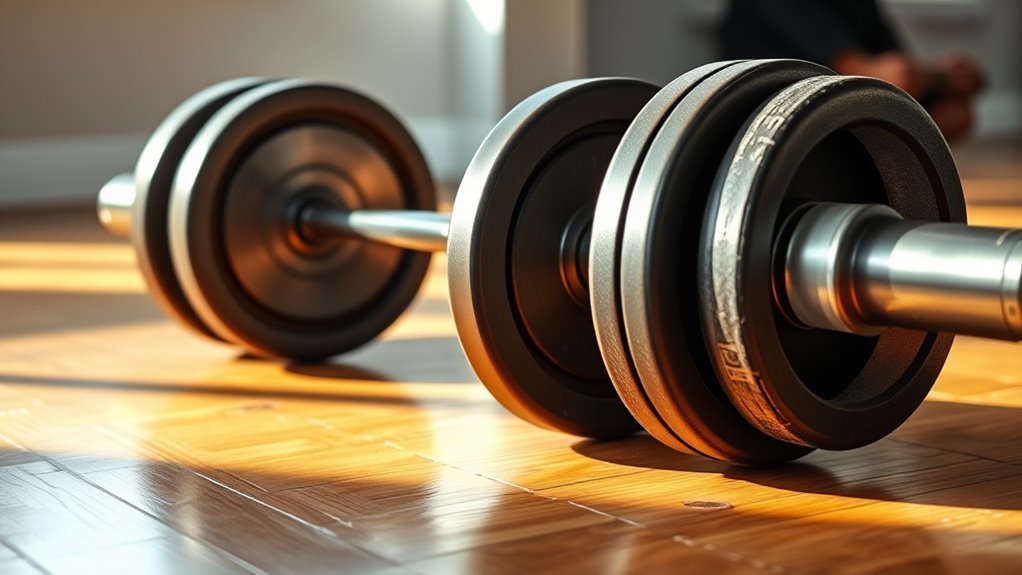
When you lift with a standard heavy gym barbell, you’re usually handling a 20-kilogram (44-pound) Olympic bar—the go-to choice for strength training. This bar is about 7.2 feet long with a 28 mm diameter, designed for durability and smooth rotation during lifts.
Women’s bars weigh less and are slimmer for easier grip.
Choosing the right barbell weight helps you stay safe and make steady progress. Keep exploring to understand how different barbells and materials impact your workout.
Key Takeaways
- The standard heavy gym barbell, often an Olympic barbell, typically weighs 20 kg (44 lbs) for men.
- Men’s Olympic barbells are about 7.2 feet long with 28 mm sleeve diameters for standard heavy lifting.
- Women’s Olympic barbells weigh around 15 kg (33 lbs), and they are shorter and slimmer for easier handling.
- Powerlifting barbells also weigh 20 kg but have a thicker diameter (around 29 mm) for a firmer grip.
- Specialty bars vary in weight from 15 to 55 lbs, but standard heavy barbells usually mean the 20 kg Olympic bar.
Overview of Standard Barbell Types
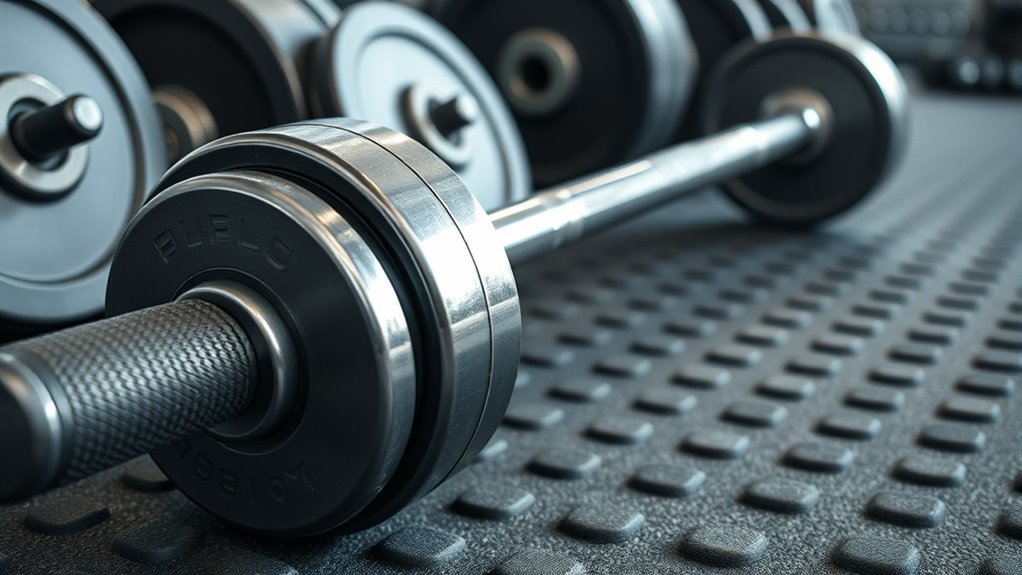
What makes a barbell “standard” can vary depending on your gym or workout goals. Typically, a standard barbell refers to a straight bar with a fixed diameter of about 1 inch (25mm) on the sleeves where you load plates. These bars usually weigh around 15 to 25 pounds, lighter than Olympic barbells.
You’ll find two main types: fixed-weight and adjustable barbells. Fixed-weight bars come pre-loaded with plates welded on, perfect if you want simplicity. Adjustable bars let you add or remove weight plates for flexibility in training.
Their shorter length and smaller sleeve diameter make standard barbells ideal for casual lifters or home gyms. Understanding these differences helps you pick the right barbell to match your strength routine.
Olympic Barbell Weight Specifications

While standard barbells offer simplicity and versatility for many lifters, Olympic barbells cater to those seeking higher performance and competition standards.
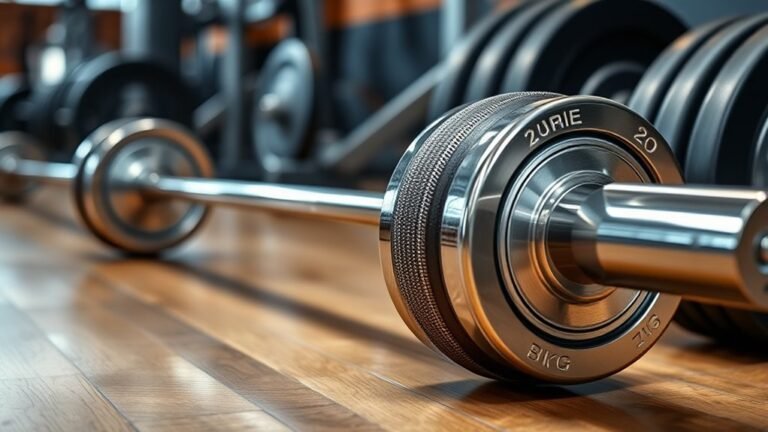
When you pick up an Olympic barbell, you’re handling a piece designed to meet strict specifications. Typically, these bars weigh 20 kilograms (about 44 pounds) for men and are 7.2 feet long, with a diameter of 28 millimeters.
An Olympic barbell is precisely crafted to strict standards: 20 kg, 7.2 feet long, and 28 mm diameter.
The sleeves rotate smoothly to reduce torque during lifts, which is essential for movements like the snatch or clean and jerk.
The bar’s knurling pattern provides a secure grip without being harsh on your hands. This precise design guarantees consistency during training and competition.
It allows you to focus on improving your technique and maximizing your strength safely and effectively.
Differences Between Men’s and Women’s Barbells
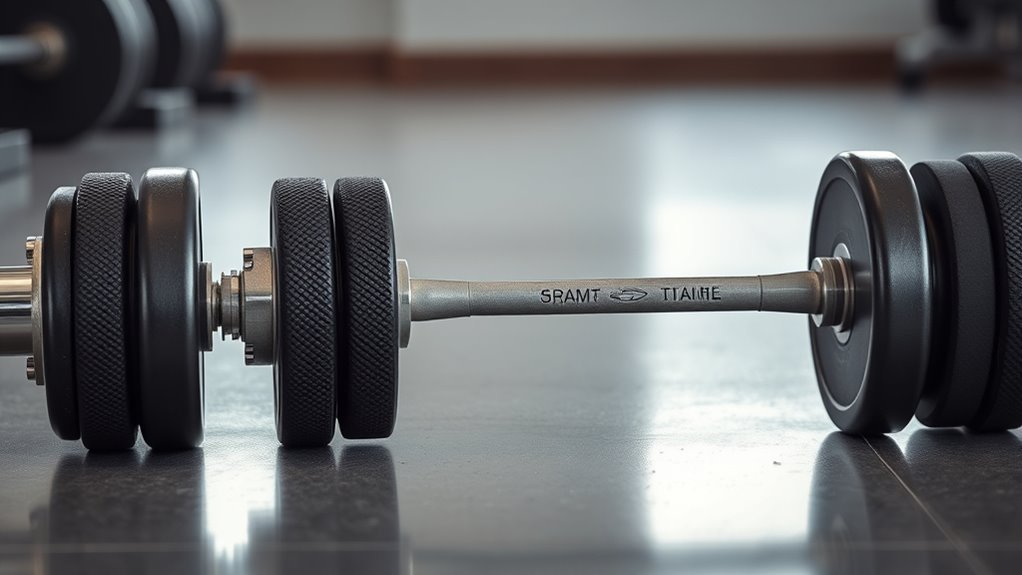
Although both men’s and women’s barbells serve the same basic purpose, they differ in weight, length, and diameter to accommodate varying strength levels and lifting styles.
Men’s barbells typically weigh 20 kilograms (44 pounds), measure about 7.2 feet long, and have a 28-millimeter diameter. Women’s barbells are lighter, usually 15 kilograms (33 pounds), shorter at around 6.6 feet, and slimmer with a 25-millimeter diameter.
These differences make women’s barbells easier to grip and maneuver, helping you maintain proper form and reduce injury risk. When you choose between the two, consider your strength, comfort, and the lifts you plan to perform.
Understanding these distinctions guarantees you pick the right barbell to maximize your training efficiency and safety.
Powerlifting Barbell Weight Standards
Since powerlifting focuses on maximal strength across three main lifts—squat, bench press, and deadlift—you’ll find that powerlifting barbells have specific weight and dimension standards designed to handle heavy loads safely.
These barbells are built for durability and consistency, which is vital in competition settings.
Here’s what you need to know about powerlifting barbell weight standards:
- Standard weight: 20 kilograms (44 pounds) for men’s bars.
- Length: Typically 7.2 feet (2.2 meters), allowing for proper grip and balance.
- Diameter: Around 29 millimeters, providing a firm grip without excessive thickness.
- Women’s bars weigh 15 kilograms (33 pounds) and are slightly shorter and thinner to accommodate different grips.
Knowing these standards helps you choose the right bar for serious training or competing.
Specialty Barbells and Their Weights
You’ll find specialty barbells come in various types, each designed for specific training needs and weight variations. Knowing their unique weights helps you choose the right bar for your workout goals.
Let’s explore how these bars differ and what benefits they bring to your routine. It’s pretty interesting once you get into the details!
Types of Specialty Bars
When you explore specialty bars, you’ll find they serve unique purposes and come with specific weights tailored to different training needs. These bars help target muscles differently and accommodate various lifting styles.
Here are four common types:
- Trap Bar (Hex Bar) – Typically weighs around 45 lbs; great for deadlifts and shrugs, reducing lower back strain.
- EZ Curl Bar – Weighs about 15-25 lbs; designed for arm exercises, easing wrist stress during curls.
- Safety Squat Bar – Usually 55 lbs; features padding and handles, making squats more comfortable on shoulders.
- Swiss Bar (Football Bar) – Around 25-35 lbs; offers neutral grip for pressing movements, minimizing joint strain.
Choosing the right specialty bar depends on your training goals and comfort preferences. So, think about what feels best for you and what muscles you want to focus on.
Weight Variations Explained
Although specialty barbells vary widely in design, their weights often reflect the specific uses and muscle groups they target. For example, a standard Olympic barbell typically weighs 20 kilograms (44 pounds), but specialty bars like the trap bar or hex bar usually weigh between 15 to 25 kilograms (33 to 55 pounds) due to their unique shapes.
Curl bars are lighter, often around 7 to 12 kilograms (15 to 26 pounds), making them ideal for arm exercises. Meanwhile, safety squat bars can weigh up to 20 kilograms (44 pounds), built to support heavier loads safely.
When you pick up a specialty bar, it’s important to know its weight because it affects your total lifting load. This knowledge helps you plan your workouts accurately and track progress effectively.
Usage and Benefits
Understanding the different weights of specialty barbells helps you choose the right tool for your workout goals. Specialty barbells vary in weight and design, targeting specific muscle groups and movement patterns.
Using the right barbell enhances your workout effectiveness and safety. Here’s how they benefit you:
- Improve muscle isolation by focusing on particular areas, such as triceps or shoulders. This means you can really zero in on the muscles you want to develop.
- Increase exercise variety, preventing workout plateaus and boosting motivation. Trying different bars keeps things interesting and fresh.
- Enhance lifting technique with bars designed for specific motions, like the trap bar for deadlifts. These specialized bars make your form more natural and efficient.
- Reduce injury risk by accommodating natural body mechanics and joint angles. When your body moves better, you stay safer during your lifts.
How Barbell Weight Affects Your Workout
Choosing the right barbell weight directly impacts your workout’s effectiveness and safety. If you pick a weight that’s too heavy, you risk poor form and injury, which slows progress.
Selecting the correct barbell weight ensures effective workouts and reduces the chance of injury and setbacks.
Conversely, a weight that’s too light won’t challenge your muscles enough, limiting strength gains and endurance improvements. The right weight encourages proper technique, engages the right muscle groups, and promotes steady progression.
It also affects how many reps and sets you can perform, influencing muscle growth and stamina. Plus, the barbell weight you use determines your workout intensity, helping you tailor sessions to your goals—whether building strength, power, or endurance.
Understanding this balance lets you maximize results while minimizing injury risks, making your workouts both efficient and safe. So, picking the right weight really is key to getting the most out of your training.
Tips for Selecting the Right Barbell Weight
You’ll want to start by evaluating your current strength level to pick a barbell weight that challenges you without risking injury. Keep your workout goals in mind—whether it’s building endurance, strength, or power—as they’ll guide your choice.
Finally, consider the barbell material since it affects durability and grip, which can impact your performance. Choosing the right weight and material can make a big difference in how effective and enjoyable your workouts are.
Assess Your Strength Level
Before selecting a barbell weight, assess your current strength to guarantee safety and effectiveness. Jumping into heavy lifts without knowing your limits can lead to injury or stalled progress.
Here’s how to gauge your strength level accurately:
- Test your max load: Use a manageable weight and gradually increase until you reach your one-rep max.
- Evaluate form stability: Ensure you maintain proper technique at your test weight.
- Note fatigue signs: Pay attention to muscle exhaustion and joint discomfort.
- Track consistency: Repeat tests weekly to monitor improvements or plateaus.
Consider Workout Goals
Since your workout goals directly influence the ideal barbell weight, it’s important to tailor your selection accordingly. If you aim to build strength, choose heavier barbells that challenge your muscles with fewer reps.
For muscle endurance or toning, lighter weights with higher repetitions work best. If your goal is powerlifting, select standard heavy barbells that meet competition regulations, usually 20 kilograms (44 pounds) for men.
For general fitness or rehabilitation, moderate weights allow safe progression without risking injury. Always match the barbell weight to your specific objectives to maximize results and avoid plateaus.
Keep your goals clear, and adjust the weight as you progress to continue challenging yourself effectively. This targeted approach ensures you get the most out of every workout session.
Evaluate Barbell Material
Although choosing the right barbell weight is essential, evaluating the barbell material can considerably impact your lifting experience. The material affects durability, grip, and even how the barbell feels during lifts.
Here’s what you need to consider:
- Steel Quality: High-quality steel offers better strength and longevity, minimizing bending or warping during heavy lifts.
- Knurling: The texture etched into the bar depends on the material’s ability to hold a firm grip without damaging your hands.
- Coating: Materials like chrome, zinc, or black oxide protect against rust and corrosion, extending the barbell’s life.
- Flexibility: Some materials provide slight whip, which benefits Olympic lifts, while others remain rigid for powerlifting.
Choosing the right material guarantees your barbell matches your training needs and lasts long. So, take your time and pick what feels best for you!
Common Misconceptions About Barbell Weights
When you pick up a standard heavy gym barbell, you might assume its weight is always the same, but that’s not necessarily true. Many people think all barbells weigh 45 pounds, but weights can vary depending on the type and manufacturer.
For example, some Olympic barbells weigh slightly more or less than 45 pounds. You might also believe that all barbells are made from solid steel, but materials differ, affecting weight and durability.
Another misconception is that heavier bars are always better for strength training; however, the right bar depends on your goals and technique. Understanding these nuances helps you choose the best barbell for your workouts, avoiding frustration and injury from using mismatched equipment.
Frequently Asked Questions
How Do I Properly Maintain and Clean My Gym Barbell?
You should wipe your barbell with a dry cloth after each use. This helps get rid of sweat and grime that can build up over time.
Next, apply a light oil to prevent rust. It’s a simple step that really makes a difference in keeping your barbell looking and performing well.
Don’t forget to clean the knurling with a nylon brush. This keeps the grip textured and safe to use.
Finally, store your barbell in a dry place. Moisture is the enemy here, so keeping it dry helps maintain it in top condition.
What Safety Measures Should I Take When Lifting Heavy Barbells?
You should always warm up, use proper form, and start with manageable weights. Don’t lift alone; use a spotter or safety racks.
Also, wear appropriate gear and listen to your body to avoid injury. It’s better to be cautious and take breaks when needed. That way, you’ll stay safe and make steady progress!
Can I Use Standard Barbells for Home Workouts Effectively?
You can absolutely use standard barbells for home workouts effectively—over 70% of home lifters report solid strength gains with them.
Just focus on proper form, gradual weight increases, and consistent training to see great results.
It’s all about sticking with it and paying attention to your technique. Keep at it, and you’ll notice the progress!
How Do Barbell Knurling Patterns Affect Grip and Performance?
Barbell knurling patterns affect your grip by providing varying levels of texture and bite. Aggressive knurling boosts grip security but can be harsh on your hands.
On the other hand, milder patterns offer comfort but less grip control. So, it’s really about finding the right balance for your needs.
Are There Any Health Risks Associated With Improper Barbell Use?
You might think improper barbell use is harmless, but it can cause serious injuries like muscle strains or joint damage.
Always focus on proper form and controlled movements to protect your health and improve your performance safely.
It’s super important to pay attention when you’re lifting. Otherwise, you could end up hurting yourself without even realizing it.
Conclusion
So, you might think all barbells are created equal, right? Surprise! Standard heavy gym barbells come in different weights depending on their use—men’s Olympic bars usually weigh 20 kg, while women’s are 15 kg.
Powerlifting bars and specialty bars vary even more. So next time you grab a barbell, don’t just assume it’s “heavy” enough. After all, who needs consistency when you can have a surprise workout every time?
Understanding the standard heavy gym barbell weight is important for tracking progress and ensuring safety. Whether you’re lifting with a men’s Olympic bar, a women’s bar, or a powerlifting bar, knowing the exact barbell weight helps you plan your workouts better. So, next time you step into the gym, remember: not all barbells weigh the same, and that difference can make a big impact on your training results.