How Old Do You Have to Be to Go to a Gym
You usually need to be at least 16 to join a gym on your own, though some gyms allow teens as young as 14 with parental consent or supervision.
Younger kids often have to work out with a guardian or during special programs designed just for them. These rules help keep you safe and guarantee you use equipment properly.
If you want to explore age-specific programs, safety tips, and alternatives like home workouts, there’s plenty more to discover.
Getting into fitness is great at any age, but knowing how old you have to be to go to a gym is important. It helps you plan your workouts better and stay safe while reaching your fitness goals.
Key Takeaways
- Most gyms require members to be at least 16 or 18 years old for independent access. Teens under 16 often need parental consent and/or supervised workouts to use gym facilities.
- Age restrictions are there to keep everyone safe. They help make sure the equipment is used properly and reduce the risk of injuries, especially for younger users.
- Some gyms have special youth programs for ages 13-17. These usually include tailored workouts and supervision to make sure things go smoothly.
- Keep in mind, policies can vary a lot depending on the gym. So, it’s a good idea to check their specific age and consent rules before signing up.
Typical Age Requirements for Gym Memberships
Although age requirements can vary, most gyms set a minimum age of 16 to 18 years for membership. If you’re younger than that, you’ll likely need parental consent or supervision to join.
Some gyms allow teens as young as 14 to use facilities during specific hours or with a guardian present. When you hit the minimum age, you can usually sign up independently and access all gym equipment and classes.
Keep in mind, policies differ widely between chains and local gyms, so it’s smart to check directly with the gym you’re interested in. Understanding these typical age limits helps you plan your fitness journey responsibly and ensures you meet the gym’s rules before you commit to a membership.
Reasons Behind Age Restrictions at Gyms
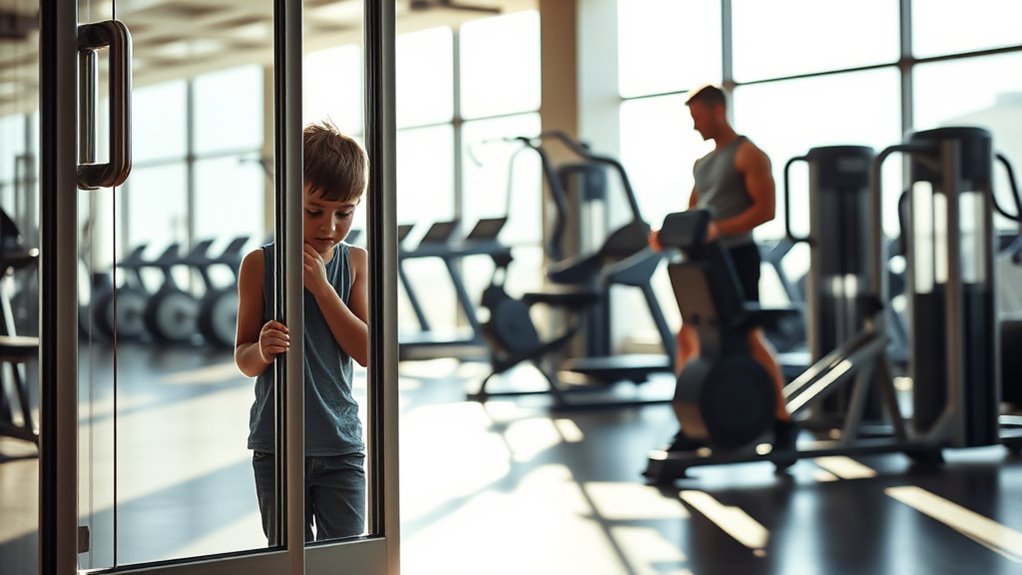
Because gyms want to keep everyone safe and guarantee proper use of equipment, they set age restrictions. These rules help protect younger members from injury and ensure that all users handle machines correctly.
When you visit a gym, you might notice limits based on age to prevent accidents and promote a comfortable environment for all. Here’s why gyms enforce these restrictions:
- Younger children may not have the physical maturity to use heavy or complex equipment safely.
- Proper technique is vital; without it, injuries can happen easily.
- Liability concerns make gyms cautious about allowing very young users.
- Age limits help maintain a space where all members can work out safely and effectively.
Understanding this helps you appreciate why gyms prioritize age guidelines. It’s really about keeping everyone safe and making sure the gym is a welcoming place for all ages.
Minimum Age for Unsupervised Gym Access
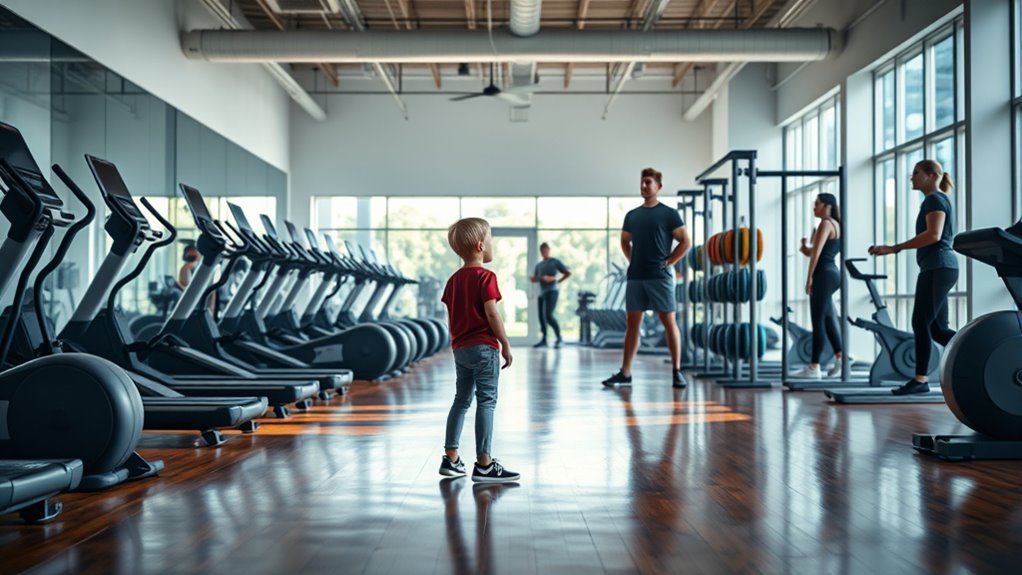
While gyms vary in their policies, most require you to be at least 16 years old to access the facilities without supervision. This age threshold guarantees you have enough maturity and understanding to use equipment safely and follow gym rules on your own.
If you’re under 16, you usually need supervision or a guardian present. At 16, many gyms consider you capable of managing workouts responsibly, reducing liability concerns for the facility.
However, some gyms might set this age at 14 or 18, depending on local laws or their specific safety standards. Before you sign up, check your gym’s age policy.
Knowing the minimum age for unsupervised access helps you plan your fitness journey safely and confidently. It’s always better to be informed so you can make the best choices for your workouts.
Parental Consent and Supervised Workouts
Before you start hitting the gym, you’ll need to know the age requirements and whether you need parental consent. Many gyms require a parent or guardian to sign off before you can work out, especially if you’re under 16.
Having supervised workouts not only keeps you safe but also helps you learn proper techniques from the start. It’s a smart way to get comfortable with the equipment and avoid injuries. Plus, having someone guide you makes the whole experience less intimidating.
Age Requirements Overview
How old do you need to be to join a gym? Age requirements vary widely, but most gyms set clear policies to keep you safe and comfortable. Generally, you’ll find these common guidelines:
Kids under 12 usually can’t enter without adult supervision. Teens aged 13 to 15 may need parental consent and must often work out with a trainer or adult.
At 16 or 17, you might get limited access, depending on the gym’s rules. Adults 18 and older typically have unrestricted access.
These rules balance safety with independence, making sure you use equipment properly and avoid injury. It’s a good idea to check your gym’s specific age policies so you can plan your workouts and know when you can fully enjoy the facilities.
Parental Consent Policies
Many gyms require parental consent for teens under 18 to access their facilities. If you’re a minor, you’ll often need a parent or guardian to sign a waiver before you can start working out. This policy guarantees that your guardians understand the risks involved and approve your gym activities.
Some gyms also require you to attend an orientation session with a parent to familiarize yourselves with equipment and safety rules. Without this consent, you might be restricted from certain areas or workouts.
It’s important you check each gym’s specific rules since requirements vary. Getting parental consent not only grants you access but also promotes a safer, more responsible workout experience.
Always communicate openly with your parents about your fitness goals and gym plans. That way, everyone’s on the same page and you can work out with peace of mind.
Supervised Workout Benefits
Since working out under supervision can considerably reduce the risk of injury, having a parent or guardian present during your gym sessions offers more than just approval—it provides guidance and immediate assistance.
When you have someone experienced by your side, you learn proper form, avoid common mistakes, and stay motivated. This support helps build confidence as you navigate new equipment and routines.
Plus, your supervisor can spot you during lifts, ensuring safety when handling heavy weights. Here’s what you gain from supervised workouts:
- Immediate feedback on your technique
- Encouragement to push your limits safely
- Quick help if an accident occurs
- Structured workout plans tailored to your age and ability
With supervision, you set a strong foundation for long-term fitness success. It’s definitely worth having that extra set of eyes and hands!
Special Programs for Teens and Young Adults
When you’re a teen or young adult, finding the right gym program can make all the difference in staying motivated and safe. Many gyms offer tailored classes and memberships designed just for you, focusing on age-appropriate workouts and skill-building.
| Program Type | Age Range | Key Benefits |
|---|---|---|
| Teen Training | 13-17 | Strength, flexibility, fun |
| Young Adult Fitness | 18-24 | Endurance, muscle toning |
| Group Classes | 13-24 | Social interaction, variety |
| Personal Coaching | 13-24 | Customized workouts, guidance |
| Nutritional Support | 13-24 | Healthy eating, energy boost |
Choosing a program that fits your goals and age ensures you get the most from your gym experience. So, pick one that feels right for you and enjoy the journey!
Safety Considerations for Younger Gym-Goers
Although hitting the gym can be exciting for younger individuals, you need to prioritize safety to prevent injuries and build healthy habits. Start by learning proper form and technique to avoid strains or sprains.
Prioritize safety and master proper form to build healthy gym habits and prevent injuries.
Don’t rush into heavy weights; focus on bodyweight exercises or light resistance to build strength gradually. Always warm up before workouts and cool down afterward to keep your muscles flexible.
Listening to your body is essential—stop if you feel pain or discomfort. Keep these tips in mind:
- Use age-appropriate equipment and machines.
- Work out under supervision or with a trainer.
- Stay hydrated and take regular breaks.
- Wear proper workout gear and supportive shoes.
Alternatives to Traditional Gyms for Younger Fitness Enthusiasts
If you’re too young for a traditional gym, don’t worry—there are plenty of youth fitness programs designed just for you. You can also set up simple home workouts that focus on fun and safe exercises.
These options help you build strength and stay active without stepping into a regular gym. So, you’ve got choices that keep things exciting and safe!
Youth Fitness Programs
Because younger fitness enthusiasts often need guidance and age-appropriate activities, youth fitness programs provide excellent alternatives to traditional gyms. These programs focus on building strength, coordination, and confidence in a safe, supportive environment.
You’ll find options designed specifically for kids and teens that emphasize fun while promoting healthy habits. It’s all about making fitness enjoyable and suitable for their age group.
Here are some popular youth fitness program features you might encounter:
- Supervised group classes with certified instructors
- Age-specific strength and conditioning routines
- Activities combining play and exercise, like obstacle courses
- Educational sessions on nutrition and wellness
These programs really mix learning with fun, helping young people stay active and healthy. It’s a great way to get them moving and feeling good about fitness!
Home Workout Options
When you want to keep younger fitness enthusiasts active without the need for a gym, home workout options offer flexible and convenient alternatives. You can set up simple routines using bodyweight exercises like push-ups, squats, and jumping jacks that require no equipment.
Interactive fitness apps and online videos provide guided workouts tailored for kids and teens, making exercise engaging and fun. Resistance bands or light dumbbells are affordable tools to add variety and build strength safely at home.
Encouraging activities like yoga or dance can improve flexibility and coordination while keeping workouts enjoyable. By creating a dedicated space and consistent schedule, you help younger individuals develop healthy habits without the constraints of gym age restrictions or memberships.
Home workouts empower you to promote fitness anytime, anywhere. It’s all about making exercise accessible and fun for the younger crowd.
Tips for Starting a Workout Routine at a Young Age
Starting a workout routine at a young age sets a strong foundation for lifelong fitness and health. When you begin early, you develop habits that stick and improve your strength, coordination, and confidence.
To get started effectively, focus on these key tips:
- Choose activities you enjoy to stay motivated.
- Set realistic goals and track your progress.
- Include a mix of cardio, strength, and flexibility exercises.
- Always warm up before workouts and cool down after.
Frequently Asked Questions
Can Children Use Gym Swimming Pools Without Adult Supervision?
No, children usually can’t use gym swimming pools without adult supervision due to safety rules.
You should check the specific gym’s policies, but most require a responsible adult to be present when kids swim.
It’s all about keeping them safe while they have fun in the water. So, always make sure an adult is around!
Are There Specific Gyms for Children With Disabilities?
Imagine a bright, welcoming gym filled with adaptive equipment just for kids like you.
Yes, there are specific gyms designed to support children with disabilities. They help you build strength, confidence, and have fun safely.
How Do Gyms Verify Age During Membership Sign-Up?
Gyms usually ask for a government-issued ID like a driver’s license or passport to verify your age during sign-up.
Some might also require a parent or guardian’s consent if you’re underage.
It’s pretty straightforward, but it helps keep things safe and legit for everyone.
What Types of Gym Equipment Are Safe for Teenagers?
You should use light dumbbells, resistance bands, and cardio machines, and avoid heavy weights, complex machines, and intense exercises.
Always focus on proper form, gradual progression, and seek guidance from trainers to stay safe and effective.
It’s all about starting slow and building up strength in a way that works for you. Don’t hesitate to ask for help when you’re unsure!
Do Gyms Offer Discounts for Students or Young Members?
Yes, many gyms offer discounts for students or young members. You can usually save money by showing a valid student ID or proof of age.
Always ask about special rates or promotions when signing up. It never hurts to check!
Conclusion
Did you know that nearly 70% of gyms require you to be at least 16 to join without supervision? That’s because safety and proper guidance are vital when you’re starting out.
If you’re younger, don’t worry—there are plenty of special programs and alternatives just for you. Starting your fitness journey early with the right support can set you up for a lifetime of health and confidence.
So get moving, safely and smartly! Remember, age requirements at gyms are there to protect you and help you get the most out of your workouts. Whether you’re just starting or looking to join a gym, knowing the age rules ensures you take the right steps toward your fitness goals.