How Much Does a Bench Bar Weight Vary?
A bench bar’s weight typically varies between 15 and 25 kilograms, depending on the type, material, and design. This variation is important to know if you’re looking to optimize your workout or choose the right equipment for your home gym. Olympic bars usually weigh around 20 kg, offering a solid standard for many lifters.
Standard or beginner bars tend to be lighter, around 15-18 kg, which can be easier to handle if you’re just starting out. The length and diameter also play a role—thicker and longer bars weigh more, so don’t be surprised if your barbell feels heavier than expected.
Your fitness level and training goals help decide which weight fits best. Keep exploring to understand how bar weight impacts performance and safety, so you can lift smarter and safer every time.
Key Takeaways
- Bench bar weights typically range from 15 kg (33 lbs) for beginner bars to 20 kg (44 lbs) for standard Olympic bars.
- Standard bars generally weigh between 15-25 lbs, while Olympic bars are heavier, around 20 kg (44 lbs).
- Bar length and diameter affect weight; longer and thicker bars weigh more, impacting handling and stability.
- Material and construction influence weight, with steel bars heavier than aluminum and coatings adding minor weight.
- Custom and specialty bars may vary widely, from lighter 10-15 lbs bars to heavy 25 kg (55 lbs) advanced models.
Standard Weights of Common Bench Bars
Although bench bars come in various designs, most follow standard weight guidelines you should know before lifting. Typically, a standard bench bar weighs around 20 kilograms (44 pounds). This weight provides a reliable baseline for most training routines.
Some bars designed for beginners or home gyms might weigh less, usually between 15 to 18 kilograms (33 to 40 pounds), making them easier to handle. Conversely, specialty bars used in certain training contexts can weigh slightly more, but these are less common.
Knowing these standard weights helps you track your progress accurately and prevents surprises during workouts. When you pick up a bench bar, you can expect it to fall within this general range, ensuring consistency across most gyms and training environments.
Differences Between Olympic and Standard Bars
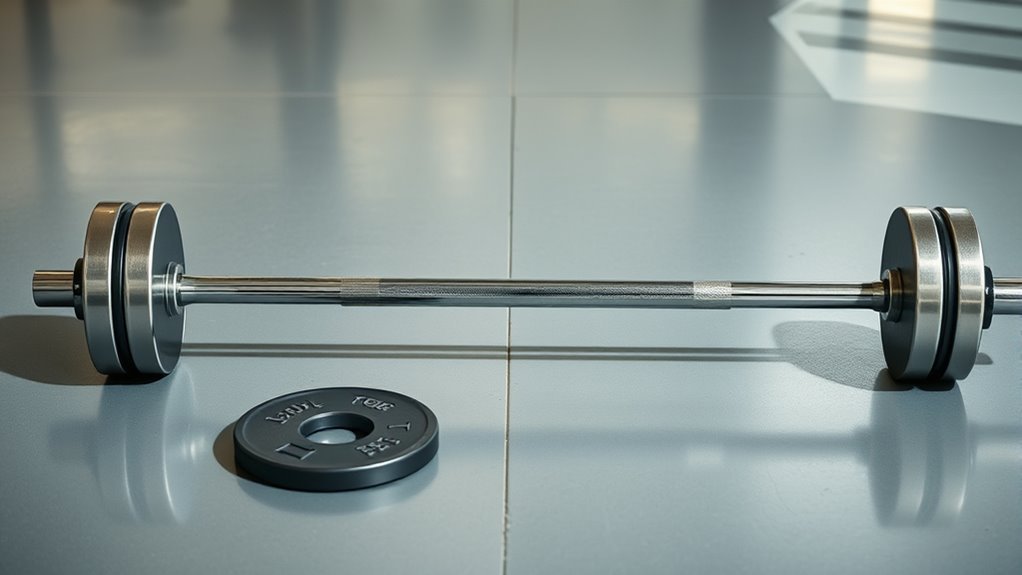
You’ll notice that Olympic bars typically weigh more than standard bars, mainly because of differences in length and diameter. These size variations affect not just the weight but also how the bar feels during your bench press.
Plus, the materials and construction methods used for each bar impact their durability and performance. It’s pretty interesting how these differences can change your lifting experience!
Weight Comparison Overview
When comparing bench bars, you’ll notice that Olympic and standard bars differ markedly in weight and design. Olympic bars generally weigh more due to their construction, while standard bars are lighter and simpler.
Understanding these differences helps you choose the right bar for your training needs.
| Bar Type | Typical Weight (lbs) |
|---|---|
| Olympic Men’s | 44 |
| Olympic Women’s | 33 |
| Standard Bar | 15-25 |
| Specialty Bars | 20-35 |
| Training Bars | 10-15 |
Olympic bars often come with rotating sleeves and thicker shafts. This adds weight and durability to the bar.
Standard bars vary more but are usually lighter. So, they’re great for beginners or casual lifters.
Diameter and Length Impact
Since bar diameter and length directly affect how you handle the bar, understanding these differences between Olympic and standard bars is essential. Olympic bars typically measure 7 feet long with a 2-inch diameter, giving you a sturdy grip and enough length to load heavy plates comfortably.
Standard bars, on the other hand, are usually shorter—around 5 to 6 feet—and have a thinner diameter of about 1 inch, which can feel less stable under heavier loads. The longer length of Olympic bars offers better balance and rotation due to the spinning sleeves.
But you’ll notice the diameter influences your grip strength and wrist positioning. When choosing between them, consider how these size factors affect your lifting technique and comfort during bench pressing.
Material and Construction Differences
Beyond size, the materials and construction of Olympic and standard bars play a big role in their performance and durability. Olympic bars typically use high-quality steel with a tensile strength between 190,000 to 215,000 PSI, making them more resilient under heavy loads.
They also feature rotating sleeves with bearings or bushings, reducing torque during lifts and protecting your wrists. Standard bars, on the other hand, often use lower-grade steel and lack rotating sleeves, which can affect longevity and feel during your workout.
Because of these construction differences, Olympic bars usually weigh around 20 kg (44 lbs), while standard bars are lighter, around 15-17 lbs. When choosing, consider how these material and construction factors impact your lifting style and the bar’s lifespan.
Material Impact on Bench Bar Weight
You’ll notice that the material of your bench bar plays a big role in its weight. Steel bars tend to be heavier, while aluminum options offer a lighter feel.
Plus, coatings like chrome or zinc can add a bit more weight and affect durability. It’s something to keep in mind when choosing the right bar for your workouts.
Steel vs. Aluminum
Although bench bars come in various materials, steel and aluminum stand out as the most common choices, each affecting the bar’s weight differently. Steel bars tend to be heavier, often ranging from 15 to 25 pounds depending on length and thickness.
This extra weight provides stability, which you might appreciate during heavy lifts. On the other hand, aluminum bars are considerably lighter, usually between 10 and 15 pounds.
If you prefer portability or less strain on your wrists, aluminum bars could be a better fit. Keep in mind, though, that aluminum is generally less durable under extreme loads compared to steel.
Impact of Coatings
Since coatings add an extra layer to bench bars, they can subtly affect the bar’s overall weight. When you choose a bar with a coating like chrome, zinc, or black oxide, you’re adding just a few ounces. It’s usually negligible but worth noting if you’re tracking every pound.
Some coatings offer corrosion resistance, which helps the bar last longer without rusting, but they don’t add much bulk. Powder coatings tend to be thicker than standard finishes, so if a bar uses powder coating, it might weigh slightly more. However, this difference is minimal compared to the bar’s core material.
Variations in Bench Bar Length and Diameter
When you look closely at bench bars, you’ll notice their length and diameter can vary considerably, affecting both weight and performance. Standard bench bars usually measure around 7 feet long with a diameter of 28mm to 29mm, but shorter or thicker bars exist.
A longer bar typically means more weight, while a thicker diameter increases the bar’s mass and grip size. Variations in diameter also influence how the bar feels in your hands and how easy it is to control during lifts.
If you choose a thinner bar, it might weigh less but offer less stability. Conversely, a thicker bar adds weight and durability but can be harder to grip. Understanding these differences helps you pick the right bar for your training goals.
Weight Considerations for Specialty Bars
Beyond standard bench bars, specialty bars introduce unique weight factors that can impact your lifting experience. These bars, like Swiss bars or cambered bars, often weigh differently due to their design and material composition.
Specialty bars vary in weight and design, affecting your lifting technique and experience.
For example, a Swiss bar typically weighs between 25 to 35 pounds, lighter than a standard 45-pound bar. This difference can influence your setup and balance.
Cambered bars, designed with a curve, usually weigh slightly more, around 50 pounds. That extra weight adds an extra challenge to your lifts.
When choosing a specialty bar, you need to think about its weight in relation to your workout goals and how it fits with your existing equipment.
Being aware of these variations helps you adjust your technique and loading strategies for peak performance and safety. It’s all about making your lifts work best for you.
How Bench Bar Weight Affects Workout Performance
Although the weight of a bench bar might seem minor, it directly impacts how you approach each lift. A heavier bar demands more strength and control, influencing your muscle recruitment and fatigue rate.
Conversely, a lighter bar can speed up reps but may reduce stability. Understanding this helps you tailor your workout intensity and technique.
| Bar Weight (lbs) | Effect on Performance |
|---|---|
| 15 | Easier to control, faster reps |
| 20 | Balanced for most lifters |
| 25 | Requires more strength |
| 30 | Increases fatigue quickly |
| 35+ | Demands advanced skill |
Adjusting to different bar weights trains your muscles differently. It affects endurance and power, so mixing it up can really boost your progress.
Choosing the Right Bench Bar Weight for Your Fitness Level
Since your fitness level directly influences your strength and control, choosing the right bench bar weight is essential for safe and effective workouts.
Start by evaluating your current strength—if you’re new to bench pressing, begin with a lighter bar, such as a 15- or 20-kilogram bar, to build proper form and avoid injury.
As you gain confidence and strength, gradually increase the weight to challenge your muscles without sacrificing technique.
Pay attention to how your body responds; if you struggle to maintain control or experience discomfort, reduce the weight.
Remember, the goal is steady progress, not heavy lifting from the start.
Matching your bench bar weight to your fitness level helps you train smart, improve consistently, and stay safe throughout your fitness journey.
Tips for Safely Handling and Loading Bench Bars
When you handle and load bench bars correctly, you reduce the risk of injury and guarantee a smoother workout. First, always use a secure grip and lift with your legs, not your back, to protect yourself from strain.
Before loading plates, verify the bar is stable on the rack. Add weight evenly on both sides to maintain balance and prevent tipping.
Use collars or clips to lock plates in place firmly. Avoid rushing—take your time to load and unload weights carefully.
If the bar feels too heavy to handle alone, ask for help. Finally, inspect the bar and plates regularly for damage or wear.
Following these tips keeps you safe and helps you get the most from your bench bar workouts.
Frequently Asked Questions
How Do Bench Bar Weights Compare Across Different Manufacturers?
You’ll find bench bar weights vary slightly across manufacturers due to design and materials. Some brands use heavier steel, while others focus on lightweight bars.
Always check specs before buying to match your training needs. It helps to know exactly what you’re getting so your workouts stay consistent.
Can Bench Bar Weight Affect Gym Membership Costs?
Gym membership costs usually aren’t affected by bench bar weight; over 70% of gyms price memberships by access, not equipment.
Are There Specific Bench Bars Designed for Beginners Only?
Yes, you’ll find bench bars designed specifically for beginners. They’re lighter and easier to handle, which makes a big difference when you’re just starting out.
These bars help you build proper form without risking injury. Starting with one can really boost your confidence and make your workouts more effective.
How Does Bench Bar Weight Influence Joint Health Over Time?
Like a well-tuned instrument, the bench bar weight affects your joint health by either promoting strength or causing strain.
You’ll want to choose wisely, avoiding excessive weight that can wear your joints down over time.
Think of your joints as delicate gears—they need the right amount of challenge to stay strong, but too much pressure can lead to problems down the road.
Do Bench Bars Require Regular Maintenance Related to Their Weight?
You don’t need regular maintenance specifically for a bench bar’s weight, but you should check for rust, loose parts, or damage to make sure safety.
Keeping it clean and lubricated helps it perform well over time. Just a little upkeep can go a long way in keeping your equipment in good shape.
Conclusion
So, you thought all bench bars weigh the same, huh? Surprise! From feather-light to serious steel beasts, their weight varies more than your playlist moods.
Whether you’re lifting a standard bar or an Olympic heavyweight, knowing the difference can save your ego—and your back. Just remember, picking the right bar isn’t about showing off; it’s about lifting smart.
Because nothing says “fit” like avoiding a trip to the chiropractor after bench day! Understanding how much a bench bar weight varies helps you choose the perfect barbell for your workout. It’s all about balancing strength and safety to get the most from every lift. So next time you hit the gym, keep the bar weight in mind—it makes all the difference in your bench press performance and injury prevention!