
How Many Calories Should I Burn on the Treadmill
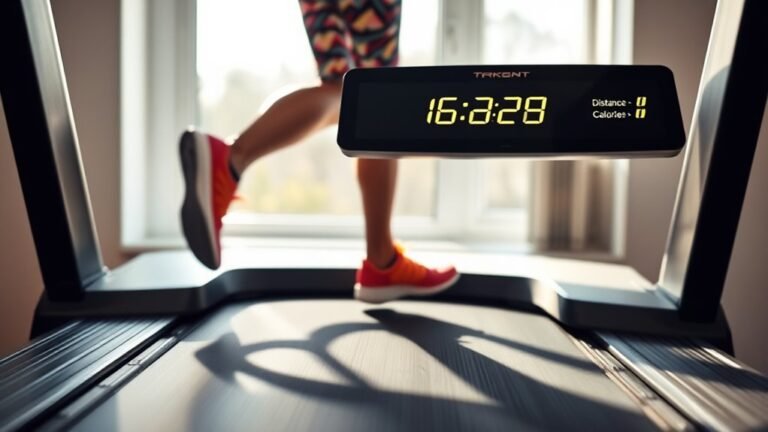
How many calories you should burn on the treadmill depends on your weight, workout intensity, and fitness goals.
Heavier individuals burn more calories at the same pace, while increasing speed or incline boosts calorie burn markedly.
Whether you walk or run, longer sessions lead to more total calories burned.
To get the best results, tailor your treadmill time and effort to your level.
If you want to maximize your workout benefits, there are effective strategies to explore.
Remember, understanding how many calories you burn can help you stay motivated and reach your fitness goals faster.
Key Takeaways
- Calorie burn on a treadmill depends on weight, speed, incline, and workout duration.
- For example, a 150 lbs person walking at 3 mph burns about 240 calories per hour.
- If you run at 6 mph, you can burn between 600 and 800 calories per hour, but it varies based on your fitness level.
- Adding incline to your treadmill workout boosts calorie burn by working more muscles and making the exercise more intense.
- Also, mixing up your speed and incline with interval training is a great way to maximize calorie burn efficiently.
Factors Influencing Calorie Burn on the Treadmill

Although the treadmill provides a consistent workout platform, several factors determine how many calories you actually burn. Your age plays a role—metabolism slows down over time, so younger individuals often burn calories more efficiently.
Fitness level also matters; if you’re well-conditioned, your body uses energy more effectively, which might reduce calorie burn during the same workout. Incline settings increase intensity, forcing your muscles to work harder and boosting calorie expenditure.
The type of workout, whether steady-state or interval training, affects how many calories you burn, too. Finally, your running or walking form impacts energy use, as poor posture can waste energy or cause inefficiencies.
Estimating Calories Burned Based on Weight and Speed

Your weight plays a big role in how many calories you burn on the treadmill—heavier bodies tend to burn more. Speed also matters: the faster you go, the more energy you use.
Let’s look at how these two factors combine to impact your calorie burn. It’s pretty interesting how even small changes can make a big difference!
Weight Impact on Calories
Since your weight directly influences how many calories you burn, understanding this relationship can help you tailor your treadmill workouts more effectively. The heavier you are, the more energy your body needs to move, which means you’ll burn more calories per minute compared to someone lighter, even at the same speed.
For example, a person weighing 180 pounds burns more calories running at 5 mph than someone weighing 130 pounds. This doesn’t mean weight alone determines your calorie burn, but it plays a significant role. When setting your treadmill goals, keep your weight in mind to get a more accurate estimate of your calorie expenditure.
Tracking this can help you adjust your workout intensity or duration to meet your fitness goals efficiently. So, paying attention to your weight can really make a difference in how you plan your exercise routine!
Speed’s Role in Burning
When you increase your treadmill speed, you boost the number of calories you burn per minute because your body works harder to keep up.
For example, if you weigh 150 pounds and walk at 3 mph, you might burn about 240 calories in an hour. But if you jog at 6 mph, that number jumps to roughly 660 calories.
Your weight and speed combine to determine how many calories you burn. The heavier you are and the faster you go, the more energy your body requires.
Tracking your speed helps you estimate calorie burn more accurately. So, if your goal is to burn more calories in less time, increasing your treadmill speed is an effective strategy to maximize your workout results.
How Workout Duration Affects Total Calorie Expenditure

Although intensity plays a key role, the total time you spend on the treadmill directly impacts how many calories you burn. The longer you work out, the more energy your body uses, increasing your calorie expenditure.
Even at a moderate pace, extending your treadmill session from 20 to 40 minutes can nearly double the calories burned. However, balance is essential—you don’t want to overdo it and risk injury or fatigue.
Consistency matters too; regular workouts of moderate duration often yield better long-term results than occasional long sessions. If you’re aiming to maximize calorie burn, gradually increase your treadmill time while maintaining good form and listening to your body.
This approach helps you burn more calories safely and effectively over time. So, take it step by step and keep at it!
Comparing Walking vs. Running Calorie Burn Rates
When you walk on a treadmill, you burn a steady number of calories, but running cranks that number up considerably. You’ll notice that running uses more energy per minute, making it a quicker way to torch calories.
Understanding these differences helps you choose the best workout for your goals. So, if you’re short on time, running might be your go-to. But if you prefer something less intense, walking still gets the job done.
Calories Burned Walking
How much energy do you actually burn by walking compared to running on a treadmill? When you walk, you burn fewer calories per minute than running, but it still adds up if you maintain a steady pace.
For example, a 155-pound person can burn around 140 calories walking briskly for 30 minutes. Walking engages large muscles steadily, boosting your metabolism without overwhelming your joints.
It’s ideal if you want a lower-impact workout or are just starting. Adjusting speed and incline increases calorie burn without switching to a run.
Calories Burned Running
Since running demands more effort than walking, you’ll burn considerably more calories in the same amount of time on a treadmill. For example, if you run at 6 mph, you can burn around 600-800 calories per hour, depending on your weight and intensity.
In contrast, walking at 3 mph might burn about 200-300 calories per hour. Running activates more muscle groups and requires greater cardiovascular output, which increases your calorie burn.
If your goal is weight loss or boosting endurance, running offers a more efficient calorie burn. However, it’s also higher impact, so you should consider your fitness level and any joint concerns.
Balancing walking and running can help you maximize benefits while reducing injury risk. It’s all about finding what works best for you!
The Impact of Incline on Treadmill Calorie Burn
Although running or walking on a flat treadmill burns calories, adding an incline considerably boosts your calorie burn. When you increase the incline, your body works harder to overcome gravity, which ramps up energy expenditure.
Adding incline to your treadmill workout significantly increases calorie burn by making your body work harder against gravity.
This means you burn more calories in less time compared to a flat surface. Plus, incline training engages different muscle groups, especially in your glutes, hamstrings, and calves, enhancing overall strength and endurance.
Here’s what adding incline does for you:
- Increases cardiovascular intensity without raising speed
- Targets lower-body muscles more effectively
- Mimics outdoor hill training for varied workouts
- Helps improve balance and stability
Setting Realistic Calorie Burn Goals for Different Fitness Levels
Adding incline to your treadmill routine can considerably increase calorie burn, but it’s important to tailor your goals based on your current fitness level. If you’re a beginner, start with a modest calorie target—around 150 to 250 calories per session—to build endurance without overexerting yourself.
Intermediate users might aim for 300 to 450 calories, incorporating intervals or increased incline to challenge their stamina. Advanced exercisers can push beyond 500 calories by mixing speed, incline, and duration for maximum efficiency.
Using Heart Rate to Monitor Calorie Burn Accuracy
When you want a clearer picture of how many calories you’re actually burning on the treadmill, monitoring your heart rate can be a game-changer. Your heart rate reflects the intensity of your workout, giving you more precise feedback than time or distance alone.
To use heart rate effectively, wear a reliable heart rate monitor for real-time data. Aim for your target heart rate zone based on your age and fitness level.
Also, keep track of how your heart rate responds to different speeds and inclines. This info can help you adjust your workout intensity for the ideal calorie burn.
Tips to Maximize Calories Burned During Treadmill Workouts
If you want to burn more calories on the treadmill, you need to challenge your body beyond a steady pace. Start by incorporating interval training—alternate between high-intensity sprints and moderate recovery jogs. This method boosts your metabolism and burns more calories long after you finish.
Next, try increasing the incline; walking or running uphill engages more muscles and increases calorie expenditure. Don’t forget to vary your speed to keep your body guessing. Adding short bursts of faster pace or incline changes prevents plateaus.
Also, maintain good posture and engage your core to maximize muscle use. Finally, extend your workout duration gradually to increase total calorie burn without overexertion. These strategies make your treadmill sessions more effective and calorie-burning.
Frequently Asked Questions
How Does Treadmill Calorie Burn Compare to Outdoor Running?
You’ll burn slightly fewer calories on a treadmill than outdoor running because it lacks wind resistance and varied terrain.
But you can adjust incline and speed to match or even exceed outdoor calorie burn effectively.
Can Treadmill Workouts Aid in Muscle Building?
Yes, treadmill workouts can aid muscle building, especially when you incorporate incline walking or sprint intervals. You’ll engage your leg muscles more, promoting strength and endurance while also enhancing cardiovascular fitness.
It’s a great way to mix things up and keep your workouts interesting. Plus, those intervals really push your muscles to work harder, which is key for building strength.
What Are the Best Times of Day to Use the Treadmill?
You might think mornings are too early, but using the treadmill then boosts energy and metabolism all day.
If mornings don’t work, try late afternoon when your body’s warmed up and performance peaks naturally.
How Often Should I Change My Treadmill Workout Routine?
You should change your treadmill workout routine every 4 to 6 weeks to avoid plateaus and keep progress steady.
Mixing up intensity, duration, and incline will challenge your body and keep workouts exciting.
It’s a great way to stay motivated and see continuous improvement. Just switch things up regularly to keep your muscles guessing!
Are Treadmill Calories Burned Equivalent to Calories Burned in Other Cardio Exercises?
Think calories burned on a treadmill match other cardio workouts? Not exactly—you’ll burn calories differently depending on exercise intensity, duration, and your body.
Conclusion
You can burn anywhere from 100 to 300 calories in just 30 minutes on the treadmill, depending on your speed, weight, and incline. Remember, even a small incline can boost your calorie burn by up to 20%!
By adjusting these factors and tracking your heart rate, you’ll maximize your workouts effectively. So, set realistic goals, stay consistent, and watch your calories melt away as you get fitter and stronger every time you hit the treadmill.
When wondering how many calories you should burn on the treadmill, keep in mind that it varies based on your personal fitness level and workout intensity. The key is to challenge yourself just enough to keep improving without overdoing it. Consistency and gradual progression are what make treadmill workouts effective for burning calories and improving cardiovascular health. So, find a pace and incline that push you but still feel manageable, and soon you’ll see the benefits of regular treadmill exercise in your calorie burn and overall fitness.