How to Use My HSA to Purchase a Treadmill
You can use your HSA to buy a treadmill only if a doctor prescribes it as medically necessary for a diagnosed condition. This means your healthcare provider needs to confirm that the treadmill is essential for your treatment or health improvement.
Make sure you keep a detailed receipt and a letter of medical necessity from your healthcare provider. Without proper documentation, the expense won’t qualify, and you’ll face taxes and penalties.
Confirm your eligibility and follow IRS rules to avoid issues. It’s important to understand what qualifies and how to keep everything in order.
To understand how to get a prescription and navigate tax details, keep exploring your options. Don’t hesitate to ask your doctor or tax advisor for guidance along the way.
Key Takeaways
- Confirm HSA eligibility by ensuring enrollment in a High Deductible Health Plan and no conflicting coverage.
- Obtain a doctor’s letter prescribing the treadmill for a specific medical condition to establish medical necessity.
- Purchase the treadmill using your HSA debit card or pay out-of-pocket and submit a reimbursement request.
- Keep detailed receipts and the medical prescription to prove the treadmill is a qualified medical expense.
- Understand that without proper documentation, treadmill purchases may be non-qualified, incurring taxes and penalties.
Understanding Health Savings Account (HSA) Eligibility

Before you can use your Health Savings Account (HSA) to buy a treadmill, you need to comprehend if you’re eligible to contribute to an HSA. To qualify, you must be enrolled in a High Deductible Health Plan (HDHP).
You can’t be covered by other health insurance that isn’t an HDHP, and you can’t be enrolled in Medicare. Additionally, you can’t be claimed as a dependent on someone else’s tax return.
If you meet these criteria, you can contribute pre-tax money to your HSA, which grows tax-free. Knowing your eligibility guarantees you can properly fund your account and use it for qualified expenses.
What Qualifies as a Medical Expense Under HSA Rules
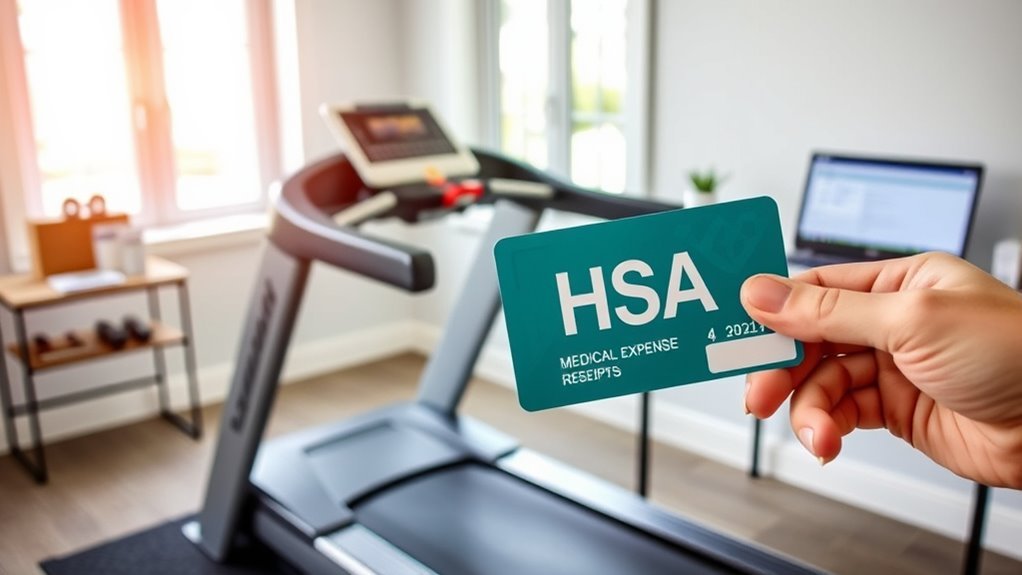
Although HSAs offer great tax advantages, you can only use the funds for expenses the IRS considers qualified medical costs. These generally include payments for diagnosis, cure, mitigation, treatment, or prevention of disease, as well as expenses affecting any part or function of the body.
Common qualified expenses include doctor visits, prescription medications, medical equipment, and certain therapies. You can’t use HSA funds for general health items like vitamins or gym memberships unless prescribed or recommended by a healthcare professional for a specific medical condition.
Always keep receipts and documentation to prove your purchases qualify. If you use HSA money for non-qualified expenses, you’ll owe taxes on the amount plus a penalty.
Understanding what counts guarantees you use your HSA wisely and avoid unexpected costs. So, it really pays to know the rules before you spend.
Can a Treadmill Be Considered a Qualified Medical Expense?

You might wonder if a treadmill counts as a qualified medical expense under IRS rules. To qualify, it generally needs to be prescribed by a doctor for a specific medical condition, showing medical necessity.
Keep in mind, you’ll want proper documentation and receipts to back up your purchase when using your HSA funds. So, make sure you have everything in order before you buy!
IRS Guidelines Overview
How does the IRS determine if a treadmill qualifies as a medical expense for your HSA? The IRS allows HSA funds to cover expenses primarily for the diagnosis, cure, mitigation, treatment, or prevention of disease. Generally, fitness equipment like treadmills isn’t eligible unless prescribed by a doctor for a specific medical condition.
You’ll need documentation showing the treadmill is necessary for medical treatment. Without this, the IRS usually classifies it as a personal expense. Keep in mind, the IRS Publication 502 outlines what counts as qualified medical expenses, but it doesn’t explicitly list treadmills.
Medical Necessity Criteria
Even if a treadmill offers health benefits, the IRS only considers it a qualified medical expense when a doctor prescribes it to treat or prevent a specific medical condition. That means your physician must document that the treadmill is medically necessary for your treatment plan, such as for obesity, heart disease, or rehabilitation after an injury.
Without this clear medical necessity, your HSA funds shouldn’t be used for the purchase. It’s not enough that the treadmill improves general fitness or wellness; you need a formal recommendation tied to a diagnosed condition.
Documentation and Receipts
When can a treadmill qualify as a medical expense for your HSA? It hinges on your doctor’s recommendation for managing a specific medical condition. To confirm your HSA covers the treadmill, keep detailed documentation.
Secure a letter or prescription from your healthcare provider explicitly stating the medical necessity of the treadmill for your treatment. When you purchase the treadmill, save all receipts showing the date, amount, and seller’s information.
These documents are vital if you need to prove the expense’s legitimacy to the IRS. Without proper documentation and receipts, your treadmill purchase may not qualify, and you risk penalties.
Documentation Needed to Use HSA Funds for a Treadmill
Although using your HSA funds for a treadmill can be a smart investment in your health, you’ll need specific documentation to confirm the purchase qualifies.
First, obtain a detailed receipt showing the treadmill’s price, purchase date, and seller information. Next, get a letter of medical necessity from your healthcare provider stating that the treadmill is required for a diagnosed medical condition or treatment plan.
This letter serves as proof that the treadmill is a qualified medical expense. Keep all these documents handy in case your HSA administrator or IRS requests verification.
Without this documentation, you risk having the expense disallowed, possibly resulting in taxes and penalties. So, being thorough with paperwork ensures smooth use of your HSA funds for your treadmill purchase.
Steps to Purchase a Treadmill Using Your HSA
Before you buy a treadmill with your HSA funds, you’ll need to confirm that the expense complies with IRS guidelines and that you have all necessary documentation ready. First, verify your HSA balance to ensure you have enough funds.
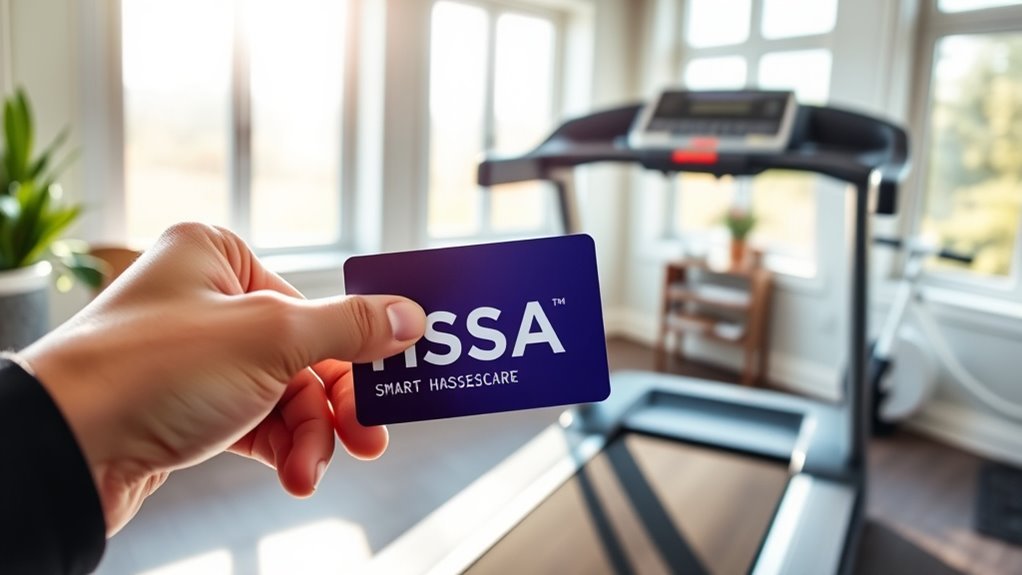
Next, shop for a treadmill that suits your health needs and budget. Once you decide, pay for the treadmill using your HSA debit card or reimburse yourself after paying out of pocket.
Make sure to keep the receipt and any related documentation, like a letter of medical necessity if required. Finally, record the purchase in your HSA account statements to maintain clear records.
Following these steps will help you use your HSA correctly and avoid any tax complications. It’s pretty straightforward once you get the hang of it!
How to Get a Doctor’s Recommendation for a Treadmill
To use your HSA for a treadmill, you’ll need a doctor’s recommendation that meets medical necessity criteria. When you consult your doctor, be clear about your health goals and ask for a written prescription.
Make sure to keep the documentation for your records and HSA claims. That way, you’ll have everything ready if you need to prove the treadmill is medically necessary.
Medical Necessity Criteria
If you want to use your HSA funds to buy a treadmill, you’ll need a doctor’s recommendation that confirms its medical necessity. To qualify, your doctor must document a specific health condition that the treadmill will help manage or improve, such as obesity, cardiovascular disease, or mobility impairments.
The recommendation should clearly state why the treadmill is essential for your treatment plan, emphasizing how it supports prescribed physical therapy or prevents further health complications. Your doctor must also note that alternative treatments are insufficient without this equipment.
Keep in mind, insurance providers often require detailed medical justification to approve HSA spending on durable medical equipment. Meeting these criteria is vital to guarantee your treadmill purchase is eligible for reimbursement through your HSA.
Doctor Consultation Tips
Although getting a doctor’s recommendation for a treadmill might seem intimidating, preparing well can make the process smoother and increase your chances of approval.
Start by clearly explaining your health goals and how a treadmill can help address specific medical conditions, like weight management or cardiovascular issues.
Bring any relevant medical records, test results, or notes from previous visits that support your need. Be honest about your current activity level and challenges.
Prepare questions about how a treadmill fits into your overall treatment plan. Showing that you’ve researched and are committed to improving your health demonstrates seriousness.
Finally, ask your doctor if they need any specific information or documentation from you to justify the recommendation. This proactive approach helps build trust and clarity during the consultation.
Prescription Documentation Process
When you decide to use your HSA for a treadmill, securing a doctor’s recommendation involves a clear documentation process. First, your doctor needs to evaluate your health condition and determine if a treadmill is medically necessary.
Once approved, they’ll provide a written prescription or letter stating the treadmill is prescribed to treat or manage a specific condition. Make sure this document includes your diagnosis, the medical reason for the treadmill, and the doctor’s signature and contact information.
You should keep a copy for your records and submit it to your HSA administrator if required. This prescription will help justify the expense as a qualified medical purchase, ensuring your HSA funds cover the treadmill without issues during reimbursement or tax time.
Tax Implications of Using HSA Funds for Exercise Equipment
Since Health Savings Account (HSA) funds are meant for qualified medical expenses, you need to be careful when using them to buy exercise equipment like a treadmill. If the treadmill isn’t prescribed by a healthcare professional to treat or prevent a specific medical condition, the IRS considers it a non-qualified expense.
Using your HSA for non-qualified purchases means you’ll owe income tax on the amount spent, plus a 20% penalty if you’re under 65. However, if you have the proper documentation showing a doctor’s prescription for the treadmill as part of medical treatment, you can avoid taxes and penalties.
Always keep receipts and prescriptions to prove the treadmill qualifies. In short, understanding these tax rules helps you use your HSA wisely and avoid unexpected costs.
Alternatives If Your Treadmill Purchase Isn’t Eligible
If your treadmill purchase doesn’t qualify for HSA funds, you still have several options to contemplate. You can explore alternative ways to improve your health without risking penalties or tax issues.
Consider reimbursing yourself later if your treadmill becomes medically necessary, or look into other fitness expenses that HSA covers. You might also want to check if a flexible spending account (FSA) or health reimbursement arrangement (HRA) allows such purchases.
| Alternative Option | Description | Benefit |
|---|---|---|
| Medical Necessity | Wait until prescribed by a doctor | Use HSA funds without issues |
| Other Eligible Equipment | Buy approved exercise aids | Stay within HSA guidelines |
| FSA/HRA Funds | Use alternative accounts | Access different spending rules |
Frequently Asked Questions
Can I Use My HSA Card Directly at Sporting Goods Stores?
You usually can’t use your HSA card directly at sporting goods stores because treadmills aren’t always qualified medical expenses.
You might need to pay out-of-pocket first, then submit a claim for reimbursement with proper documentation.
It’s a bit of extra work, but it helps make sure you’re following the rules and getting the most out of your HSA.
Are There Specific Treadmill Brands Covered by HSA Funds?
You won’t find specific treadmill brands covered by HSA funds—IRS focuses on medical necessity, not brands.
Notably, 60% of HSA users prioritize wellness equipment. So, get a doctor’s recommendation to justify your purchase and use your funds confidently.
How Long Does It Take for HSA Reimbursement After Purchase?
You’ll usually get your HSA reimbursement within a few days to a couple of weeks after submitting your claim, depending on your plan’s processing time.
Make sure you keep your receipt and submit all required documents promptly. That way, you won’t run into any delays.
Can Family Members Use My HSA Funds for a Treadmill?
Imagine your HSA as a garden—only you can tend it. You can’t use your HSA funds for a family member’s treadmill. They’re strictly for your qualified medical expenses, keeping your health investment personal and protected.
Does My HSA Provider Offer Discounts on Fitness Equipment?
You’ll want to check directly with your HSA provider, as some do offer discounts or partnerships with fitness equipment retailers.
Visit their website or contact customer service to see if any deals or programs are currently available to you. It’s worth asking because these perks can really add up.
Conclusion
Using your HSA to buy a treadmill can be like planting seeds for a healthier future—each step symbolizing progress toward well-being. If your purchase qualifies, it’s a smart way to invest in your health without extra tax burdens.
Just remember to gather the right docs and get that doctor’s nod. If it’s not eligible, don’t worry—there are other paths to wellness waiting for you to explore and embrace.
Keep moving forward! Using your HSA for health-related purchases like a treadmill can make staying active easier and more affordable. It’s all about making your health a priority while maximizing your benefits.