
How to Pack Dumbbells for Moving Safely
To pack your dumbbells safely for moving, start by giving them a good clean and check for any damage. This step is important because you want to make sure they’re in good shape before packing. Plus, clean dumbbells are easier to handle and less likely to cause messes.
Next, wrap each dumbbell individually with bubble wrap or towels. Secure the wrap with tape so everything stays in place during the move. It’s a simple way to protect both your dumbbells and the surfaces they come in contact with.
Use sturdy boxes or plastic containers to pack them. Place some cushioning at the bottom of the box and between each dumbbell to prevent them from shifting around. This helps avoid scratches and dents while on the move.
Don’t forget to label each box with the weights inside and any handling notes. This makes unpacking much easier, and you’ll know exactly what you’re dealing with.
When loading the boxes, put heavier dumbbells in first and make sure the boxes are secure during transport. Taking your time with these steps helps prevent damage and keeps you safe.
Stick around for tips on unpacking and storing your dumbbells properly!
Key Takeaways
- Clean and inspect dumbbells for damage before packing. This helps ensure safety and prevents corrosion during the move.
- Wrap each dumbbell individually with bubble wrap or towels, then secure with tape. This way, you avoid scratches and keep them from shifting around.
- Use sturdy boxes or plastic containers. Add cushioning materials at the bottom and between dumbbells to protect them.
- Label each box clearly with its contents and weight. It makes handling and stacking much safer during transport.
- Load heavier dumbbells at the bottom of the boxes. Also, secure the containers to stop any movement that could cause injury.
Gather Necessary Packing Materials

Before you start packing your dumbbells, gather all the necessary materials to protect both the weights and your belongings. You’ll need sturdy moving boxes or plastic containers that can support heavy weights without breaking.
Grab some bubble wrap or foam sheets to cushion each dumbbell and prevent scratches or dents. Packing tape is essential to secure boxes tightly and avoid accidental openings during transit.
Don’t forget packing paper or old towels to fill gaps and keep dumbbells from shifting inside the box. Consider using gloves to handle the weights comfortably and avoid injury.
Having a marker on hand helps label the boxes clearly, so you know what’s inside and can handle them with care. Getting these materials ready will make your packing process smoother and safer.
Clean and Inspect Your Dumbbells

Since moving can jostle your dumbbells around, you should clean and inspect them carefully to verify they’re in good condition. Start by wiping off any dirt, sweat, or dust with a damp cloth to prevent rust and maintain grip quality.
Next, inspect each dumbbell for cracks, loose parts, or corrosion that could affect safety during transport or future use. Pay special attention to handles and grips for tears or wear.
Also, check weight plates for chips or cracks. Don’t forget to make sure screws and bolts are tight.
If you find any damage, consider repairing or replacing the dumbbell before moving. This step helps avoid accidents and keeps your equipment in top shape throughout the move.
Wrap Each Dumbbell Individually
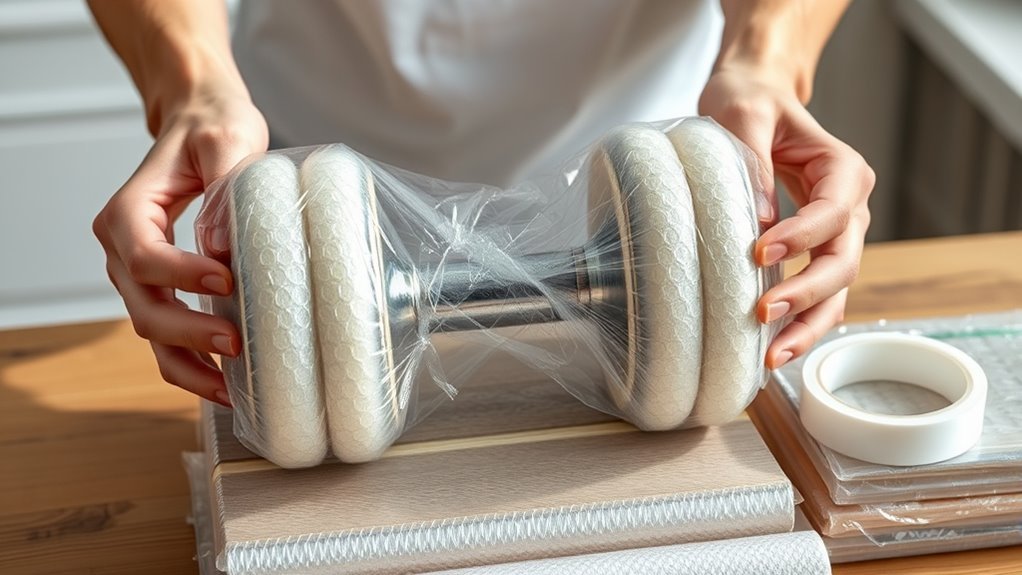
When you wrap each dumbbell individually, you protect them from scratches and prevent damage during the move. Start by using bubble wrap or thick towels, securing the wrap with tape.
This cushioning absorbs shocks and keeps metal parts from banging against each other. Label each wrapped dumbbell for easy identification later.
| Step | Description |
|---|---|
| 1. Choose Wrap | Bubble wrap or thick towels |
| 2. Wrap Dumbbell | Cover fully, secure with tape |
| 3. Cushioning | Add extra padding on ends |
| 4. Label | Mark weight and side |
| 5. Inspect | Check for any exposed parts |
Wrapping individually guarantees your dumbbells stay intact and your move goes smoothly.
Use Durable Containers for Packing
After wrapping each dumbbell carefully, you’ll want to place them in containers that can handle the weight and protect them during the move. Choosing the right container is vital to avoid damage and guarantee safe transport.
Opt for durable materials that won’t break or bend under pressure. Here’s what you should look for:
- Sturdy plastic bins or heavy-duty cardboard boxes with reinforced bottoms.
- Containers with handles or grips to make lifting easier and safer.
- Sizes that fit your dumbbells snugly to minimize movement inside.
Secure the Dumbbells Inside the Containers
Although you’ve chosen sturdy containers, you still need to secure the dumbbells inside to prevent shifting during transit. Start by placing a layer of packing paper or bubble wrap at the bottom of the container.
Then, arrange the dumbbells snugly, making sure they don’t touch each other or the box edges. Fill any gaps with crumpled paper or foam peanuts to keep everything tight. You can also wrap each dumbbell individually in bubble wrap for extra protection.
Once packed, press down gently on the contents to check for movement. If there’s any, add more cushioning until the dumbbells stay firmly in place.
Securing the dumbbells this way protects both the weights and your container. It also reduces the risk of damage or injury when you move.
Label the Boxes Clearly
Make sure you label your boxes with a bold marker so they’re easy to spot. Clearly indicate the weight on each box to avoid any surprises when lifting.
This helps you and movers handle the dumbbells safely and efficiently. It’s just a simple step that can make a big difference.
Use Bold Marker
When you label your boxes with a bold marker, you make certain that everyone handling your dumbbells knows exactly what’s inside. Using a bold marker guarantees your labels stand out, reducing the chance of mishandling or confusion.
Here’s why you should choose a bold marker:
- Visibility: Bold letters are easier to read from a distance, helping movers quickly identify dumbbell boxes.
- Durability: Bold markers typically resist smudging, so your labels stay clear even if the boxes get damp or dirty.
- Simplicity: You can quickly write clear, large letters without needing extra tools or time.
Indicate Weight Clearly
A clear weight label on your dumbbell boxes helps you and the movers handle them safely and efficiently. When you mark each box with its exact weight, you reduce the risk of injury and damage.
Use a bold marker to write the weight on multiple sides of the box for easy visibility. Also, consider including handling instructions like “Heavy – Lift with Care.”
Here’s a simple way to organize your labels:
| Box Number | Weight (lbs) | Handling Notes |
|---|---|---|
| 1 | 30 | Heavy – Lift Carefully |
| 2 | 40 | Heavy – Lift Carefully |
| 3 | 20 | Medium Weight |
| 4 | 50 | Heavy – Lift Carefully |
| 5 | 25 | Medium Weight |
Clearly marked boxes keep your move smooth and safe. It really makes a difference!
Load Dumbbells Carefully Into the Moving Vehicle
Although dumbbells are compact, you’ll need to load them into the moving vehicle with care to prevent damage or injury. Start by placing them on the floor of the vehicle rather than stacking, which could cause shifting.
Secure them tightly with straps or ropes to keep them from rolling during transit. Here’s how to do it right:
- Load heavier dumbbells first to create a stable base.
- Use padding like blankets or foam to separate dumbbells from other items.
- Keep dumbbells near the center of the vehicle to maintain balance.
Taking these steps really helps keep your dumbbells safe and your move smooth. Just a little extra care goes a long way!
Tips for Unpacking and Storing Dumbbells Safely
Once you arrive at your new place, unpack your dumbbells carefully to avoid injury or damage. Place them on a sturdy surface and avoid dropping them.
Store your dumbbells in a dry, accessible location to prevent rust and guarantee safety. Use racks or shelves designed for weights to keep them organized and off the floor.
Here’s a quick guide to help:
| Step | Action | Tip |
|---|---|---|
| 1 | Unpack slowly | Avoid sudden drops |
| 2 | Inspect for damage | Check plates and handles |
| 3 | Choose storage spot | Dry, flat, easy access |
| 4 | Use proper racks | Prevent clutter & injury |
Following these steps keeps your dumbbells safe and your space tidy. It’s a simple way to make sure everything stays in good shape!
Frequently Asked Questions
Can Dumbbells Be Shipped via Air Freight Safely?
Yes, you can ship dumbbells via air freight safely. Just make sure to secure them tightly in sturdy packaging.
Cushion them well to prevent damage, and label the package clearly. This helps avoid mishandling during transit.
What Is the Average Weight Limit for Moving Dumbbells?
The average weight limit for moving dumbbells is like a tightrope walker’s balance—usually around 50 pounds per box to keep things manageable and safe.
You’ll want to avoid overpacking and risking injury or damage. It’s all about finding that sweet spot so you can move your gear without any hassle.
Are Adjustable Dumbbells Harder to Pack Than Fixed Ones?
Yes, adjustable dumbbells are harder to pack than fixed ones because they have multiple parts that can shift or get lost.
You’ll need to secure each piece carefully to prevent damage during the move.
It’s a bit more work, but with some patience, you can keep everything together and safe.
How Do I Insure My Dumbbells During a Long-Distance Move?
If you insure your dumbbells with a moving company, like Sarah did, get a detailed inventory list and purchase additional coverage for high-value items.
Always document their condition with photos to support any future claims.
It’s a good idea to take clear pictures from multiple angles. That way, if anything happens during the move, you’ll have proof of their original state.
Can I Recycle Packing Materials After Moving Dumbbells?
Yes, you can recycle packing materials like cardboard boxes and paper after moving dumbbells. Just make sure they’re clean and free of heavy tape or residue before placing them in your recycling bin.
This helps keep the recycling process smooth and efficient. So, give those materials a quick check and they’re good to go!
Conclusion
Remember, “a stitch in time saves nine.” By packing your dumbbells carefully—cleaning, wrapping, and securing them properly—you’ll avoid damage and hassle later.
Take the time to label and load them thoughtfully, ensuring they stay safe during your move. When unpacking, handle them with care to keep your workout gear in top shape.
Following these steps helps you move smartly and start your next workout without a hitch. Properly packing dumbbells for moving safely not only protects your equipment but also prevents injuries and damage to your belongings. So, invest a little effort now to enjoy a smooth, stress-free move and get back to your fitness routine quickly and safely.