How Many Calories Does a Treadmill Burn Step-by-Step
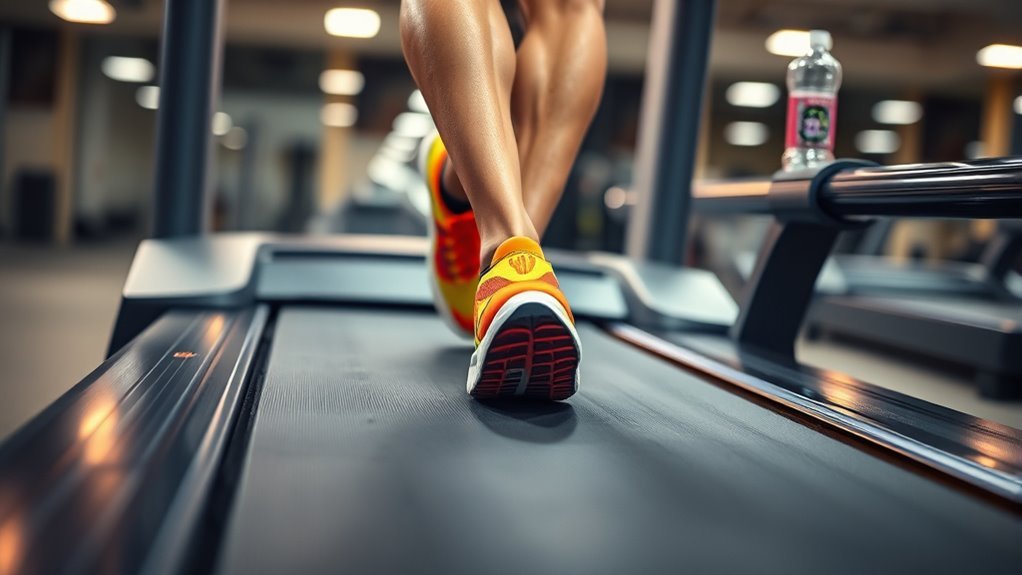
You burn calories on a treadmill by adjusting your speed, incline, and workout length. These factors directly affect how many calories you burn during your session. Going faster or increasing the incline makes your muscles work harder and raises your heart rate, boosting calorie burn.
Heavier body weight and longer sessions also increase total calories burned. Running generally burns more calories per minute than walking, and mixing speeds or inclines maximizes your effort.
Keep these factors in mind, and you’ll find ways to improve your treadmill workouts for better results ahead.
Key Takeaways
- Calories burned on a treadmill depend on speed, incline, body weight, and workout duration.
- Walking burns fewer calories per minute than running, with running roughly doubling the burn rate.
- Increasing incline engages more muscles, raising heart rate and calorie expenditure significantly.
- Heavier individuals typically burn more calories due to greater energy requirements for movement.
- Using metabolic formulas and treadmill data helps estimate personalized calorie burn for each session.
Understanding the Basics of Calorie Burn on a Treadmill
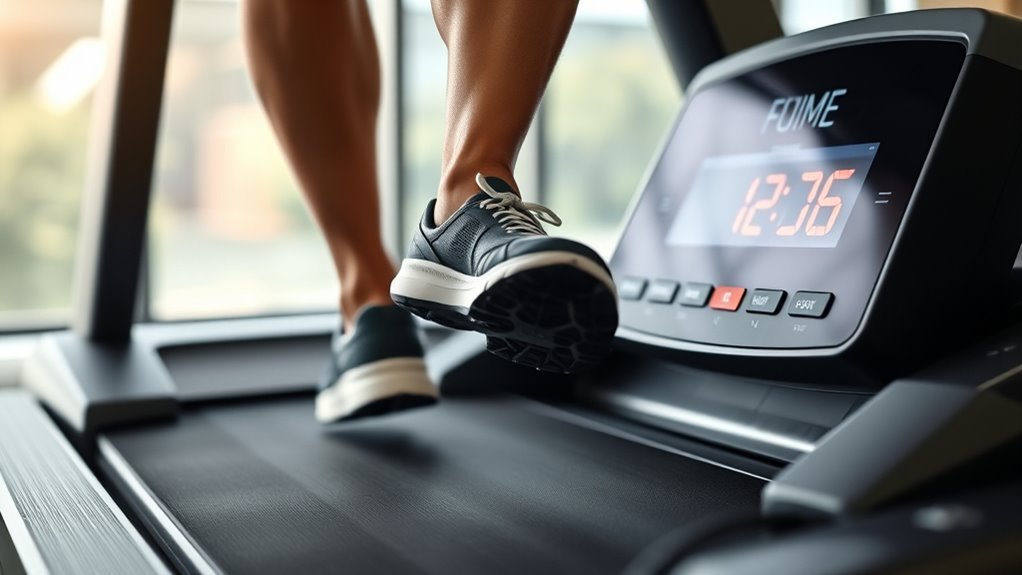
Although burning calories on a treadmill might seem straightforward, understanding how it actually works can help you maximize your workouts. When you step onto the treadmill, your body uses energy to move your muscles and maintain balance.
Understanding how your body uses energy on a treadmill can help you maximize calorie burn and workout effectiveness.
The treadmill’s speed and incline directly influence how hard your muscles work, which in turn affects calorie burn. Your heart rate rises as your effort increases, signaling your body to burn more calories.
Even walking at a moderate pace burns energy because your body needs fuel to support movement and maintain bodily functions. By knowing that calorie burn depends on energy expenditure during physical activity, you can appreciate why consistent treadmill workouts contribute to weight management and improved fitness.
This basic understanding sets the stage for optimizing your treadmill routine effectively. So, next time you hit the treadmill, remember these points to get the most out of your session!
Factors That Affect Calorie Expenditure During Treadmill Workouts
Now that you understand how your body burns calories on a treadmill, it’s important to recognize the factors that influence how many calories you expend during each workout. Your weight plays a big role; heavier individuals typically burn more calories because their bodies work harder to move.
The workout duration also matters—the longer you exercise, the more calories you burn. Incline settings impact calorie burn, too, as walking or running uphill requires more effort.
Your fitness level influences efficiency; if you’re more fit, your body may burn fewer calories doing the same workout compared to when you first started. Ultimately, your metabolism rate affects calorie expenditure—some people naturally burn calories faster than others.
Keep these factors in mind to tailor your treadmill sessions effectively. It’s all about finding what works best for you and making your workouts count!
How Speed Influences Calories Burned
When you increase your speed on the treadmill, your body works harder and burns more calories. Walking and running use different energy systems, so shifting between them can impact your metabolism.
Understanding how speed changes your calorie burn helps you tailor workouts to your goals. It’s all about finding what works best for you and keeping things moving!
Walking vs. Running
Since speed directly impacts how many calories you burn on a treadmill, understanding the difference between walking and running is essential for tailoring your workout.
When you walk, you maintain a steady, moderate pace that burns calories at a consistent rate. Running, on the other hand, demands more energy and burns calories faster due to increased intensity.
Here’s how walking and running compare:
- Calorie Burn Rate: Running typically burns about twice as many calories per minute as walking.
- Impact on Joints: Walking is low-impact, making it easier on your joints, while running places more stress on them.
- Workout Duration: You might walk longer due to lower fatigue, but running achieves higher calorie burn in less time.
Choose the method that fits your fitness goals and physical condition best. It really comes down to what works for you!
Speed and Metabolism
Although increasing your treadmill speed demands more effort, it also revs up your metabolism, helping you burn more calories both during and after your workout. When you push yourself to run faster, your body requires extra energy to sustain the pace, which accelerates calorie burn.
This heightened intensity triggers your metabolism to stay elevated even after you finish, a phenomenon known as excess post-exercise oxygen consumption (EPOC). The faster you go, the greater this afterburn effect becomes.
The Role of Incline in Increasing Calorie Burn
Adding an incline to your treadmill workout substantially boosts the number of calories you burn. When you increase the incline, your body works harder, engaging more muscles and elevating your heart rate.
Increasing treadmill incline intensifies effort, activates more muscles, and raises heart rate for greater calorie burn.
This means you burn more calories in less time. Here’s how incline impacts your calorie burn:
- Increases Muscle Activation: Walking or running uphill recruits your glutes, hamstrings, and calves more, improving overall strength and endurance.
- Elevates Heart Rate: The added effort pushes your cardiovascular system, increasing oxygen consumption and calorie expenditure.
- Enhances Metabolic Rate: Incline training can raise your metabolism post-workout, helping you burn calories even after you stop exercising.
Mixing in incline variations keeps your treadmill sessions challenging and effective for calorie burning. It’s a simple way to make your workout work harder for you!
Calculating Calories Burned Based on Workout Duration
You’ll burn more calories the longer you stay on the treadmill, but intensity plays a big role too.
Balancing your workout duration with how hard you push yourself helps you estimate total calories burned more accurately.
Let’s look at how time and effort combine to impact your calorie count.
Duration Impact on Calories
When you increase the time spent on a treadmill, your body naturally burns more calories. The longer you stay active, the more energy you expend.
Here’s how duration impacts your calorie burn:
- Extended Sessions – Each additional minute adds calories burned, so doubling your workout roughly doubles your energy use.
- Steady State – After warming up, your body reaches a steady calorie burn rate. So, keeping a consistent duration is key to maximizing calories.
- Fatigue Factor – As time passes, fatigue can lower your pace, which might slightly reduce calorie burn. But overall, longer workouts still yield more total burned calories.
Intensity and Time Relation
Understanding how intensity interacts with the duration of your treadmill workout helps you better estimate the calories you burn. When you increase the speed or incline, your body works harder, so you burn more calories per minute.
Conversely, if you maintain a moderate pace for a longer time, you also accumulate a significant calorie burn. For example, a brisk 30-minute run burns more calories than a slow 30-minute walk.
But a slow 60-minute walk might rival a shorter intense session. To optimize calorie burn, balance how hard you push yourself with how long you keep going.
Tracking both factors together lets you tailor workouts to your fitness goals and accurately gauge your energy expenditure.
Estimating Total Burned Calories
Although factors like speed and incline affect calorie burn, the total workout duration plays a crucial role in estimating how many calories you’ll burn on a treadmill.
To calculate your total burned calories, you’ll want to take into account these key points:
- Determine your calorie burn rate per minute based on your speed and incline settings.
- Multiply this rate by the total minutes you spend exercising to get an estimate of total calories burned.
- Adjust for any breaks or changes in intensity during your workout to maintain accuracy.
It’s pretty straightforward once you get the hang of it. Just keep track of your pace and time, and you’ll have a good idea of your calorie burn.
Using Metabolic Equations to Estimate Treadmill Calorie Burn
Because calorie burn varies with speed, incline, and individual factors, metabolic equations provide a reliable way to estimate how many calories you burn on a treadmill. These formulas consider your weight, walking or running speed, and treadmill incline to give a more personalized estimate.
For example, the ACSM metabolic equation is widely used for this purpose.
Here’s a quick reference table showing approximate calorie burn per minute based on weight and speed at 0% incline:
| Weight (lbs) | Speed (mph) | Calories/Minute |
|---|---|---|
| 150 | 3.5 | 4.3 |
| 150 | 6.0 | 10.0 |
| 180 | 3.5 | 5.2 |
| 180 | 6.0 | 12.1 |
Using these equations helps tailor your treadmill workout estimates accurately. It’s a smart way to get a clearer picture of your calorie burn and make your workouts count!
Practical Tips to Maximize Calorie Burn on the Treadmill
Now that you know how to estimate your calorie burn using metabolic equations, you can focus on strategies to boost those numbers during your treadmill sessions.
Here are three practical tips to maximize your calorie burn:
1. Incorporate Intervals: Alternate between high-intensity sprints and moderate-paced walking or jogging. This challenges your body and increases overall calorie expenditure.
It’s a great way to keep things interesting and push your limits.
2. Adjust the Incline: Walking or running uphill forces your muscles to work harder. This considerably raises the calories you burn compared to flat surfaces.
Plus, it’s an excellent way to build strength and endurance.
3. Increase Duration Gradually: Extending your workout time, even by a few minutes, adds up to more calories burned.
Just be careful not to increase too quickly to avoid injury. Slow and steady wins the race!
Tracking and Adjusting Your Treadmill Workouts for Better Results
To get the most from your treadmill workouts, you need to track your progress and adjust your routine regularly. Start by recording key stats like time, speed, distance, and calories burned each session. Use a fitness app or treadmill display to make this easy.
Review your data weekly to spot trends and plateaus. When you notice your calorie burn leveling off, tweak your workout by increasing speed, incline, or duration. Incorporate interval training to challenge your body and boost metabolism.
Don’t forget to adjust as your fitness improves to keep burning calories efficiently. Consistent tracking helps you set realistic goals and stay motivated. By actively monitoring and modifying your treadmill routine, you’ll maximize calorie burn and reach your fitness targets faster.
Frequently Asked Questions
Can Treadmill Workouts Help With Muscle Building?
Yes, treadmill workouts can help build muscle, especially in your legs and glutes. By incorporating inclines and intervals, you’ll challenge your muscles more.
This promotes strength and endurance while burning calories effectively. So, it’s a great way to add muscle tone while getting a good cardio session in. Give it a try and see how your muscles respond!
How Does Treadmill Running Compare to Outdoor Running?
Treadmill running offers controlled conditions and less impact, which is great for reducing stress on your joints.
Outdoor running, on the other hand, challenges you with varied terrain and wind resistance. It keeps things interesting because no two runs are exactly the same.
You’ll get consistent pacing indoors, which can help you focus on specific training goals. Plus, running outside lets you enjoy mental stimulation and natural scenery, making the experience more enjoyable overall.
Are There Specific Shoes Recommended for Treadmill Workouts?
You should choose shoes that offer support, cushioning, and durability. Pick running shoes designed for treadmill workouts, avoid heavy hiking shoes, and guarantee proper fit.
This helps you stay comfortable, prevent injury, and improve performance. It’s all about keeping your feet happy while you work out!
Can Walking on a Treadmill Improve Cardiovascular Health?
Yes, walking on a treadmill can improve your cardiovascular health by strengthening your heart and lungs. Regular treadmill workouts boost circulation, lower blood pressure, and increase endurance.
This helps you maintain a healthier heart over time. Plus, it’s a convenient way to get consistent exercise regardless of the weather outside. So, hopping on a treadmill can definitely be a great step towards better heart health!
What Are the Best Treadmill Settings for Beginners?
Imagine Sarah, a beginner, starts with a 2 mph speed and 0% incline for 10 minutes.
You should do the same, gradually increasing speed and incline as you get comfortable to avoid injury and build endurance.
Take it slow at first. Trust me, your body will thank you!
Conclusion
Now that you know how speed, incline, and duration impact calorie burn, you can tailor your treadmill workouts to meet your goals. Did you know that adding just a 5% incline can boost your calorie burn by up to 20%? That means you’re getting more out of every step without extra time.
Keep tracking your progress and adjusting your routine—you’ll see better results and stay motivated as you burn calories more efficiently! Remember, the key to maximizing how many calories a treadmill burns lies in mixing up your speed and incline and pushing yourself just a little more each session.
By paying attention to these factors, you can make every treadmill workout count toward your fitness goals. So lace up, get moving, and watch those calorie numbers drop!