
How to Move an Elliptical in 3 Easy Steps
To move your elliptical in three easy steps, start by unplugging it and removing any accessories. This includes securing or detaching loose parts like pedals and handles to make it lighter and easier to handle.
Next, use proper lifting techniques—bend your knees, keep your back straight, and consider using a furniture dolly or straps for extra support. This helps prevent injury and makes the move smoother.
Finally, place the elliptical on a flat, stable surface. Tighten any loose screws and test it out to make sure it’s running smoothly.
Keep reading for helpful tips to make your elliptical move safer and more efficient!
Key Takeaways
- Unplug and remove accessories, then secure loose parts like pedals and handles with tape or straps.
- Use a furniture dolly or moving straps to support the elliptical while lifting with knees and a straight back.
- Clear the path to avoid obstacles and move the elliptical slowly and carefully to prevent damage.
- Place the elliptical on a flat, stable surface and adjust leveling feet to ensure stability in the new location.
- Reconnect power, test the machine briefly, and confirm all parts are secure and functioning properly.
Prepare the Elliptical for Moving
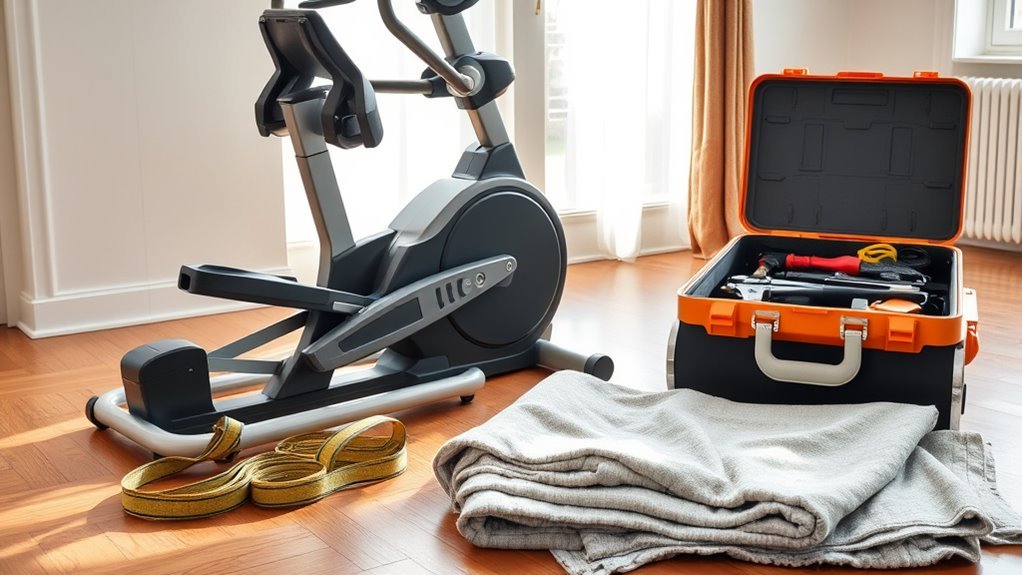
Before you start moving your elliptical, you need to prepare it properly to avoid damage and make the process smoother. First, unplug the machine and remove any accessories like water bottles or towels.
Check for loose parts or screws and tighten them to prevent rattling or falling during the move. If your elliptical has pedals or handles that can be detached, remove them to reduce bulk.
Clean the machine to avoid dirt or sweat residue spreading to other areas. Secure cables and wires with twist ties or tape so they don’t get tangled or damaged.
Finally, clear the path where you’ll move the elliptical to avoid obstacles. Taking these steps will protect your equipment and make the move safer and easier.
Use Proper Techniques and Tools
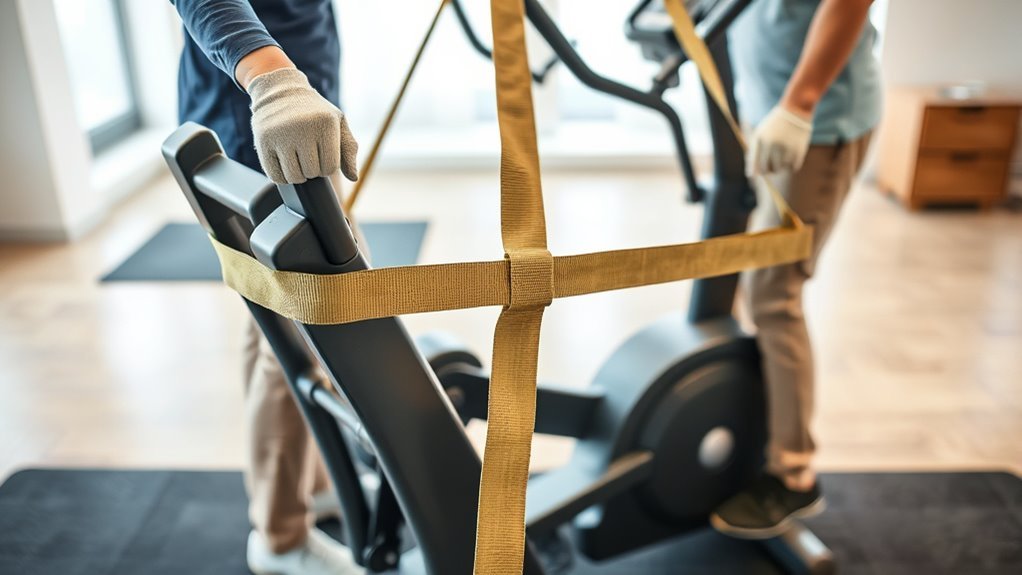
When moving your elliptical, you’ll want to use the right techniques and tools to protect both yourself and the equipment. Start by securing the pedals and handlebars to prevent movement during the move.
Use a furniture dolly or moving straps to ease transportation and reduce strain. Always lift with your legs, not your back, to avoid injury.
Here’s a quick checklist to follow:
- Secure loose parts like pedals and handles with tape or straps.
- Use a furniture dolly or moving straps to support the elliptical’s weight.
- Lift properly by bending your knees and keeping your back straight.
Following these steps will help you move your elliptical safely and efficiently. It’s really all about being careful and using the right tools.
Position and Secure the Elliptical in Its New Location
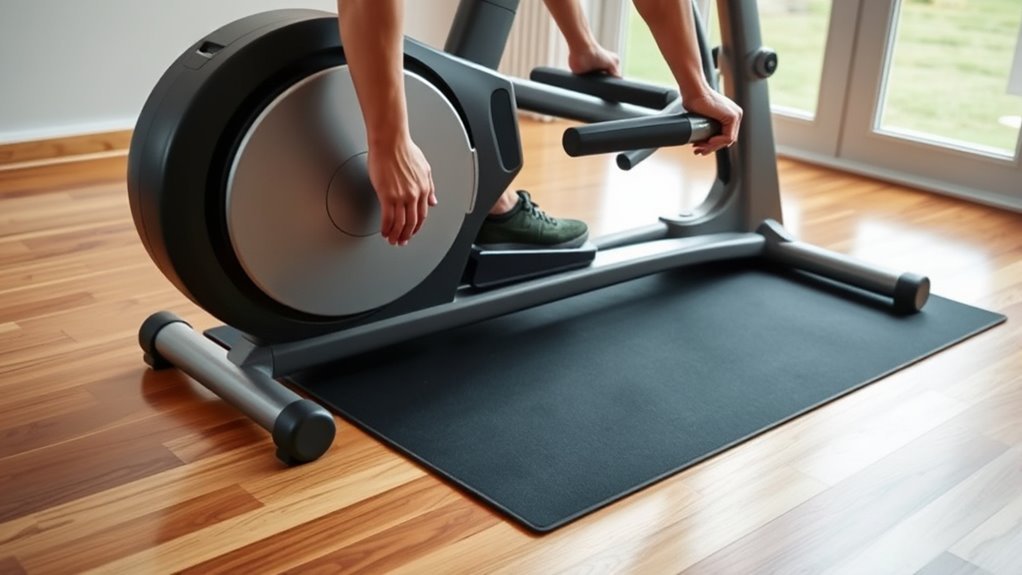
Once you’ve moved the elliptical to its new spot, position it on a flat, stable surface to guarantee safety and proper function. Check for any unevenness and adjust the machine’s leveling feet if it has them.
Place the elliptical on a flat, stable surface and adjust leveling feet to ensure safety and stability.
This will prevent wobbling during use and protect your floor. Next, secure the elliptical by tightening all bolts and screws you loosened during the move.
If your elliptical has wheels, lock them to keep it stationary. Consider placing a non-slip mat underneath to reduce movement and protect your flooring.
Finally, plug in the elliptical and test it briefly to ensure everything works smoothly. Taking these steps will help you enjoy your workout without interruptions or damage to your equipment.
Frequently Asked Questions
Can I Disassemble the Elliptical for Easier Moving?
Yes, you can disassemble the elliptical to make moving it easier. Just make sure you keep all screws and parts organized.
Follow the manual carefully to avoid damaging your machine during the process. It’s a good idea to take your time and be patient with each step.
How Do I Clean the Elliptical Before Moving It?
You wipe down the handles, you clean the pedals, you dust the frame. Use a damp cloth with mild soap, avoid harsh chemicals, and dry thoroughly.
This keeps your elliptical fresh and ready for moving safely. It’s simple but makes a big difference!
What Should I Do if the Elliptical Is Too Heavy Alone?
If the elliptical is too heavy alone, don’t risk injury. Ask a friend for help, use a dolly or furniture sliders, and lift with your legs, not your back, to move it safely and efficiently.
It’s always better to be safe than sorry. So, getting some help or the right tools can make the whole process much easier!
Are There Professional Services for Moving Fitness Equipment?
Yes, you can hire professional moving services specializing in fitness equipment. They’ll handle heavy ellipticals safely and efficiently, saving you time and effort.
Just search locally and book a trusted company to assist you. It makes the whole process way easier and less stressful!
How Do I Maintain the Elliptical After Relocating It?
You should clean the elliptical thoroughly, check for loose bolts, lubricate moving parts, and recalibrate the machine.
Regularly inspect the power cord and display to guarantee everything works smoothly after relocating your elliptical. It’s a good idea to take your time with these steps so your equipment stays in great shape.
Conclusion
Now that you’ve prepped, lifted, and settled your elliptical, you’re ready to enjoy smooth workouts in your new space—like a well-choreographed dance. Just like moving mountains one step at a time, you’ve handled each part with care and precision.
Remember, every great journey starts with a single move, and with these easy steps, you’ve made yours effortless. So, gear up, roll forward, and keep your fitness rhythm going strong! Moving an elliptical can seem tricky, but breaking it down into simple steps makes all the difference.
By following these three easy steps to move an elliptical, you ensure your equipment stays safe and your workouts uninterrupted. Now it’s time to enjoy your fitness routine in its new spot, feeling confident and ready to crush your goals!