How Many Calories Do You Burn on Vibration Plates
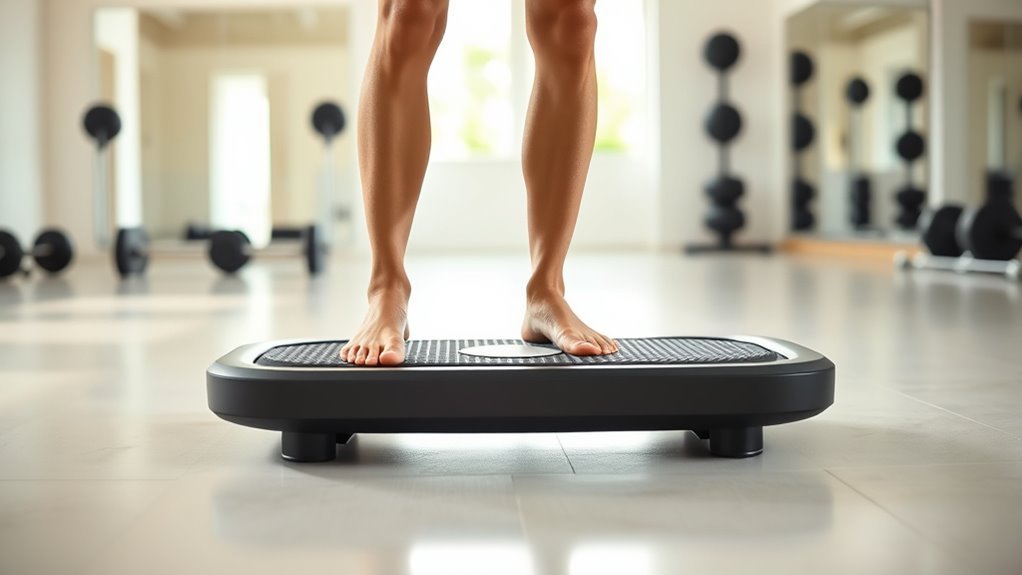
You burn calories on vibration plates by engaging muscles through rapid contractions triggered by the platform’s oscillations. These quick muscle movements help activate different muscle groups, which can lead to calorie burn.
Depending on your workout intensity, duration, and vibration settings, you can burn anywhere from 50 to 300 calories per session.
Combining dynamic moves like squats or lunges boosts calorie burn more than just standing still. So, if you want to get the most out of your session, keep moving!
While vibration plates won’t replace traditional cardio for max calorie burn, they offer low-impact muscle activation and tone, making them a great option for many people.
Explore how to maximize these benefits and who can best use vibration plates to support their fitness goals. It’s a handy tool for muscle activation, especially if you’re looking for a gentle yet effective workout.
Key Takeaways
- Vibration plate workouts burn approximately 50-300 calories depending on intensity, duration, and exercise type.
- Light sessions burn about 50-80 calories in 15 minutes, while intense 30-minute workouts can burn 200-300 calories.
- Dynamic exercises like squats and lunges increase calorie burn compared to static poses or stretches.
- Calorie burn is generally lower than traditional exercises like running or cycling but offers low-impact muscle activation.
- Combining vibration plate workouts with conventional exercises maximizes overall calorie expenditure and muscle activation.
Understanding Vibration Plate Technology
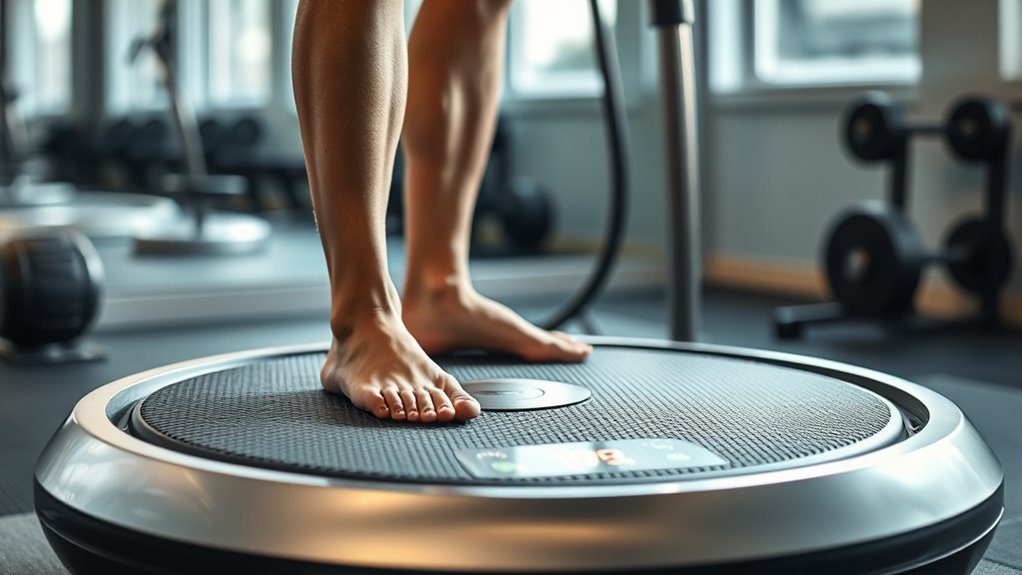
Although vibration plates might seem like simple exercise machines, they use advanced technology to stimulate your muscles through rapid vibrations. When you stand, sit, or perform exercises on the plate, it delivers mechanical oscillations that cause your muscles to contract and relax multiple times per second.
This rapid stimulation activates muscle fibers more efficiently than traditional workouts. The vibration frequency and amplitude are adjustable, allowing you to customize the intensity based on your fitness level and goals.
These machines rely on either vertical or oscillating vibrations, each producing different movement patterns to engage your muscles. By understanding how this technology works, you can better appreciate how vibration plates offer a unique way to enhance your exercise routine without relying solely on conventional movements.
How Vibration Plates Affect Muscle Activation
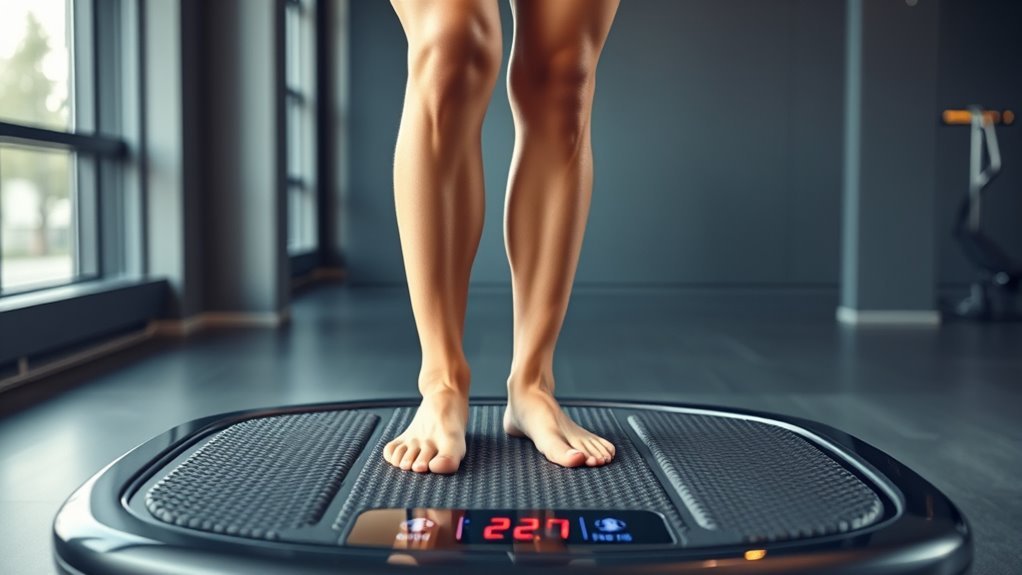
When you step on a vibration plate, it changes how your muscles engage by altering recruitment patterns. The frequency and amplitude of the vibrations play a key role in activating different muscle fibers.
This stimulation can improve your muscle tone more efficiently than traditional exercises alone. It’s like giving your muscles a little extra wake-up call to work harder and smarter.
Muscle Recruitment Patterns
Because vibration plates send rapid oscillations through your muscles, they stimulate increased muscle activation compared to static exercises. This means your body recruits more muscle fibers simultaneously, including deep stabilizing muscles you might not engage otherwise.
As a result, your muscles work harder, boosting calorie burn and improving strength.
Here’s how muscle recruitment varies on vibration plates:
| Muscle Type | Recruitment Effect |
|---|---|
| Fast-twitch fibers | Activated for explosive responses |
| Slow-twitch fibers | Engaged for endurance support |
| Stabilizer muscles | Increased activation for balance |
| Prime movers | Enhanced contraction intensity |
Frequency and Amplitude Effects
Adjusting the frequency and amplitude on vibration plates directly influences how your muscles respond and activate. When you increase these settings, your muscles contract more rapidly and intensely. This can boost calorie burn and workout efficiency.
Here’s how each factor plays a role:
- Frequency (Hz): Higher frequencies cause faster muscle contractions. This enhances muscle activation and energy expenditure.
- Amplitude (mm): Larger amplitudes increase the movement range. That forces your muscles to work harder to stabilize your body.
- Combination Effect: Balancing frequency and amplitude optimizes muscle stimulation. It helps avoid excessive fatigue or discomfort.
Impact on Muscle Tone
Although vibration plates have gained popularity for their convenience, you might be surprised at how effectively they engage your muscles to improve tone. When you stand or perform exercises on a vibration plate, the rapid oscillations cause your muscles to contract involuntarily.
This reflexive activity boosts muscle fiber recruitment beyond what you’d achieve with static holds or slow movements alone. As a result, your muscles work harder, promoting increased strength and firmness over time.
Factors Influencing Calorie Burn on Vibration Plates
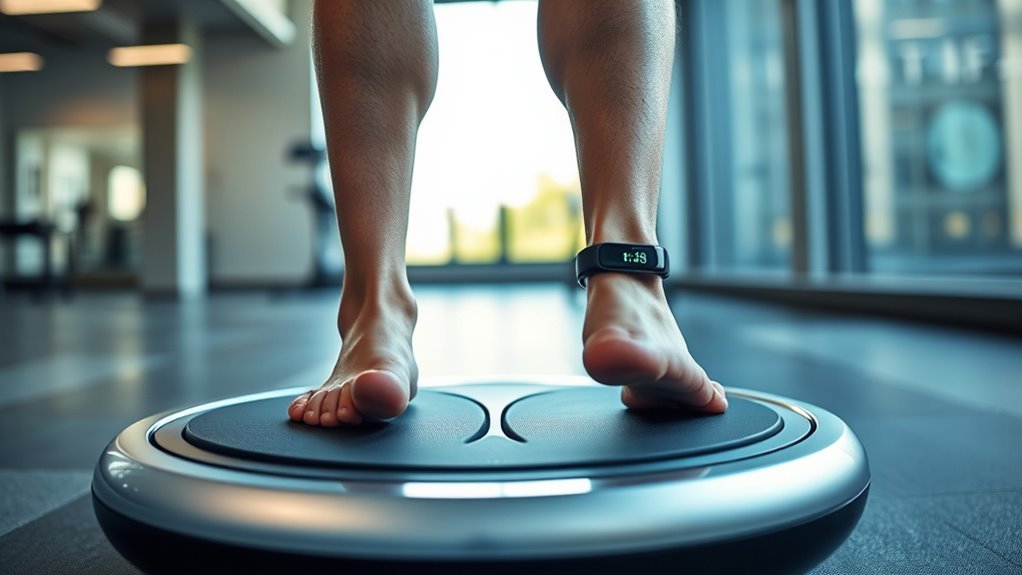
When you use a vibration plate, several factors determine how many calories you burn. Understanding these can help you maximize your workout efficiency.
- Duration and Intensity: The longer and more intense your session, the more calories you’ll burn. Higher vibration frequencies increase muscle activation, which boosts calorie expenditure.
- Body Composition: Muscle mass impacts calorie burn. If you have more muscle, your body requires more energy, so you’ll burn more calories during vibration plate exercises.
- Exercise Type: Combining static poses with dynamic movements on the plate engages more muscle groups. This results in higher calorie burn compared to just standing still.
Comparing Calorie Burn: Vibration Plates Vs Traditional Exercise
Understanding the factors that influence calorie burn on vibration plates sets the stage for comparing their effectiveness to traditional exercise. When you use a vibration plate, you engage muscles through rapid vibrations, which can increase energy expenditure.
However, the calorie burn typically remains lower than what you’d achieve with activities like running, cycling, or strength training. Traditional exercises tend to involve sustained, dynamic movements that demand more oxygen and energy, leading to higher calorie consumption.
Calorie burn on vibration plates is usually less than running, cycling, or strength training due to lower energy demands.
That said, vibration plates can complement your routine by activating muscles in a low-impact way, especially if you’re recovering or have joint issues. So, if you’re looking for something gentle on the body, they can be a good option.
Ultimately, if your goal is maximum calorie burn, traditional workouts generally outperform vibration plates. But hey, combining both can offer balanced benefits and keep things interesting!
Sample Calorie Burn Estimates for Different Vibration Plate Workouts
You’ll burn fewer calories during light vibration sessions, but the numbers rise when you push into more intense workouts.
Combining vibration plate exercises with other movements can boost your total calorie burn even more.
Let’s look at some sample estimates to see how these different approaches compare.
Light Vibration Sessions
Although light vibration sessions may seem less intense, they still help you burn a notable amount of calories. These sessions often involve gentle movements or static poses on the plate, making them ideal for beginners or those focusing on recovery.
Here’s what you can expect in terms of calorie burn during light vibration workouts:
- Standing or slight squatting on the plate can burn around 50-70 calories in 15 minutes.
- Simple balance exercises combined with vibration may increase calorie burn to approximately 70-90 calories.
- Light stretching or yoga poses on the vibrating platform can help you burn close to 60-80 calories per session.
Even at low intensity, vibration plates activate muscles and boost metabolism. This supports your overall fitness goals, so don’t underestimate these gentler sessions!
Intense Workout Estimates
When you push your limits on a vibration plate, your body burns considerably more calories in a shorter time. For example, a 30-minute intense session involving squats, lunges, and push-ups on the plate can burn around 200 to 300 calories, depending on your weight and effort.
High-frequency vibrations combined with dynamic movements boost muscle engagement, accelerating calorie burn. Including isometric holds or resistance bands during your workout can increase calorie expenditure even more.
If you perform a vigorous 20-minute routine with minimal rest, expect to torch about 150 to 250 calories. Remember, the more intense and varied your exercises, the greater your calorie burn. So, ramp up the vibration frequency and challenge yourself with complex moves to maximize results.
Combined Exercise Impact
Since combining different exercises on a vibration plate engages multiple muscle groups, it can substantially boost your calorie burn. When you mix movements like squats, push-ups, and planks on the platform, your body works harder to stabilize and balance itself, increasing energy expenditure.
Here are some sample calorie burn estimates for combined vibration plate workouts:
- Squat + Arm Raises (15 minutes): Burns approximately 120-150 calories by engaging legs and shoulders simultaneously.
- Plank + Leg Lifts (10 minutes): Burns around 90-110 calories, targeting core and lower body.
- Lunges + Bicep Curls (20 minutes): Burns about 180-210 calories, activating multiple large muscle groups.
Incorporating varied exercises keeps your routine dynamic and maximizes calorie burn efficiently. It’s a great way to stay motivated and get more out of your workout sessions!
Benefits Beyond Calories: Circulation and Muscle Tone
Beyond just burning calories, vibration plates can considerably enhance your circulation and muscle tone. When you stand or perform exercises on these plates, the vibrations stimulate blood flow, helping oxygen and nutrients reach your muscles more efficiently.
This boost in circulation can aid recovery and reduce muscle soreness. Additionally, the rapid muscle contractions triggered by the vibrations improve muscle tone and strength over time. You’ll notice firmer, more defined muscles without intense workouts.
Plus, the stimulation activates deep muscle fibers often overlooked during traditional exercise, giving you a more all-encompassing workout. Using vibration plates regularly can contribute to better overall muscle health and improved vascular function, making them a valuable tool beyond simply tracking calories burned.
Tips for Maximizing Calorie Burn on Vibration Plates
To get the most out of your vibration plate workouts, you’ll want to focus on proper posture and movement variety. This approach helps you engage more muscles and burn additional calories efficiently.
Focusing on good posture and varied movements boosts muscle engagement and maximizes calorie burn on your vibration plate.
Here are three tips to maximize your calorie burn:
- Incorporate dynamic exercises: Instead of standing still, try squats, lunges, or push-ups on the plate to increase muscle activation and energy expenditure.
- Adjust vibration settings: Use higher frequencies and amplitudes as you progress. This will challenge your muscles more and boost calorie burn.
- Maintain correct posture: Keep your core tight, knees slightly bent, and avoid locking joints. Doing this enhances muscle engagement and helps prevent injury.
Who Should Consider Using Vibration Plates for Fitness
If you’re looking for a low-impact way to boost your fitness, vibration plates can be a great option. They’re especially useful if you have joint issues or limited mobility, as the vibrations stimulate muscles without heavy strain.
You might consider using vibration plates if you want to enhance muscle tone, improve circulation, or speed up recovery after workouts. They also suit busy people who need efficient workouts since sessions are typically short but effective.
However, if you have certain medical conditions like pacemakers or are pregnant, consult your doctor first. Overall, vibration plates offer a convenient, accessible fitness tool that complements traditional exercises and helps you burn calories in a gentle yet effective way.
Frequently Asked Questions
Are Vibration Plates Safe for People With Joint Problems?
You can use vibration plates if you have joint problems, but you should consult your doctor first. They reduce impact on joints, but improper use might cause discomfort.
Start slow, listen to your body, and adjust accordingly. It’s all about finding what feels right for you. If something doesn’t feel good, don’t push it.
How Often Should I Use a Vibration Plate for Best Results?
Think of using the vibration plate like watering a plant—about 3-4 times a week works best.
Just like consistent watering helps growth, regular sessions boost muscle tone and circulation without overdoing it.
Can Vibration Plates Help With Weight Loss Without Diet Changes?
Vibration plates alone won’t lead to significant weight loss without diet changes.
You can boost muscle tone and metabolism, but combining them with healthy eating and regular exercise is key to seeing real, lasting results.
So, if you’re hoping to shed pounds, don’t rely just on the vibration plate.
Think of it as a helpful tool, but not a magic fix.
Do Vibration Plates Improve Balance and Coordination?
Yes, vibration plates can improve your balance and coordination by stimulating muscle contractions and activating your core.
Regular use challenges your stabilizing muscles, helping you enhance overall body control and stability effectively over time.
It’s like giving your body a little workout boost that targets those tricky muscles you don’t always think about. Stick with it, and you’ll likely notice better balance and smoother movements!
What Maintenance Is Required for Vibration Plate Machines?
To keep your vibration plate in tip-top shape, you’ll want to wipe it down regularly, check bolts and screws, and keep it away from dust and moisture.
A little elbow grease goes a long way for smooth operation. Just a quick clean and check can make a big difference in how well it works.
Conclusion
You might step onto a vibration plate expecting a gentle shake, but your muscles are firing like they’re in a full workout. While you won’t burn calories as fast as running or cycling, these plates add subtle intensity, boosting muscle activation and circulation.
Think of it as a quiet hum beneath your feet that complements—not replaces—traditional exercise. Use vibration plates smartly, and you’ll amplify your fitness routine in ways that go beyond just burning calories.
So, how many calories do you burn on vibration plates? It varies depending on your effort and duration, but they’re great for enhancing muscle engagement and improving circulation. In short, vibration plates are a useful addition to your workout regimen—they increase calorie burn slightly while strengthening muscles and improving overall fitness. Just remember, they work best when combined with other forms of exercise.