
How Many Calories Do You Burn on a Treadmill?
You burn between 200 and 900 calories per hour on a treadmill, depending on your weight, speed, and incline. Heavier people burn more calories since moving extra weight demands more energy. Increasing your speed or adding incline boosts your calorie burn by working more muscles and raising your heart rate.
Walking, jogging, or running all differ in intensity and calories burned. If you want to improve your treadmill workouts and tailor them to your goals, there’s plenty more to learn.
So, whether you’re aiming to lose weight, build endurance, or just stay active, understanding how these factors affect calorie burn can help you get the most out of your treadmill sessions.
Key Takeaways
- Calorie burn on a treadmill varies by weight, speed, and incline. Heavier individuals tend to burn more calories per minute.
- Walking at 3.5 mph burns about 240-300 calories per hour. Running at 7-8 mph can burn 600-900 calories per hour.
- Increasing treadmill incline significantly boosts calorie expenditure. It does this by engaging more muscles and raising your heart rate.
- Speed and incline adjustments, combined with interval training, help prevent plateaus. This approach maximizes calorie burn efficiency.
- Personalized calorie calculations based on your individual data provide accurate tracking. They also help set realistic fitness goals.
Factors Influencing Calorie Burn on a Treadmill

Although the number of calories you burn on a treadmill depends on several factors, understanding them can help you tailor your workouts effectively. The speed at which you run or walk plays a major role; the faster you go, the more calories you burn.
Incline is another key element—adding an incline increases intensity and calorie expenditure, simulating uphill terrain. The duration of your workout also matters; longer sessions naturally burn more calories.
Your treadmill workout style, whether steady-state or interval training, influences calorie burn, with intervals typically boosting it. Finally, your fitness level affects how efficiently you use energy; as you get fitter, your body may burn fewer calories doing the same workout.
Impact of Body Weight on Calories Burned

Your body weight plays a big role in how many calories you burn on a treadmill. If you weigh more, you’ll burn more calories because your body works harder to move.
On the other hand, lighter individuals burn fewer calories at the same pace and duration. So, it really depends on your weight when you’re tracking your calorie burn.
Weight and Calorie Burn
Since your body weight directly influences the energy your muscles need to move, it plays a crucial role in how many calories you burn on a treadmill. The heavier you are, the more energy you use to propel yourself forward. This means more calories burned in the same amount of time compared to someone lighter.
Conversely, if you weigh less, your calorie burn will be lower for the same treadmill workout. Understanding this relationship helps you set realistic goals and track your progress effectively.
| Body Weight (lbs) | Calories Burned (30 min walk) |
|---|---|
| 120 | 120 |
| 160 | 160 |
| 200 | 200 |
Heavier vs. Lighter Impact
When you carry more weight, your body works harder during a treadmill workout. This means you’ll burn more calories compared to someone lighter moving at the same pace. Your muscles have to support and propel a greater mass, which ramps up energy expenditure.
This heavier impact boosts calorie burn but can also put extra stress on your joints. So, it’s super important to keep good form and pick the right footwear.
On the flip side, if you’re lighter, your body doesn’t have to work as hard to move. That means you’ll burn fewer calories for the same distance or speed.
But don’t worry—you can still crank up your calorie burn by tweaking treadmill settings like incline or speed. Knowing how body weight affects calorie burn helps you tailor workouts that work best for you, no matter your size.
How Speed Affects Calorie Expenditure
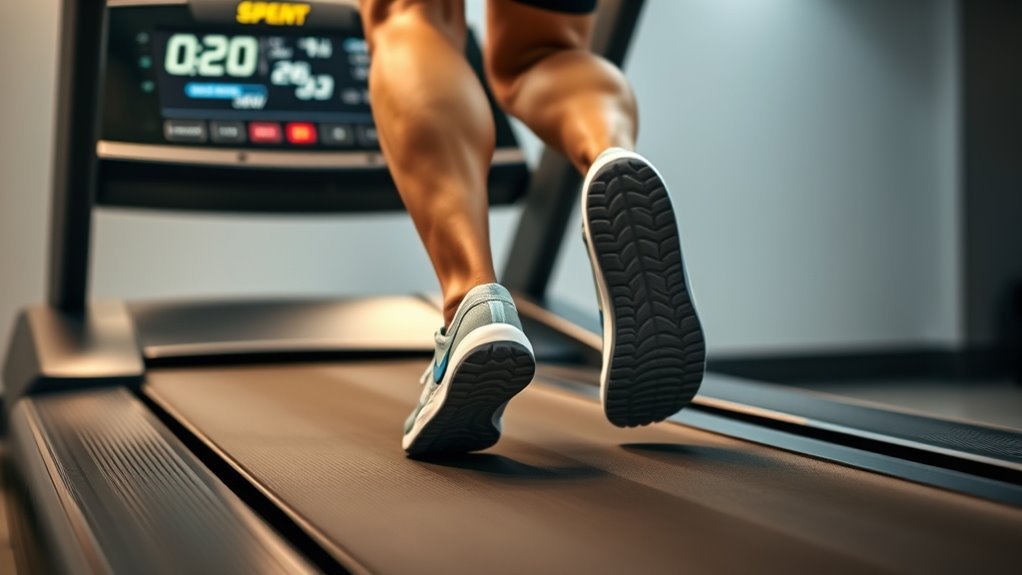
Although speed isn’t the sole factor in determining calorie burn on a treadmill, it plays a significant role in how many calories you expend. When you increase your speed, your body works harder to maintain that pace, boosting your calorie burn.
Here’s how speed affects your workout:
- Walking (2-4 mph): Burns fewer calories but is great for warm-ups or recovery.
- Jogging (4-6 mph): Increases heart rate, leading to moderate calorie expenditure.
- Running (6+ mph): Maximizes calorie burn by engaging more muscles and demanding higher energy output.
The Role of Incline in Increasing Workout Intensity
Speed definitely impacts how many calories you burn, but adding incline can push your workout intensity even further. When you increase the treadmill’s incline, your muscles work harder, especially your glutes, hamstrings, and calves.
This added effort boosts your heart rate and calorie burn without needing to increase speed. Incline training also mimics uphill walking or running, making your workout more challenging and effective.
| Incline Level | Approximate Calorie Burn Increase* |
|---|---|
| 0% | Baseline |
| 3% | +10-15% |
| 5% | +20-25% |
| 10% | +40-50% |
*Percentages vary by individual effort and weight but illustrate incline’s powerful effect.
Comparing Walking, Jogging, and Running Calories Burned
When you walk on a treadmill, you burn calories steadily, but jogging and running increase your energy expenditure considerably. Understanding the difference in calories burned between these activities can help you choose the best workout for your goals.
Let’s compare how walking, jogging, and running stack up in terms of calorie burn. It’s pretty interesting to see how just changing your pace can make such a big difference!
Calories Burned by Walking
Understanding the calories you burn while walking can help you tailor your treadmill workouts to meet your fitness goals. Walking is a low-impact exercise that burns fewer calories than jogging or running, but it’s still effective for weight management and improving cardiovascular health.
The exact calories burned depend on your speed, body weight, and duration. For example:
- A 150-pound person walking at 3 mph burns about 240 calories per hour.
- Increasing speed to 4 mph boosts calorie burn to roughly 320 calories per hour.
- Walking uphill or using an incline can increase calories burned by up to 50%.
Jogging Energy Expenditure
Although jogging burns more calories than walking, it doesn’t require the full intensity of running, making it a great middle ground for many exercisers. When you jog on a treadmill, you typically burn about 7 to 10 calories per minute, depending on your speed and body weight.
This rate sits comfortably between the lower calorie burn of walking and the higher burn of running. Jogging boosts your heart rate and engages more muscles than walking, so you get a stronger workout without pushing your limits too hard.
If you want to increase calorie burn without the impact or fatigue of running, jogging is a smart choice. It helps you build endurance and burn fat efficiently while staying sustainable for regular workouts.
Running Calorie Comparison
Jogging offers a balanced calorie burn, but if you want to maximize your treadmill workout, comparing walking, jogging, and running can help you choose the right pace. Each method burns calories differently based on intensity and duration.
Walking at 3.5 mph burns roughly 240-300 calories per hour, making it a great low-impact option. It’s perfect if you want to ease into exercise without overdoing it.
Jogging at 5-6 mph increases your burn to about 430-480 calories per hour, balancing effort and endurance. You get a good workout without feeling completely wiped out.
Running at 7-8 mph profoundly boosts calorie burn, reaching 600-900 calories per hour depending on your speed and weight. If you’re ready to push yourself, running is where you really crank up the calorie burn.
Duration and Its Effect on Total Calorie Burn
Because the longer you stay on the treadmill, the more calories you burn, duration plays a crucial role in your total calorie expenditure. Even if you maintain the same pace, increasing your workout time will considerably boost the calories you burn.
For example, a 30-minute session will burn fewer calories than a 60-minute one at the same intensity. However, your stamina and motivation can impact how long you realistically exercise.
| Duration (minutes) | Estimated Calories Burned |
|---|---|
| 20 | 150 |
| 40 | 300 |
| 60 | 450 |
Increasing workout duration helps you maximize calorie burn, but balance it with intensity and rest for best results. It’s all about finding that sweet spot that works for you!
Calculating Your Personal Calorie Burn on a Treadmill
Knowing how duration affects calorie burn is helpful, but to get an accurate estimate, you need to take into account your personal factors like weight, speed, and incline.
Here’s how to do it:
- Weight: The heavier you are, the more calories you burn per minute because your body works harder moving more mass.
- Speed: Running or walking faster increases your calorie burn since your muscles demand more energy.
- Incline: Adding an incline simulates uphill walking or running, which considerably ramps up calorie expenditure.
To calculate your personal calorie burn, use treadmill calorie calculators or fitness apps that ask for these inputs.
This tailored approach gives you a clearer picture of your workout’s effectiveness, helping you track progress and set realistic fitness goals.
Tips to Maximize Calorie Burn During Treadmill Workouts
If you want to get the most out of your treadmill sessions, focusing on intensity and variety can considerably boost your calorie burn. Try mixing intervals of sprinting with walking or jogging to keep your body guessing.
Adjusting the incline challenges different muscles and increases effort. Incorporate steady-state runs for endurance and recovery periods to avoid burnout.
| Tip | Description | Benefit |
|---|---|---|
| Interval Training | Alternate high/low intensity | Burns more calories |
| Incline Usage | Increase treadmill incline | Engages more muscles |
| Speed Variation | Change pace frequently | Prevents plateaus |
| Consistent Timing | Work out regularly | Builds endurance |
| Proper Form | Maintain good posture | Reduces injury risk |
Use these tips to optimize your treadmill workouts and maximize calorie burn efficiently. Give them a shot and see how your sessions improve!
Frequently Asked Questions
Can Treadmill Workouts Help Improve Cardiovascular Health?
Yes, treadmill workouts can improve your cardiovascular health by strengthening your heart and lungs. When you exercise regularly, you boost circulation, lower blood pressure, and increase endurance.
This helps you feel healthier and more energetic overall. Plus, it’s a convenient way to stay active regardless of the weather. So, hopping on the treadmill can definitely be a smart move for your heart health!
What Is the Best Time of Day to Use a Treadmill?
You’ll get the best treadmill results in the morning when your metabolism is primed—studies show people burn up to 20% more fat exercising before breakfast.
How Often Should I Replace My Treadmill Belt?
You should replace your treadmill belt every 3 to 5 years, depending on usage.
If you notice slipping, fraying, or noise, it’s time.
Regular maintenance helps you avoid damage and keeps your workouts smooth.
So, keep an eye on how your treadmill feels and sounds.
Taking care of it means more reliable and enjoyable exercise sessions!
Are Treadmill Workouts Suitable for People With Joint Problems?
Absolutely, treadmill workouts can be joint-friendly if you choose cushioned belts and adjust speed. You’ll find low-impact intervals gentle, helping you stay strong without stressing sensitive spots.
Always consult your doctor before starting, though. It’s better to be safe and get tailored advice for your specific needs.
Can Treadmill Running Aid in Mental Health or Stress Relief?
Yes, treadmill running can boost your mental health and relieve stress. It releases endorphins, improves your mood, and helps clear your mind.
Regular workouts can reduce anxiety and make you feel more energized and focused. So, if you’re looking for a simple way to lift your spirits, hopping on a treadmill might just do the trick!
Conclusion
So, if you thought just stepping onto a treadmill would magically melt calories away, think again. Your body weight, speed, incline, and how long you stick with it all team up to decide your burn.
It’s like expecting a slow stroll to outrun a sprint—fun idea, but not how it works. Remember, you’re not just walking; you’re investing in sweat equity.
So crank up that incline and watch those calories wave goodbye! When it comes to how many calories you burn on a treadmill, it really boils down to these factors working together. The more effort you put in, the higher your calorie burn. Keep this in mind, and your treadmill workouts will be a game-changer for your fitness goals.