
How to Use an Elliptical to Burn Belly Fat Effectively
To burn belly fat effectively on an elliptical, start by maintaining proper posture. Keep your spine straight and your core engaged while pedaling. This helps target the right muscles and improves your overall workout efficiency.
Begin with a moderate resistance level that challenges you but doesn’t leave you overly exhausted. Aim for at least 30 minutes per session to get your heart rate up and burn calories effectively.
Try incorporating interval training into your elliptical routine. Alternate between high-intensity bursts and recovery periods to boost your metabolism and increase calorie burn.
Don’t forget to pair your workouts with a balanced diet. Creating a calorie deficit is key to shedding belly fat.
Stay consistent with your efforts, and you’ll notice improvements over time. Keep it up, and you’ll discover even more ways to maximize your results!
Key Takeaways
- Use moderate to high resistance to engage muscles and keep your heart rate in the fat-burning zone (60-70% max). This helps your body burn belly fat more efficiently.
- Perform at least 30 minutes per session. Gradually increase the duration and try adding interval training by mixing up your speed and resistance.
- Maintain an upright posture and engage your core by tightening your abs. Using controlled, steady movements will activate your muscles better and improve results.
- Track your workouts and progressively increase the intensity. Also, combine your elliptical sessions with a balanced, calorie-controlled diet to see effective fat loss.
- Stay consistent and vary your workouts so you don’t get bored. Set clear goals and celebrate milestones to keep yourself motivated for long-term belly fat reduction.
Understanding the Benefits of Elliptical Workouts for Belly Fat

Although spot reduction isn’t possible, using an elliptical can help you burn overall body fat, including stubborn belly fat. When you hop on the elliptical, you engage multiple muscle groups—legs, core, and arms—which boosts your calorie burn.
This full-body workout increases your heart rate, improving your metabolism and helping you burn fat more efficiently. Plus, the low-impact nature of the elliptical makes it easier on your joints compared to running or high-impact exercises. That means you can work out longer and more consistently without the wear and tear.
Regular elliptical sessions improve cardiovascular health and build endurance, which supports sustained fat loss. So, while you can’t target belly fat alone, the elliptical helps create the calorie deficit needed to reduce fat all over, including your midsection.
Setting Up Your Elliptical for Optimal Fat Burning
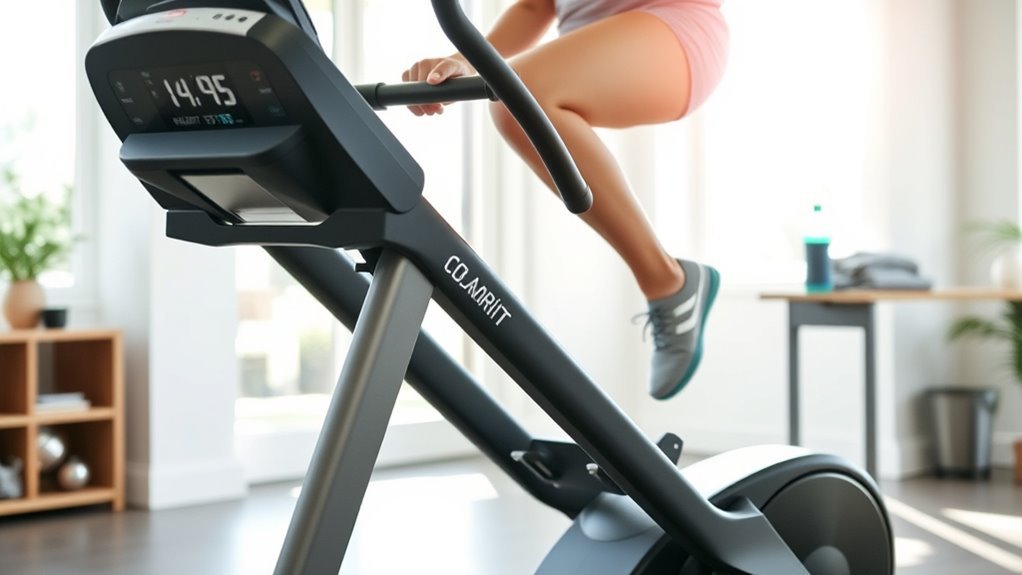
To burn belly fat effectively, you’ll want to adjust your elliptical’s resistance levels to challenge your muscles without overdoing it.
Make sure your workout duration is long enough to keep your heart rate in the fat-burning zone.
Incorporating interval training by alternating between high and low intensity can maximize your results.
Adjust Resistance Levels
How do you find the right resistance level on your elliptical to maximize belly fat burning? Start by setting a resistance that challenges you without causing strain. You want enough intensity to raise your heart rate into the fat-burning zone, typically 60-70% of your maximum heart rate.
If the resistance feels too easy, increase it gradually until you feel a moderate burn in your muscles and steady breathing. Too much resistance can lead to fatigue and poor form, reducing workout effectiveness.
Adjust the resistance throughout your session to keep your body engaged—alternating between moderate and slightly higher levels promotes fat loss by boosting calorie burn. Listen to your body and tweak the settings to stay challenged but comfortable during your elliptical workouts.
Optimize Workout Duration
Adjusting resistance keeps your muscles engaged, but pairing that with the right workout duration can amplify belly fat burning. Aim for at least 30 minutes per session to tap into fat stores effectively.
If you’re just starting out, begin with 15-20 minutes and gradually increase as your endurance improves. Consistency matters more than lengthening sessions excessively—regular workouts of moderate duration often yield better results than infrequent, long ones.
Keep your pace steady to maintain a fat-burning zone, typically around 60-70% of your maximum heart rate. Remember, going too long without breaks can lead to fatigue, reducing workout quality.
Incorporate Interval Training
When you mix bursts of high intensity with recovery periods on your elliptical, you boost your metabolism and burn belly fat more efficiently. To incorporate interval training, start by warming up for 5 minutes at a moderate pace.
Then, increase your resistance and speed for 30 to 60 seconds, pushing yourself to a challenging level. Follow this with 1 to 2 minutes of slower, low-resistance recovery. Repeat this cycle for 15 to 20 minutes.
Adjust intervals based on your fitness level, gradually increasing intensity as you improve. This method keeps your body guessing and maximizes calorie burn during and after your workout.
Incorporating interval training on your elliptical is a smart way to target belly fat effectively and keep your sessions engaging.
Proper Posture and Form on the Elliptical
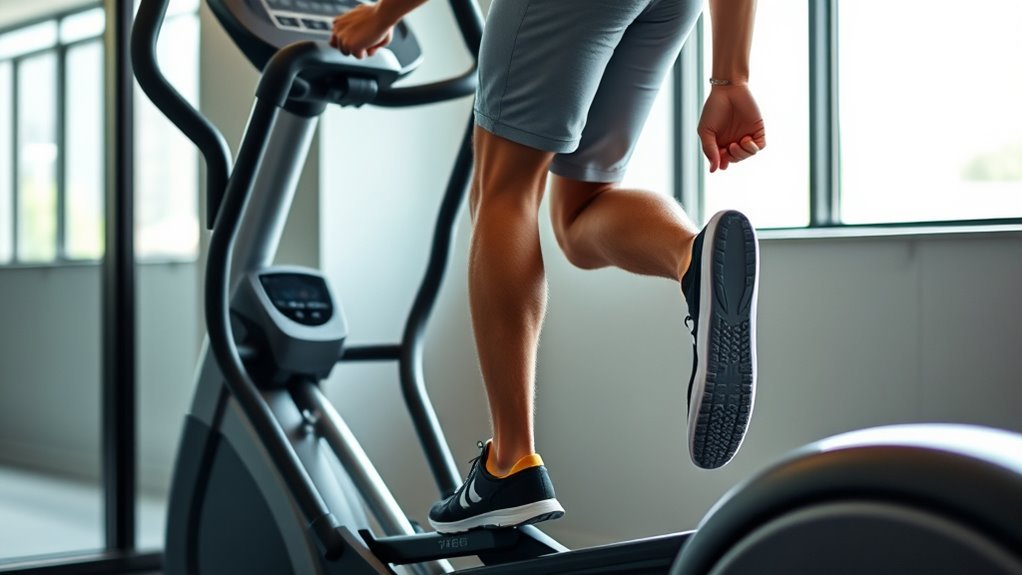
To maximize your belly fat burn on the elliptical, you need to maintain an upright spine and avoid slouching. Engage your core muscles throughout your workout to strengthen your midsection and improve balance.
Also, keep your feet centered on the pedals to guarantee proper alignment and reduce strain. This way, you’ll get the most out of your elliptical session without risking injury.
Maintain Upright Spine
Although it may be tempting to lean forward or slump while using the elliptical, keeping your spine upright is essential for maximizing your workout and preventing injury. Stand tall with your shoulders relaxed and aligned over your hips.
Avoid hunching or arching your back, as this can strain your muscles and reduce the effectiveness of your session. Keep your head level and gaze forward, not down at your feet or the console.
This posture helps maintain proper alignment and encourages better breathing. An upright spine ensures that your body engages the right muscles, improving your balance and stability as you move.
Focus on maintaining this position throughout your workout to protect your back and get the most out of your elliptical routine. It really makes a difference!
Engage Core Muscles
Since your core stabilizes your entire body during elliptical workouts, engaging those muscles is essential for maintaining balance and maximizing calorie burn. Tighten your abs as if bracing for a light punch, keeping them active throughout your session.
This engagement supports your spine and improves posture, helping you avoid slouching. So, keep those muscles working even when you feel a bit tired.
| Action | Benefit | Tip |
|---|---|---|
| Tighten abs gently | Stabilizes torso | Imagine pulling belly button in |
| Keep shoulders back | Prevents hunching | Relax shoulders, chest open |
| Control breathing | Enhances endurance | Inhale deeply, exhale fully |
| Maintain steady pace | Boosts fat burning | Avoid sudden speed changes |
Keep Feet Centered
Engaging your core sets a strong foundation, but your foot placement plays a big role in maintaining balance and proper form on the elliptical. Keep your feet centered on the pedals to guarantee even weight distribution.
Avoid leaning too far forward or backward, which can throw off your posture and reduce workout efficiency. Centered feet help you engage the right muscles and prevent strain on your ankles and knees.
Focus on pressing evenly through the entire foot, not just the toes or heels. This balanced pressure supports smooth, controlled movements and maximizes calorie burn.
Incorporating Interval Training to Boost Metabolism
When you add interval training to your elliptical routine, you ignite your metabolism and burn more belly fat in less time. Alternate between high-intensity bursts and moderate recovery periods to maximize fat burning.
Here’s a simple interval plan to get you started:
| Interval Type | Duration |
|---|---|
| Warm-Up | 5 minutes |
| High-Intensity | 1 minute |
| Recovery | 2 minutes |
| Repeat Cycle | 5-8 times |
Push yourself hard during high-intensity phases, then slow down to catch your breath. This pattern keeps your heart rate fluctuating, which boosts calorie burn even after your workout.
Aim to do this 3–4 times a week for the best results. Remember, consistency is key to transforming your belly fat into lean muscle. Keep at it, and you’ll see progress!
Engaging Your Core Muscles During Elliptical Sessions
Although many focus on their legs during elliptical workouts, activating your core muscles can considerably enhance your results. To engage your core effectively, maintain an upright posture without leaning on the handles.
Tighten your abdominal muscles as if preparing for a light punch to your stomach. This conscious engagement helps tighten your midsection and increases calorie burn.
Avoid slouching or relaxing your core; instead, imagine pulling your belly button toward your spine throughout the workout. Incorporating this focus not only targets belly fat but also improves balance and overall stability.
Tracking Your Progress and Adjusting Intensity
To see real progress in burning belly fat, you need to track your workouts and modify the intensity accordingly. Start by recording your workout duration, resistance level, and speed after each elliptical session.
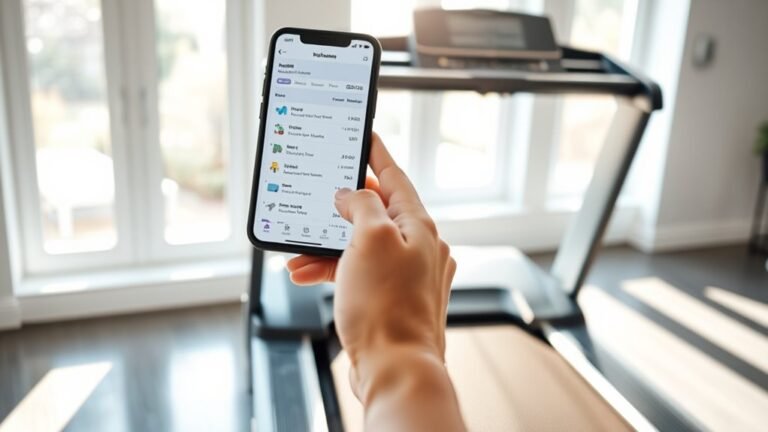
Use a fitness app or journal to monitor your heart rate and calories burned. Reviewing this data helps you identify patterns and plateaus.
Tracking heart rate and calories reveals progress patterns and plateaus to keep your workouts effective.
When you notice your progress slowing, increase the resistance or speed to challenge your body more. Incorporate interval training by alternating between high and moderate intensity to boost fat burn.
Don’t forget to listen to your body—push hard but avoid overtraining. Regularly adjusting intensity ensures your workouts remain effective, helping you burn belly fat faster while improving endurance and overall fitness.
Stay consistent and focused on your goals. You’ve got this!
Combining Elliptical Exercise With a Balanced Diet
Since burning belly fat relies heavily on creating a calorie deficit, combining your elliptical workouts with a balanced diet is essential for achieving the best results. You can’t out-exercise a poor diet, so focus on fueling your body properly.
Here’s how to balance your nutrition with your elliptical routine:
- Prioritize lean proteins to support muscle repair and boost metabolism.
- Choose whole grains over refined carbs to maintain steady energy levels.
- Incorporate plenty of fruits and vegetables for vitamins, minerals, and fiber.
- Limit added sugars and unhealthy fats that can sabotage fat loss.
- Stay hydrated by drinking enough water before, during, and after workouts.
Tips for Staying Motivated and Consistent
Keeping your motivation high and sticking to your elliptical routine can be challenging, but developing consistent habits is key to burning belly fat effectively. To stay motivated, set clear, achievable goals and track your progress regularly.
Stay motivated by setting clear goals and tracking progress to burn belly fat effectively with your elliptical routine.
Mixing up your workouts by varying intensity or duration prevents boredom and keeps you engaged. Scheduling your elliptical sessions like appointments ensures you prioritize exercise.
Find a workout buddy or join a class for added accountability and support. Celebrate small milestones to maintain enthusiasm and remind yourself why you started.
Finally, focus on how exercise makes you feel rather than just the scale results; increased energy and mood boosts can be strong motivators. With these strategies, you’ll build a sustainable routine that delivers lasting results.
Frequently Asked Questions
Can Elliptical Workouts Reduce Belly Fat Without Dieting?
You can reduce belly fat with elliptical workouts, but without dieting, progress will be slower.
Combining exercise with a healthy diet boosts fat loss, helping you see results faster and maintain a leaner midsection.
How Long Does It Take to See Results on an Elliptical?
Rome wasn’t built in a day, and neither are your results.
You’ll typically see changes in 4-6 weeks if you’re consistent, mixing intensity and duration while maintaining a healthy diet alongside your elliptical workouts.
Stick with it, and you’ll start noticing those improvements before you know it!
Is Using an Elliptical Safer Than Running for Belly Fat Loss?
Yes, using an elliptical is generally safer than running because it’s low-impact, reducing stress on your joints.
You’ll still burn belly fat effectively while protecting your knees and hips, especially if you have previous injuries.
Plus, it’s a great option if you want to avoid the wear and tear that running can sometimes cause.
Can I Use an Elliptical if I Have Joint Pain?
Yes, you can use an elliptical if you have joint pain. It’s low-impact and gentle on your joints, allowing you to exercise without aggravating pain.
Just start slowly and listen to your body’s signals. That way, you can find a pace that feels comfortable and safe for you.
Does the Resistance Level Affect Belly Fat Burning Efficiency?
Yes, increasing resistance on the elliptical boosts calorie burn and muscle engagement. This helps you burn belly fat more efficiently.
Just don’t overdo it—gradually raise resistance to challenge yourself. Make sure to maintain proper form and avoid injury.
Conclusion
By consistently combining crisp core engagement with carefully crafted interval challenges, you’ll carve away stubborn belly fat faster. Keep your posture poised and your pace pulsing, pushing past plateaus with passion and persistence.
Pair your elliptical efforts with a balanced, belly-friendly diet to fuel your fiery fat-burning journey. Stay steady, stay strong, and let your dedication drive delightful, noticeable results.
Remember, every elliptical effort edges you closer to a leaner, livelier you! Using an elliptical to burn belly fat effectively requires commitment, the right technique, and consistency. With focused core work and interval training on the elliptical, you maximize calorie burn and target that stubborn midsection. Combine this with a nutritious diet, and you’re setting yourself up for success. So keep moving, keep engaging your core, and watch the belly fat melt away as you build a healthier, fitter body.