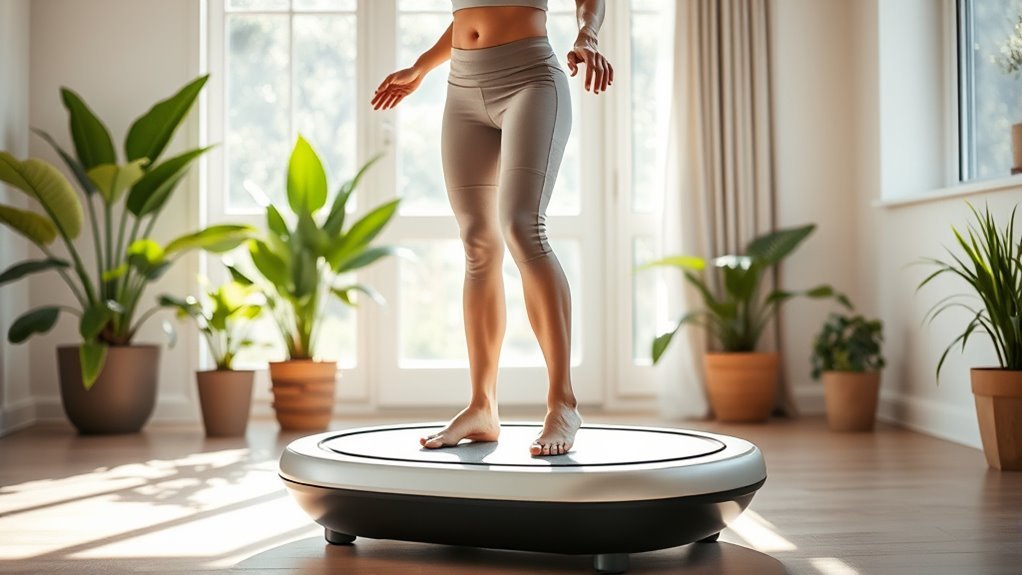
How to Use a Vibration Plate to Lower Blood Pressure
To lower your blood pressure with a vibration plate, start by warming up and hydrating well. Using a vibration plate can be an effective way to incorporate low-impact exercise into your routine, which may help improve circulation and support healthy blood pressure levels.
Try exercises like squats or calf raises on a stable, adjustable platform. Begin with short sessions of 5–10 minutes, and gradually increase to 15–20 minutes, three to five times a week.
Make sure to monitor your blood pressure before, during, and after use.
Combining vibration plate workouts with healthy lifestyle habits can boost your results.
If you want to optimize your approach safely, there’s more helpful guidance ahead. Just take it slow and listen to your body as you get started!
Key Takeaways
- Begin with 5-10 minute sessions, performing low-impact exercises like squats and calf raises to stimulate circulation and muscle engagement. This helps your body ease into the vibration and get the benefits without overdoing it.
- Measure blood pressure before, during, and after sessions to monitor immediate effects and track long-term improvements. Keeping an eye on these changes can motivate you and help adjust the routine as needed.
- Use vibration plates with adjustable speed and pre-set cardiovascular programs for personalized, heart-healthy workouts. This way, you can tailor the experience to your fitness level and goals.
- Stay hydrated by drinking water before and during sessions, and avoid caffeine or sugary drinks to prevent dehydration. Hydration plays a big role in how effective and comfortable your workouts feel.
- Combine vibration plate use with a balanced diet, stress management, and regular exercise for optimal blood pressure control. It’s all about creating a healthy lifestyle that supports your heart over time.
Understanding the Benefits of Vibration Plates for Blood Pressure
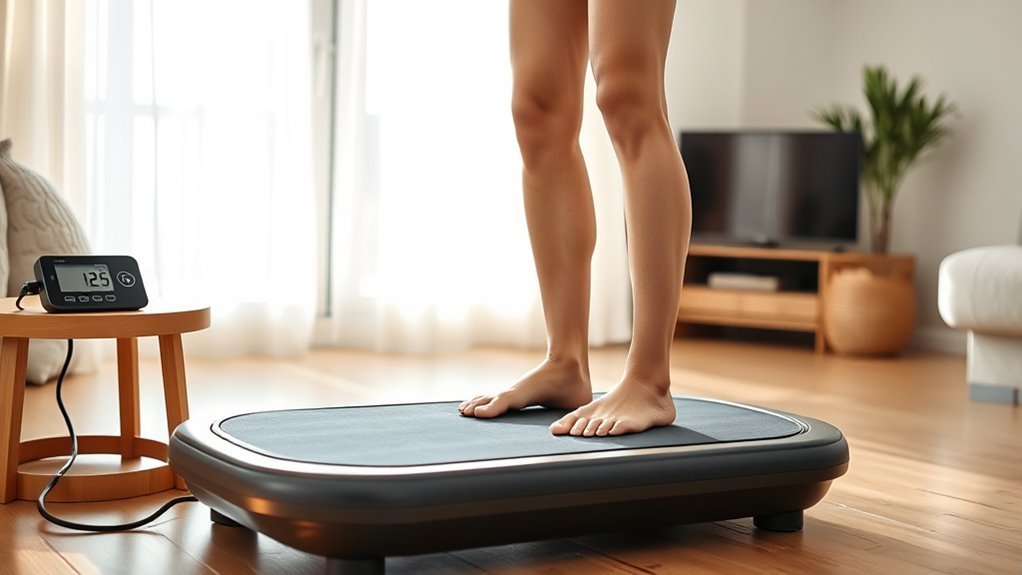
Although vibration plates are often associated with muscle toning and fitness, they can also have a positive impact on your blood pressure. When you use a vibration plate regularly, it stimulates your muscles and improves circulation, which helps your cardiovascular system work more efficiently.
This enhanced blood flow can reduce the stiffness of your arteries, lowering your blood pressure naturally. Plus, vibration plates promote relaxation by reducing stress hormones that contribute to high blood pressure.
You don’t need to spend hours exercising; just short sessions on the plate can trigger these benefits. By incorporating vibration plate use into your routine, you support your heart health in a simple, low-impact way.
Just remember consistency is key to seeing meaningful improvements in your blood pressure.
Choosing the Right Vibration Plate for Your Needs
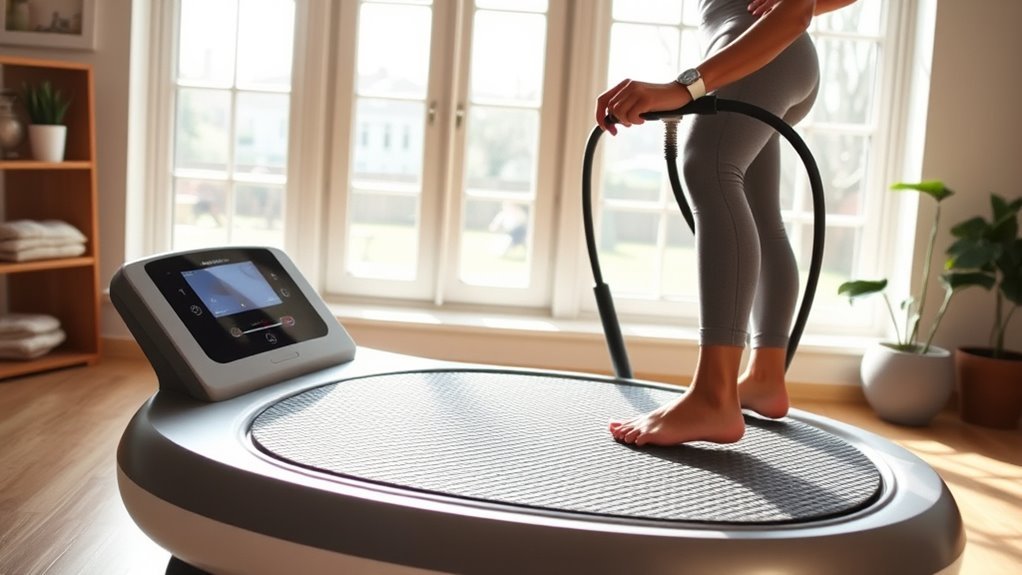
To pick the right vibration plate, you’ll want to compare different plate types and their key features. Think about what functions matter most to you, like speed settings or program variety.
Also, keep your budget and warranty options in mind to make a smart investment. It’s all about finding what fits your needs best without overspending.
Plate Types Overview
What kind of vibration plate suits your fitness goals and lifestyle best? There are mainly two types: oscillating and vertical plates. Oscillating plates tilt side to side, mimicking a seesaw motion that targets muscles differently and often feels gentler.
Vertical plates move up and down, delivering more intense vibrations ideal for strength training. You’ll also find hybrid models combining both motions.
Consider where you’ll use it—compact plates fit small spaces, while larger ones offer more stability. Your choice depends on how you plan to use the plate, whether for light therapy to lower blood pressure or more vigorous workouts.
Understanding these types helps you pick a vibration plate that matches your needs without overwhelming features or unsuitable motions.
Key Features to Consider
When choosing a vibration plate, you’ll want to focus on features that directly impact your comfort, safety, and workout effectiveness. Look for a model that offers adjustable intensity levels so you can customize your sessions as you progress.
A stable base with non-slip surfaces is essential to prevent accidents during use. Consider plates with multiple programs designed for cardiovascular health and blood pressure management.
Finally, check for easy-to-use controls and a clear display to help you track your workout without hassle.
- Adjustable vibration frequency and amplitude
- Secure, non-slip platform for stability
- Pre-set programs targeting health goals
- User-friendly interface with clear readouts
These features ensure you get the most benefit while staying safe and comfortable.
Budget and Warranty Options
Along with features that enhance your workout, your budget and warranty options play a big role in choosing the right vibration plate. You want a model that fits your financial plan without sacrificing quality.
Also, a solid warranty guarantees peace of mind if any issues arise. Consider how long the warranty lasts and what it covers before making a decision.
| Price Range | Warranty Length | Coverage Highlights |
|---|---|---|
| $100 – $300 | 6 months | Basic parts only |
| $301 – $600 | 1 year | Parts and limited labor |
| $601 – $900 | 1-2 years | Parts, labor, and motor |
| $901 – $1200 | 2 years | Extensive coverage |
| $1200+ | 3+ years | Full coverage plus support |
Preparing Your Body Before Using a Vibration Plate
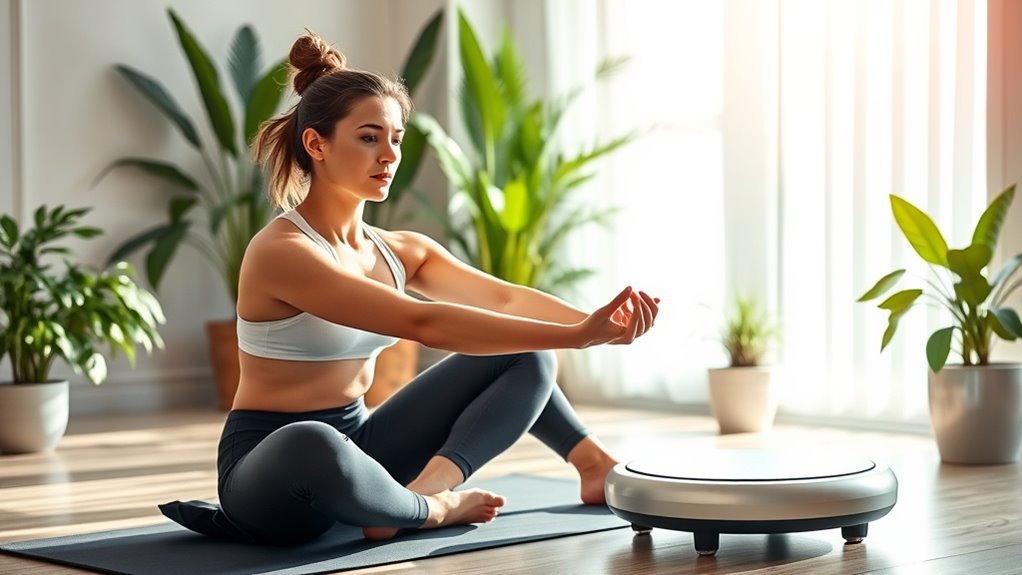
Before you step onto the vibration plate, make sure to do some light warm-up exercises to get your muscles ready.
Staying hydrated is also key, so drink water beforehand to support your body’s response.
These simple steps help you get the most out of your workout and reduce the risk of injury.
Warm-Up Exercises
Although it might be tempting to jump right onto the vibration plate, warming up your muscles first helps prevent injury and improves your workout effectiveness. Taking just a few minutes to prepare your body can make a significant difference in how you feel during and after your session.
Try these simple warm-up exercises before stepping on the plate:
- March in place for 2-3 minutes to increase your heart rate.
- Perform gentle leg swings to loosen your hip joints.
- Do arm circles to activate your shoulder muscles.
- Stretch your calves and hamstrings to improve flexibility.
These movements get your blood flowing and muscles ready, setting the stage for a safer, more productive vibration plate workout. Give it a try—you’ll notice the difference!
Hydration Importance
You should always prioritize staying hydrated when preparing to use a vibration plate. Proper hydration helps maintain your blood volume and supports ideal circulation, which is essential for lowering blood pressure effectively.
Drinking water before your session ensures your muscles stay supple and reduces the risk of cramps or dizziness during vibration exercises. Aim to drink at least 8 ounces of water about 30 minutes before starting.
Avoid caffeinated or sugary drinks, as they can dehydrate you and counteract your efforts. Additionally, keep a water bottle nearby during your workout to sip as needed.
Staying hydrated not only enhances your performance but also helps your body recover faster. This makes your vibration plate sessions safer and more effective for managing blood pressure.
Recommended Vibration Plate Exercises for Blood Pressure Management
When managing blood pressure, incorporating specific vibration plate exercises can boost circulation and promote heart health. You’ll want to focus on low-impact moves that engage large muscle groups gently yet effectively.
Try these exercises on your vibration plate:
Incorporate these vibration plate exercises to enhance circulation and support heart health safely and effectively.
- Squats: Stand shoulder-width apart and perform slow squats to engage your legs and core. These help build strength without overexerting your heart.
- Calf Raises: Rise up on your toes and lower back down to improve circulation in your lower legs. It’s a simple move that really gets the blood flowing.
- Plank Holds: Place your forearms on the plate and hold a plank to strengthen your core. Holding steady helps improve stability and overall muscle tone.
- Seated Leg Lifts: Sit on the plate and lift each leg slowly to activate muscles and enhance blood flow. This one’s great if you want to keep things gentle but effective.
These exercises help stimulate circulation while being safe for your cardiovascular system. Give them a try—you might find they make a real difference!
Optimal Duration and Frequency of Vibration Plate Sessions
Building on the benefits of targeted vibration plate exercises for blood pressure, knowing how long and how often to use the plate can maximize your results. Start with shorter sessions to allow your body to adapt, then gradually increase time and frequency.
Consistency is key, but overdoing it may cause fatigue or dizziness.
| Session Duration | Frequency per Week |
|---|---|
| 5 minutes | 3 times |
| 10 minutes | 3-4 times |
| 15 minutes | 4-5 times |
| 20 minutes | 5 times |
| 20+ minutes | Not recommended |
Aim for 10-15 minutes per session, 3-5 times weekly. Always listen to your body and adjust accordingly to maintain comfort and safety.
Monitoring Your Blood Pressure During Vibration Plate Use
Although vibration plates can positively impact your blood pressure, it’s essential to monitor your readings before, during, and after use to guarantee safety and effectiveness. Tracking these changes helps you understand how your body responds and alerts you to any unusual spikes or drops.
Here’s how you can effectively monitor your blood pressure:
- Measure your blood pressure at rest before starting the session.
- Check readings midway through to observe immediate effects.
- Record your blood pressure immediately after finishing the session.
- Keep a consistent log to track trends over time and share with your healthcare provider.
Combining Vibration Plate Therapy With Lifestyle Changes
Since vibration plate therapy can enhance your overall wellness, combining it with healthy lifestyle changes maximizes its benefits. To lower your blood pressure effectively, pair vibration sessions with a balanced diet rich in fruits, vegetables, and whole grains.
Regular exercise complements vibration therapy by improving heart health and circulation. Managing stress through mindfulness or meditation further supports healthy blood pressure levels.
Also, prioritize quality sleep each night to aid recovery and maintain cardiovascular health. Avoid smoking and limit alcohol intake, as these habits can undermine your progress.
Safety Precautions and Contraindications for Vibration Plate Use
Taking steps to improve your health with a vibration plate means you should also be aware of certain safety precautions and who should avoid using it. While vibration plates can be beneficial, improper use or ignoring contraindications can cause harm.
Before starting, make sure you consult your healthcare provider if you have heart conditions, high blood pressure, or are pregnant. It’s really important to get the green light from a professional first.
Also, avoid using the vibration plate if you have implanted medical devices like pacemakers. These devices can be sensitive to vibrations, so better safe than sorry.
Start with low intensity to prevent dizziness or muscle strain. Don’t jump into high settings right away—ease into it.
Limit sessions to recommended durations to avoid overexertion. Overdoing it can lead to more harm than good.
Listen to your body and stop immediately if you experience pain, nausea, or unusual symptoms. Trust yourself—if something feels off, don’t push through it.
Staying cautious ensures you safely reap the benefits of vibration plate therapy for lowering blood pressure. Take it slow and steady, and you’ll be on the right track!
Frequently Asked Questions
Can Vibration Plates Replace Blood Pressure Medications?
No, you can’t substitute blood pressure medications with vibration plates alone. They can support your health, but always consult your doctor before changing treatments or stopping meds.
It’s important to make sure your blood pressure stays safely managed. So, don’t make any changes without professional advice.
How Quickly Can Vibration Plates Lower Blood Pressure?
You might notice some blood pressure improvement within a few weeks of regular vibration plate use, but it varies. Consistency matters, and it’s best to combine it with lifestyle changes and consult your doctor for safety.
Keep in mind, everyone’s different, so how quickly you see results can change. Sticking with it and making healthy choices alongside the vibration plate will give you the best shot at lowering your blood pressure.
Are Vibration Plates Effective for All Age Groups?
Vibration plates can be effective for most age groups, but you should adjust intensity based on your fitness level and health.
Always check with a healthcare professional before starting, especially if you’re older or have medical conditions.
It’s all about finding what works best for you and staying safe while you get moving!
Do Vibration Plates Help With Other Heart Conditions?
Yes, vibration plates can improve circulation and muscle strength, which may benefit some heart conditions.
However, you should consult your doctor before using one, especially if you have serious heart issues or arrhythmias. It’s always best to get professional advice tailored to your specific health needs.
Can Vibration Plate Use Cause Any Long-Term Side Effects?
You might experience some mild aftereffects like temporary muscle soreness or slight dizziness. However, if you use the vibration plate properly and avoid overdoing it, long-term side effects are generally rare and manageable.
Just make sure to listen to your body and take breaks when needed. That way, you can enjoy the benefits without much worry.
Conclusion
Using a vibration plate to help lower your blood pressure can be a game-changer, much like discovering a rotary phone in the age of smartphones—unexpected but effective. Stick to the right exercises, keep your sessions consistent, and monitor your progress closely.
Remember, combining this therapy with healthy lifestyle changes boosts your results. Always prioritize safety and listen to your body. This way, you ensure the vibration plate works seamlessly with your wellness journey toward better blood pressure control.
Incorporating vibration plate exercises into your routine is a smart step for managing hypertension. When paired with a balanced diet, regular cardio, and stress reduction techniques, it can significantly support your cardiovascular health. So, use the vibration plate wisely, stay consistent, and keep an eye on your blood pressure levels to achieve the best outcomes. Your path to healthier blood pressure starts with safe and informed use of this innovative tool.