How Much Is a Mile on the Treadmill?
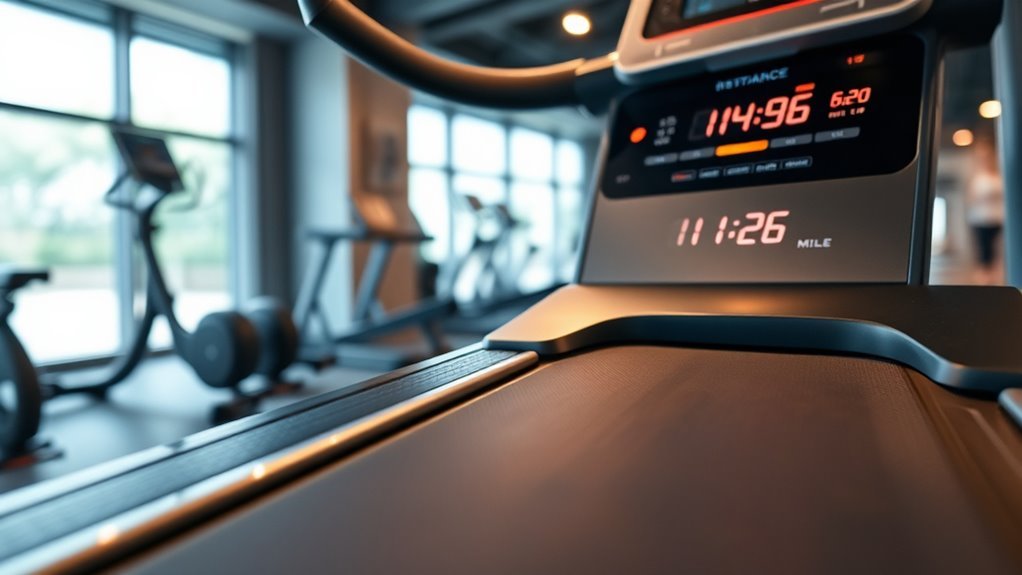
When you run a mile on a treadmill, you’re covering the exact distance corresponding to the belt’s full rotations, not GPS or stride length. The treadmill calculates distance mechanically by tracking how many times the belt loops under your feet.
Usually, one mile equals a specific number of rotations.
While this measurement is generally consistent, factors like calibration or belt wear can affect accuracy. So, it’s not always 100% perfect, but it’s pretty close most of the time.
Keep going to understand what influences these treadmill miles and how to track them best.
Key Takeaways
- A treadmill mile equals one mile of belt rotation. This is calculated by sensor-detected belt revolutions matching the belt’s circumference.
- Distance is computed by multiplying speed (mph) by running time (hours). For example, running at 6 mph for 10 minutes equals 1 mile.
- Treadmill distance relies on mechanical calibration, not GPS. So, its accuracy depends on proper sensor and belt maintenance.
- Also, incline settings don’t change the horizontal mile distance recorded on the treadmill.
- To improve measurement reliability, cross-check your treadmill distance with GPS devices or manual calibration. This helps you track your real running progress better.
Understanding Treadmill Distance Measurement
Although it might seem straightforward, understanding how treadmills measure distance can help you track your workouts more accurately. When you step on a treadmill, it doesn’t rely on GPS or external signals like a running app.
Instead, it calculates distance based on the rotation of its belt. Each time the belt completes a full rotation, the machine counts a specific distance, which adds up to your total mileage.
This means the treadmill’s accuracy depends on its calibration—if the belt length or sensor is off, your distance reading might be too. Knowing this, you can better interpret the numbers on the display and adjust your pace or duration based on the treadmill’s measurement system rather than assuming it’s exact.
How Treadmills Calculate a Mile
When you use a treadmill, it calculates distance based on your speed and the time you spend running or walking. The machine tracks how fast the belt moves and multiplies it by the duration to estimate your mileage.
Keep in mind, calibration and accuracy can vary, which can affect how precise that mile measurement really is. So, sometimes the number you see might be a little off. It’s good to be aware of that when you’re tracking your progress.
Distance Measurement Methods
Because treadmills rely on internal sensors rather than GPS, they calculate distance by tracking the rotations of the belt and the speed at which it moves. When you hop on, the treadmill measures how many times the belt completes a full rotation and multiplies that by the belt’s circumference to estimate distance.
Here’s how it works:
- Belt Rotation Count: Sensors count each belt rotation.
- Belt Length: The length of the belt per rotation is a fixed value.
- Distance Calculation: Distance equals rotations multiplied by belt length.
This method guarantees your distance is based on mechanical movement, not external signals. Knowing this helps you understand why treadmill miles might feel different from outdoor running distances.
Speed and Time Relation
As you run on a treadmill, it calculates each mile by combining your speed setting with the amount of time you spend moving. The machine assumes a steady pace, measuring distance by multiplying your speed (in miles per hour) by the time you’ve been running (in hours).
For example, if you run at 6 mph for 10 minutes, the treadmill registers one mile because 6 mph × 1/6 hour equals 1 mile. This straightforward calculation helps you track your progress easily.
However, it relies on the speed you set and the continuous time you remain active. So, the treadmill translates your speed and running duration directly into the distance traveled, giving you a convenient way to monitor miles covered during your workout.
Calibration and Accuracy Factors
Although treadmills use speed and time to estimate distance, their calibration and accuracy can vary markedly. You might trust the distance displayed, but factors like belt slippage, sensor precision, and machine calibration affect how accurate that mile really is.
To understand this better, consider these key points:
- Belt Calibration – If the belt isn’t properly calibrated, the treadmill might overstate or understate distance.
- Sensor Accuracy – Speed sensors rely on mechanical or magnetic components that can wear down or misread speed.
- User Variability – Your running style and weight can slightly alter treadmill mechanics, impacting distance accuracy.
Being aware of these factors helps you gauge how much that treadmill mile compares to an outdoor run. So, next time you hit the treadmill, keep these in mind!
Comparing Treadmill Miles to Outdoor Miles
When you run a mile on the treadmill, it might not feel exactly the same as running a mile outside. Factors like treadmill calibration, belt speed, and your running form can affect how accurate that distance really is.
Understanding these differences helps you compare your indoor workouts to your outdoor runs more effectively. It’s good to keep these things in mind next time you’re tracking your progress.
Treadmill Vs Outdoor Distance
If you’ve ever wondered whether a mile on a treadmill matches a mile outside, you’re not alone. While the distance is technically the same, the experience and effort can feel different.
Here’s why:
- Consistency: Treadmills maintain a steady pace and flat surface, so your mile is uniform.
- Environment: Outdoor miles include variables like wind, terrain, and elevation changes that affect your speed and energy.
- Feedback: Outdoors, you need to regulate your pace yourself, which can lead to slight variations in distance perception.
Factors Affecting Mile Accuracy
Understanding the differences between treadmill and outdoor miles helps highlight what can affect their accuracy. When you run outside, factors like terrain, wind resistance, and GPS signal impact your distance measurement.
On a treadmill, the belt’s calibration and speed settings determine your mile count. If the treadmill isn’t properly calibrated, it might display a mile shorter or longer than what you actually run.
Also, outdoor routes often involve slight variations in pace and elevation, while treadmills provide a consistent environment. Your stride length might change on a treadmill, influencing distance perception.
Finally, some treadmills use algorithms that estimate distance based on speed and time, which may not perfectly match your actual stride. So, this can cause small inaccuracies compared to outdoor miles.
The Impact of Treadmill Calibration on Distance
Since treadmills rely on internal sensors to measure distance, calibration plays a crucial role in accuracy. If your treadmill isn’t calibrated correctly, the distance it shows can be off, making your mile feel either shorter or longer than it really is.
You want to trust the numbers to track your progress accurately. Here’s why calibration matters:
- Sensor Alignment: Proper calibration ensures sensors detect belt movement precisely.
- Belt Speed Accuracy: Calibration adjusts the belt speed to match actual speed, preventing distance errors.
- Consistent Tracking: Regular calibration keeps distance measurements stable over time.
You can usually recalibrate your treadmill following the manufacturer’s instructions. Doing this helps you get a true sense of how far you’ve run, making training and goal-setting much more reliable.
Factors That Affect Treadmill Mileage Accuracy
Although treadmills provide convenient distance tracking, several factors can affect how accurately they measure your mileage.
The machine’s belt speed calibration plays a key role; if it’s off, your distance won’t match your actual effort.
Your running style matters too—shorter or irregular strides can throw off the treadmill’s sensors.
Changes in incline can also impact readings since treadmills calculate distance based on belt rotation, not actual ground covered.
Additionally, wear and tear on the treadmill’s components can cause subtle inaccuracies over time.
Environmental factors like room temperature might influence the treadmill’s electronics slightly, though this is less common.
Understanding these factors helps you recognize why your treadmill’s mileage might differ from outdoor runs, without needing to adjust your workout intensity.
Tips for Accurately Tracking Your Treadmill Miles
How can you guarantee your treadmill miles reflect your true effort? Accurate tracking is key to monitoring progress and setting goals.
Here’s how you can do it:
- Calibrate Your Treadmill Regularly – Make sure the machine’s settings match real distances. You can test it against a known distance or check the manual for guidance.
- Use a GPS-Enabled Device – GPS might not work perfectly indoors, but if you combine treadmill data with a smartwatch or phone app, you can cross-verify your distance.
- Keep Consistent Speed and Form – Erratic pacing or changing posture can mess with the treadmill’s sensors. So, try to keep a steady speed and proper running form.
Benefits of Using a Treadmill for Distance Training
Tracking your treadmill miles accurately sets a solid foundation for effective distance training. When you use a treadmill, you control your pace, making it easier to stick to specific speed targets and improve steadily.
You can train regardless of weather or time, so you won’t miss sessions due to rain or darkness. Treadmills also allow you to simulate different terrains by adjusting inclines, which boosts endurance and strength for outdoor running.
Plus, you get immediate feedback on distance, pace, and calories burned, helping you monitor progress clearly. This consistent environment reduces injury risk by providing a cushioned surface and stable conditions.
Common Misconceptions About Treadmill Distance
Even if you rely on a treadmill regularly, you might misunderstand how it measures distance and pace. Here are three common misconceptions to clear up:
- Treadmill distance always matches outdoor running. Not true. The treadmill calculates distance based on belt rotations, which can differ slightly from your actual stride length outdoors.
- Incline settings don’t affect distance. They do! Running uphill on a treadmill feels harder, but the machine still counts horizontal distance, not the extra effort or elevation gain.
- Treadmill pace is perfectly accurate. Sometimes it isn’t. Calibration errors or belt slippage can cause slight discrepancies in pace and distance readings.
Knowing these facts helps you set realistic goals and better interpret your treadmill workouts. So, keep these points in mind next time you step on the machine!
Frequently Asked Questions
Can Treadmill Workouts Help With Weight Loss Effectively?
Yes, treadmill workouts can effectively help you lose weight by burning calories and boosting your metabolism.
If you stay consistent, mix up intensity, and combine exercise with a healthy diet, you’ll see great results over time.
It’s all about keeping at it and making sure you’re challenging yourself just enough. Plus, pairing your workouts with good nutrition makes a huge difference!
How Do I Choose the Best Treadmill for My Home?
Like choosing a steampunk gadget, pick a treadmill that fits your space, budget, and fitness goals.
Look for sturdy build, good cushioning, and easy controls.
Don’t forget a motor powerful enough for your workouts!
What Is the Average Calorie Burn Running One Mile on a Treadmill?
You’ll burn about 100 calories running one mile on a treadmill, though it varies with your weight, speed, and incline.
Adjust these factors to match your fitness level and goals for the best results. It’s all about finding what works best for you!
Are Treadmills Safe for People With Joint Problems?
Treadmills are incredibly safe for people with joint problems—you won’t feel like you’re running on broken glass! Their cushioned belts reduce impact, so you can exercise comfortably while protecting your joints.
Just adjust speed and incline carefully. It’s all about finding the right pace that feels good for you.
How Often Should Treadmill Belts Be Replaced or Maintained?
You should check your treadmill belt every 3-6 months and replace it every 3-5 years, depending on usage.
Make sure to regularly lubricate and clean it to keep it running smoothly. This will help avoid premature wear or damage.
Conclusion
While a mile on the treadmill might seem straightforward, it’s not always the same as a mile outside. You trust the machine’s calibration, yet factors like belt slippage or stride differences can throw off accuracy.
You get consistent pacing indoors, but miss the natural variations of outdoor terrain. Understanding these contrasts helps you appreciate treadmill miles without overestimating them.
So, keep tracking your progress, but remember: a treadmill mile and an outdoor mile don’t always tell the same story. Knowing how much a mile on the treadmill actually is can help you set realistic goals and better gauge your fitness journey. After all, whether you’re running indoors or outdoors, what matters most is staying active and enjoying the process.