How You Can Use a Vibration Plate on Carpet Safely
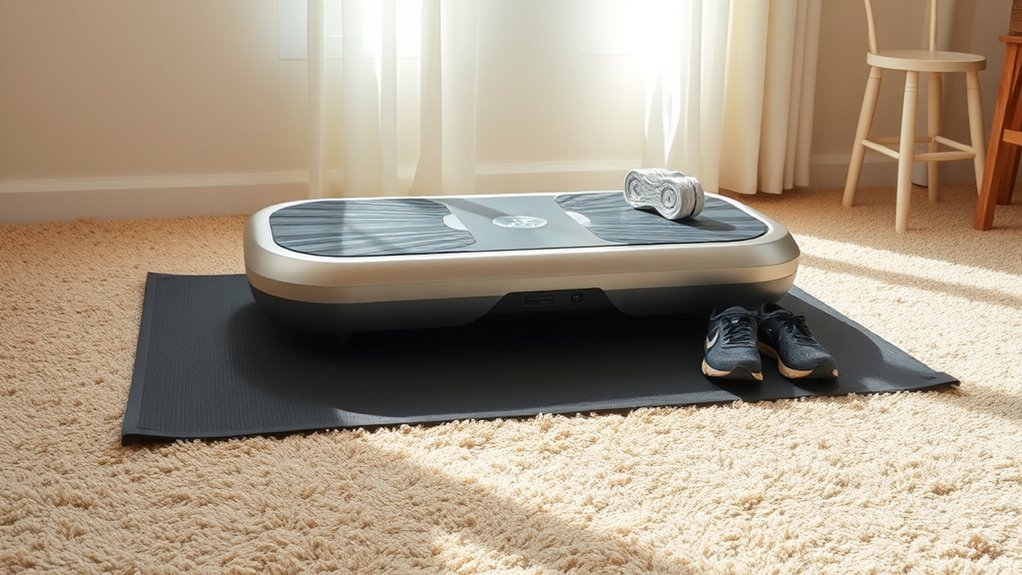
You can safely use a vibration plate on carpet by choosing a low-pile or firm-textured carpet like Berber.
Placing a solid base or non-slip mat beneath the machine helps stabilize it and prevents slipping.
Start with shorter sessions at lower intensities to get a feel for the machine.
Keep your feet shoulder-width apart for better balance and control.
Make it a habit to regularly check for any loose parts on your vibration plate.
Also, ensure your carpet is even and flat to avoid wobbling during use.
Following these simple tips protects both your machine and carpet.
Plus, there’s more to know about maximizing safety and effectiveness when using a vibration plate on carpet.
Stick around to learn how!
Key Takeaways
- Place a sturdy, flat base like a solid wood board or vibration mat between the carpet and plate for stability and vibration transmission. This helps keep things steady and ensures the vibrations aren’t lost in the carpet.
- Use low or firm pile carpets such as Berber to minimize vibration absorption and maintain machine effectiveness. Softer carpets tend to soak up the vibrations, which can reduce the workout benefits.
- Ensure the vibration plate is securely assembled with tightened screws and intact stabilizers before use on carpet. You want everything to be solid to avoid any wobbling or accidents.
- Wear supportive, non-slip shoes and maintain proper foot placement to enhance balance and prevent slipping. This keeps you safe and comfortable during your session.
- Monitor machine operation for unusual noise or wobbling and limit session intensity initially to adjust safely on carpet. Start slow so you can get a feel for how it handles on your carpeted floor.
Understanding the Impact of Carpet on Vibration Plate Performance
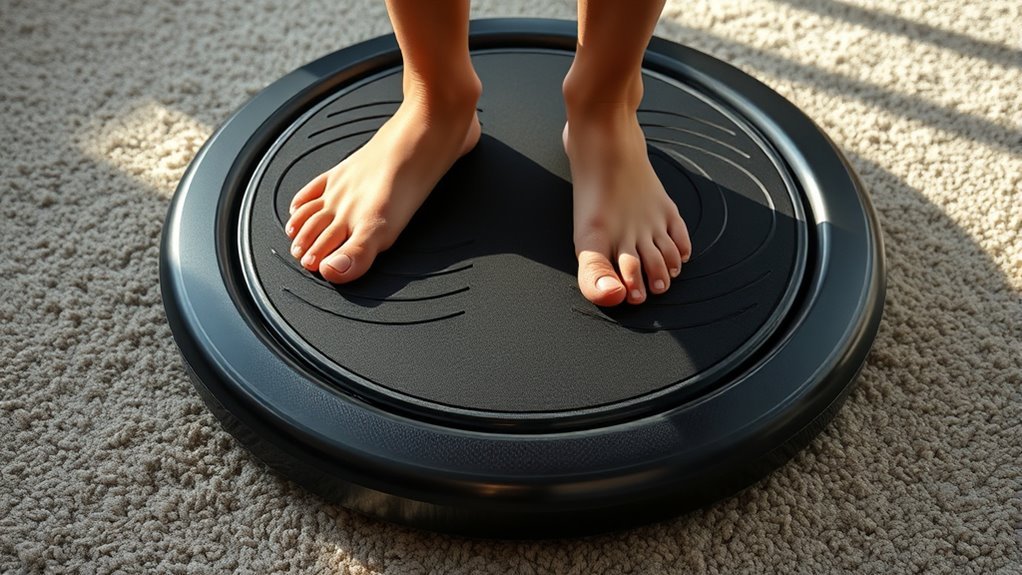
Although you might be tempted to place your vibration plate directly on carpet for convenience, doing so can affect its performance. Carpet cushions the vibrations, which means your plate won’t deliver the full intensity it’s designed for.
This can reduce the effectiveness of your workout and may cause the machine to work harder, potentially leading to quicker wear and tear. Plus, the carpet’s texture can cause your vibration plate to shift or become unstable during use, increasing the risk of injury.
You’ll also find that the carpet traps heat and dust around the motor, which could impact the machine’s longevity. So, to get the most out of your vibration plate, it’s important to understand how carpet interferes with its function before deciding where to place it.
Choosing the Right Type of Carpet for Your Vibration Plate
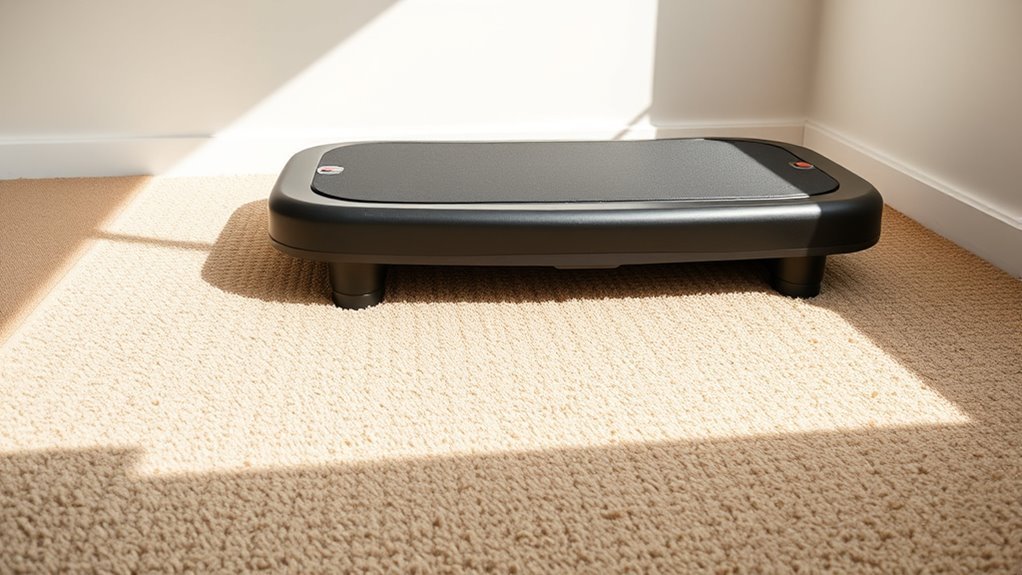
Since carpet can impact how your vibration plate performs and wears, picking the right type of carpet becomes important if you want to keep using it safely and effectively.
You’ll want a carpet that provides enough support without absorbing too much vibration or causing instability. Low pile carpets are generally better than thick, plush ones because they offer a firmer surface.
| Carpet Type | Suitability for Vibration Plate |
|---|---|
| Low Pile | Best support, less vibration absorption |
| Medium Pile | Moderate support, may reduce effectiveness |
| High Pile/Shaggy | Poor support, absorbs vibrations |
| Berber | Firm texture, stable base |
Using a Stable Base or Platform Under the Vibration Plate
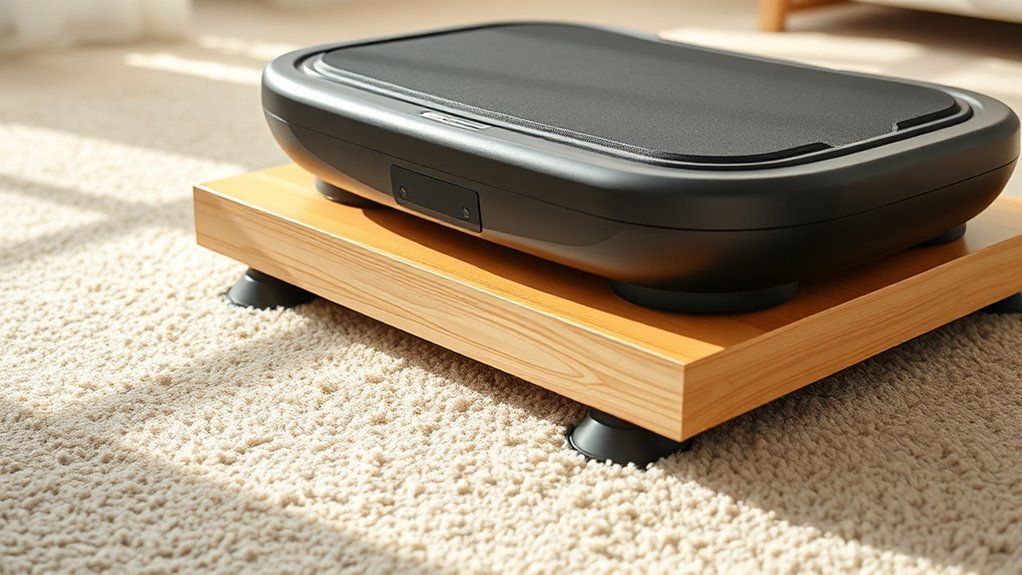
When you place a vibration plate on carpet, using a stable base or platform underneath can greatly improve safety and performance. A sturdy platform helps distribute the machine’s weight evenly, preventing it from sinking into the carpet fibers and reducing wobbling during use.
You can use a solid wood board or a commercial vibration platform mat designed specifically for this purpose. Make sure the base is slightly larger than the vibration plate’s footprint to provide full support.
Check that the surface is level and secure before turning on the machine. This setup not only stabilizes the vibration plate but also protects your carpet from excessive wear and tear.
Adjusting Machine Settings for Carpeted Surfaces
When using a vibration plate on carpet, you’ll want to adjust the frequency and intensity to guarantee effective and safe workouts. Lower settings often work better to prevent excessive movement and maintain stability.
Make sure the machine’s base stays steady to avoid any wobbling during your session. It’s all about keeping things safe and comfortable while you get the most out of your workout.
Optimal Frequency and Intensity
Although vibration plates offer various intensity levels, you’ll need to adjust the frequency and intensity settings carefully when using one on carpeted surfaces. Carpet tends to absorb some vibrations, reducing the machine’s effectiveness.
Start with a lower frequency, around 20-30 Hz, to ensure stability and prevent excessive dampening. Gradually increase intensity, but avoid maxing out settings since the carpet will cushion the vibrations, making higher intensities less efficient and potentially unstable.
Pay attention to how the machine feels underfoot; if it seems less responsive, slightly boost the frequency or intensity while maintaining control. By fine-tuning these settings, you’ll get excellent workout benefits without compromising safety or machine performance on your carpeted floor.
Stabilizing the Machine Base
How can you guarantee your vibration plate stays steady on carpeted floors? Start by adjusting the machine settings to suit the softer surface. Carpet can absorb some vibrations, making the plate less stable, so you need to compensate for that.
Here’s how to stabilize the machine base effectively:
- Lower the vibration intensity to prevent excessive shaking.
- Use anti-slip mats or rubber pads under the machine’s feet.
- Ensure the plate is on a flat, even carpeted area.
- Tighten any adjustable feet or base components for better grip.
Ensuring Proper Foot Placement and Balance
To get the most from your vibration plate on carpet, you need to place your feet firmly and evenly on the platform. Keep your core engaged to maintain balance throughout your session.
This steady positioning helps you stay safe and maximize the workout benefits. It’s all about finding that perfect footing so you can really feel the vibrations working for you.
Stable Foot Positioning
When you step onto a vibration plate placed on carpet, maintaining a stable foot position is essential for your balance and safety. Your feet act as your foundation, so proper placement helps prevent slips and uneven vibrations.
Position your feet shoulder-width apart to distribute your weight evenly. Keep your toes facing forward or slightly outward to enhance stability. Avoid standing too close to the edges where the plate may wobble more.
Make sure your heels stay firmly on the plate, not hanging off the sides.
Here are some tips for stable foot positioning:
- Plant your feet flat to maximize contact with the surface
- Shift your weight evenly between both feet
- Adjust your stance if you feel unsteady
- Use your toes and heels to make micro-adjustments during vibration
These habits help you stay secure and get the most from your workout. It’s all about finding that steady balance so you can focus on your exercises without worrying about slipping.
Maintaining Core Balance
Although stable foot positioning lays the foundation, maintaining your core balance is key to maximizing safety and effectiveness on a vibration plate placed on carpet. Keep your feet firmly planted, but don’t lock your knees; a slight bend helps absorb vibrations and maintain stability.
Engage your abdominal muscles to support your spine and prevent wobbling. Focus on distributing your weight evenly between both feet to avoid tipping or slipping.
If you feel unsteady, pause and adjust your stance until you find your center of balance. Using your core actively helps you stay steady despite the carpet’s cushioned surface, reducing the risk of injury.
Protecting Your Carpet From Wear and Tear
Since vibration plates can exert constant pressure and movement, you’ll want to take steps to shield your carpet from damage. Protecting your carpet not only extends its life but also keeps your workout area safe and tidy.
Constant pressure from vibration plates means protecting your carpet to keep your space safe and looking great.
Here’s how you can do it:
- Use a thick, durable mat beneath the vibration plate to absorb impact and prevent indentations.
- Rotate the position of the plate occasionally to avoid wearing down one spot.
- Keep the carpet clean and free from debris that could get trapped under the plate, causing abrasion.
- Check the vibration plate’s feet for any sharp edges or damage that might snag or tear the carpet fibers.
Regular Maintenance and Inspection of Your Vibration Plate
To keep your vibration plate performing at its best, you need to perform regular maintenance and inspections. Start by checking the power cord and plug for any signs of damage or wear, as faulty wiring can cause malfunctions.
Clean the surface and vents regularly to prevent dust buildup, which can affect the motor’s efficiency. It’s a simple step that really makes a difference.
Inspect the plate’s rubber feet or pads, especially when using it on carpet. Make sure they’re intact and providing proper stability to avoid slipping or uneven vibrations.
Don’t forget to tighten any loose screws or bolts. This helps avoid unnecessary vibrations or noise that can be annoying or even harmful.
Also, test the controls and display panel to confirm everything operates smoothly. It’s a quick check that ensures your workout won’t be interrupted.
Safety Tips to Prevent Injuries While Using on Carpet
When you use a vibration plate on carpet, you need to take extra precautions to prevent slips and injuries. Carpets can shift or compress unevenly, which affects your balance and the machine’s stability.
So, it’s super important to follow some safety tips to stay secure.
First, place a non-slip mat or rubber base under the vibration plate to keep it steady. Make sure the carpet is flat and free from wrinkles or folds that could cause wobbling.
Also, wear supportive shoes with good grip to maintain your footing. It really helps with stability.
Start with shorter sessions and lower intensity to see how your body reacts on the carpeted surface. This way, you reduce the risk of injury.
Frequently Asked Questions
Can Vibration Plates Help With Weight Loss on Carpeted Floors?
Yes, you can lose weight using a vibration plate on carpeted floors, but you’ll want to make certain of stability.
Using a thin, firm mat under the plate helps maintain balance and effectiveness during your workout sessions. This way, you can get the most out of your exercise without worrying about slipping or uneven vibrations.
Is It Safe to Use a Vibration Plate While Wearing Shoes?
Yes, you can wear shoes on a vibration plate.
Coincidentally, it often provides better support and grip. Just make sure your shoes are clean and have non-slip soles.
This will help keep you stable during your workout.
How Long Should a Typical Vibration Plate Session Last?
You should keep typical vibration plate sessions between 10 to 15 minutes to avoid overexertion.
Start with shorter durations, and gradually increase time as your body adapts to the vibrations. This way, you can have safe and effective workouts.
Can Vibration Plates Improve Circulation When Used on Carpet?
Like a gentle river stirring still waters, vibration plates can boost your circulation even on carpet.
Just guarantee the surface is firm and stable, so the waves of movement flow effectively through your body without losing power.
That way, you get the full benefit without any wobbling or weakening of the vibrations.
Are There Specific Exercises Recommended for Use on Vibration Plates?
Yes, you can try squats, planks, and calf raises on a vibration plate. These exercises engage multiple muscle groups and boost circulation.
Just make certain your form’s correct and start slow to avoid injury. It’s all about getting comfortable with the movement before increasing intensity.
Conclusion
Using a vibration plate on carpet can be safe and effective when you take the right steps. Did you know that up to 70% of vibration plate users experience improved balance and muscle strength? It’s pretty impressive!
By choosing the right carpet and using a stable base, you’ll protect both your machine and the floor underneath. Adjusting your settings is also key to getting the most out of your workout.
Always focus on proper foot placement and regular maintenance. This way, you can enjoy the benefits of a vibration plate on carpet safely and stay injury-free.
In conclusion, using a vibration plate on carpet is totally doable with the right precautions. Picking a firm carpet or adding a platform base ensures stability. Don’t forget to set the machine correctly and keep your feet positioned well during exercises. With these tips, your vibration plate session will boost muscle strength and balance without damaging your carpet or equipment. Staying safe and effective on carpeted surfaces is easier than you think!