
How to Oil a Treadmill in 3 Easy Steps
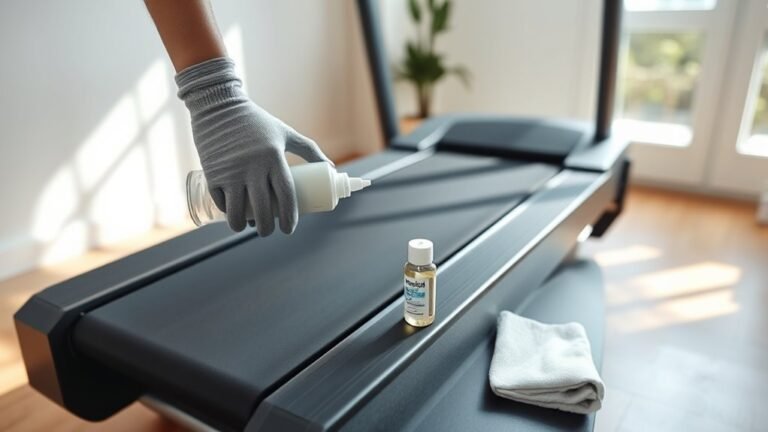
To oil your treadmill in three easy steps, start by unplugging it.
Then, clean the belt and deck thoroughly to remove any dust or debris. This helps ensure the lubricant works effectively and keeps your treadmill running smoothly.
Next, gently lift the belt and apply a thin, even line of silicone-based lubricant. Focus the application along the center of the deck, about 6 to 12 inches from the front roller. This spot is key for reducing friction and maintaining your machine’s performance.
Finally, lower the belt back down, turn on the treadmill at a low speed, and observe the belt’s movement. Make sure it runs smoothly without any sticking or slipping.
Following these simple steps will help you keep your treadmill in great shape for years to come.
Key Takeaways
- Unplug the treadmill and clean the belt and deck to prepare for oiling.
- Lift the belt and apply a thin, even line of silicone lubricant along the deck’s center.
- Gently lower the belt and manually rotate it to spread the lubricant evenly.
- Turn on the treadmill at low speed to check for smooth belt movement and noises.
- Regularly oil the treadmill every 3 to 6 months to maintain performance and longevity.
Prepare Your Treadmill for Oiling
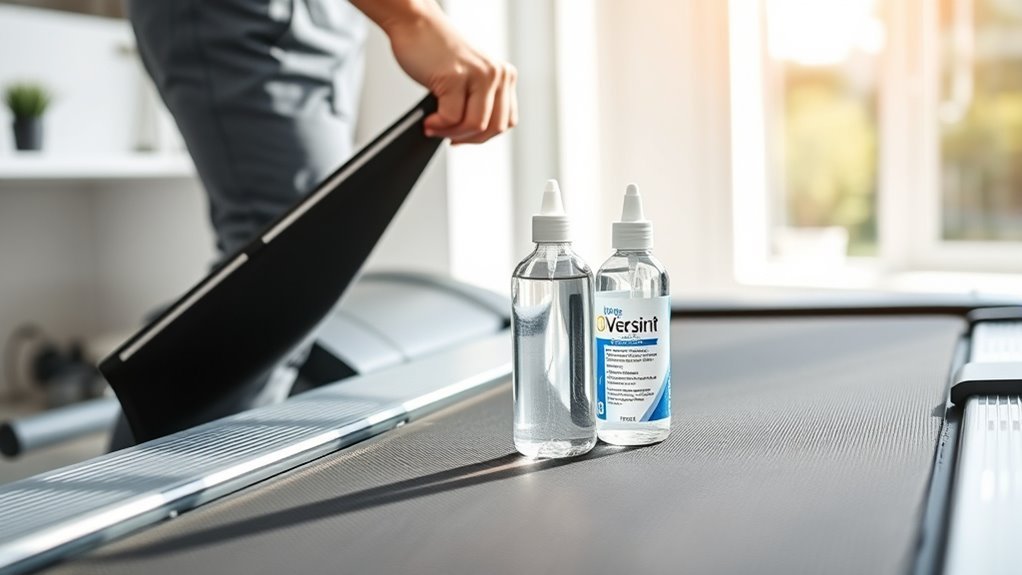
Before you start oiling your treadmill, make sure it’s unplugged and placed on a flat, stable surface. This prevents accidents and guarantees you can work comfortably.
Next, clean the treadmill belt and deck thoroughly. Use a soft cloth and mild cleaner to remove dust, dirt, and sweat buildup that can interfere with the lubricant’s effectiveness.
Check the belt tension and alignment—too tight or loose can cause damage. Loosen or tighten it slightly if needed, following the manufacturer’s guidelines.
Also, remove any debris around the motor cover or under the belt to avoid obstructions. Finally, gather all necessary tools and the correct lubricant specified for your treadmill model.
Preparing properly will make the oiling process smoother and extend your treadmill’s lifespan.
Apply the Lubricant Correctly
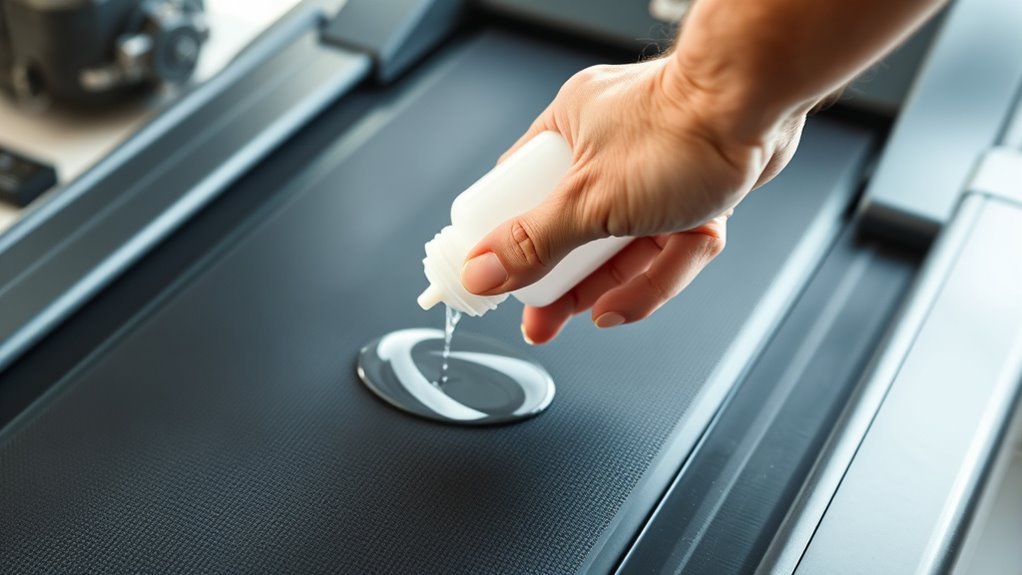
How exactly should you apply lubricant to your treadmill to guarantee peak performance? First, lift the belt slightly to access the underside.
Apply a thin, even line of silicone-based lubricant along the center of the deck, about 6 to 12 inches from the front roller. Avoid using too much lubricant, as excess can attract dust and cause slipping.
Once applied, lower the belt gently back into place. Next, manually rotate the belt a few times to spread the lubricant evenly beneath the surface.
Make sure to follow your treadmill’s manual for the recommended amount and type of lubricant. Proper application ensures smooth belt movement, reduces friction, and extends your treadmill’s lifespan.
Take your time to get this step right before moving on. It really makes a difference!
Test and Maintain Your Treadmill After Oiling

Once you’ve applied the lubricant, you’ll want to test your treadmill to verify everything runs smoothly and quietly. Turn it on at a low speed and listen for any unusual noises or resistance.
Gradually increase the speed to ensure the belt moves evenly without slipping or sticking. If you notice any issues, stop the machine and check the belt alignment or apply more lubricant where needed.
Regularly cleaning the deck and belt will also keep your treadmill in top shape. Make it a habit to oil your treadmill every three to six months, depending on usage.
Proper maintenance not only extends the machine’s life but also ensures a safer, more comfortable workout. Keep a maintenance log to track oiling and inspections.
Frequently Asked Questions
How Often Should I Oil My Treadmill for Optimal Performance?
You should oil your treadmill every three to six months, depending on your usage. If you run frequently, oil it every three months to keep it smooth and prevent wear.
Less use means less frequent oiling. So, if you’re using it just occasionally, you might stretch that interval a bit. Just keep an eye on how the treadmill feels when you’re running.
What Type of Oil Is Best for Treadmill Lubrication?
You should use 100% silicone-based lubricant for treadmill lubrication. It’s safe, effective, and won’t damage the belt or deck.
Avoid WD-40 or petroleum-based oils, as they can cause wear and reduce performance. Stick with silicone—it’s the best choice for keeping your treadmill running smoothly.
Can I Use Household Oils Instead of Treadmill-Specific Lubricant?
Using household oils instead of treadmill-specific lubricant is like putting sugar in a car’s gas tank—it can gum up your machine and cause damage.
Stick with silicone-based lubricants made for treadmills to keep things running smoothly. It’s definitely worth it to use the right product!
Will Oiling My Treadmill Void the Warranty?
Oiling your treadmill usually won’t void the warranty if you use the manufacturer-recommended lubricant and follow their instructions.
Just be sure to avoid household oils—they might cause damage and could nullify your warranty coverage.
It’s always a good idea to check your manual first. That way, you’re sure you’re doing everything right!
How Do I Know if My Treadmill Needs Oiling?
You’ll know your treadmill needs oiling if the belt feels dry, squeaks, or slows down during workouts.
Check your manual for recommended oiling intervals and keep an eye on unusual noises or increased friction while running.
It’s pretty straightforward once you get the hang of it! Just a little maintenance goes a long way.
Conclusion
Now that you’ve given your treadmill a little TLC, it’s ready to glide smoothly once again. By preparing it properly, applying lubricant with care, and testing it afterward, you’re not just maintaining a machine—you’re extending the life of your reliable workout partner.
Keep up this gentle routine, and your treadmill will keep rewarding you with effortless strides and quiet performance. Regular treadmill maintenance, like oiling, is a small effort that makes a world of difference in your fitness journey.
So, take a few minutes every month to oil your treadmill correctly. This simple step ensures your treadmill stays in top shape, giving you smooth, comfortable workouts for years to come. Your fitness routine deserves nothing less!