How You Can Use Dumbbells as Parallettes for Effective Workouts
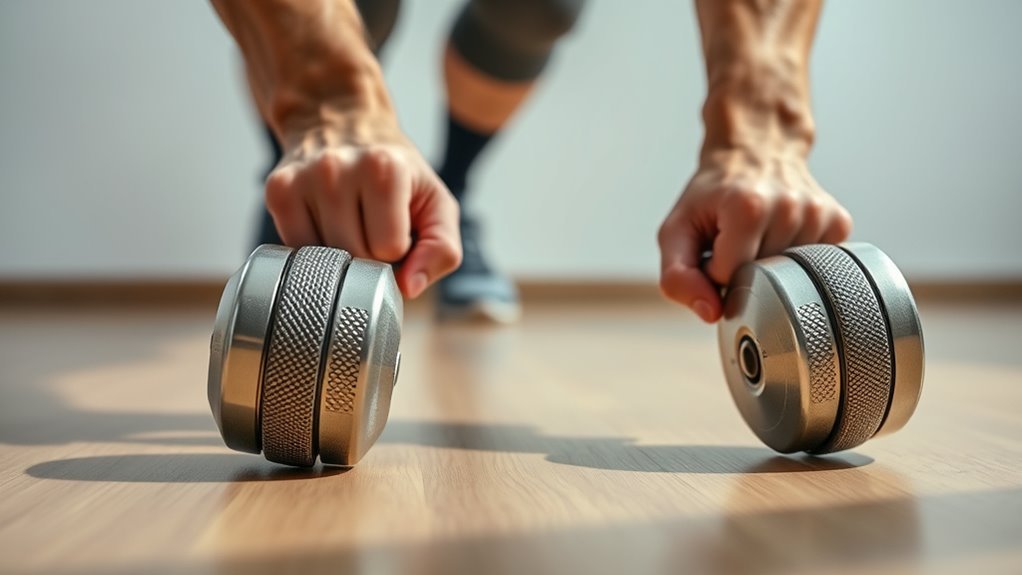
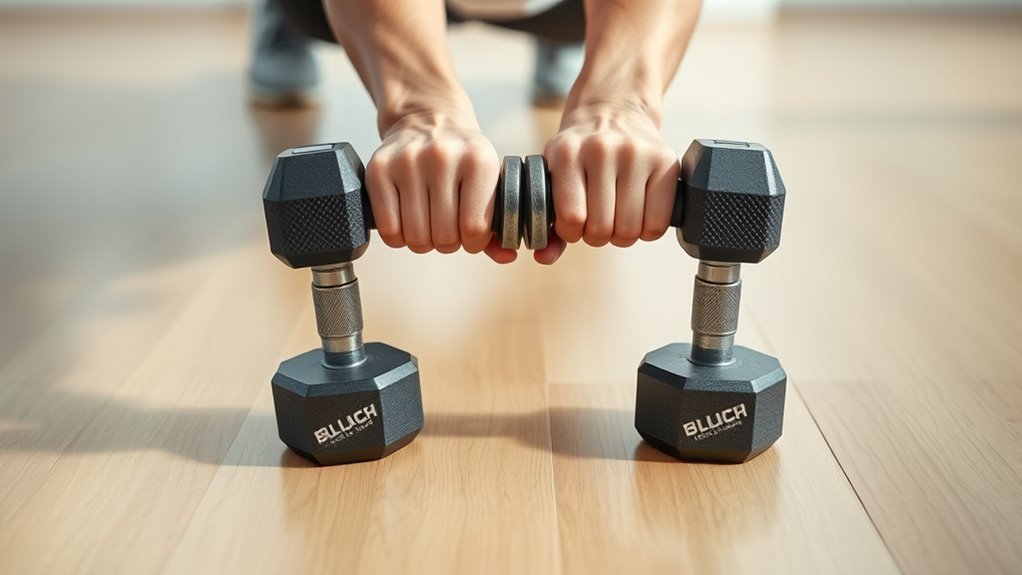
You can turn dumbbells into effective parallettes by choosing stable, flat-based hex dumbbells for a secure grip and placing them shoulder-width apart on a non-slip surface.
This simple setup lets you use your dumbbells for a variety of bodyweight exercises that boost strength and stability.
Use them to do push-ups, L-sits, dips, and even handstand training. These moves improve your overall strength and wrist comfort, making your workouts both challenging and safer.
Make sure to engage your core and grip firmly for stability throughout each exercise.
Keeping these basics in mind will help you explore new workout variations and progress safely as you try more advanced moves.
It’s a smart way to get more out of the equipment you already have!
Key Takeaways
- Choose flat-based, hexagonal dumbbells on a non-slip surface to ensure stability and prevent rolling during exercises. This helps keep you safe and steady while you work out.
- Perform push-up variations on dumbbells to increase range of motion and reduce wrist strain effectively. It’s a great way to challenge your muscles without hurting your wrists.
- Use chalk or athletic tape on handles to enhance grip and maintain control throughout workouts. This little trick can make a big difference in keeping your hands from slipping.
- Progress from basic push-ups to L-sits, dips, and handstand holds to develop strength and stability. Take it step by step, and you’ll notice improvements over time.
- Incorporate dumbbell parallettes consistently to improve overall strength, balance, and reduce wrist discomfort. Stick with it, and your workouts will get even better!
Choosing the Right Dumbbells for Parallette Exercises
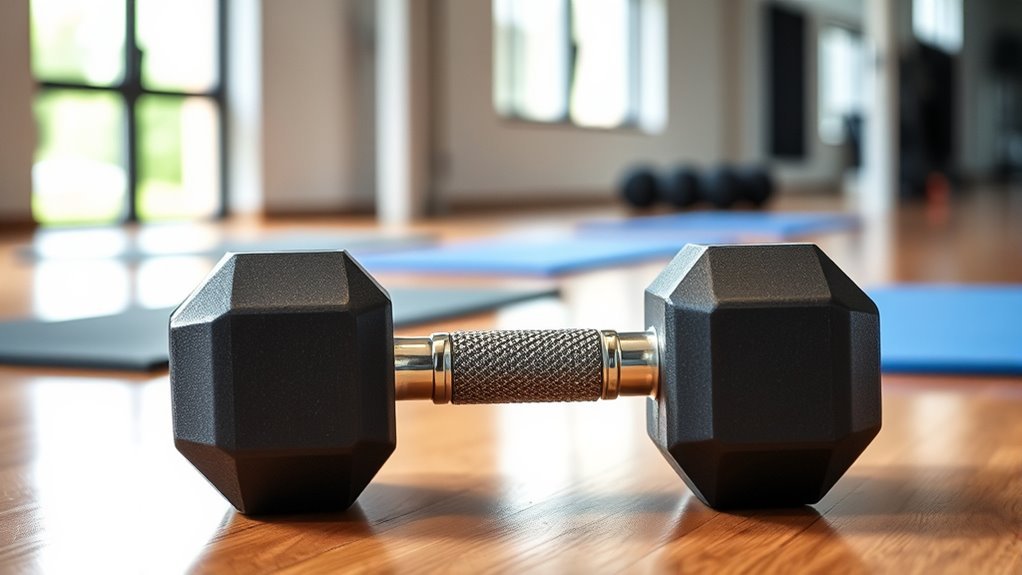
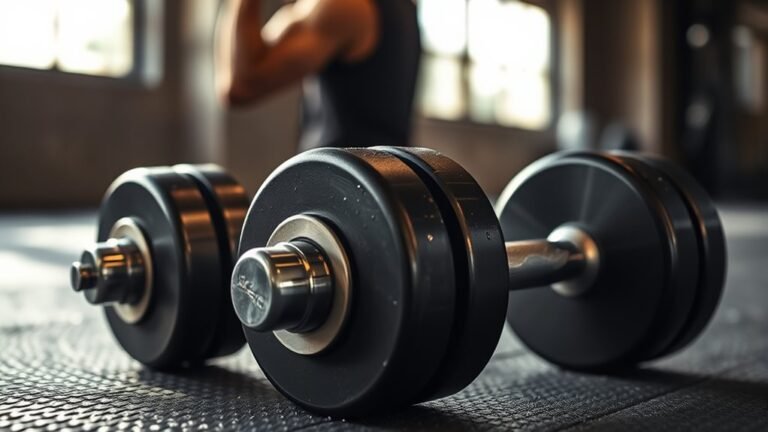
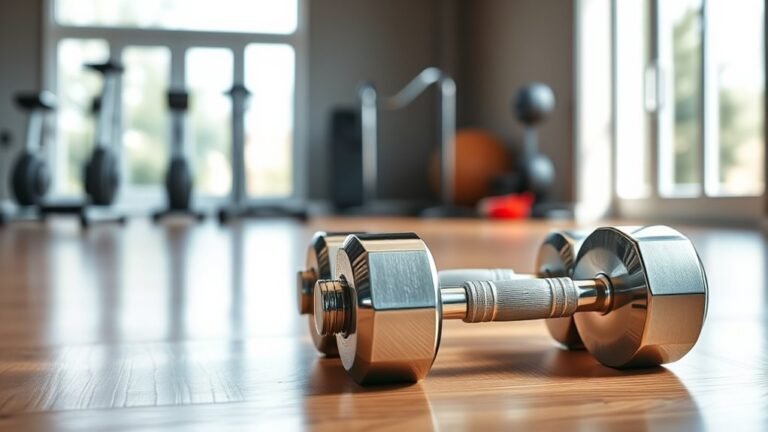
When selecting dumbbells for parallette exercises, you’ll want to prioritize stability and grip. Choose dumbbells with a flat base to prevent rolling during your workout. Hexagonal dumbbells are ideal because they stay put, offering a secure foundation for your movements.
Next, focus on the handle thickness. A slightly thicker grip can improve your hold, reducing wrist strain while enhancing control. Avoid dumbbells with overly textured or slippery handles since they might cause discomfort or slipping when your hands sweat.
Consider the weight, too—lighter dumbbells work best for parallette exercises, allowing you to maintain balance without unnecessary strain. By carefully picking dumbbells that combine stability, comfortable grip, and appropriate weight, you’ll set yourself up for effective and safe parallette training.
Setting Up Your Dumbbells Safely for Workout Use
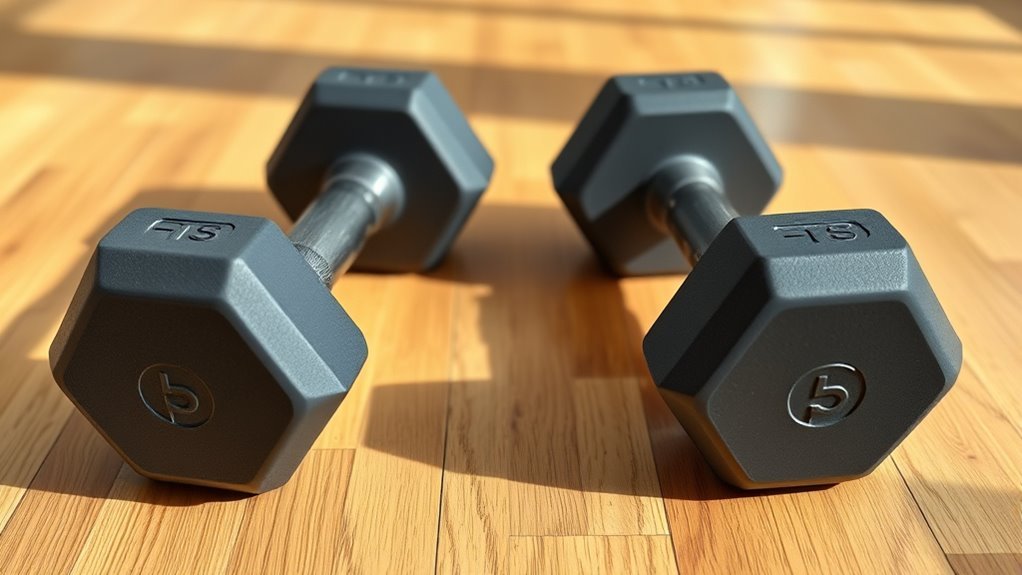
After choosing dumbbells with the right stability and grip, you need to set them up correctly to guarantee safety during your workouts. Place your dumbbells on a flat, non-slip surface to prevent any movement.
Make sure the weights are securely fastened so they won’t shift or fall during exercises. Position the dumbbells parallel to each other, spaced shoulder-width apart to support your body comfortably.
Secure weights tightly and position dumbbells shoulder-width apart for stability and comfortable support during workouts.
Before starting, check each dumbbell’s stability by pressing down gently and making sure they don’t wobble. Avoid using dumbbells with rounded edges that could roll or cause imbalance.
If needed, use a yoga mat or rubber flooring underneath to add extra grip and protect your floor. Proper setup minimizes injury risk and helps maintain correct form throughout your routine.
Benefits of Using Dumbbells as Parallettes
Although dumbbells might not seem like traditional parallettes, they offer several unique benefits that can really enhance your workout. First, their compact size makes them easy to store and transport.
So, you can train anywhere without hassle. Using dumbbells as parallettes also improves your grip strength since you have to hold onto rounded handles. This challenges your forearms more than flat bars would.
They provide a stable yet slightly unstable surface, which engages your stabilizer muscles and boosts overall balance. Plus, dumbbells let you customize your workout by adjusting the weight or handle thickness. This way, you can tailor the difficulty to your needs.
Finally, their versatility means you can easily progress between exercises. This maximizes efficiency without cluttering your space with extra equipment.
Using dumbbells as parallettes is a smart, practical choice that supports functional strength development.
Push-Up Variations Using Dumbbell Parallettes
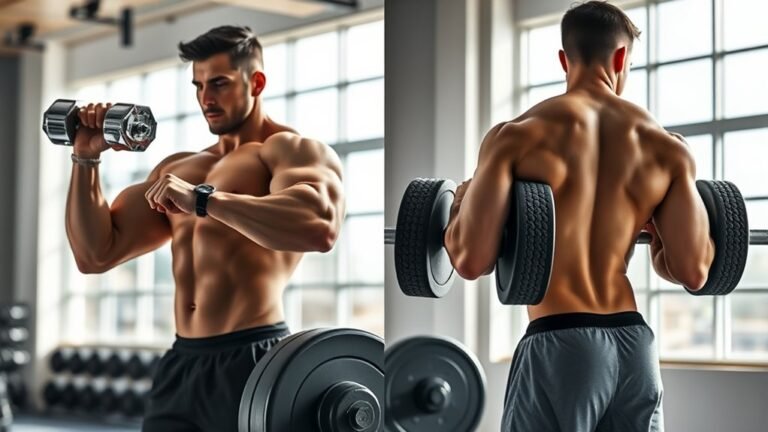
Using dumbbells as parallettes lets you explore push-up variations that target different muscle groups and increase intensity. They elevate your hands, allowing for a deeper range of motion and reducing wrist strain.
Here are four effective push-up variations to try:
- Standard Dumbbell Parallette Push-Up: Keep your body straight, grip dumbbells firmly, and lower yourself until your chest nears the dumbbells for a full stretch.
- Wide-Grip Push-Up: Position dumbbells wider than shoulder-width to emphasize your chest and shoulders.
- Close-Grip Push-Up: Place dumbbells close together to target your triceps more intensely.
- Pike Push-Up on Dumbbells: Elevate your hips and perform push-ups to focus on your shoulders and upper chest.
These variations really maximize muscle engagement and make your push-up routine more challenging. Give them a try and see how they upgrade your workout!
Performing L-Sits With Dumbbell Support
Push-up variations on dumbbells build upper body strength and stability, setting a solid foundation for more advanced moves like the L-sit. To perform an L-sit using dumbbell support, place a pair of sturdy dumbbells shoulder-width apart on the floor.
Grip the handles firmly and press down to lift your body off the ground. Keep your arms straight and engage your core as you extend your legs forward, parallel to the floor.
Hold this position, focusing on maintaining tight abs and straight legs. Dumbbells elevate your hands, making it easier to clear the floor and reduce wrist strain.
Start by holding the L-sit for a few seconds and gradually increase duration as your strength improves. This exercise enhances core stability, arm strength, and overall balance.
Handstand Training Techniques With Dumbbells
When you incorporate dumbbells into your handstand training, you challenge your balance and wrist stability in new ways. Using dumbbells as parallettes elevates your hands, reducing wrist strain and allowing deeper shoulder engagement.
Here’s how to get started:
- Grip the dumbbells firmly to ensure control and prevent slipping.
- Kick up into a handstand with your hands on the dumbbells, focusing on keeping your body tight.
- Engage your core and shoulders to maintain a straight line, using the dumbbells to enhance stability training.
- Practice controlled holds and small shifts to improve balance and build strength gradually.
This method intensifies your handstand practice by forcing your muscles to stabilize under a different load and grip position. It’s a great way to take your balance and strength to the next level!
Tips for Maintaining Grip and Stability
To keep a strong grip on your dumbbell parallettes, focus on techniques like chalking your hands or using grip pads. You’ll also want to engage your core and shoulders to boost overall stability during exercises.
These simple adjustments can make a big difference in your control and safety. Trust me, a little extra attention here goes a long way!
Grip Enhancement Techniques
Although using dumbbells as parallettes challenges your grip in unique ways, you can improve your hold by focusing on specific techniques. Strengthening your grip will help you maintain control and prevent slipping during exercises.
Here are four effective grip enhancement techniques:
- Chalk Up: Use gym chalk to reduce moisture and increase friction between your hands and the dumbbells.
- Wrap with Tape: Apply athletic tape around the handles to add texture and prevent slipping.
- Use Grip Trainers: Incorporate grip-strengthening tools like hand grippers into your routine.
- Engage Your Fingers Fully: Wrap your fingers completely around the dumbbell handles to maximize contact and grip strength.
Stability Improvement Methods
Since dumbbells aren’t designed as parallettes, you’ll need to adopt specific strategies to maintain stability during your exercises. First, confirm the dumbbells have a flat base to prevent rolling.
Position them on a non-slip surface or use a yoga mat to reduce movement. When gripping, wrap your fingers fully around the handles and engage your forearm muscles to secure control.
Keep your core tight and shoulders engaged to stabilize your body throughout each movement. Avoid sudden shifts in weight; move deliberately and with control.
If you feel wobbly, lower your range of motion until your balance improves. Finally, practice regularly to build muscle memory and confidence.
These methods will help you maintain grip and stability, making your dumbbell parallettes workouts safer and more effective.
Incorporating Dumbbell Parallettes Into Your Fitness Routine
When you add dumbbell parallettes to your workouts, you unseal new ways to build strength and improve balance. To seamlessly include them in your routine, start by replacing traditional push-ups with parallettes push-ups, which increase wrist mobility and core engagement.
Incorporate dumbbell parallettes to unlock enhanced strength and balance through wrist-friendly, core-engaging push-ups.
Next, try L-sits to boost your abdominal and hip flexor strength. Incorporate dips using dumbbell parallettes for enhanced tricep activation, then progress to handstand holds to develop shoulder stability.
Here’s a simple plan to get started:
- Parallette push-ups – 3 sets of 10
- L-sits – hold for 15 seconds, 3 reps
- Tricep dips – 3 sets of 8
- Handstand holds – practice for 20 seconds, 2 reps
Regularly rotating these exercises will maximize your gains and keep workouts fresh. Give it a try and see how your strength and balance improve!
Frequently Asked Questions
Can Dumbbells as Parallettes Replace Traditional Gym Equipment?
You can’t fully replace traditional gym equipment with dumbbells as parallettes, but they offer a versatile, compact alternative for bodyweight exercises.
They’ll enhance your strength and stability, especially if you’re short on space or budget. Plus, they’re super easy to store and move around.
Are There Specific Dumbbell Weights Best for Beginners?
You should start with lighter dumbbells, around 5 to 15 pounds, to build strength and maintain control.
As you get comfortable, gradually increase weight to challenge yourself without risking injury or compromising form.
It’s all about finding that sweet spot where you feel the burn but can still keep good form.
Take your time and listen to your body!
How Do Dumbbell Parallettes Affect Wrist Health?
Using dumbbell parallettes can reduce wrist strain by allowing a neutral grip, which lessens pressure compared to floor exercises.
Just make sure your dumbbells are stable and avoid overextending your wrists to keep them healthy.
Can I Use Adjustable Dumbbells Safely as Parallettes?
You can’t just grab adjustable dumbbells as parallettes safely—they’re unstable and risk injury.
Instead, use fixed dumbbells with solid grips; your wrists will thank you, and your workout stays effective without unnecessary hazards.
What Are Common Mistakes When Using Dumbbells as Parallettes?
Common mistakes include using unstable dumbbells, not securing grips properly, neglecting wrist alignment, and overloading weight.
You should focus on control, guarantee the dumbbells won’t roll, and maintain proper form to avoid injury.
It’s really important to keep everything steady and aligned. Otherwise, you might risk hurting yourself or not getting the most out of your workout.
Conclusion
Using dumbbells as parallettes is like turning simple stones into stepping pillars on your fitness journey. Each push-up, L-sit, and handstand is a step climbing higher, building strength and balance with every move.
Just as a river shapes stones into smooth paths, your grip and focus carve a stronger you. So, grab those dumbbells, set your foundation, and let your workouts flow—turning ordinary tools into powerful allies for your progress.
By using dumbbells as parallettes, you unlock a whole new level of effective workouts. They help improve your stability and enhance your range of motion. Plus, they’re a convenient and affordable alternative to traditional parallettes.
So next time you’re ready to train, remember how dumbbells can double as parallettes, making your workout routine more dynamic and challenging. Embrace this simple yet powerful tool to boost your strength and balance every session.